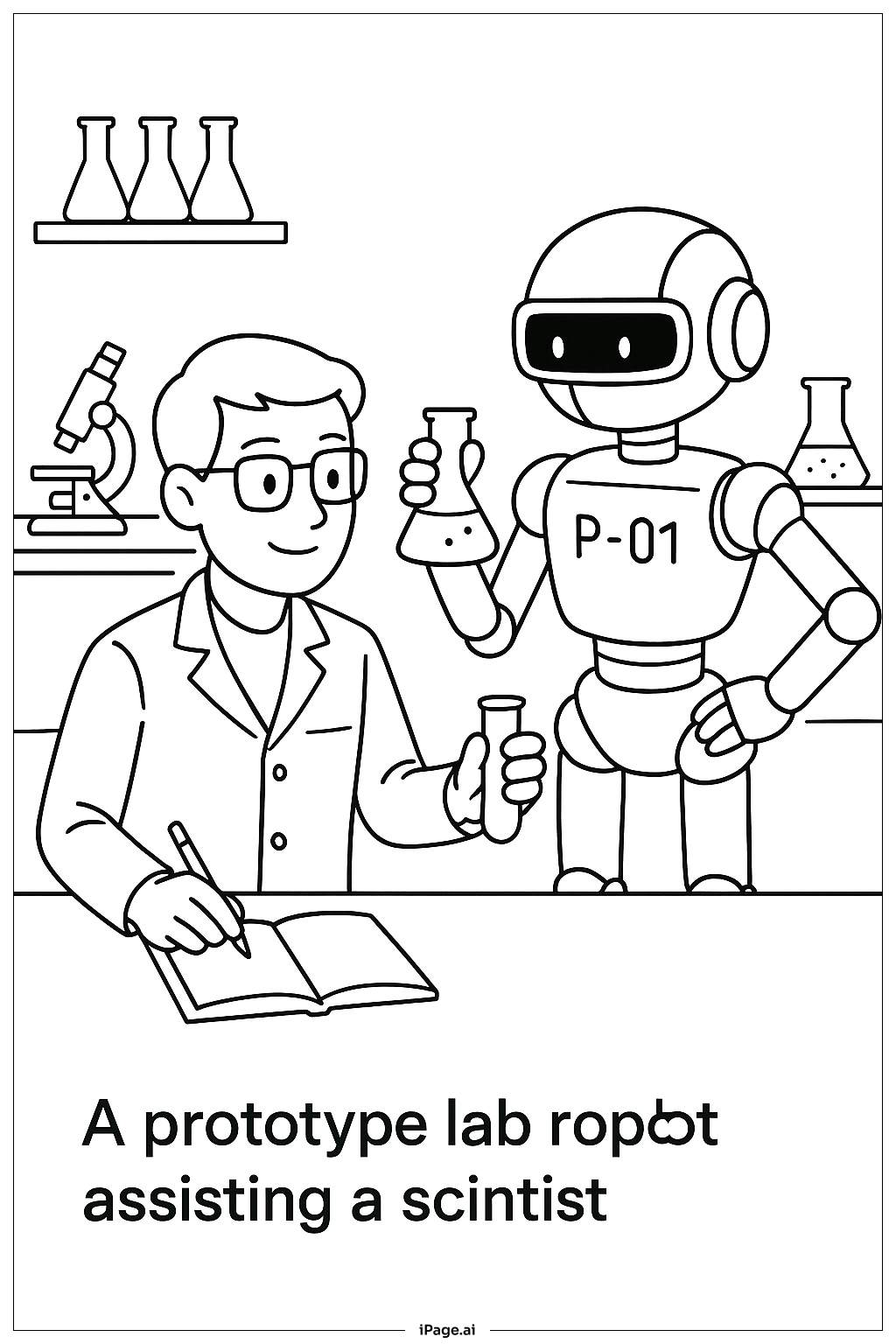
Coloring tips: How to color Prototype Lab Robot Assist coloring page well?
Use bright and cheerful colors for the robot to make it stand out. For example, you can color the robot’s body in silver or light gray with blue or green highlights on its joints and face screen. The scientist can be colored in soft tones like white for the lab coat and natural skin and hair tones. The liquids in the flasks and test tubes can be bright colors like red, blue, green, or yellow to make the picture lively. The background and lab equipment can be in neutral colors like light gray or beige to keep the focus on the robot and scientist.
Coloring challenges: Which parts are difficult to color and need attention for Prototype Lab Robot Assist coloring page?
1. Coloring the small details like the robot’s joints and face screen might be hard because they have thin lines.
2. The scientist’s hand holding the pencil and the test tube need careful coloring to stay inside the lines.
3. The lab equipment on the shelves has many small parts that require patience.
4. The liquids in the flasks have different shapes, so coloring them smoothly can be tricky.
5. Balancing the colors so the robot looks lively without overpowering the scientist can be challenging.
Benefits of coloring books: Advantages of drawing Prototype Lab Robot Assist coloring page
Coloring this page helps children learn about teamwork between humans and robots in science. It improves fine motor skills through detailed work, like coloring small parts of the lab tools and robot. Children can practice using different colors to make the liquids and surroundings interesting. It also encourages imagination by thinking about the lab setting and the role of robots. Overall, it’s a fun way to learn about science and technology while developing artistic skills.