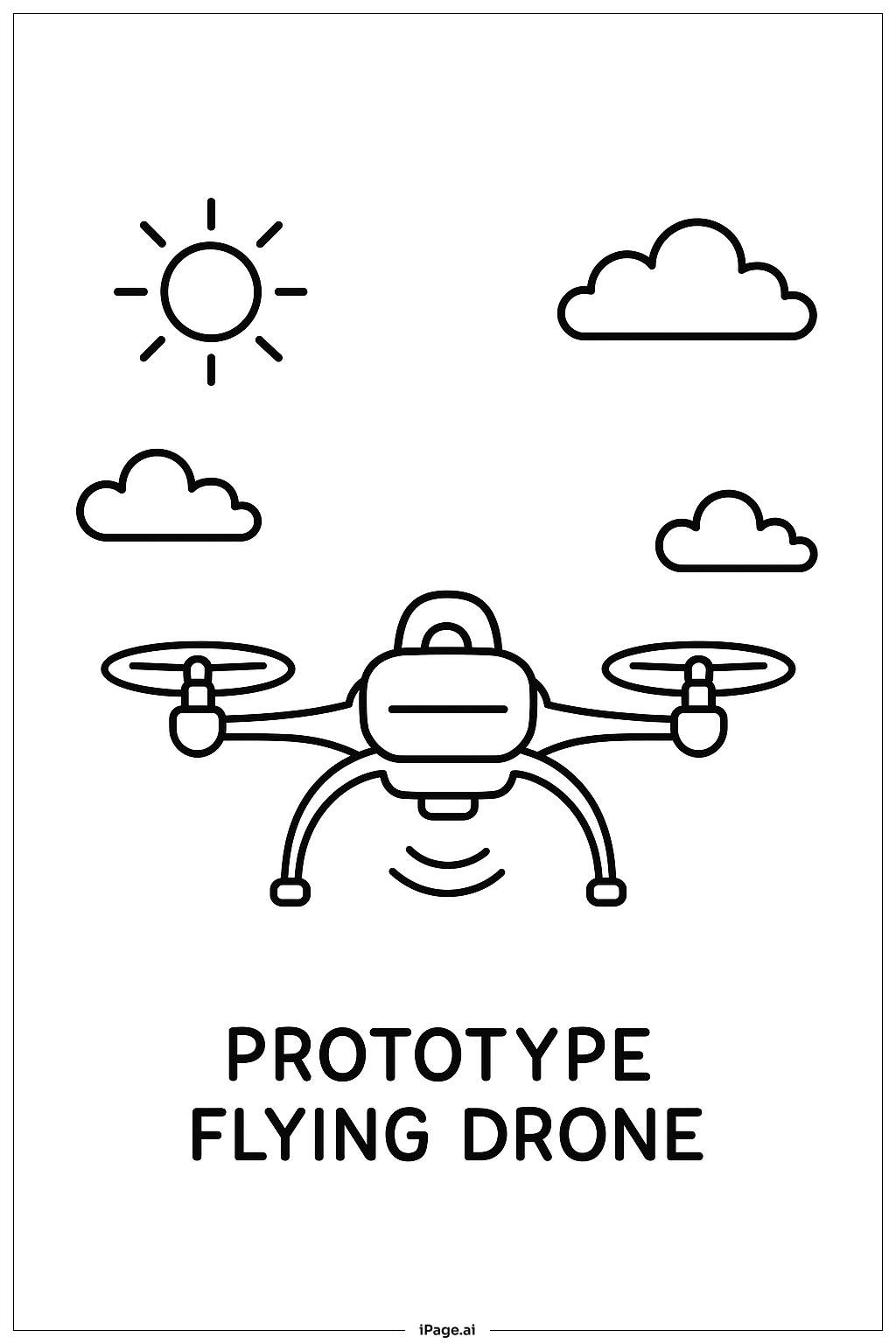
Coloring tips: How to color Prototype Flying Drone coloring page well?
For the drone's body, consider using metallic shades like silver, gunmetal gray, or titanium blue to create a realistic tech look. The propeller arms can be colored in contrasting dark grays or blacks to make them stand out. Add bright accent colors like neon blue, electric green, or orange to the sensor lights and camera modules for a futuristic glow effect. The rotors can be shaded with gradients from light gray at the center to darker edges to suggest spinning motion. Try using colored pencils to create subtle metallic sheens on the body panels. For a more playful approach, use bold primary colors like red, yellow, and blue on different sections. Don't forget to add shadows beneath the drone using light gray or purple tones to give it a floating appearance. Experiment with color combinations to make your drone unique and eye-catching.
Coloring challenges: Which parts are difficult to color and need attention for Prototype Flying Drone coloring page?
• Propeller Blade Precision: The multiple thin propeller blades require careful coloring to stay within the lines. Each blade has a narrow shape that can be challenging for younger children. Keeping the color consistent across all four or six propellers while maintaining clean edges demands steady hand control and patience. Using fine-tipped coloring tools helps achieve better results in these delicate areas.
• Mechanical Panel Details: The drone's body features numerous small panels, vents, and technical details that create complex geometric patterns. Distinguishing between different sections and deciding on a color scheme that highlights these details without creating visual chaos requires planning. Coloring each panel separately with different shades adds depth but increases the time and concentration needed.
• Creating Metallic Effects: Achieving a realistic metallic or technological appearance is challenging with standard coloring materials. It requires understanding how light reflects off metal surfaces and applying gradients or highlights appropriately. Blending multiple shades of gray, silver, or blue smoothly takes practice and the right techniques, such as layering colors or using blending tools.
• Symmetry Maintenance: Drones typically have symmetrical designs, and maintaining color consistency across matching parts on opposite sides requires attention to detail. Remembering which colors were used on one propeller arm and replicating them on the corresponding arm tests memory and organizational skills, especially for younger colorists working over multiple sessions.
Benefits of coloring books: Advantages of drawing Prototype Flying Drone coloring page
Coloring this Prototype Flying Drone helps children develop fine motor skills through the precise work required for small mechanical details. It encourages interest in technology, engineering, and robotics by familiarizing them with drone components and design. The geometric shapes and symmetrical patterns support spatial reasoning and mathematical thinking. Children learn about color theory by experimenting with metallic tones and futuristic color schemes. The activity promotes patience and focus as they work through the detailed technical elements. It also sparks creativity by allowing them to imagine their own custom drone designs through color choices. For older children and adults, this coloring page offers a relaxing mindfulness activity while engaging with modern technology themes. Completing the detailed image provides a sense of accomplishment and boosts confidence in artistic abilities.