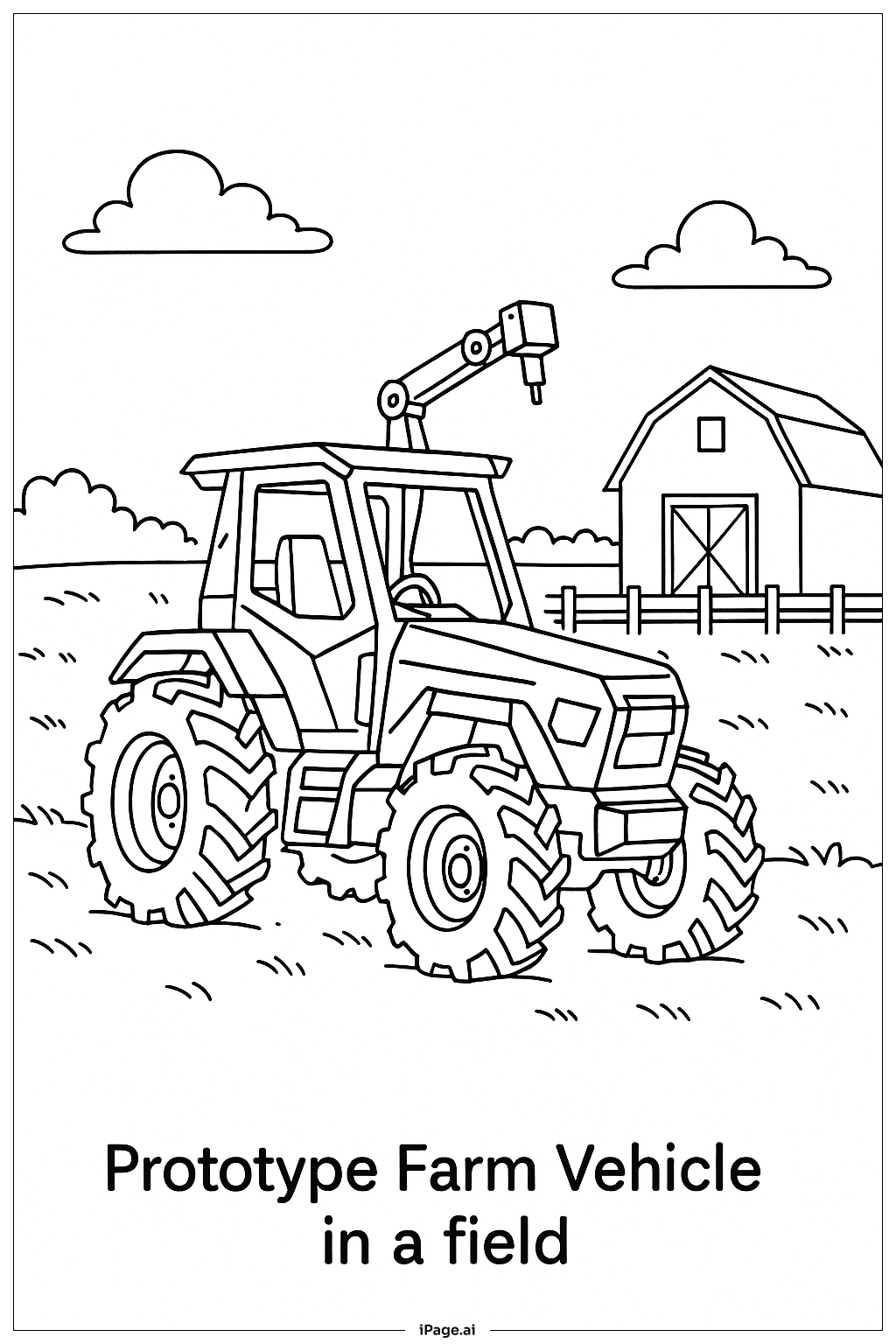
Coloring tips: How to color Prototype Farm Vehicle coloring page well?
Start with the main body of the vehicle using shades of green, red, or yellow, which are traditional farm equipment colors. The cabin windows can be colored in light blue or gray to represent glass. Use metallic colors like silver, gray, or dark blue for the mechanical components and hydraulic systems. The large wheels can be colored black or dark gray for the tires, with lighter gray or tan for the wheel rims. Add brown or orange tones to suggest rust or weathering effects on certain metal parts for added realism. The protective roll bars could be bright yellow or orange for safety visibility. Consider using darker shades for shadows under the vehicle and lighter tones for highlights on curved surfaces to create depth and dimension in your coloring.
Coloring challenges: Which parts are difficult to color and need attention for Prototype Farm Vehicle coloring page?
• Mechanical Component Details: The prototype farm vehicle contains numerous small mechanical parts, including hydraulic systems, joints, and attachment mechanisms that require careful attention. These intricate areas demand precision coloring to distinguish between different functional components while maintaining realistic metallic textures and avoiding color bleeding between adjacent small sections.
• Wheel Tread Patterns: The large agricultural tires feature complex tread patterns with deep grooves and repeated geometric designs. Coloring these patterns consistently requires patience and steady hand control to maintain uniform color within each tread block while creating appropriate contrast between the raised and recessed areas to achieve a three-dimensional appearance.
• Angular Panel Surfaces: The vehicle's modern design includes multiple angular panels and surfaces at various angles, creating challenges in applying appropriate shading and highlights. Children must understand light source direction and apply graduated color tones to convey the geometric complexity and make flat surfaces appear properly dimensional and realistic.
• Glass and Reflective Surfaces: The cabin windows present the challenge of depicting transparent or reflective materials through coloring techniques. This requires leaving strategic white spaces for highlights, using lighter pressure or diluted colors for transparency effects, and potentially adding environmental reflections to make the glass surfaces look authentic rather than simply solid colored areas.
Benefits of coloring books: Advantages of drawing Prototype Farm Vehicle coloring page
Coloring this prototype farm vehicle offers excellent educational value by introducing children to agricultural technology and engineering concepts. It encourages interest in STEM fields and modern farming innovations. The complex mechanical details help develop fine motor skills and hand-eye coordination through precise coloring within small spaces. The geometric shapes and angular surfaces enhance spatial awareness and understanding of three-dimensional forms. This coloring page promotes patience and concentration as children work through intricate mechanical components. It also provides opportunities to learn about color theory by experimenting with metallic shades and realistic machinery colors. The subject matter can spark discussions about sustainability, food production, and technological advancement in agriculture, making it both an artistic and educational activity that combines creativity with real-world knowledge.