Coloring tips: How to color Prototype Deep Sea Lab coloring page well?
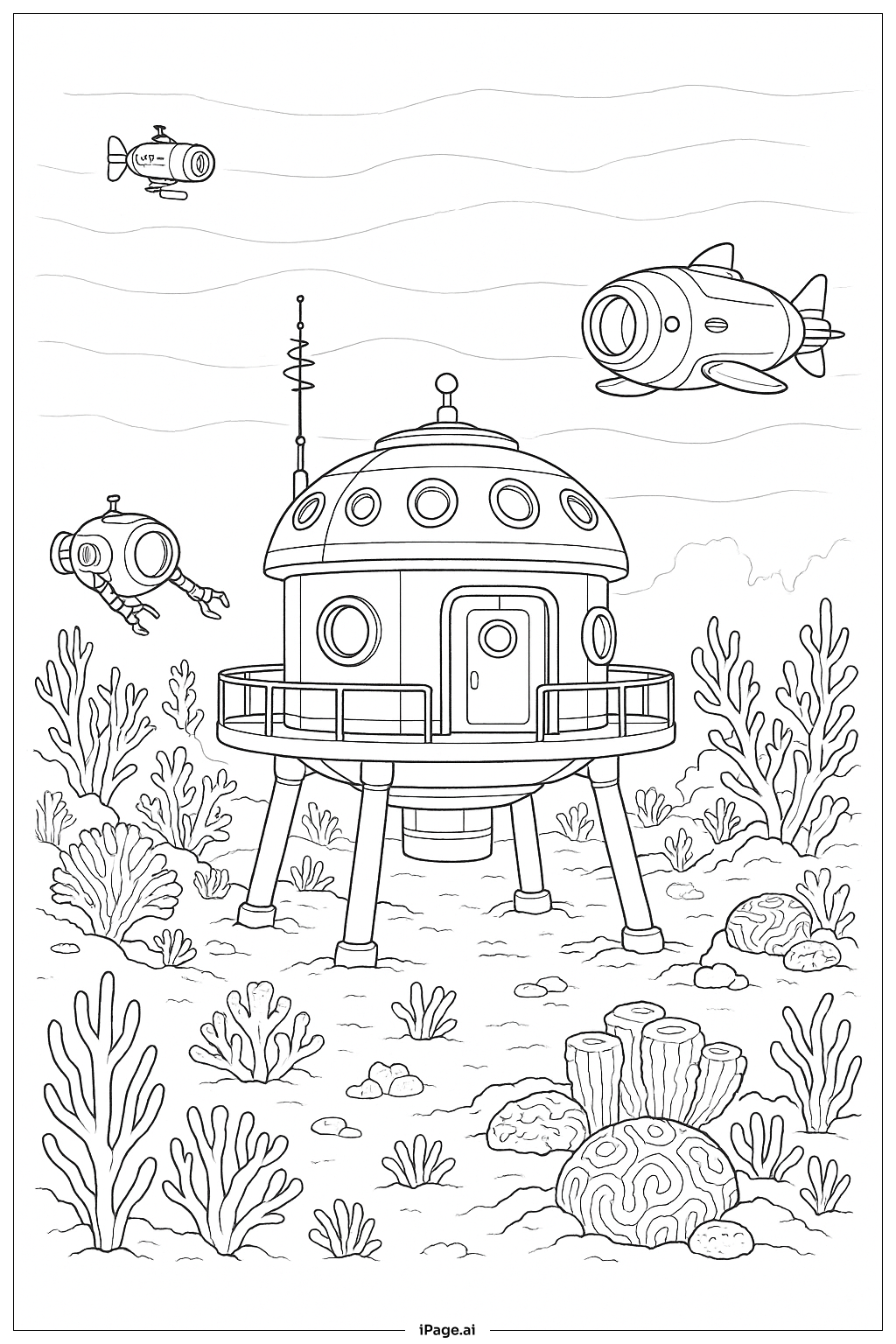
Use a variety of blues and greens for the underwater plants and water to create a lively ocean scene. The deep sea lab can be colored with metallic shades like silver, gray, or light blue to give it a futuristic look. For the submarines, bright colors such as red, yellow, or orange will make them stand out against the blue background. Adding shades and gradients will give more depth. Make sure to color each coral differently to highlight their shapes and details.
Coloring challenges: Which parts are difficult to color and need attention for Prototype Deep Sea Lab coloring page?
1. Coloring the circular windows and small details on the deep sea lab requires patience and careful strokes to avoid coloring outside the lines.
2. The many small underwater plants and corals vary in sizes and shapes, making it tricky to use different colors while keeping it neat.
3. The deep sea lab has rounded surfaces which might be hard to shade realistically to show its 3D structure.
4. Coloring the submarines small parts, such as propellers and antennas, may require fine motor skills.
5. Blending the water background smoothly can be challenging to create a natural underwater look without harsh lines.
Benefits of coloring books: Advantages of drawing Prototype Deep Sea Lab coloring page
Coloring this deep sea lab scene helps improve focus and attention to detail for young artists. It encourages creativity as children choose different colors for underwater plants and submarines. It also teaches them about underwater life and exploration. Working on small parts like windows and antennas boosts fine motor skills. Finally, coloring helps relax the mind and can be a fun way to learn about science and the ocean world.