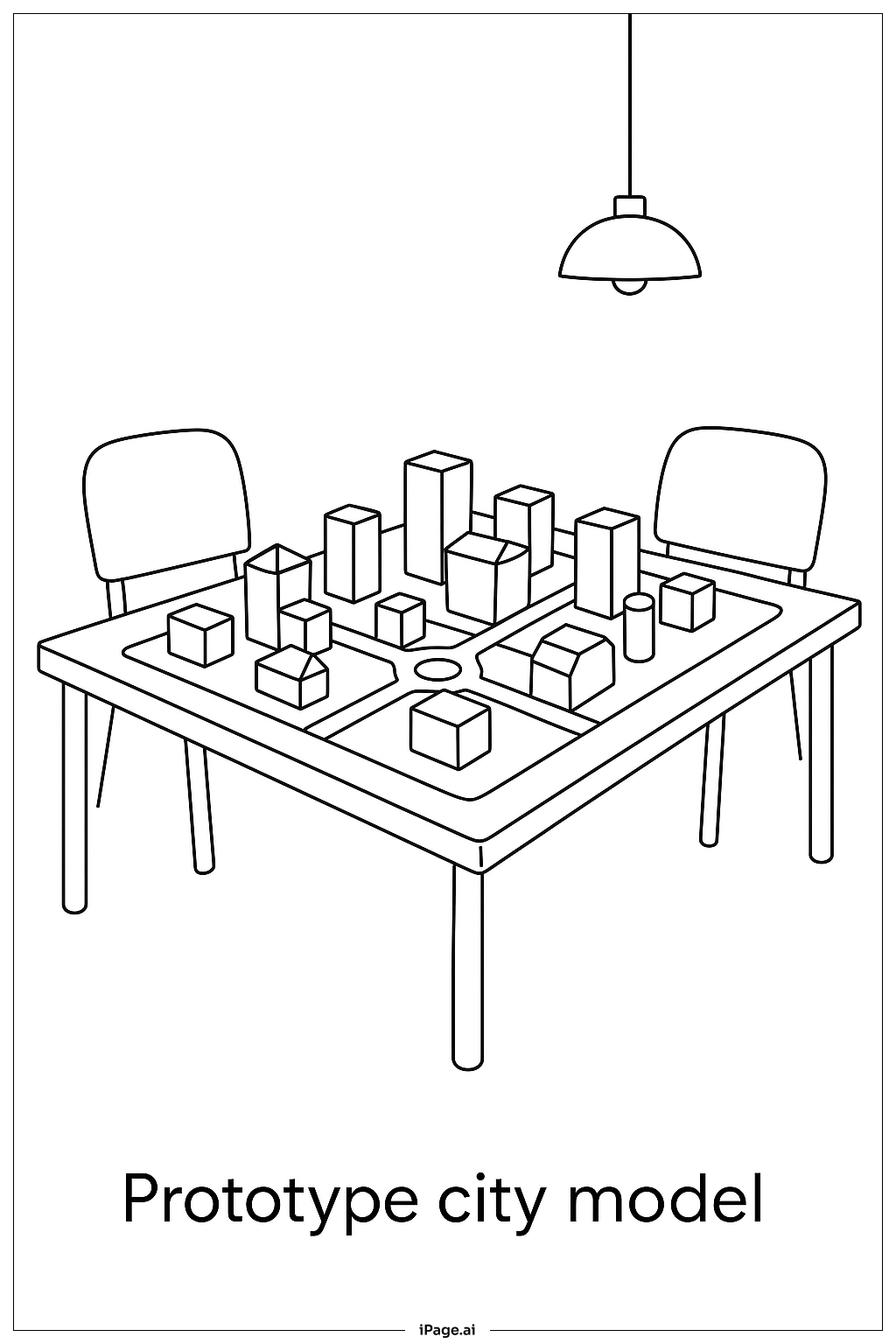
Coloring tips: How to color Prototype City Model coloring page well?
Use bright and distinct colors to color the buildings to make each one stand out. Try using shades of green, blue, red, and yellow for variety. For the roads, use gray or black to represent asphalt. Color the table and chairs in natural colors like brown or light wood tones. The lamp can be colored in metallic shades like silver or gold. You can also add some shadows by using darker colors on one side of the buildings to give a 3D effect.
Coloring challenges: Which parts are difficult to color and need attention for Prototype City Model coloring page?
1. The image has many small shapes close to each other, which makes it tricky to color inside the lines neatly. 2. Coloring the buildings with different heights and shapes while keeping the colors balanced may be challenging. 3. Adding shadows to give a 3D effect requires careful planning and color blending. 4. Coloring the small details like the lamp and chair legs needs steady hand control. 5. Making sure the roads and city blocks look different but connected can be difficult because they are close together.
Benefits of coloring books: Advantages of drawing Prototype City Model coloring page
Coloring this prototype city model helps develop hand-eye coordination as kids color small and detailed shapes. It encourages creativity by allowing children to choose colors for different buildings and elements. It also teaches them about basic city planning concepts like roads and building placement. Moreover, shading the buildings can introduce the idea of light and shadow, enhancing understanding of 3D shapes. Overall, it is a fun way to learn about designing and building cities.