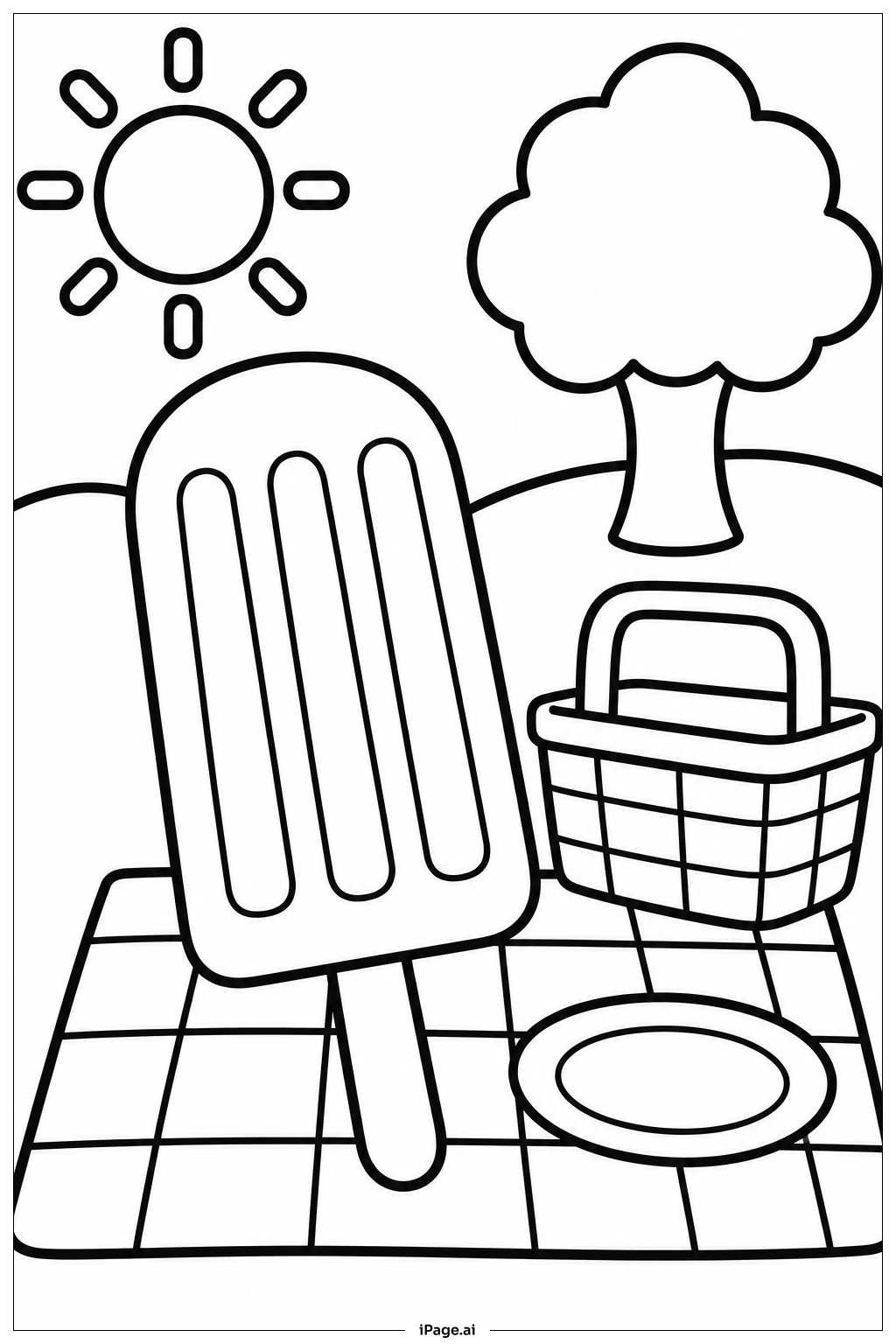
Coloring tips: How to color Popsicle Picnic Basket coloring page well?
For this picture, you can use bright and cheerful colors to bring the popsicles to life. Try red, orange, yellow, green, or blue for the popsicle sticks and fruity parts. You can color the basket shades of brown or tan to look like real woven straw. The cloth inside the basket could be colored with a classic red and white checker pattern or any fun colors you like. For the leaves and flowers around the basket, use different greens for the leaves and soft yellows, pinks, or purples for the flowers. Feel free to mix light and bold colors to make the picture pop with summer energy and make your Popsicle Picnic Basket look extra festive!
Coloring challenges: Which parts are difficult to color and need attention for Popsicle Picnic Basket coloring page?
• The woven texture of the basket requires careful coloring to show its pattern without making it look flat. Try shading with light and dark browns to add depth.
• The popsicles have different shapes and sections, so coloring inside small spaces neatly can be a bit tricky, especially the swirls or layered popsicles.
• Maintaining clean lines between the popsicles and the basket ensures the objects don’t blend together, which can be challenging for younger artists.
• Coloring the checked cloth pattern involves repeating small squares, which needs patience and accuracy to keep consistent colors.
• Adding natural tones to the leaves and flowers while keeping the picture lively can require balancing realistic and bright colors without overpowering the main popsicles.
Benefits of coloring books: Advantages of drawing Popsicle Picnic Basket coloring page
Coloring this Popsicle Picnic Basket is great for developing fine motor skills because of the different shapes and details. It encourages creativity by letting children experiment with colors for fruit flavors and textures. Filling in the woven basket pattern helps practice careful coloring and hand-eye coordination. The image also evokes happy summer feelings, which can inspire positive emotions while coloring. Finally, focusing on this picture enhances attention to detail and patience, valuable skills for learning and artistic growth in children aged 4 to 16.