Coloring tips: How to color Popsicle Sundae Party coloring page well?
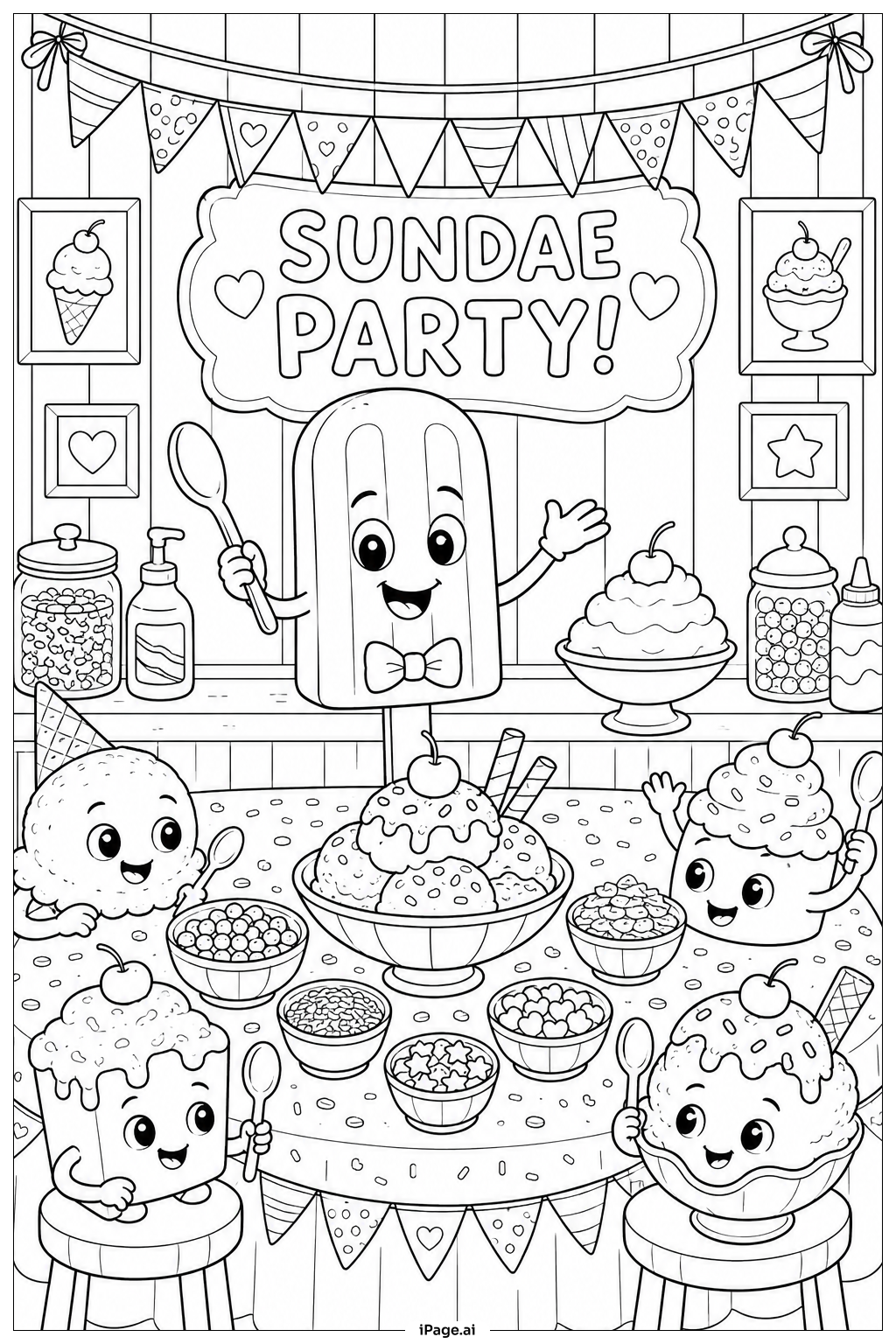
For this vibrant Popsicle Sundae Party, you can use a bright and cheerful palette to make the image come alive. Consider colors like red, pink, orange, yellow, and lime green for the popsicles to reflect popular fruity flavors. Use soft pastels for the whipped cream and gentle white highlights to suggest creaminess. Bright red or deep purple are perfect for cherries and berries on top. For the sprinkles, pick tiny dashes of multiple colors such as blue, yellow, pink, and green. The bowl can be colored with cool hues like light blue or lavender to balance the warm popsicle shades. Don’t forget to color the party hats and confetti with vibrant, contrasting colors to emphasize the excitement of the celebration. Use short, even strokes or small circular motions to fill in details carefully.
Coloring challenges: Which parts are difficult to color and need attention for Popsicle Sundae Party coloring page?
• Small Details: The popsicles have striped patterns and small toppings like sprinkles and nuts, which require patience and a steady hand to color neatly without going outside the lines.
• Layering Elements: The image features overlapping popsicles and toppings, making it tricky to decide which areas to color first to maintain clarity and depth.
• Texture Representation: Conveying the different textures like creamy whipped cream, icy popsicles, and crunchy sprinkles with colors alone can be challenging but rewarding.
• Maintaining Contrast: Since many popsicles are close together, choosing colors that contrast well helps each element stand out clearly rather than blending into a single block of color.
• Background Details: The confetti and swirl decorations are scattered throughout and relatively small, requiring careful attention to ensure they add to the festive atmosphere without cluttering the scene.
Benefits of coloring books: Advantages of drawing Popsicle Sundae Party coloring page
Coloring this Popsicle Sundae Party image offers many fun benefits for children and young artists. It helps develop fine motor skills as they carefully color the small details like sprinkles and stripes. The variety of shapes and textures encourages creativity and experimentation with different color combinations. This activity also fosters focus and concentration, as coloring the overlapping elements requires careful planning and attention. Engaging with such a joyful, celebration-themed picture can boost mood and inspire positive feelings. Lastly, it serves as an excellent way for kids to learn about color theory—understanding how warm and cool colors interact and how contrast can make an image vibrant and lively.