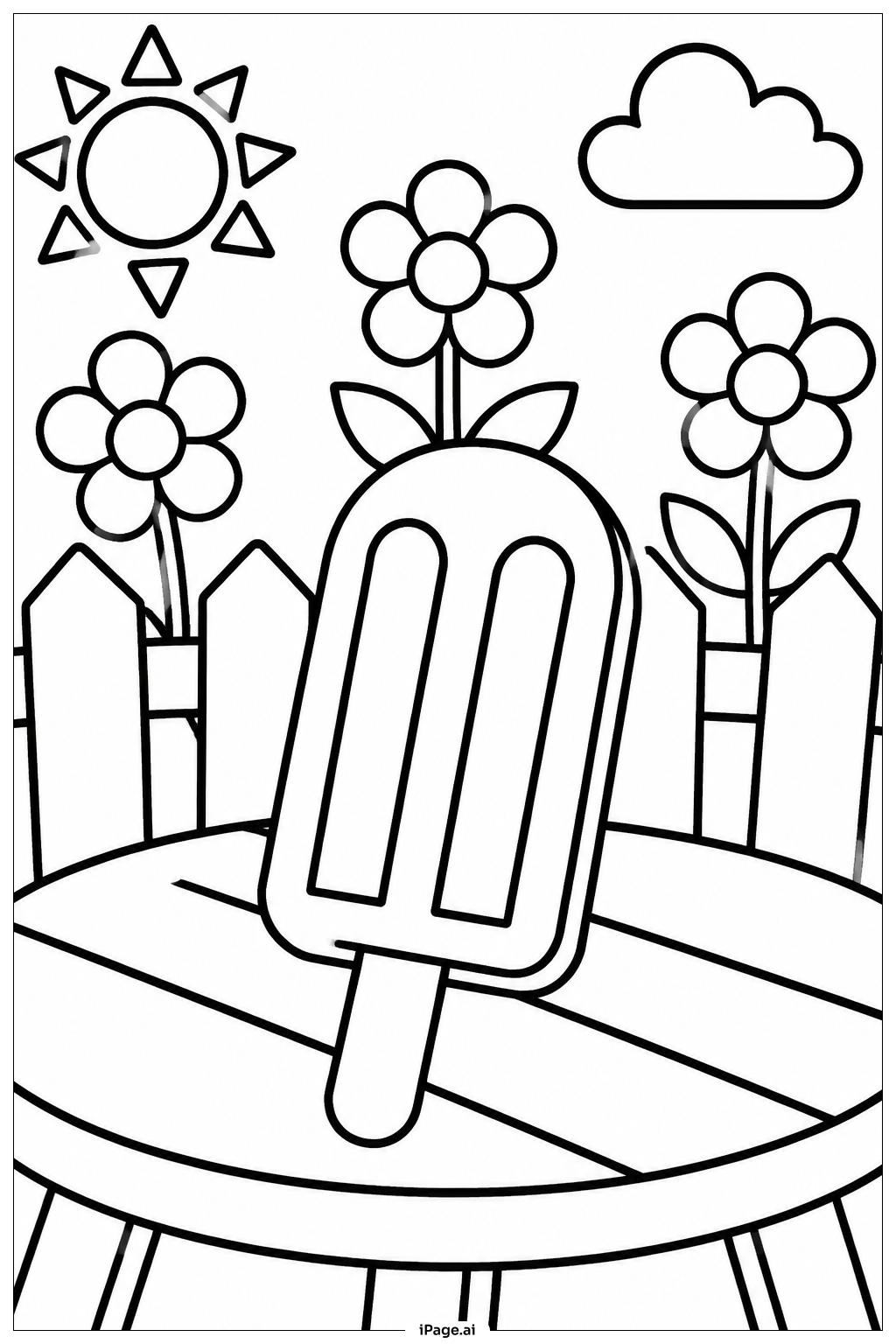
Coloring tips: How to color Popsicle In Garden coloring page well?
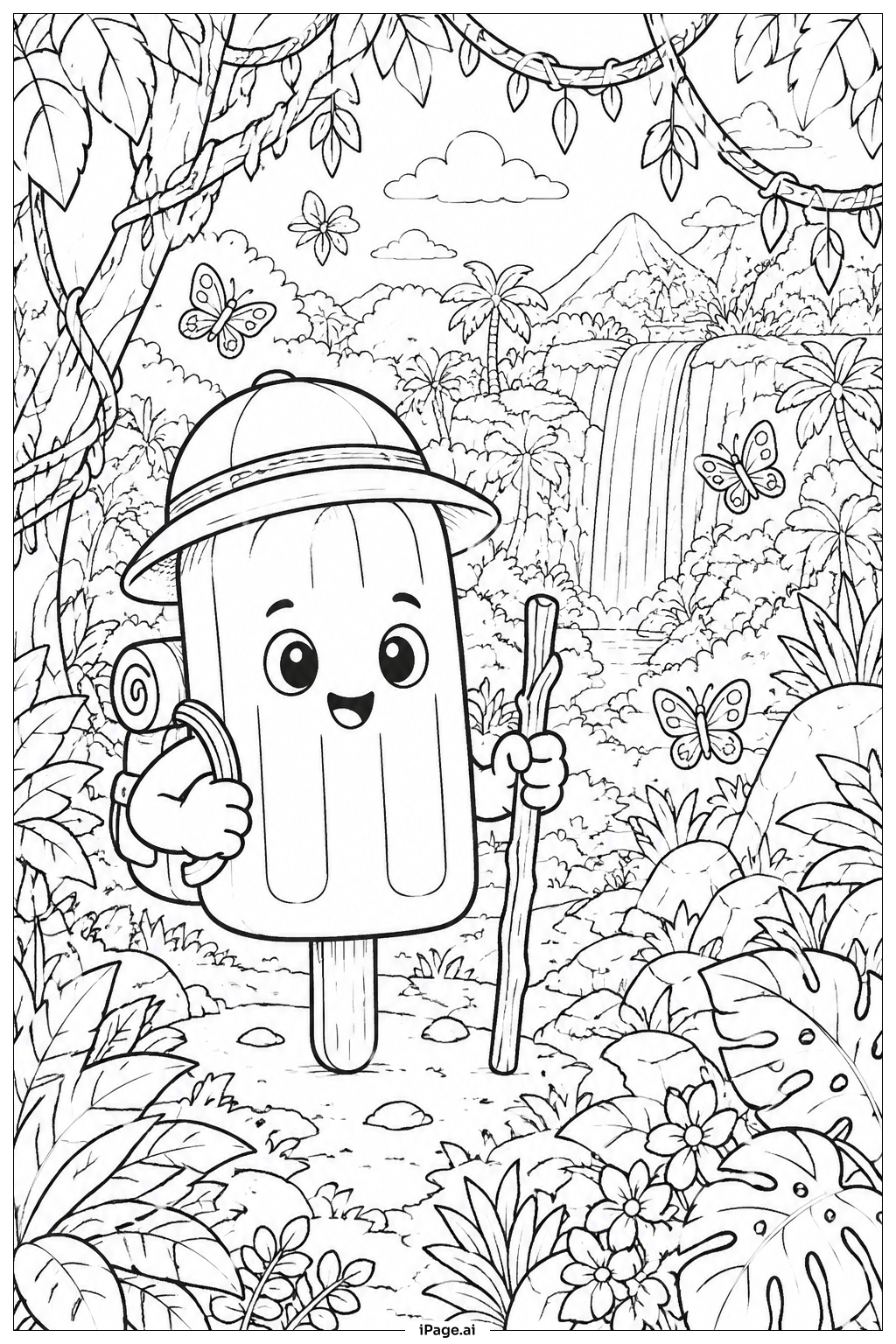
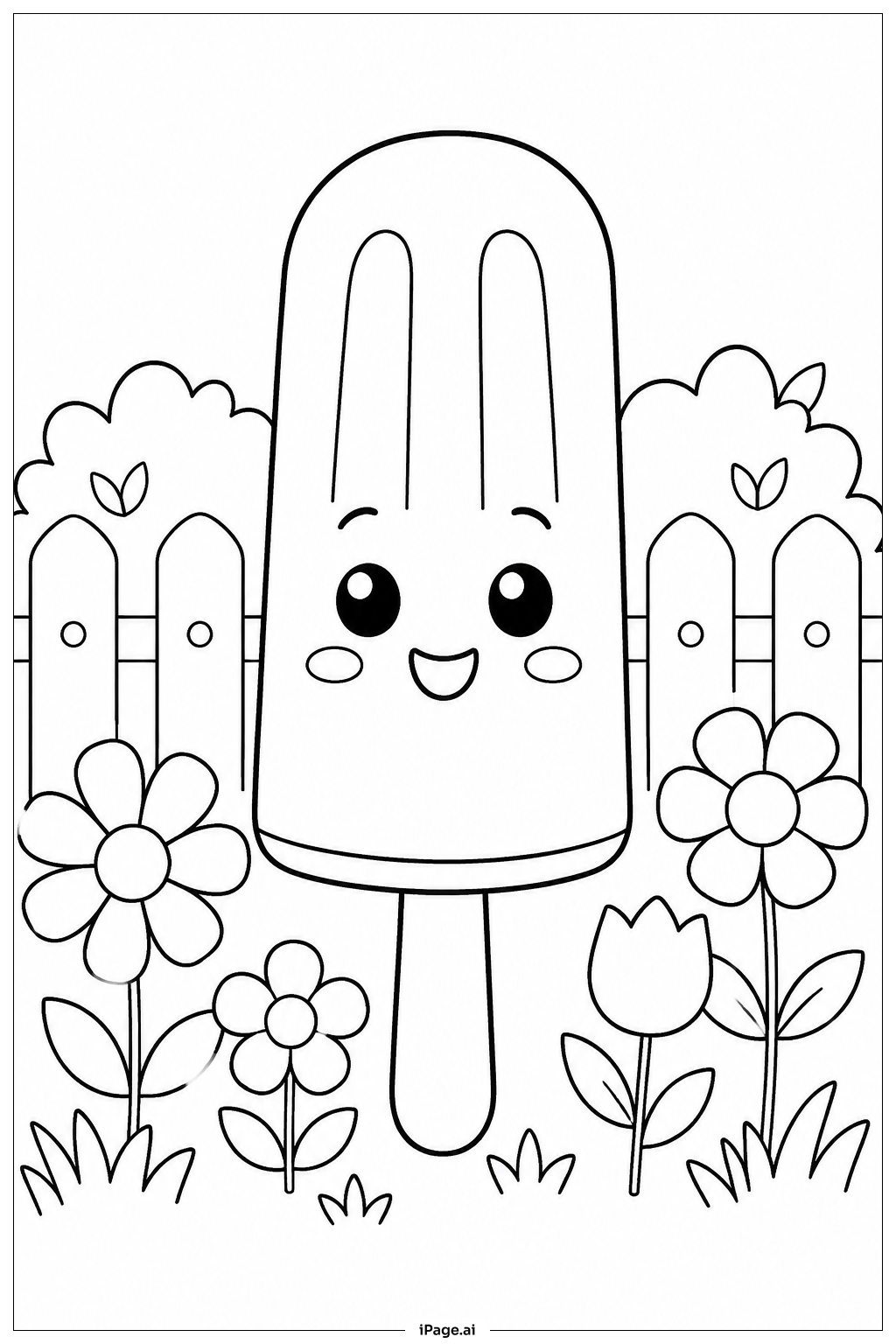
Use bright and cheerful colors to bring this garden scene to life. Color the Popsicle in vibrant shades like red, orange, or pink to make it stand out. For the garden plants, try using various greens to show the different leaves, and add pops of color for the flowers such as yellows, purples, and blues. You can color the grass a fresh green and use soft pastels for the background to give the feeling of a sunny, calm day. Don’t forget to color the small details like butterflies with lively colors to make the page exciting and fun. Mixing a few light and dark shades will add depth to your picture.
Coloring challenges: Which parts are difficult to color and need attention for Popsicle In Garden coloring page?
• The Popsicle’s stick and body have smooth large areas that need even coloring to look neat and balanced. It might be tricky for younger children to avoid coloring outside the lines here.
• The garden plants show many different leaf shapes and sizes. Coloring them consistently in different green tones takes attention to detail and patience.
• The flowers have small petals and intricate designs, which can be challenging for fine motor skills, especially for younger children.
• The background includes tiny elements like butterflies and stones that require precise coloring without mixing colors accidentally.
• Shading or blending colors to show sunlight and shadows will be a good challenge for older children wanting to add realism and depth to their coloring. These subtleties can be difficult but rewarding to master.
Benefits of coloring books: Advantages of drawing Popsicle In Garden coloring page
Coloring this image helps improve hand-eye coordination by carefully filling in different shapes, from large areas like the Popsicle to small details like flowers and butterflies. It encourages creativity as children choose colors for the garden plants and Popsicle while imagining their own sunny outdoor scene. The task also promotes focus and patience because of the varied difficulty in coloring smooth surfaces versus intricate floral patterns. Additionally, coloring this nature-themed picture can foster a sense of calm and appreciation for the outdoors. Overall, kids strengthen fine motor skills, practice color recognition, and enjoy a relaxing artistic activity.