Coloring tips: How to color Heart Popsicle coloring page well?
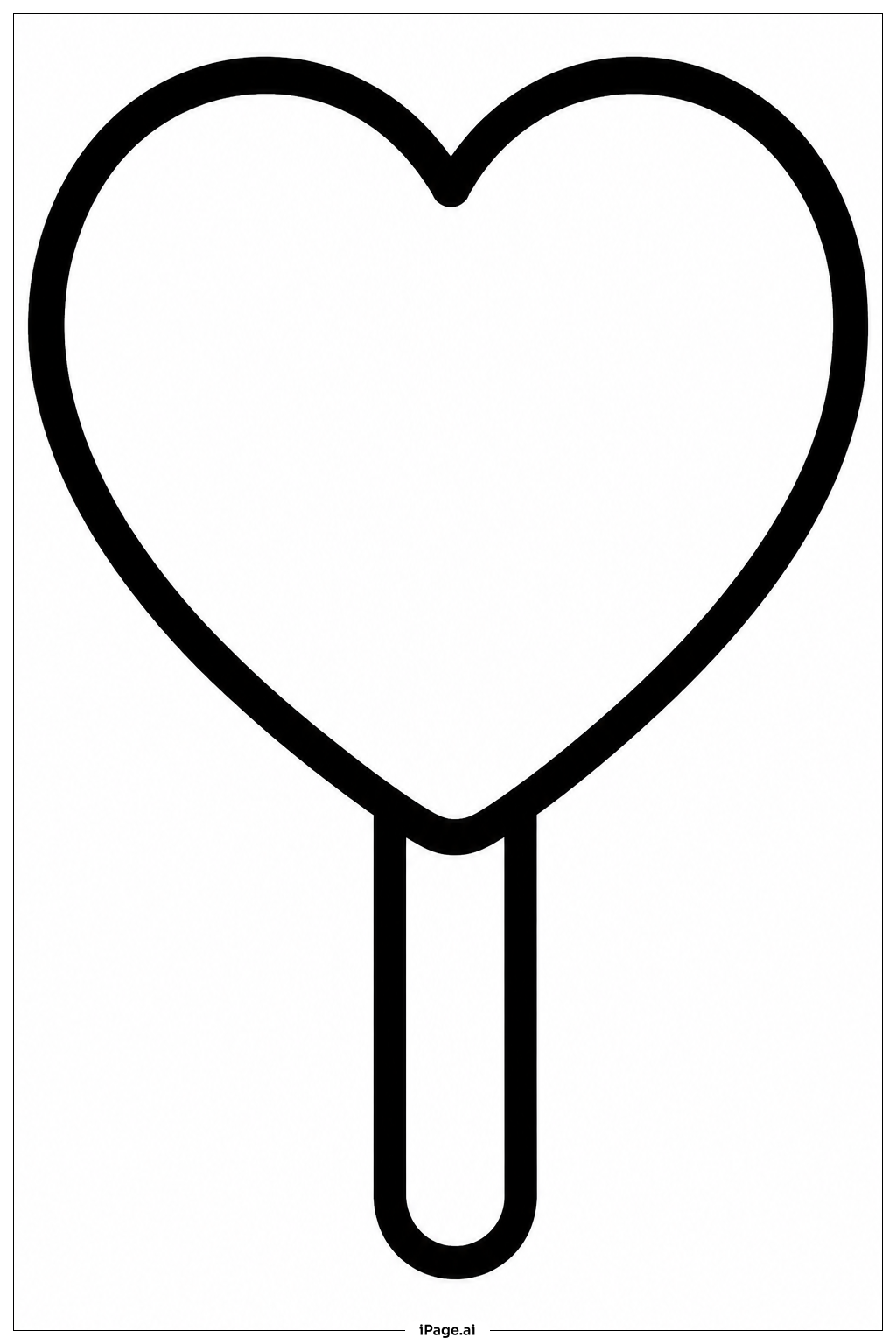
For this Heart Popsicle, consider using bright and cheerful colors to bring it to life. You can color the heart a vibrant red or pink to represent love and sweetness. Alternatively, try pastel colors like light pink, lavender, or peach for a softer look. The star sprinkles can be colored in yellow, white, or even rainbow shades to make them pop. For the wooden stick, choose a natural brown or tan color to contrast nicely with the popsicle. Don’t be afraid to mix and blend colors for a fun effect, like adding a little shading around the edges to give the popsicle a three-dimensional feel. Have fun experimenting with your favorite colors to make your Heart Popsicle unique!
Coloring challenges: Which parts are difficult to color and need attention for Heart Popsicle coloring page?
• Staying inside the curved edges of the heart shape can be challenging for younger children, especially when coloring near the point and indent of the heart.
• The small star sprinkles demand careful attention because they are tiny and close together, requiring patience and precision.
• Achieving even color coverage on the large open area of the popsicle may be difficult. It’s easy to create streaks or uneven patches if the coloring tool is pressed with varying pressure.
• Coloring the wooden stick realistically might be a bit complex, as the texture lines require subtle shading instead of flat color.
• For those wanting to add shading and highlights to make the popsicle look more lifelike, understanding light source and gradients can be a bit advanced, posing a fun but tricky challenge.
Benefits of coloring books: Advantages of drawing Heart Popsicle coloring page
Coloring the Heart Popsicle offers many benefits for children and beginners. It encourages fine motor skills as they carefully color inside the lines, especially around small details like the star sprinkles. The heart shape invites emotional expression and creativity, helping kids associate colors with feelings like love and happiness. This simple yet charming design can boost confidence as artists see their colorful creation come together. Engaging with this image also promotes focus and patience, important skills for young learners. Overall, coloring this Heart Popsicle is a delightful way to relax, develop artistic skills, and enjoy a sweet, summery theme.