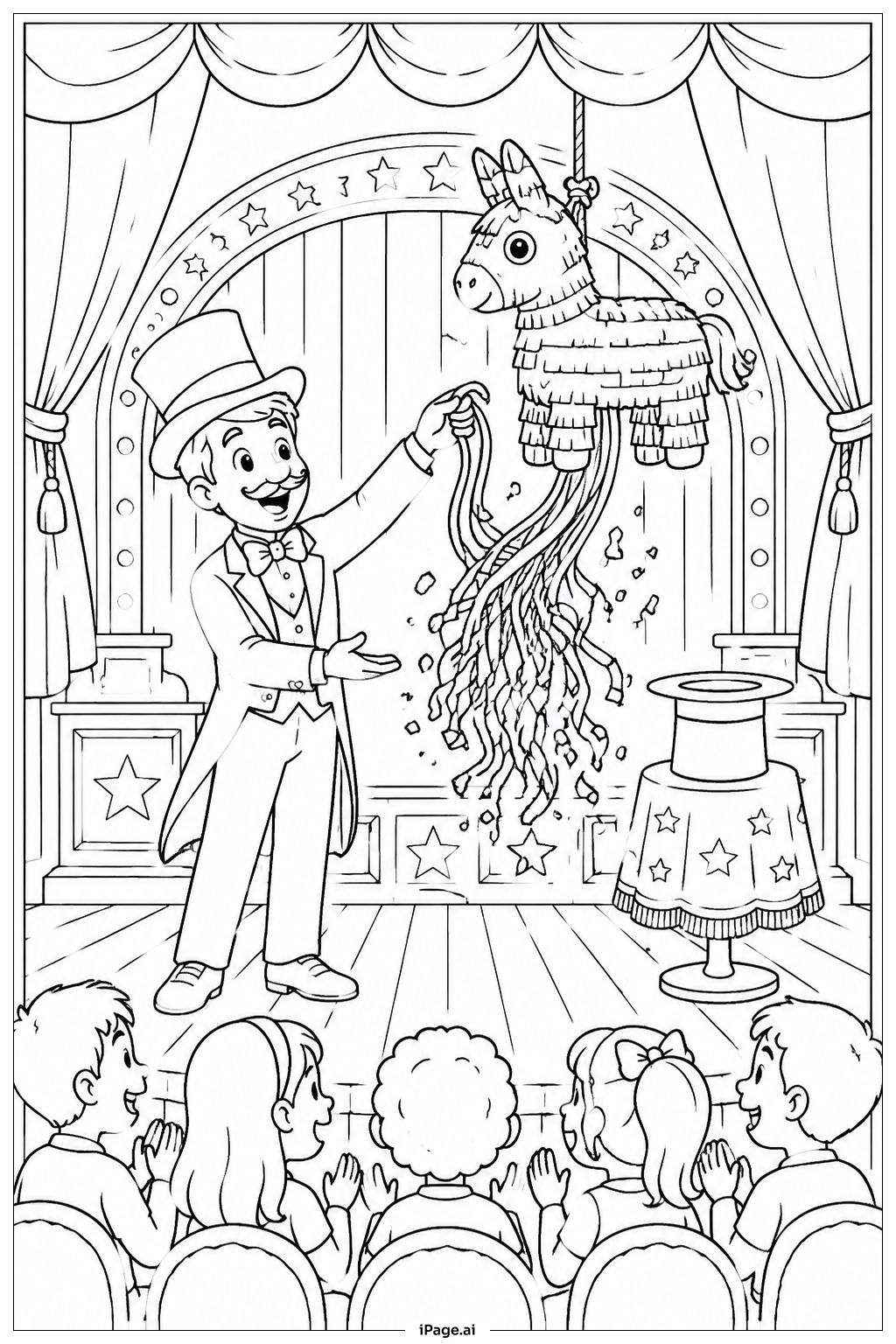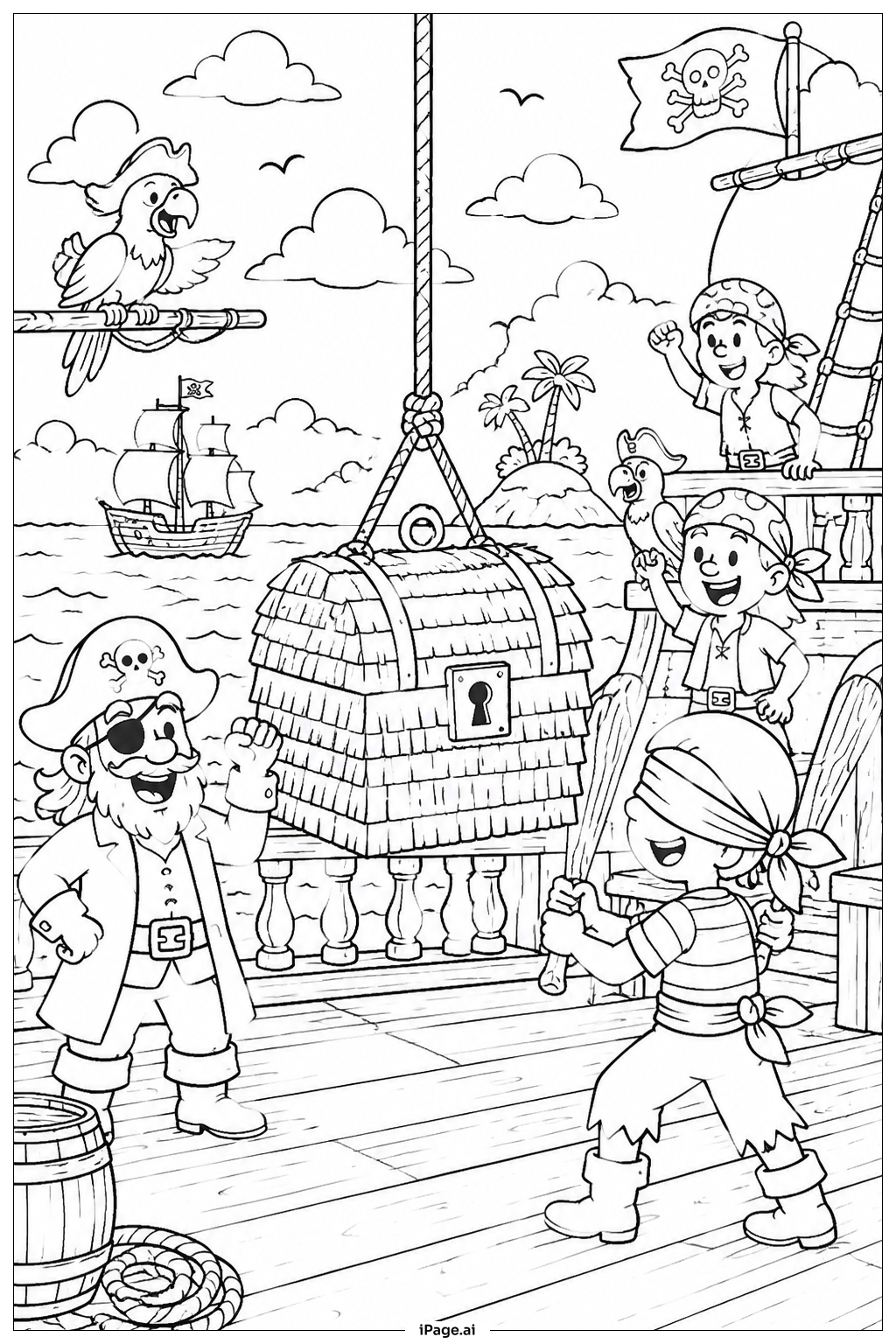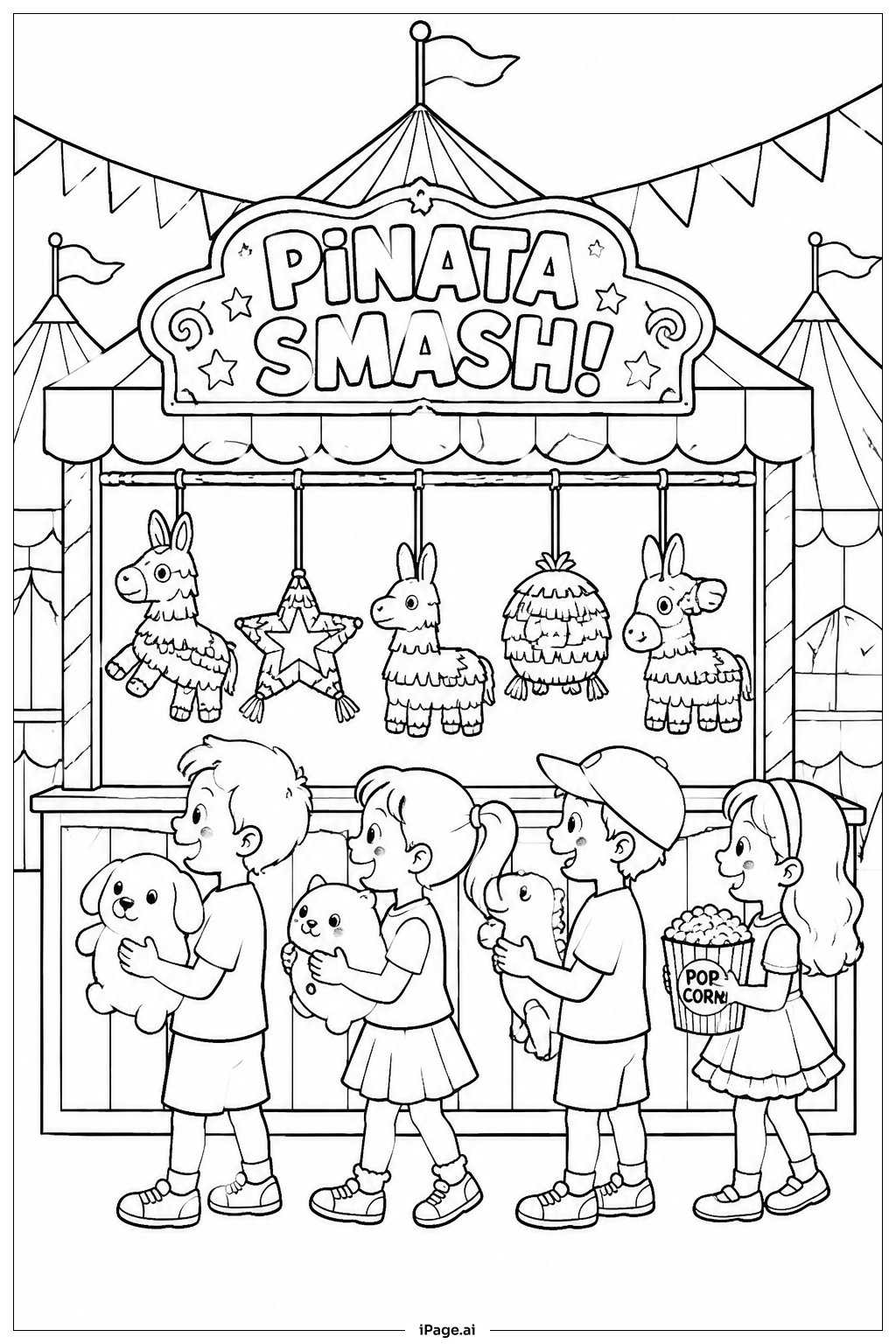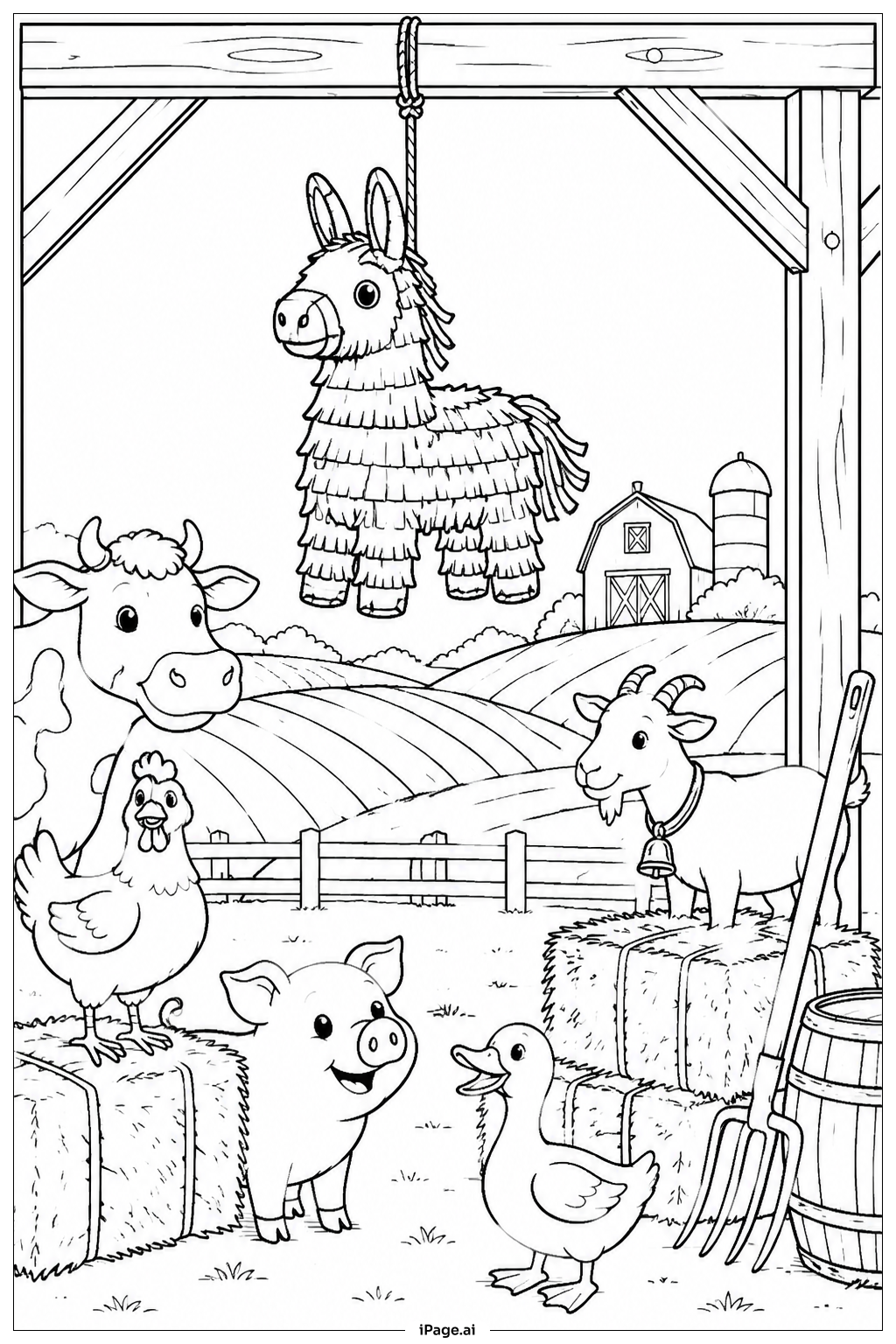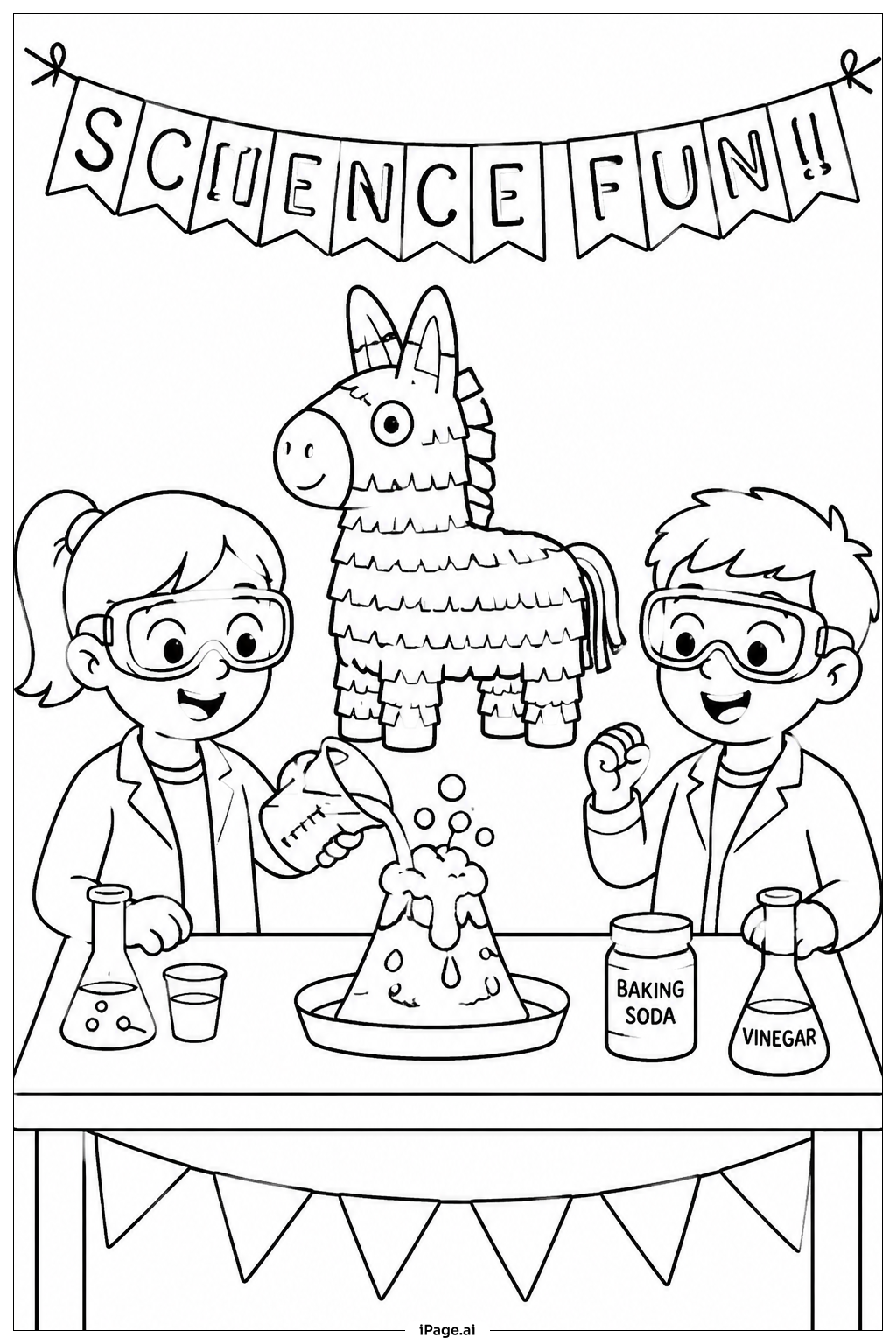
Coloring tips: How to color Pinata Science Party coloring page well?
Start with the piñata body using bright, festive colors like hot pink, purple, or electric blue to make it stand out as the centerpiece. Color the scientific symbols in contrasting shades - try green for atoms, yellow for stars, and orange for test tubes to make them pop. Use rainbow colors for the streamers and ribbons flowing from the bottom, alternating red, orange, yellow, green, blue, and purple for a cheerful effect. The balloons can be colored in a variety of bright party colors. For the background science elements, consider using cooler tones like silver, light blue, or soft purple to create depth without overwhelming the main subject. Add metallic touches with gold or silver crayons on stars and atomic symbols for extra sparkle. Remember to leave some areas lighter and others darker to create dimension and visual interest throughout your finished artwork.
Coloring challenges: Which parts are difficult to color and need attention for Pinata Science Party coloring page?
• Scientific Symbol Details: The small atoms, molecules, and test tubes require careful coloring within tiny spaces. Children may find it challenging to stay within the lines of these intricate scientific icons while maintaining distinct colors for each element. Using fine-tipped markers or sharp colored pencils helps achieve precision in these detailed areas.
• Ribbon and Streamer Flow: The curling ribbons and flowing streamers create overlapping layers that can be confusing to color. Deciding which ribbon passes in front or behind another requires spatial awareness and planning. Young colorists should identify each separate ribbon strand before starting and choose a color sequence that helps distinguish one from another.
• Pattern Consistency: Maintaining consistent coloring patterns across decorative elements like stripes or polka dots on the piñata body demands patience and attention to detail. Children need to track their pattern choices throughout the entire image to create a cohesive look, which can be mentally taxing for younger artists.
• Background Balance: Determining how much detail to add to background elements versus the main piñata requires artistic judgment. Coloring every small detail might create visual chaos, while leaving too much uncolored might look incomplete. Finding the right balance between filled and negative space is an advanced skill that develops with practice and experimentation.
Benefits of coloring books: Advantages of drawing Pinata Science Party coloring page
Coloring this science-themed piñata helps children develop fine motor skills through the precise movements needed for detailed areas and flowing ribbons. It strengthens hand-eye coordination and improves pencil grip, which supports handwriting development. The scientific symbols introduce educational concepts in a fun, creative context, helping young minds associate learning with joy and celebration. This combination reinforces positive attitudes toward science education. The activity encourages color theory exploration as children experiment with complementary colors and learn how different hues interact. Planning which colors to use where promotes decision-making skills and boosts confidence. The festive theme sparks imagination and storytelling, allowing children to envision their own science parties. Completing this detailed image provides a sense of accomplishment and pride, building self-esteem. The concentration required promotes mindfulness and helps children practice focus in an enjoyable, screen-free activity that celebrates both creativity and learning.