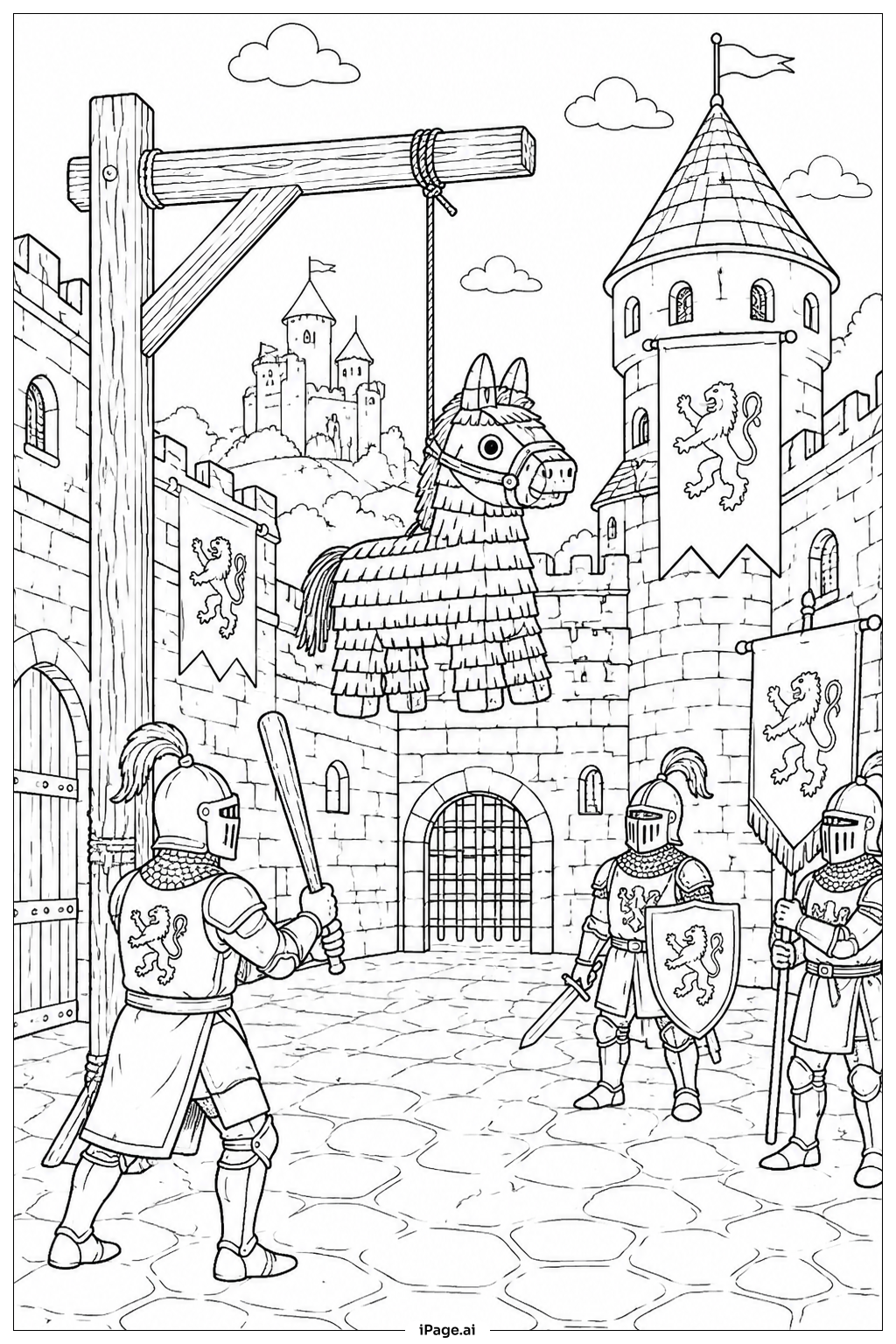
Coloring tips: How to color Medieval Pinata Castle coloring page well?
Start with the castle walls using warm stone colors like gray, tan, or light brown to create a realistic medieval foundation. The towers can vary slightly in shade to add depth and dimension. For the pinata-inspired decorative elements and fringe details, use vibrant fiesta colors like hot pink, bright orange, sunny yellow, electric blue, and lime green to capture that celebratory spirit. The pennant flags offer a perfect opportunity for bold, contrasting color combinations. Consider using purple or deep blue for the roofs to create royal elegance. The entrance gate and windows can be colored in darker browns or blacks for contrast. Add shading along one side of the towers to suggest sunlight direction. You might even add a gradient effect to the sky background, transitioning from light blue near the horizon to deeper blue at the top.
Coloring challenges: Which parts are difficult to color and need attention for Medieval Pinata Castle coloring page?
• Intricate Brick and Stone Patterns: The castle walls feature detailed brick textures and stonework that require patience and precision. Coloring each individual brick consistently while maintaining uniform shading can be time-consuming. Younger children may find it challenging to stay within the small lines, while older colorists will need steady hands to create realistic stone effects with subtle color variations.
• Layered Fringe Details: The pinata-style decorative fringe elements along the castle rooflines contain multiple overlapping layers with thin, repetitive strips. These narrow sections require careful attention to avoid colors bleeding together. Alternating colors effectively in these tight spaces demands concentration and fine motor control, especially when trying to create vibrant, contrasting patterns.
• Multiple Tower Perspectives: The castle design includes several towers at different depths and angles, creating a complex three-dimensional composition. Understanding which towers are in front versus behind, and applying appropriate shading techniques to convey distance and depth, presents a challenge. Deciding on a consistent light source and maintaining proper shadow placement across all architectural elements requires spatial awareness.
• Small Flag and Window Details: The numerous pennant flags and window openings throughout the castle are relatively small features that need precise coloring. Keeping colors neat within these tiny spaces without accidentally coloring outside the lines tests fine motor skills. Creating variety among the many flags while maintaining visual harmony across the entire image requires thoughtful color planning and execution.
Benefits of coloring books: Advantages of drawing Medieval Pinata Castle coloring page
Coloring this Medieval Pinata Castle offers wonderful developmental benefits for children and relaxation for all ages. The detailed architectural elements help improve fine motor skills and hand-eye coordination as colorists carefully work within intricate lines and small spaces. The combination of repetitive brick patterns and creative decorative elements encourages both focused concentration and imaginative expression. Children can learn about medieval history and architecture while exploring festive cultural traditions represented by the pinata design. The image promotes color theory understanding as they experiment with complementary colors for the flags and decorative fringe. Planning which colors to use where develops decision-making skills and spatial reasoning. The satisfying process of bringing this whimsical castle to life builds patience, perseverance, and confidence. For adults, this detailed image provides therapeutic stress relief through mindful coloring meditation. The blend of structured geometric shapes and playful decorative elements creates a perfect balance between order and creativity, making it enjoyable for colorists of all skill levels.