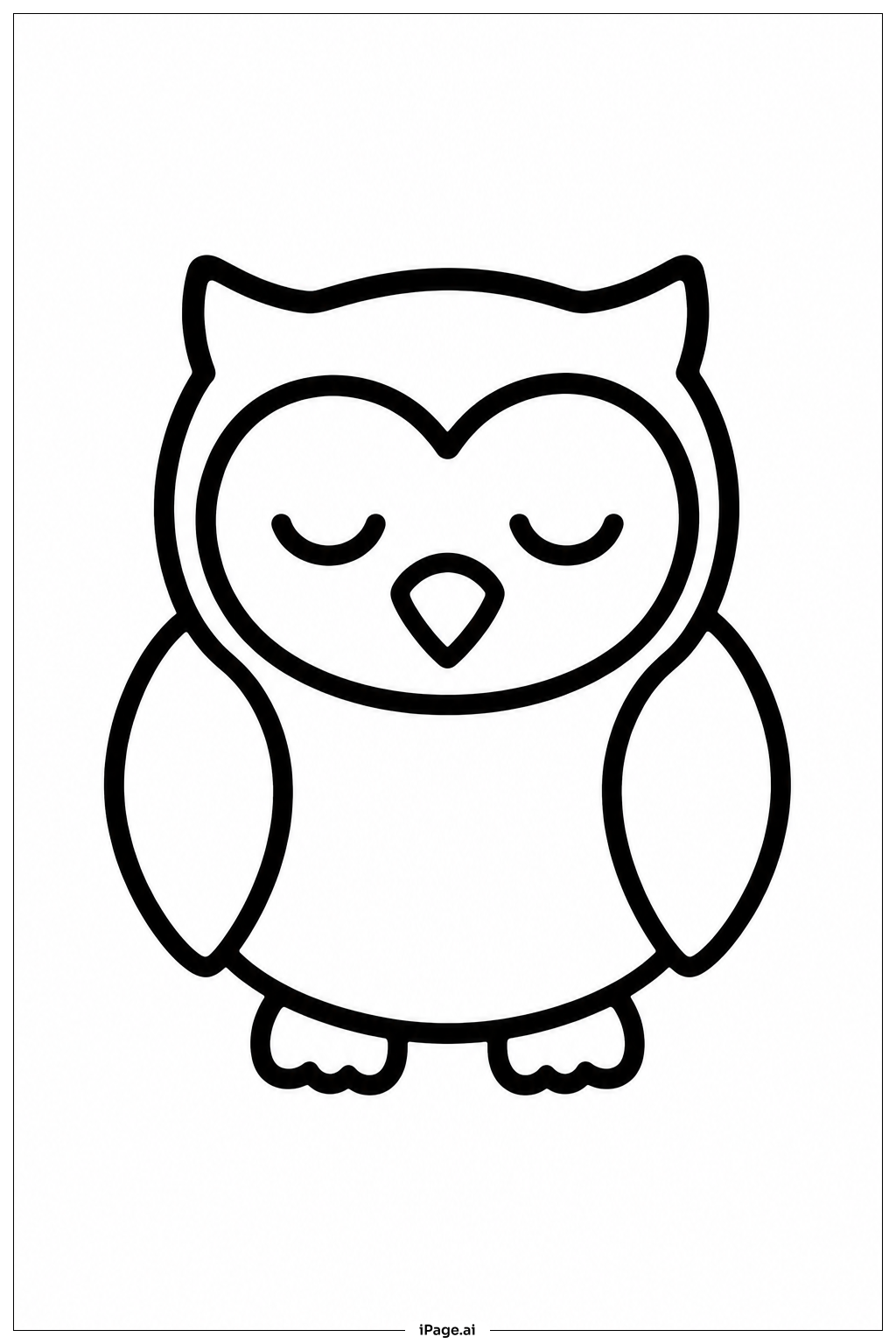
Coloring tips: How to color Sleeping Owl coloring page well?
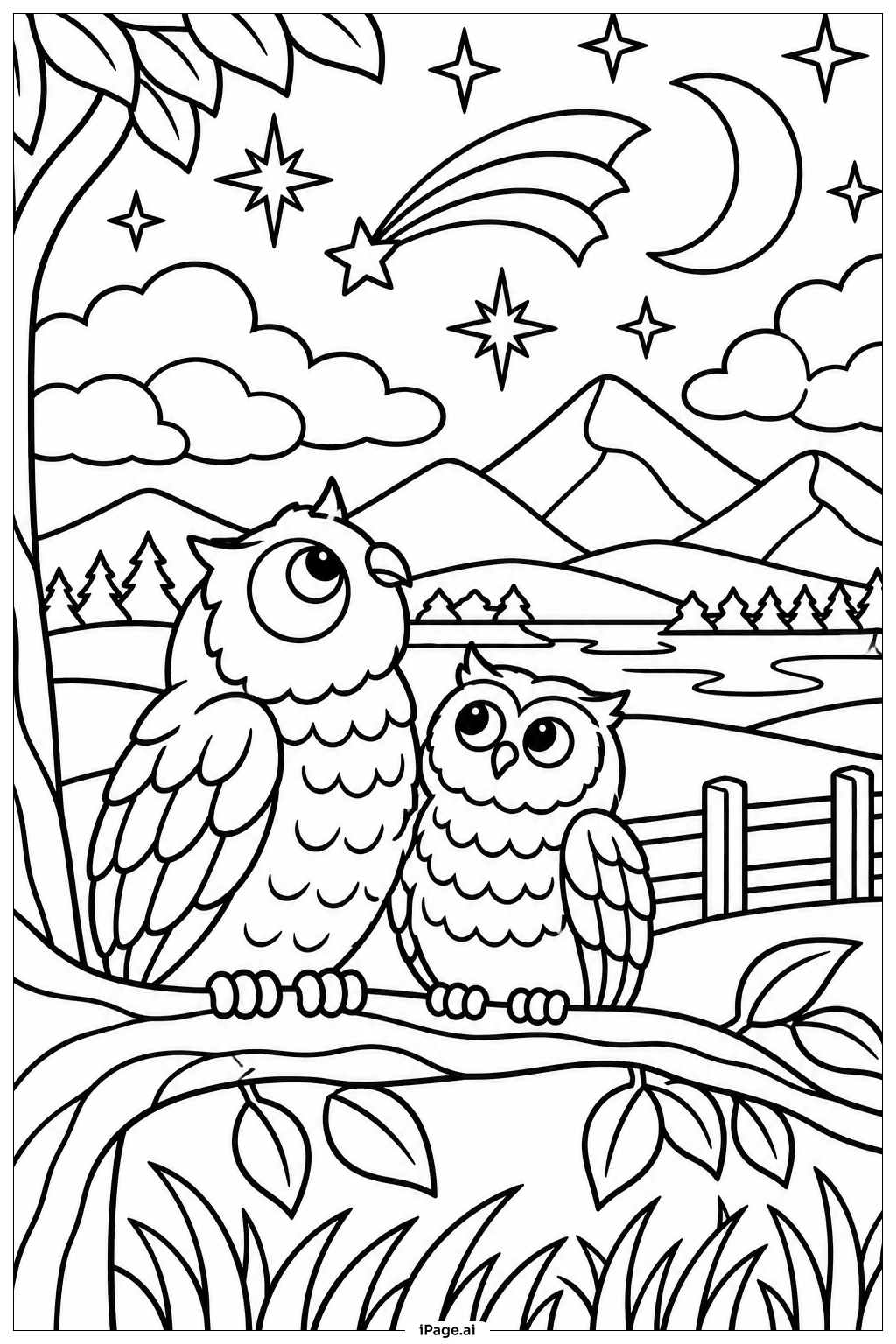
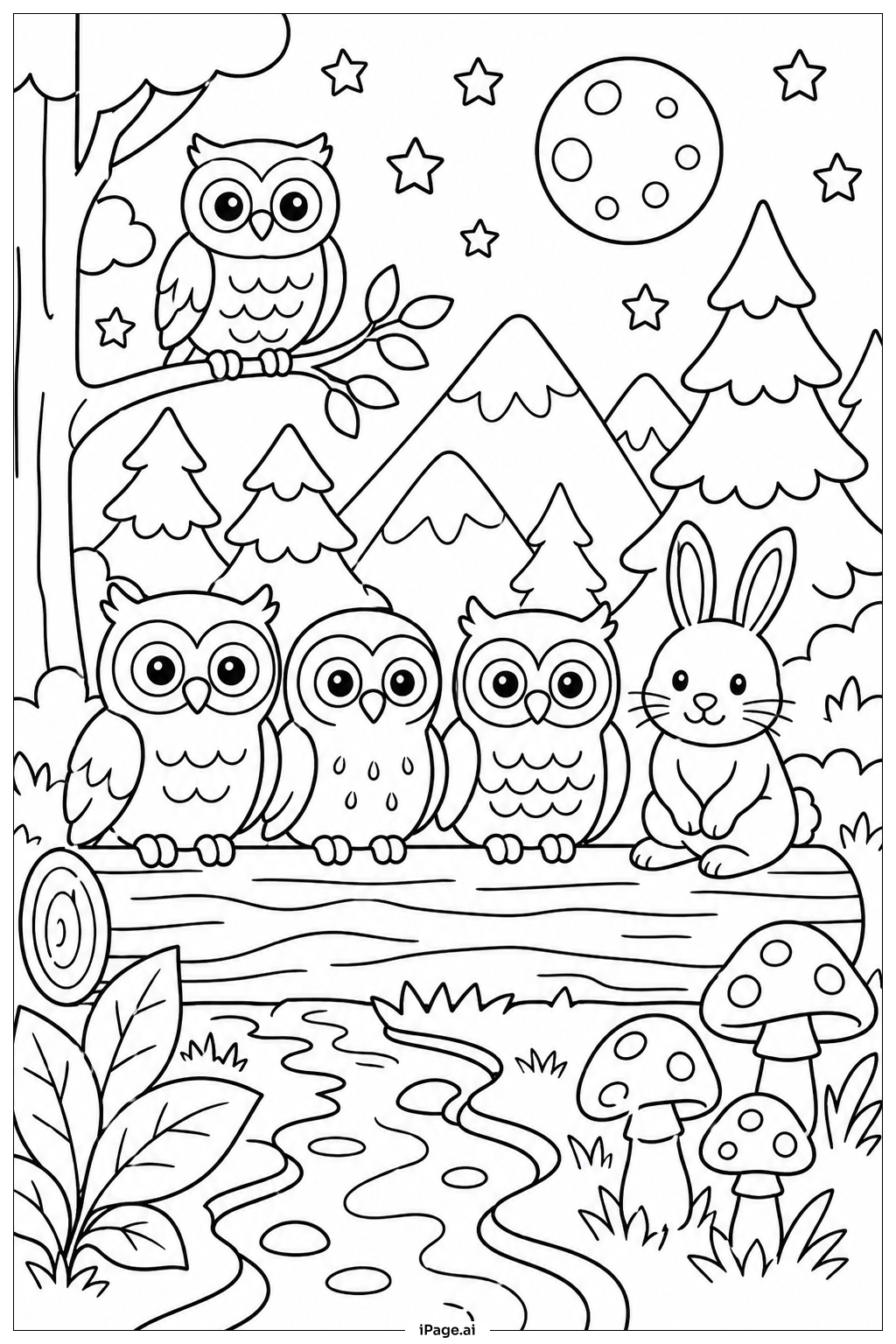
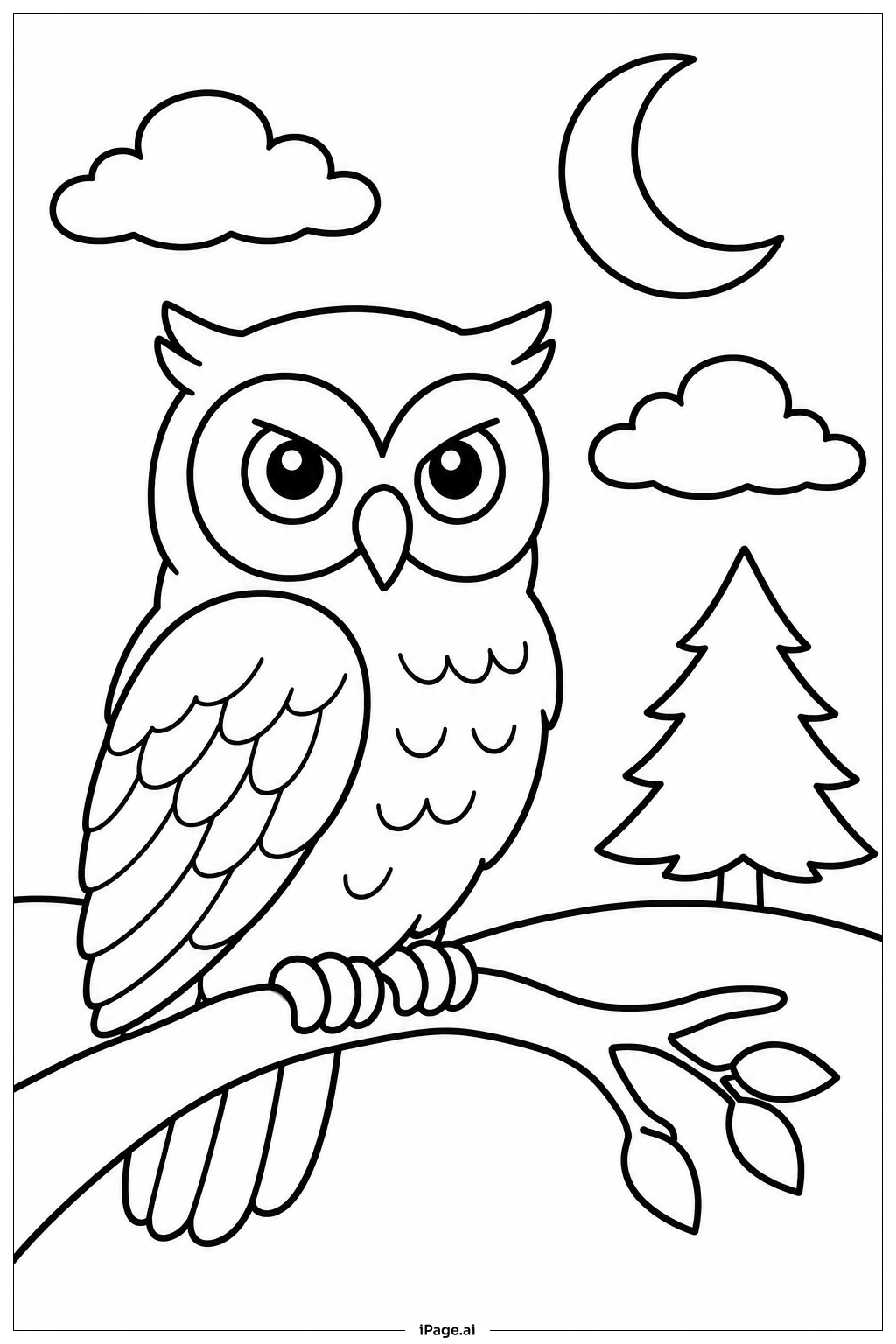
Start with the owl's body using warm, soft colors. Light brown, tan, or creamy white work great for the feathers. Use a slightly darker shade for the wing edges and tail to add depth. The tree branch can be colored in medium or dark brown, with hints of gray to show texture. For the background, try a deep navy or purple to capture the night sky. Color the crescent moon in pale yellow or soft gold. The stars can be bright white or light yellow. Add soft gray or lavender to the clouds for a dreamy feel. Use gentle, smooth strokes to keep the overall mood calm and peaceful. Blending colors lightly around the owl's belly gives it a fluffy, soft look. Feel free to experiment with cool blues and purples in the shadow areas to make the owl look warm and glowing in the moonlight.
Coloring challenges: Which parts are difficult to color and need attention for Sleeping Owl coloring page?
• Feather Texture Details: The owl's body is covered with many small, layered feathers. Coloring each feather individually while keeping a consistent look takes patience. You need to follow the direction of each feather carefully to avoid a messy result. Using short, light strokes helps here.
• Smooth Blending on the Round Body: The owl has a full, round shape. Creating a sense of volume and softness requires careful blending from lighter tones at the center to darker tones at the edges. Without blending, the body can look flat. Colored pencils or soft crayons are ideal for this area.
• Night Sky Background: Filling in the deep background evenly around the stars and moon is tricky. The negative spaces around the small star shapes require a steady hand and a fine-tipped tool. Pressing too hard may smear into the stars or the moon outline.
• Crescent Moon Glow Effect: Making the moon appear to glow softly takes skill. You need to layer a pale yellow at the center and gradually blend outward into the dark sky. This gradient effect can be challenging for younger colorists who are still learning blending techniques.
• Tree Branch Texture: The bark of the branch has uneven lines and knots. Coloring it realistically means using multiple shades of brown and gray in short, irregular strokes. Keeping the branch looking natural without overcomplicating it requires a light touch and some color layering practice.
Benefits of coloring books: Advantages of drawing Sleeping Owl coloring page
Coloring this Sleeping Owl page brings many wonderful benefits for kids and beginners alike. The peaceful nighttime scene naturally encourages a calm and focused mindset, making it a great activity before bedtime or during quiet time.
Working on the owl's feather details helps build fine motor skills and hand control. Children practice making small, careful strokes, which strengthens the muscles used for writing and drawing.
Choosing colors for the night sky, moon, and owl encourages creative thinking. Kids get to make their own color decisions, which builds confidence and self-expression. There are no wrong choices here.
The image also introduces basic concepts of shading and blending in a gentle, low-pressure way. Trying to make the owl look soft and round teaches children how light and shadow work without it feeling like a lesson.
Completing the full page gives a real sense of achievement. Finishing a detailed coloring page boosts patience, focus, and concentration. These are skills that carry over into school and everyday tasks.
Overall, this Sleeping Owl Coloring Page is a relaxing, rewarding, and educational activity for Boys, Girls, and Adults of all skill levels.