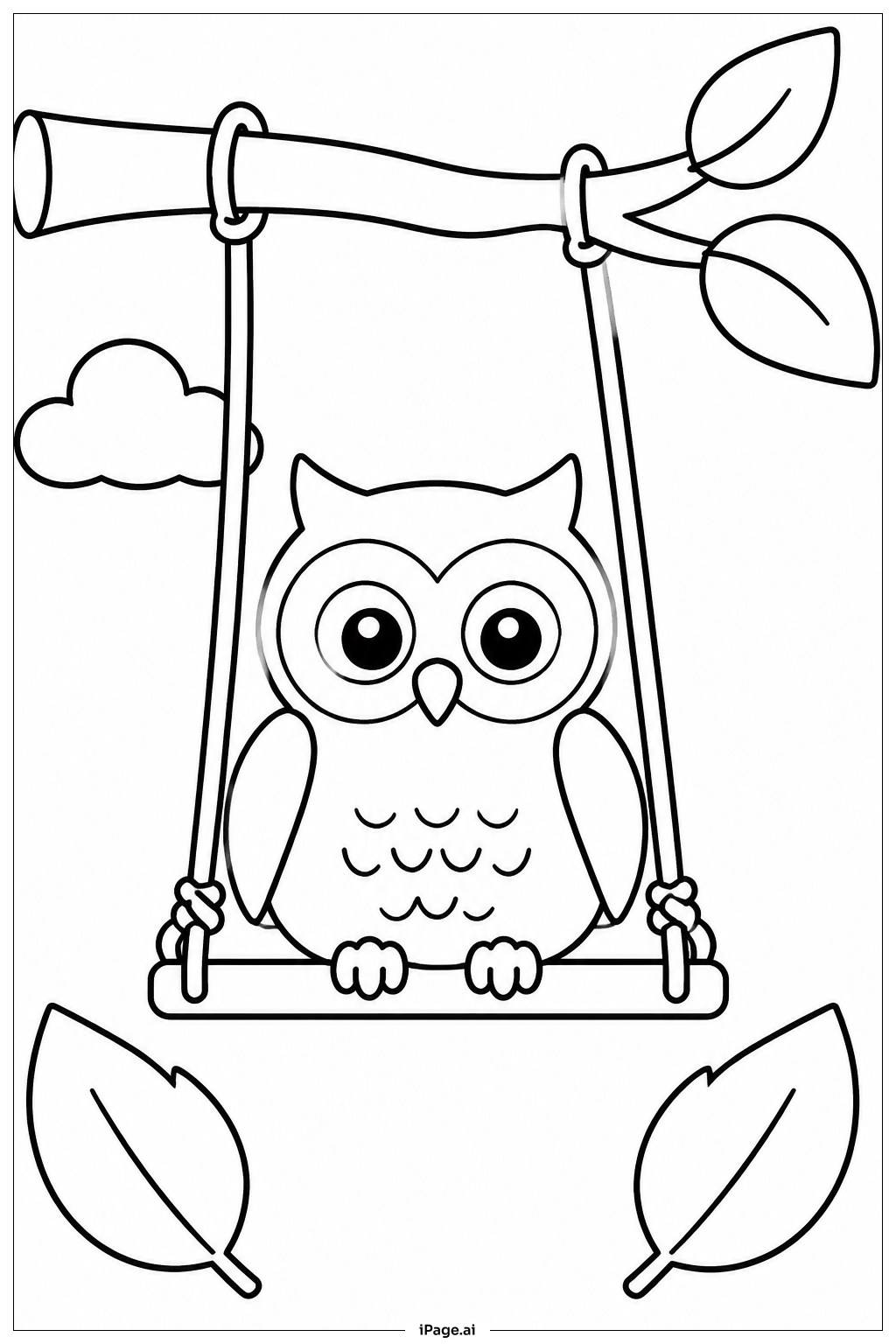
Coloring tips: How to color Owl On Swing coloring page well?
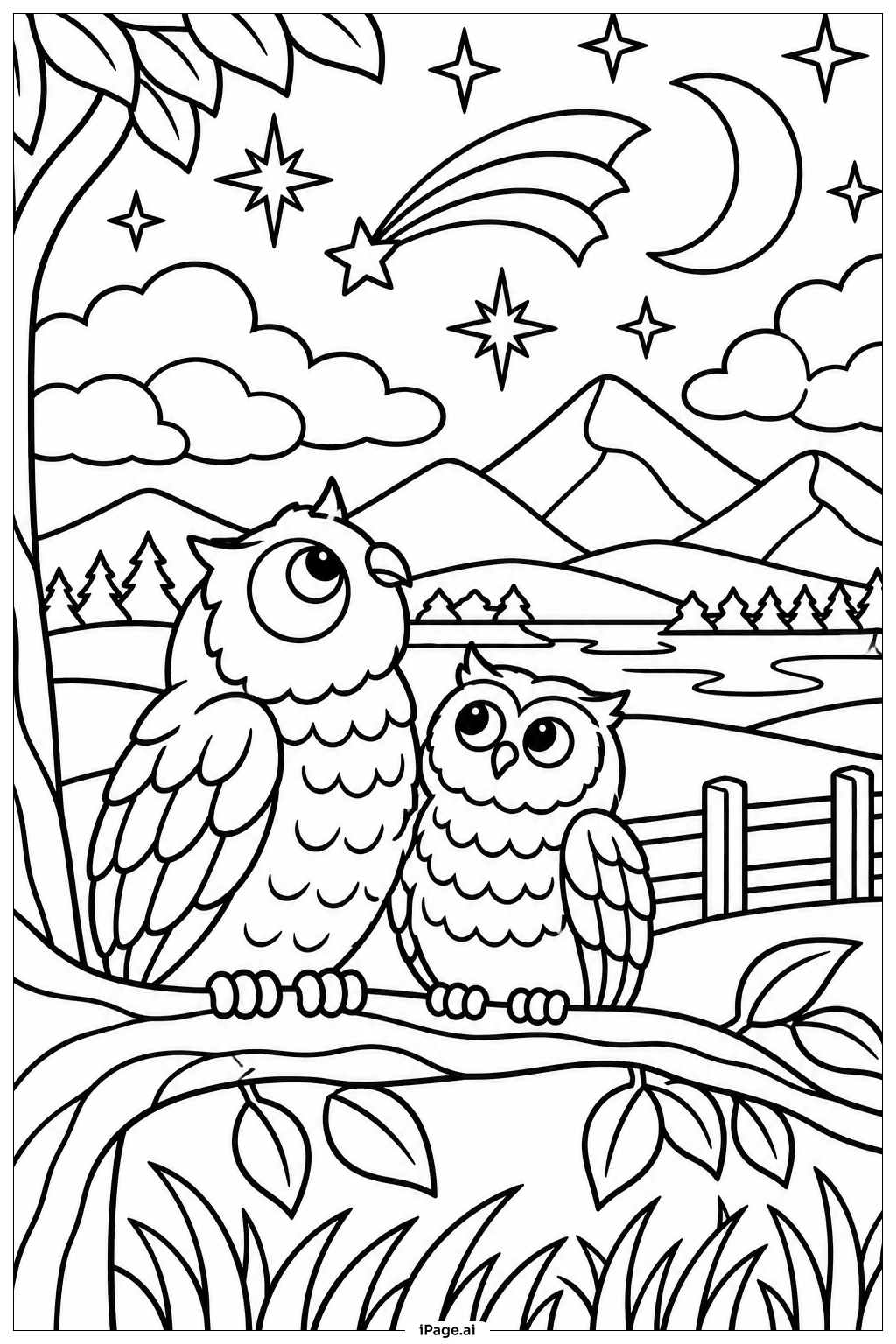
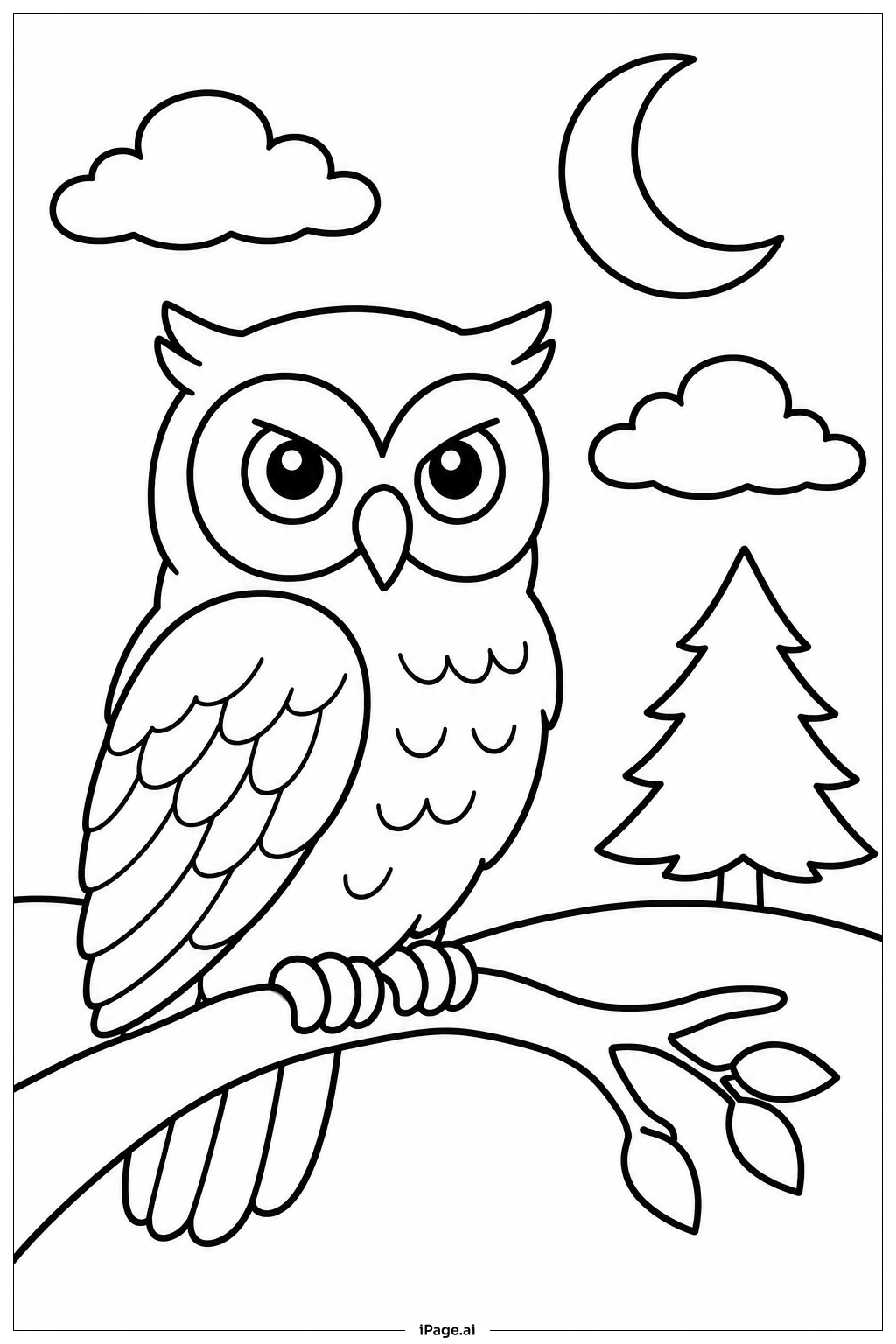
Start with the owl's body using warm brown tones. Use a lighter tan or cream for the chest and belly area to create contrast. Add streaks of dark brown or gray on the wings to show feather layers and depth. The large round eyes look great with a bright yellow or golden iris and a bold black pupil at the center. For the beak and talons, try a muted orange or amber shade. Color the wooden swing with a natural honey-brown tone, and use slightly darker shading along the edges of the wood grain to give it a three-dimensional feel. The ropes can be done in sandy beige or warm gray. For the background branches and leaves, green and earthy brown work beautifully. Kids can also get creative and use fantasy colors like purple feathers or a teal background for a magical forest look. There are no wrong choices here, so have fun and let your imagination lead the way!
Coloring challenges: Which parts are difficult to color and need attention for Owl On Swing coloring page?
• Feather Details: The owl's body is covered in many layers of overlapping feathers, each with its own small pattern. Staying inside the tiny lines and adding shading to each individual feather takes patience and a steady hand. Using a sharp colored pencil tip will help a lot here.
• Eye Precision: The owl's large round eyes are one of the most important parts of the image. They have multiple rings and a small highlight spot inside the pupil. Coloring these carefully without smudging the layers is tricky, especially for younger artists. Take your time and let each layer dry before adding the next.
• Rope and Wood Texture: The swing's rope and wooden seat both have natural textures that are fun to color but require some technique. Showing the grain of the wood means layering light and dark browns in the same direction. Coloring the twisted rope strands without losing their shape is also a small challenge.
• Background Depth: The branches and leaves in the background need to feel further away than the owl in the foreground. Using lighter, softer colors for background elements and stronger, bolder colors for the owl helps create this sense of depth. It is a good technique to practice but can be confusing at first.
• Small Ear Tufts and Beak Area: The ear tufts on top of the owl's head are small and closely set together. The area around the beak also has fine lines and tiny feather details that are easy to accidentally color over. Using a fine-tipped tool and going slowly through these areas will give the best results.
Benefits of coloring books: Advantages of drawing Owl On Swing coloring page
Coloring this Owl On Swing image brings a wide range of benefits for kids and young artists. First, working through all the detailed feather patterns builds focus and concentration. Sitting with a complex image and finishing it one section at a time is great practice for staying on task. Second, choosing colors for the owl, the swing, and the forest background encourages creative thinking and personal expression. There is no single right answer, so every child's finished page will look unique and special. Third, carefully coloring inside small shapes like the owl's eyes and ear tufts helps develop fine motor skills and hand-eye coordination, which are important for writing and other everyday tasks. Fourth, the peaceful woodland scene has a naturally calming quality. Spending quiet time with this image can help reduce stress and create a sense of relaxation. Fifth, completing a detailed coloring page gives children a real sense of accomplishment. Seeing the finished, colorful artwork is a confidence boost that encourages them to take on more creative challenges. Overall, this image is a wonderful mix of fun, learning, and creative play.