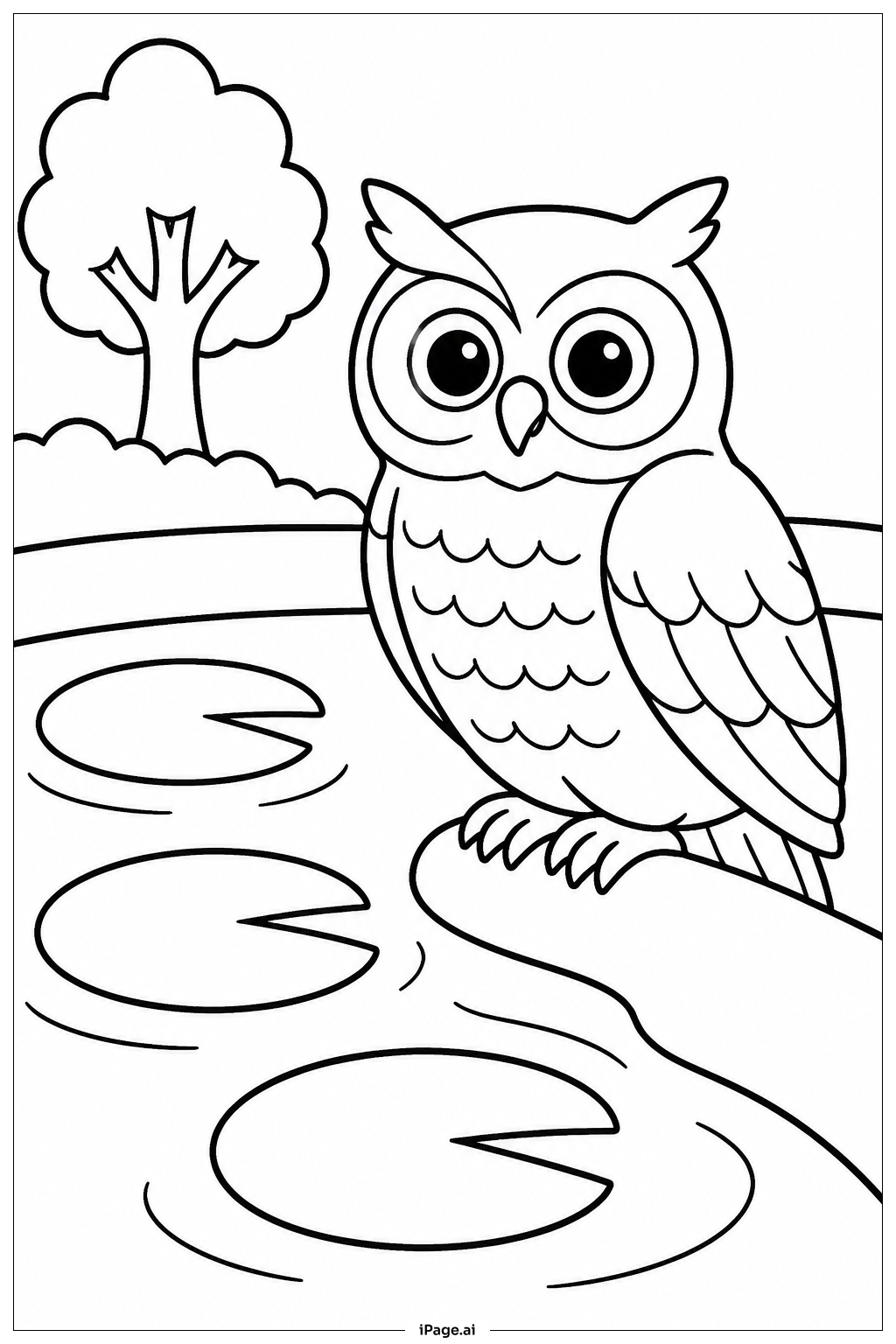
Coloring tips: How to color Owl At Pond coloring page well?
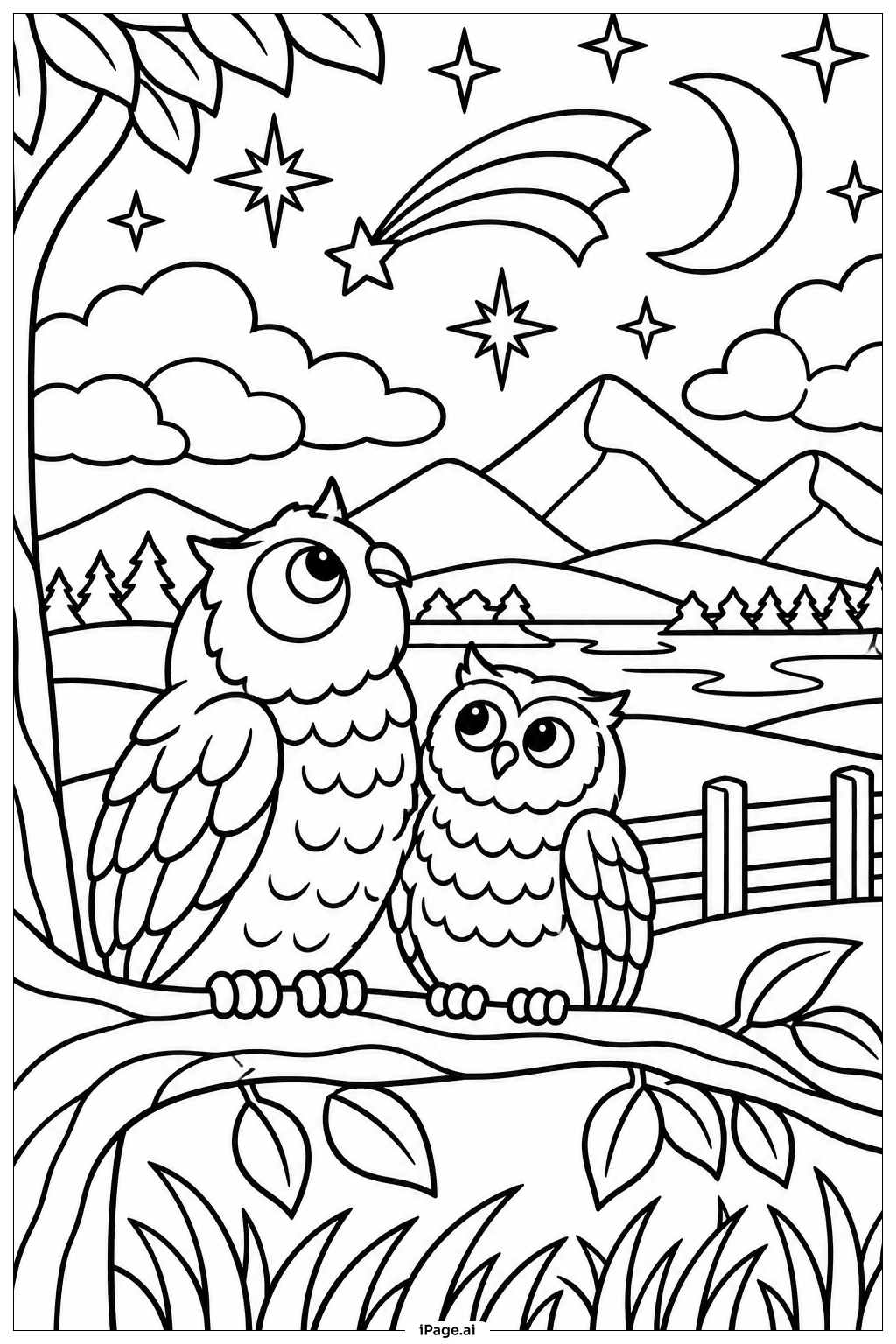
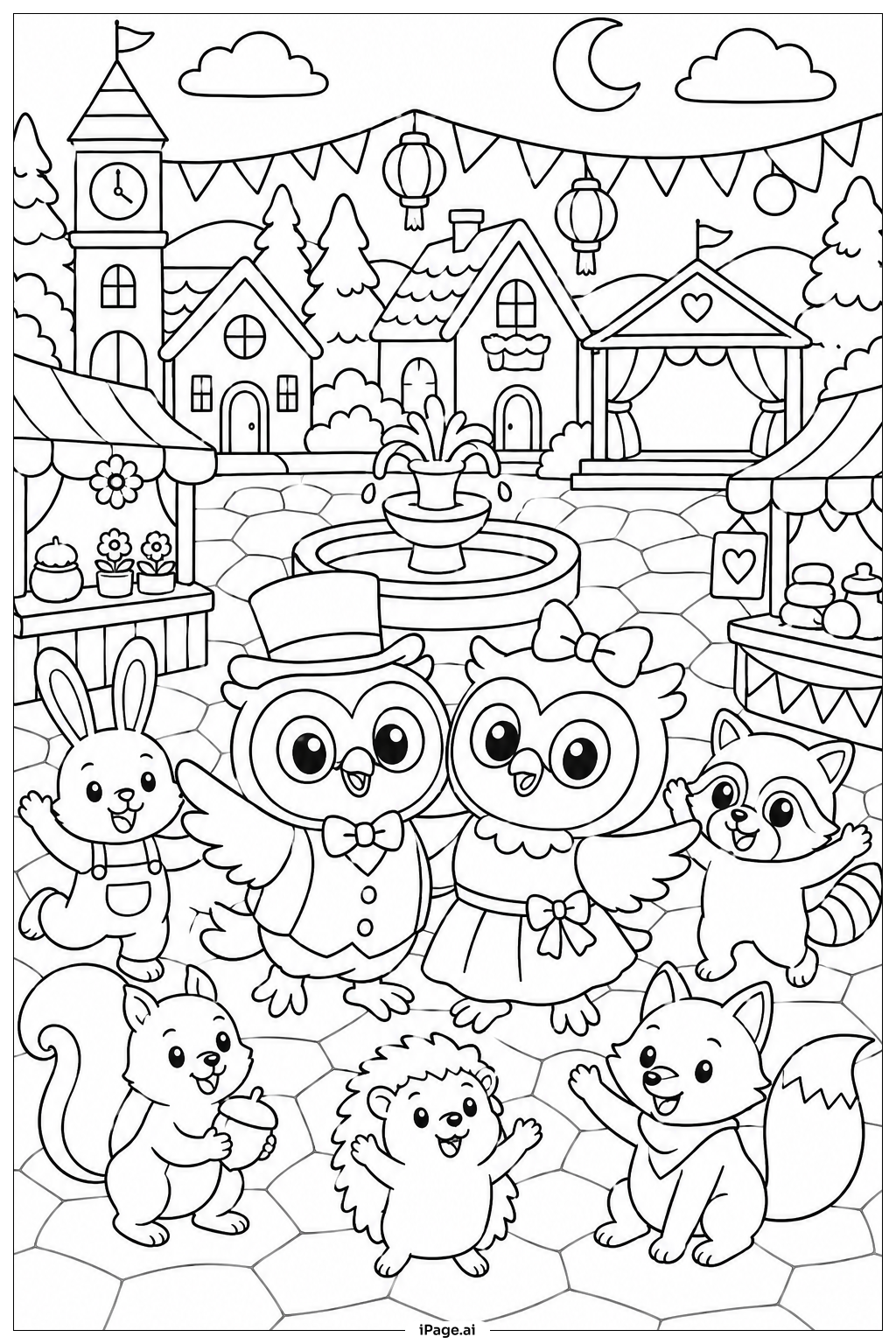
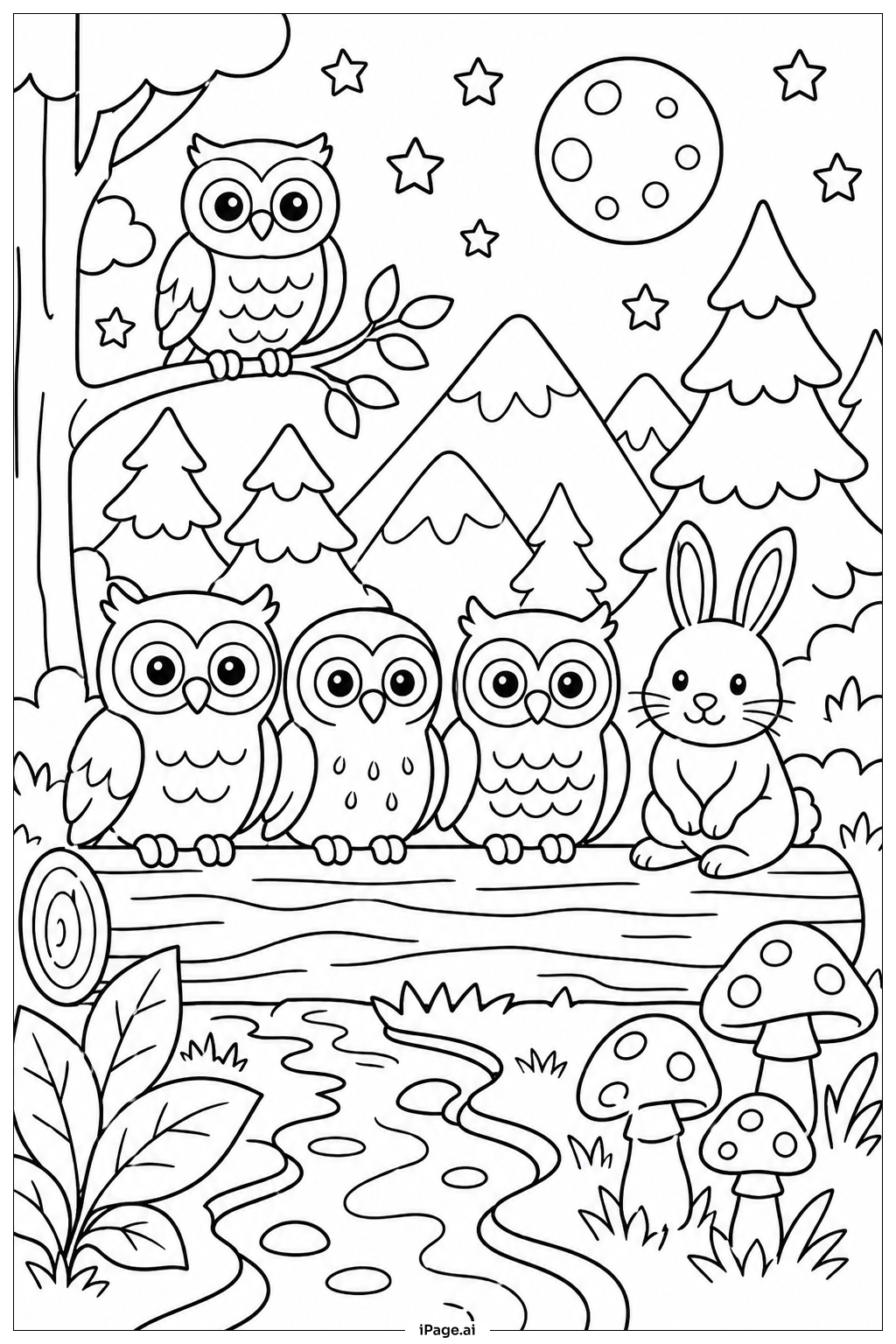
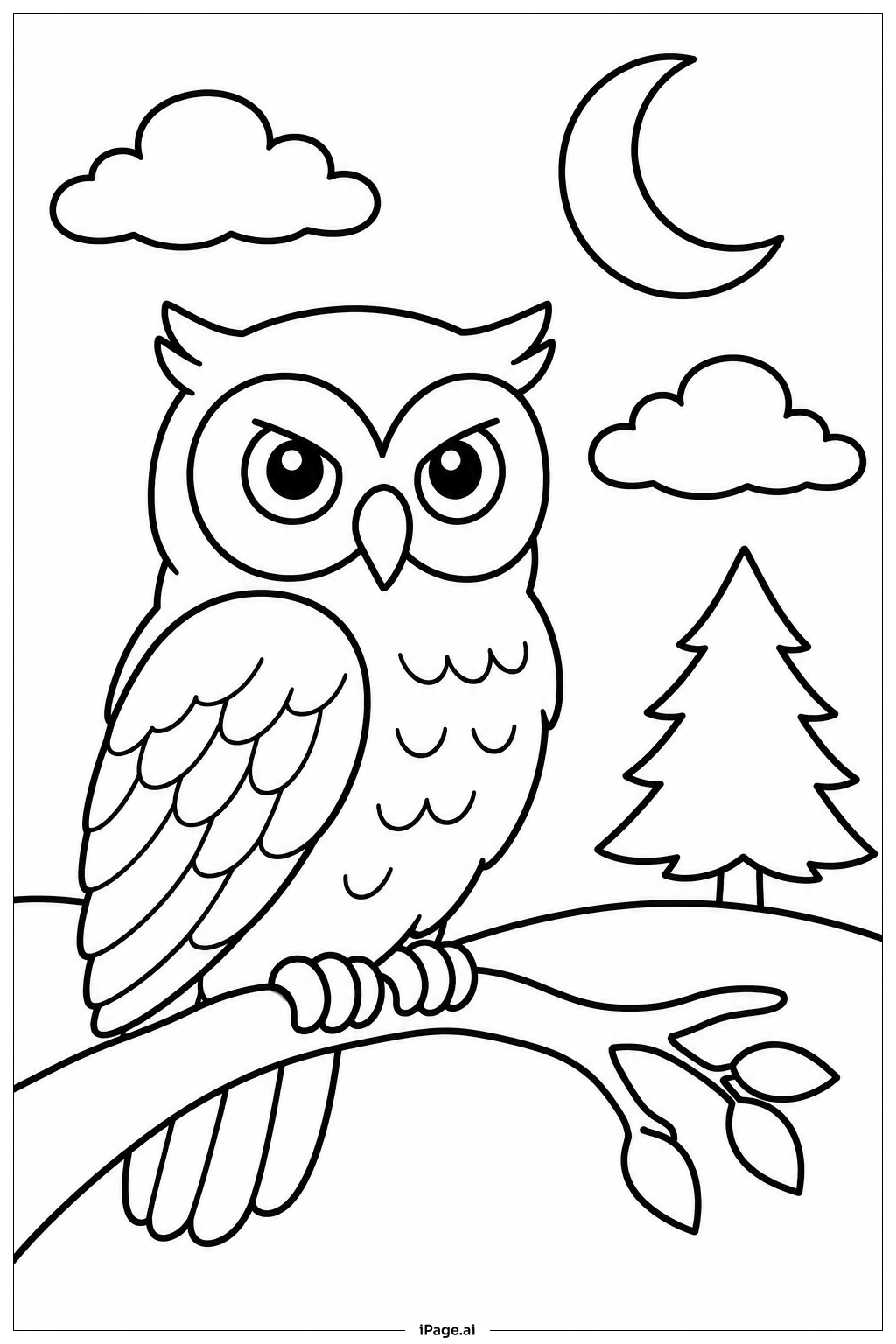
Start with the owl's eyes — use bright golden yellow or amber to make them pop. For the feathers, try warm browns, tans, and creamy whites. Layer different shades to show depth and texture across the chest and wings. Use a darker brown or gray for the wing tips and back. Color the log or branch in earthy browns with hints of green for moss. For the pond, shades of soft blue and teal work beautifully. Add light green to the lily pads and pale pink or white for any flowers. The reeds and cattails can be olive green and warm brown. The background trees and bushes look great in various greens — mix light and dark greens to create a lush, layered forest feel. Younger kids can keep colors simple and bold, while older colorists can blend and shade for a more realistic nature scene.
Coloring challenges: Which parts are difficult to color and need attention for Owl At Pond coloring page?
• Owl Feather Textures: The owl's body is covered in many small, layered feathers with fine line details. Staying within each individual feather shape takes patience and a sharp pencil or thin marker. Blending multiple shades of brown and tan to create a natural, dimensional look can be tricky, especially for younger colorists who are still developing fine motor control.
• Intricate Eye Details: The owl's large eyes have several rings of detail — pupils, irises, and surrounding feather patterns. Coloring these carefully without muddying the colors requires precision. Using the right balance of gold, black, and highlight tones makes the eyes feel alive and expressive.
• Water and Reflections: Coloring the pond realistically is one of the biggest challenges. Water isn't just one flat blue — it has subtle shifts in tone, ripple lines, and possible reflections of the surrounding trees and sky. Capturing this sense of movement and depth with color takes careful layering and blending.
• Lily Pads and Reeds: The small lily pads and thin reed stalks are narrow shapes that require careful coloring to avoid going outside the lines. The overlapping nature of reeds can also make it confusing to decide which areas belong to which element.
• Background Depth and Layering: The trees, bushes, and foliage in the background need to feel further away than the owl and pond in the foreground. Achieving this sense of depth means using lighter, cooler greens in the back and richer, warmer greens up front — a concept that can be challenging for beginners.
Benefits of coloring books: Advantages of drawing Owl At Pond coloring page
Coloring this Owl At Pond scene offers a wonderful range of benefits for kids and adults alike. The detailed feather patterns on the owl help build fine motor skills and hand-eye coordination as colorists work carefully within small, precise shapes. This kind of focused activity also strengthens concentration and attention to detail — skills that carry over into school and daily life. The peaceful nature setting encourages a sense of calm and mindfulness. Spending time coloring a quiet pond scene can help reduce stress and anxiety, making it a great creative outlet after a busy day. For younger children, choosing colors for the owl, water, and plants sparks imaginative thinking and early decision-making. They learn about color relationships and how different hues work together to create a natural scene. Older kids and teens can explore shading and blending techniques, developing artistic confidence along the way. The scene also connects colorists to the natural world, gently introducing them to pond ecosystems, birds, and plant life in a fun and engaging way. Overall, this image is a rewarding and enriching coloring experience for all ages.