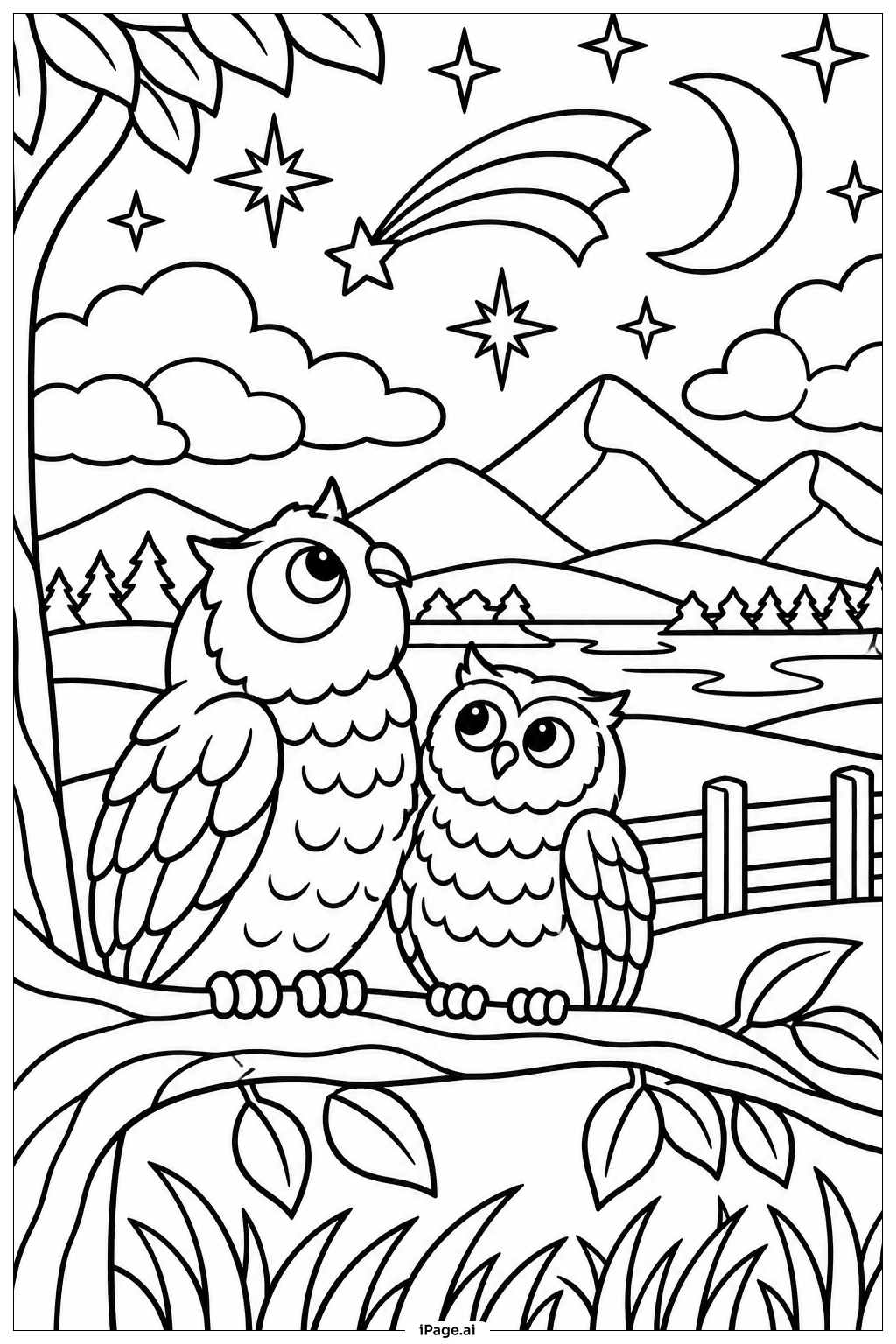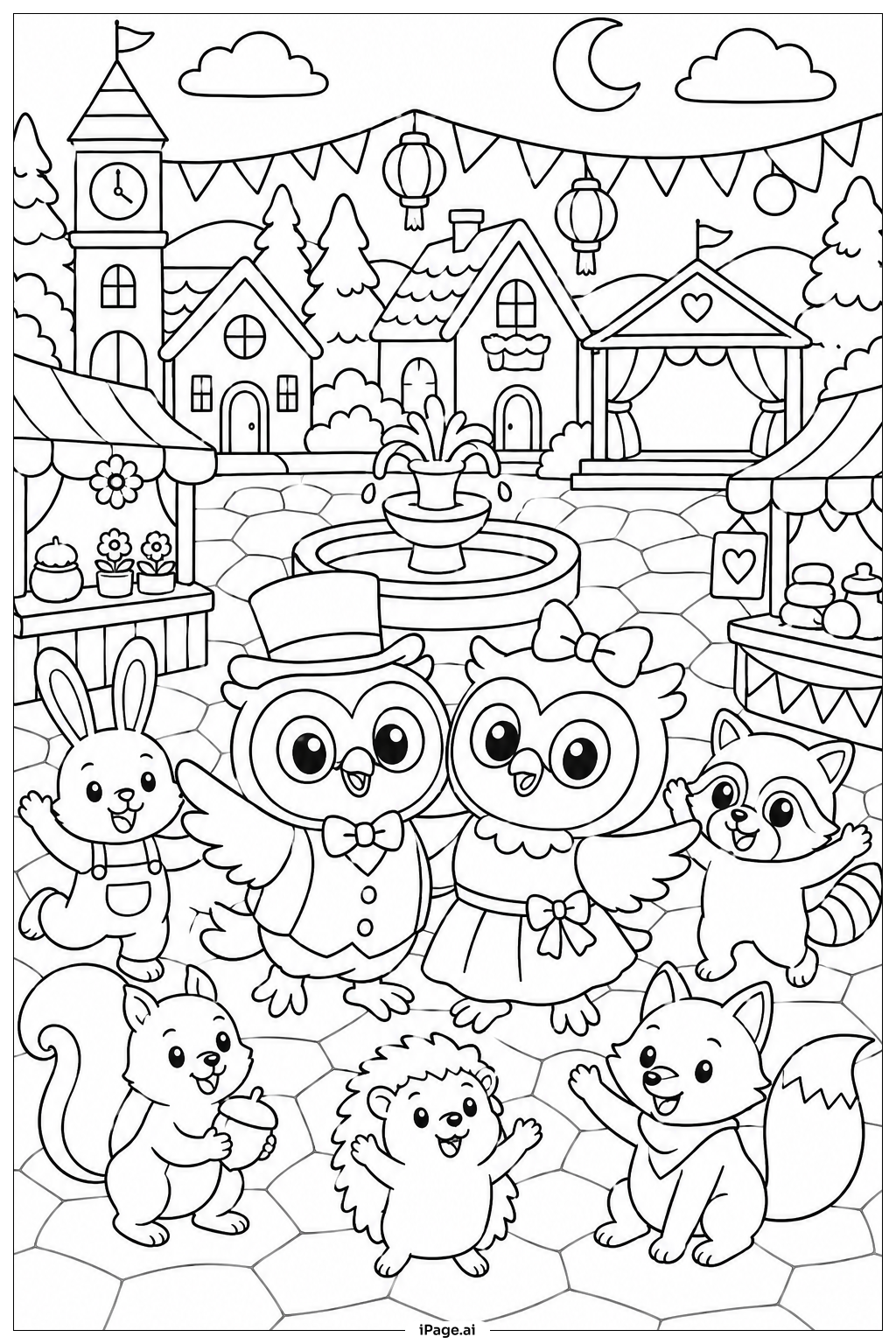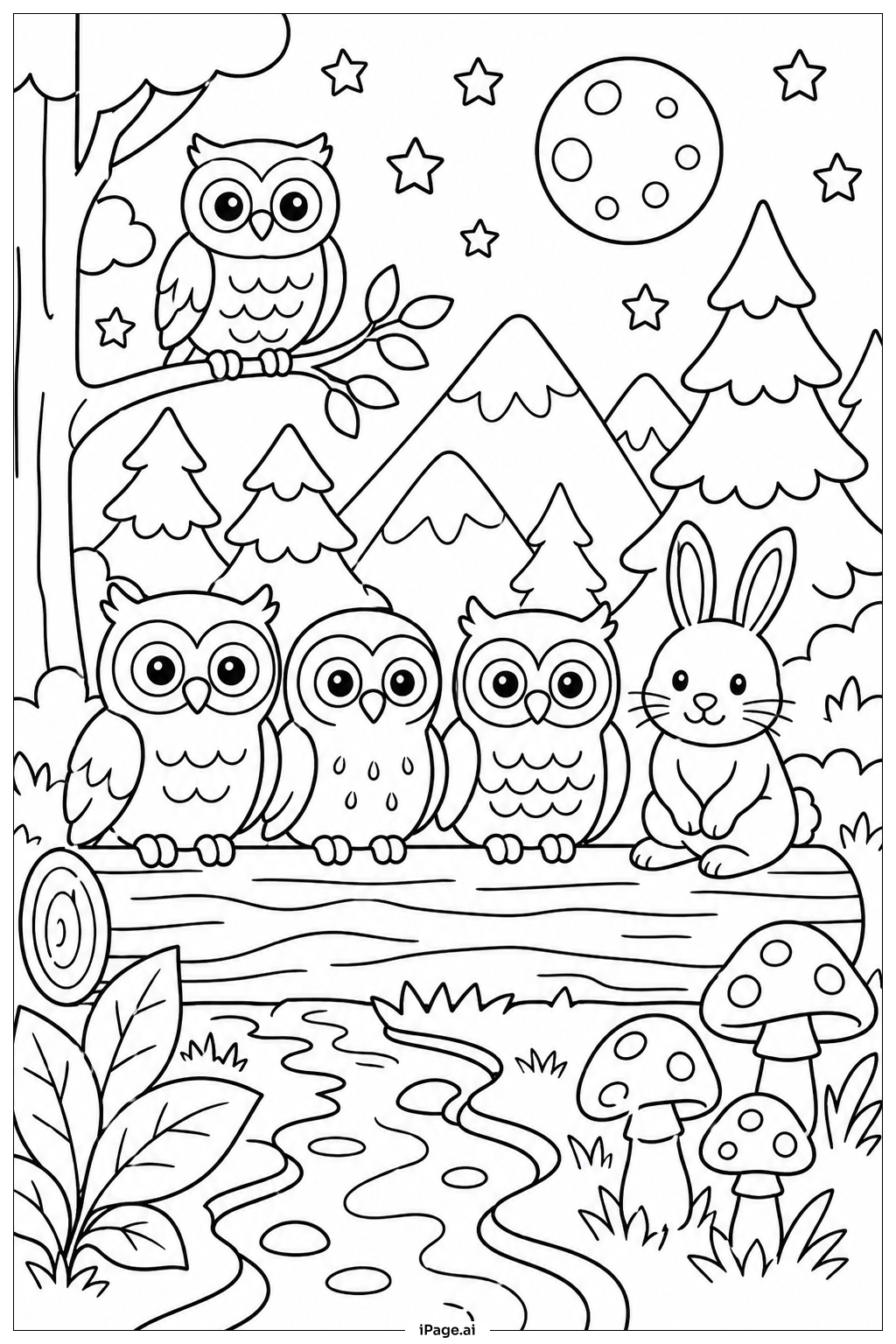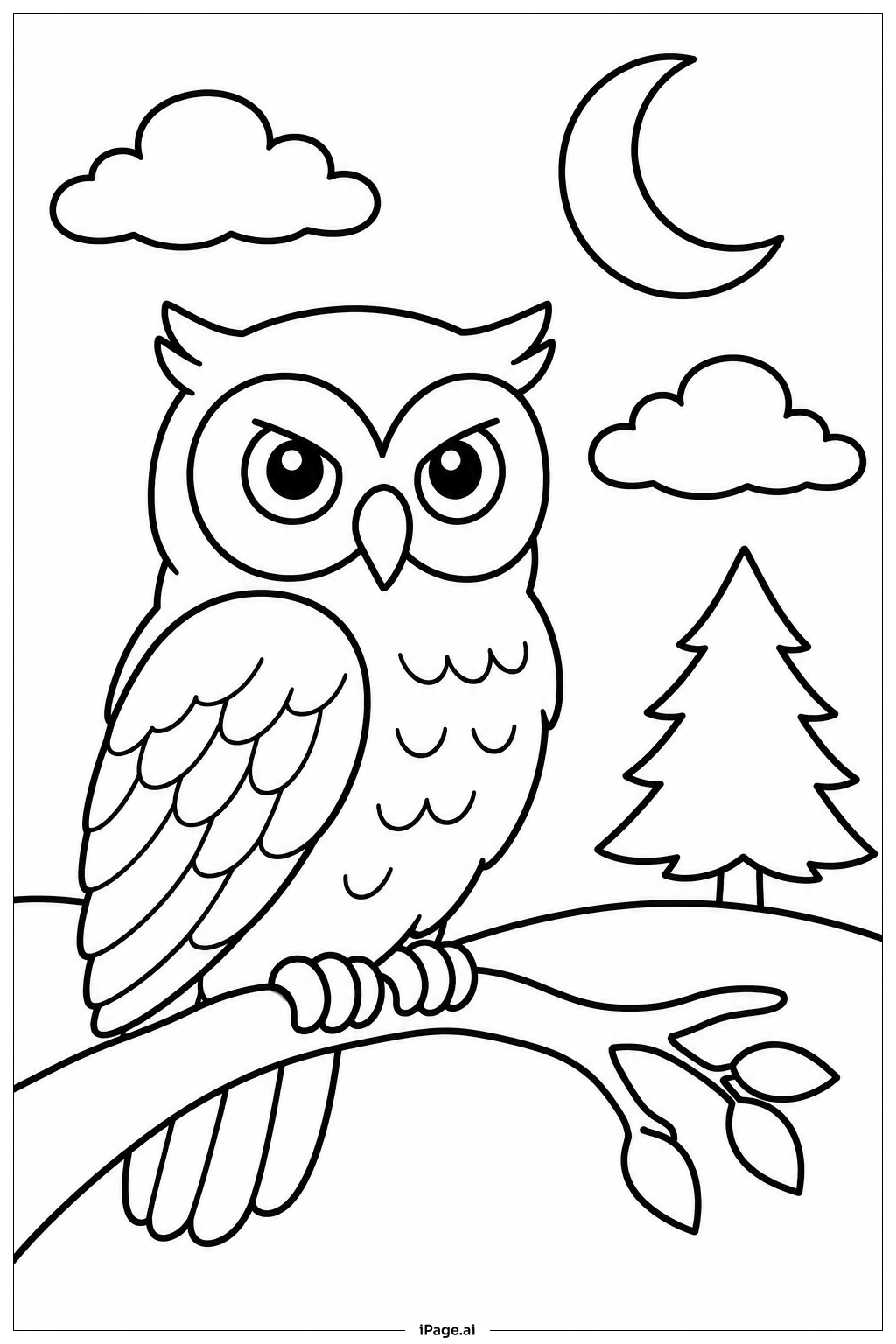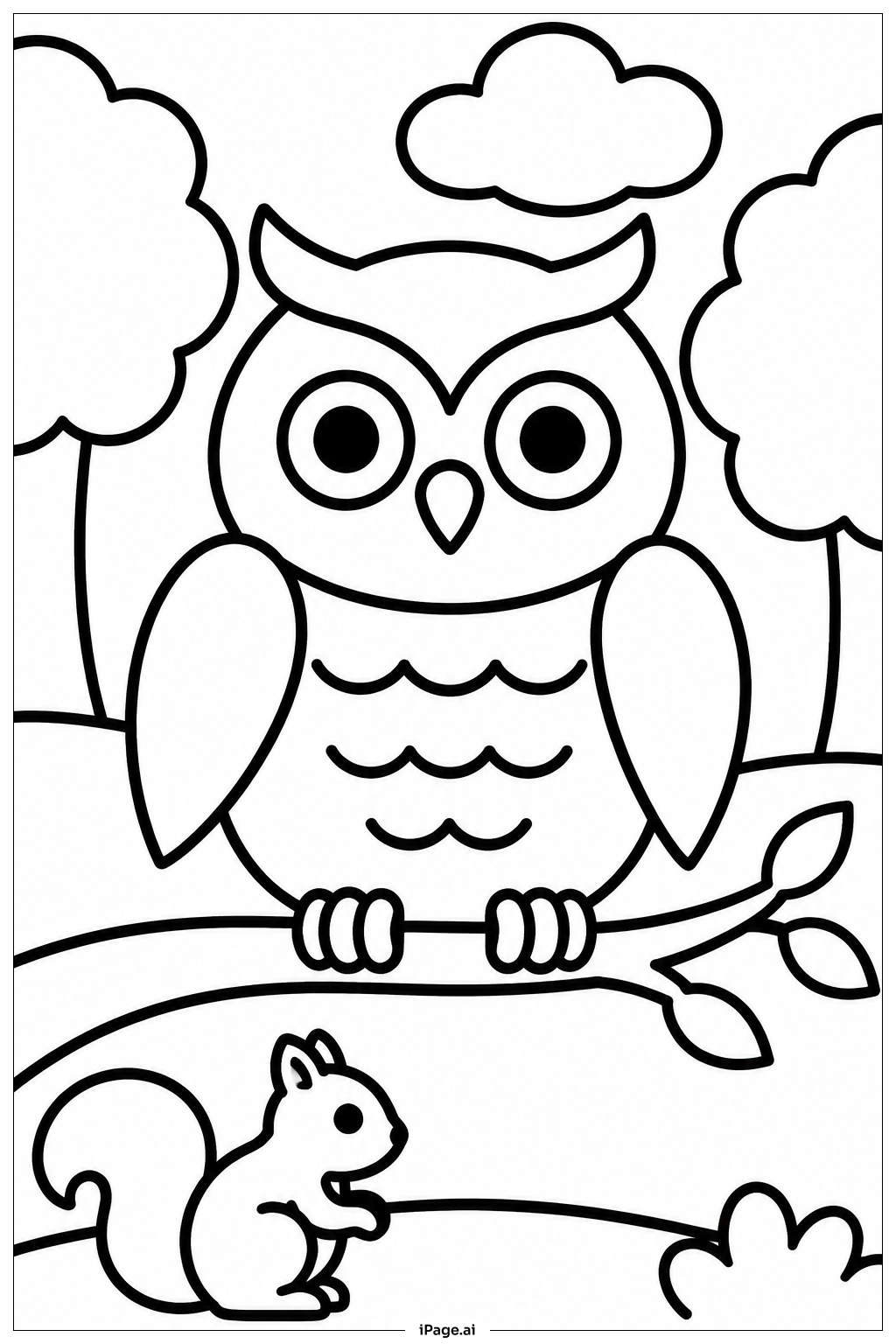
Coloring tips: How to color Owl And Squirrel coloring page well?
Start with the lighter areas before moving to darker tones. For the owl, use warm browns, tans, and creamy whites on the feathers. Add a soft yellow or orange for the beak and talons. Make the large eyes stand out with golden yellow irises and deep black pupils. For the squirrel, try rusty reds, warm oranges, and soft browns to capture its natural coat. The fluffy tail can be done in layers, mixing light and dark shades for a full, textured look. Use greens and yellows for the leaves, and deep brown for the branches. Acorns look great in golden brown with dark caps. Try blending two shades of the same color to add depth and make the animals look soft and realistic. Light pencil strokes work best for fur textures. This page is fun and flexible, so kids can also experiment with bright fantasy colors to make it their own.
Coloring challenges: Which parts are difficult to color and need attention for Owl And Squirrel coloring page?
• Owl Feather Details: The owl's body is covered in layered feathers with many small lines and patterns. Staying inside each feather section and using consistent color direction takes patience. Younger colorists may find it tricky to shade each feather individually without the colors bleeding into one another.
• Squirrel's Fluffy Tail: The bushy tail of the squirrel has many fine, overlapping lines meant to suggest thick fur. Coloring this area requires smooth, light strokes and careful blending of at least two shades to avoid a flat, single-color look. Getting the texture to feel soft and three-dimensional is one of the more challenging parts of this image.
• Small Facial Features: Both animals have small, detailed facial features including eyes, beaks, noses, and tiny whiskers. These areas are compact and require a sharp pencil or fine-tipped marker to fill in accurately. A shaky hand or thick tool can easily color outside the lines in these zones.
• Layered Background Elements: The leaves, branches, and acorns in the background overlap with the main figures. Deciding which areas belong to the foreground versus the background and keeping those color zones separate requires focus and planning before you begin coloring.
• Balancing the Overall Color Palette: Since both animals are naturally brown-toned, choosing slightly different shades for the owl and squirrel is important so they do not blend together visually. Finding the right contrast between the two characters while keeping the scene harmonious is a subtle but real challenge for colorists of all ages.
Benefits of coloring books: Advantages of drawing Owl And Squirrel coloring page
Coloring this Owl And Squirrel page offers a wide range of benefits for children and young learners. Focusing on the fine details of feathers, fur, and tiny facial features helps build hand-eye coordination and strengthens fine motor skills that are essential for writing and everyday tasks. Choosing and mixing colors for two different animals encourages creative thinking and helps children learn about color relationships and contrast. The woodland theme also sparks curiosity about nature, animals, and their habitats, making it a gentle and fun way to learn about the natural world. Staying within the detailed lines of the image builds focus and patience, which are valuable skills both in and out of the classroom. For children who feel anxious or restless, the calm, repetitive motion of coloring provides a soothing and meditative experience. Completing the full page also gives children a sense of accomplishment and pride in their own creative work, boosting self-confidence. Whether done alone or shared with a friend, this coloring page is a joyful and enriching activity for Boys and Girls of all skill levels.