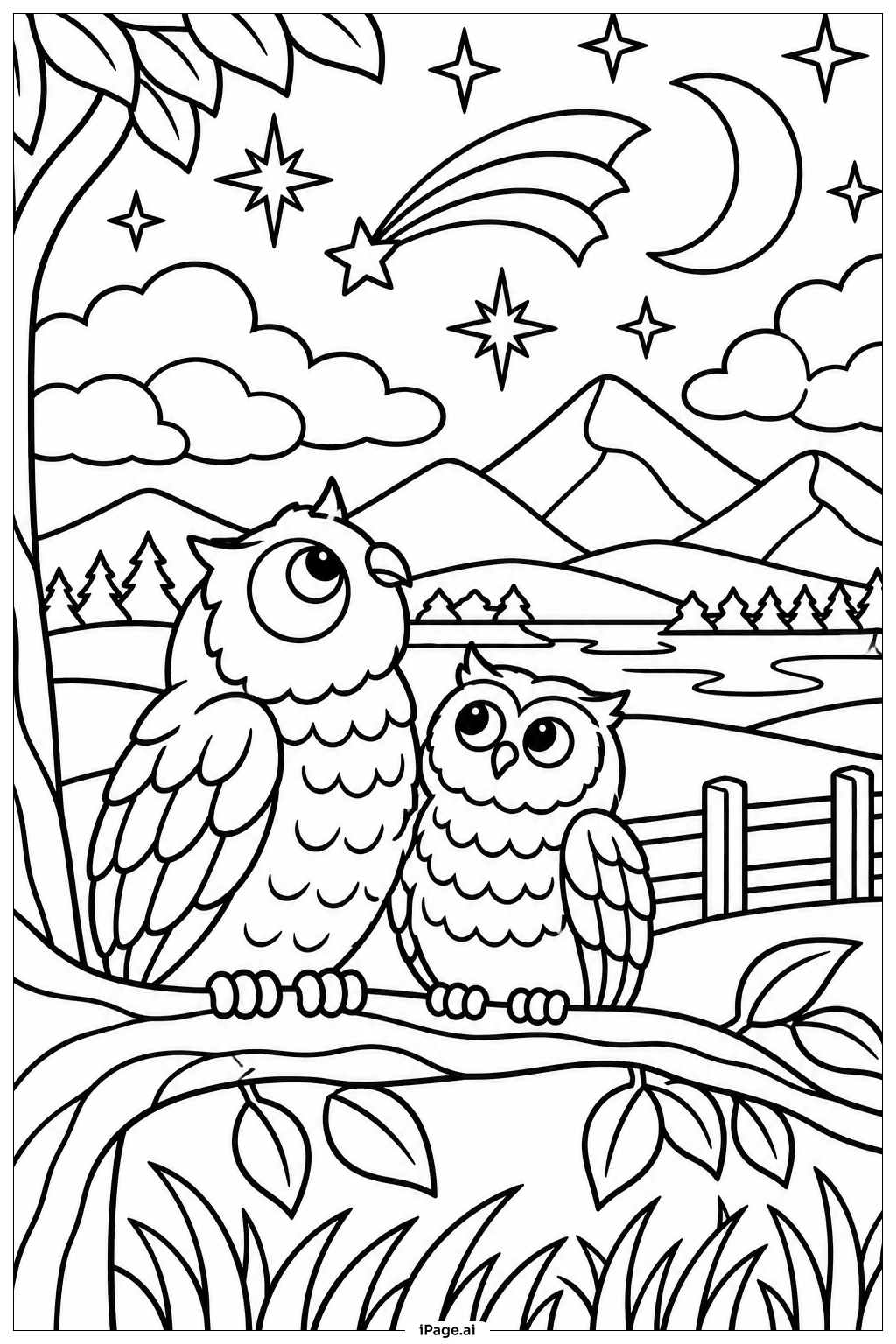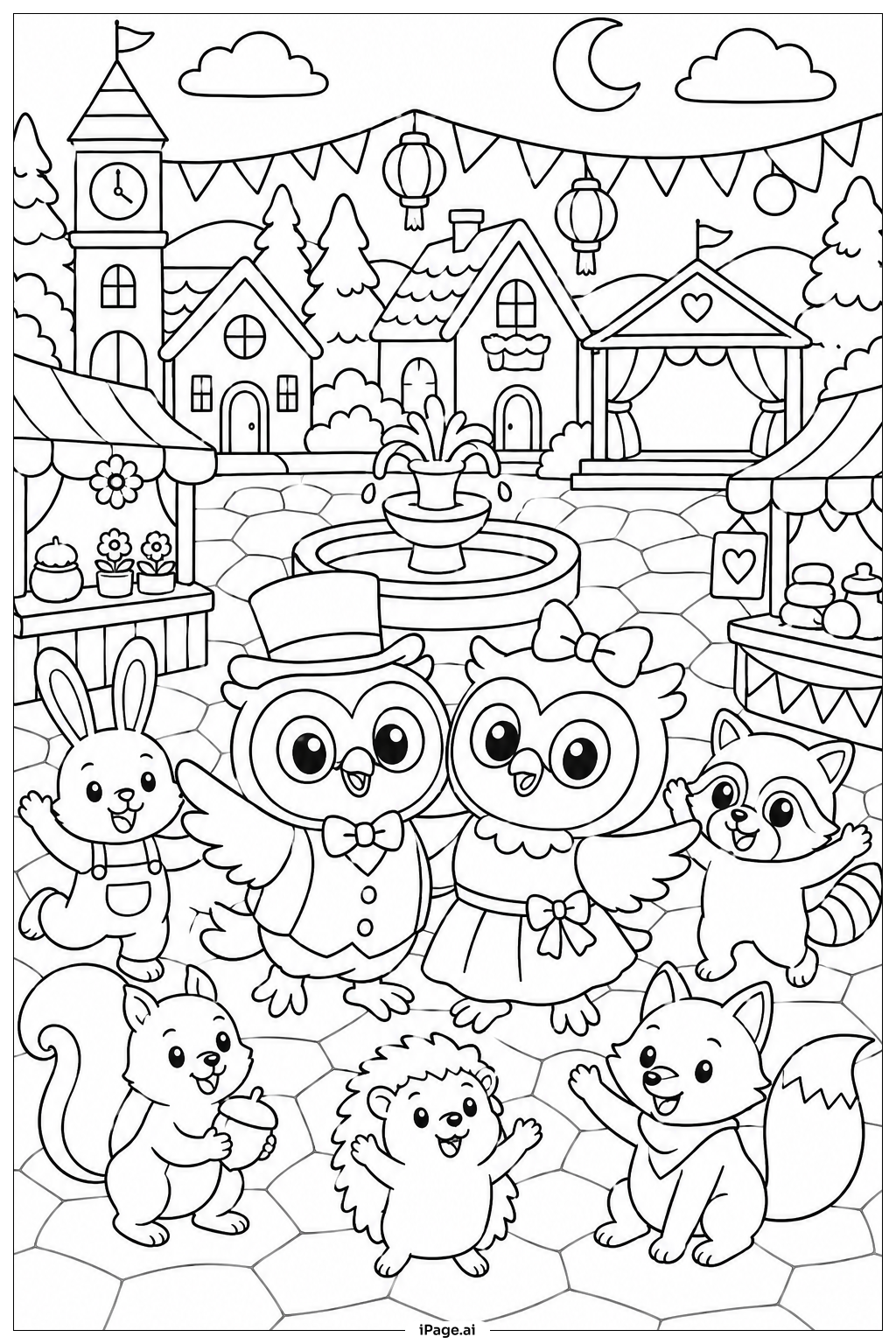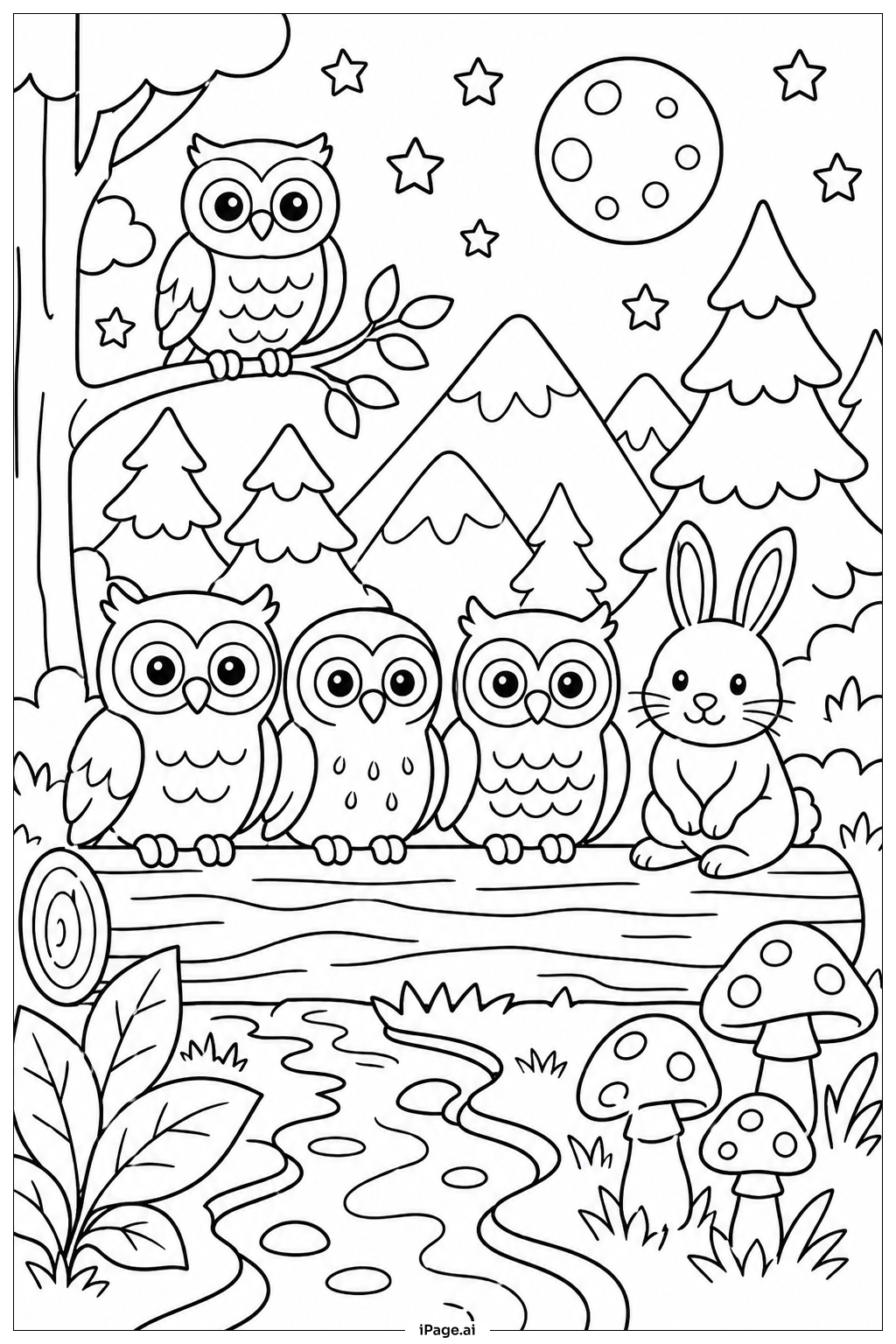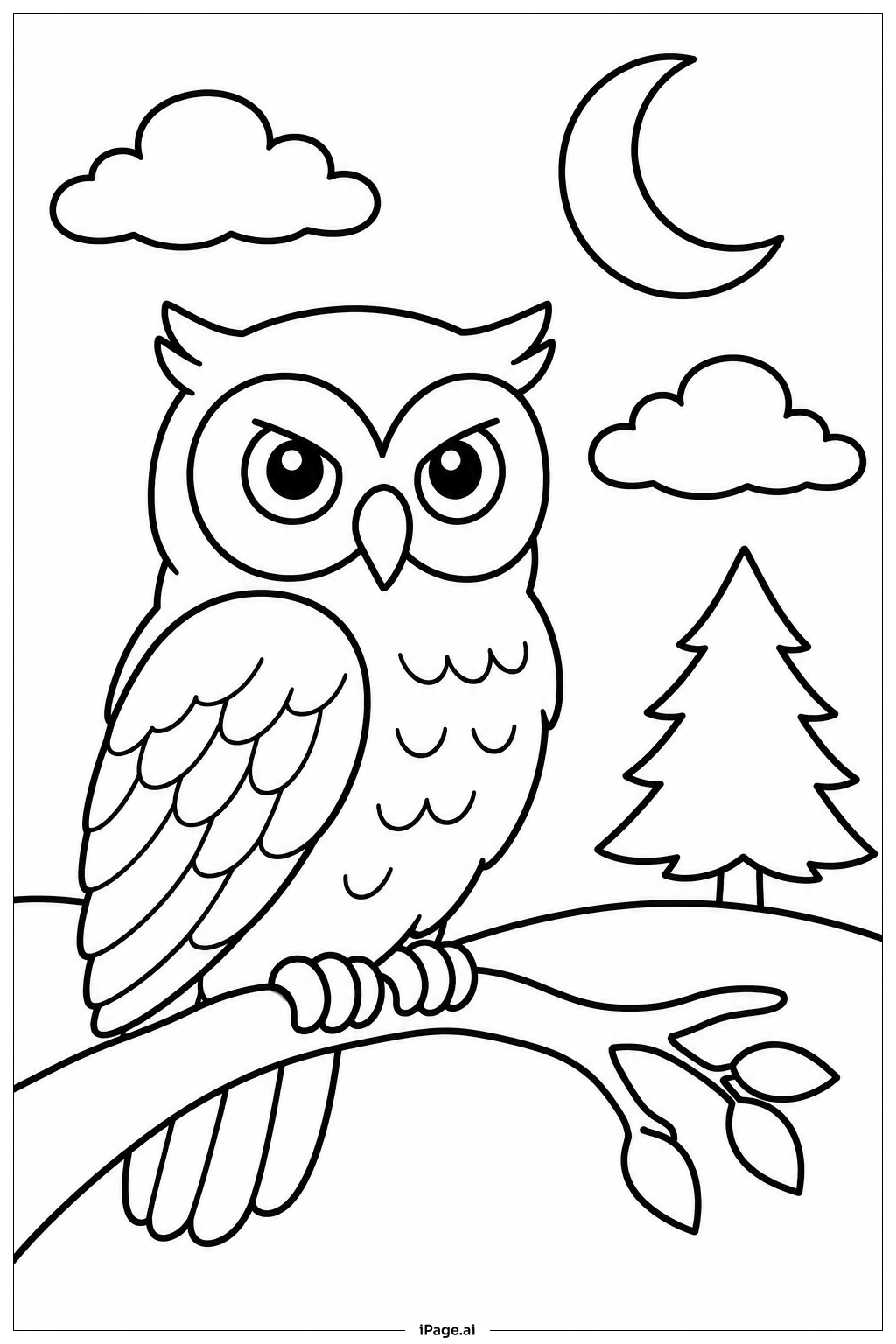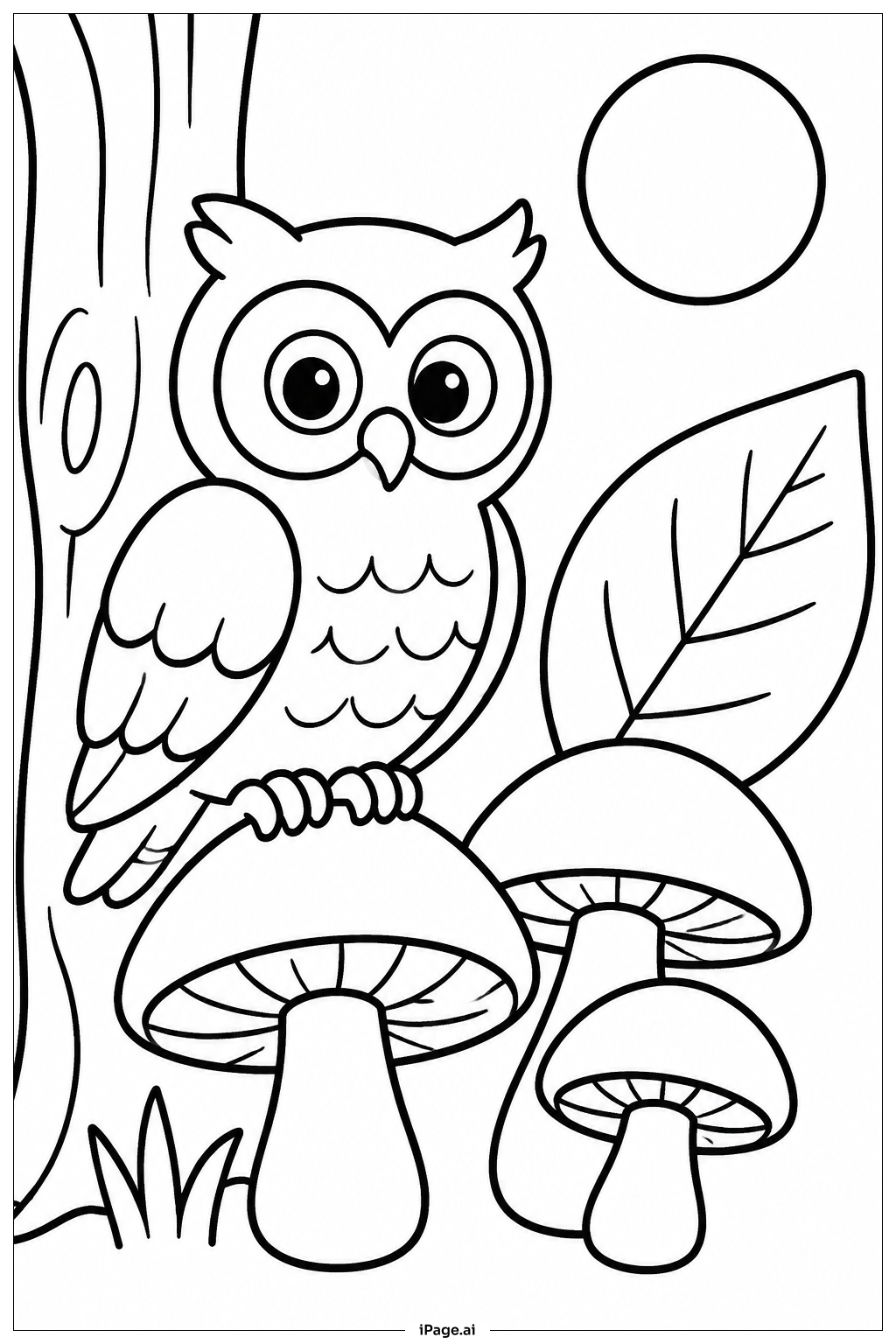
Coloring tips: How to color Owl And Mushrooms coloring page well?
Start with the owl's large eyes — try bright golden yellow or warm amber to make them pop. Use soft browns, tans, and creamy whites for the feathers, layering shades to show texture and depth. Darker brown works well for the wing edges and belly markings.
For the mushrooms, classic red caps with white spots look bold and fun, but you can also try purple, orange, or teal for a more magical look. Use a pale ivory or light tan for the mushroom stems.
Fill the background leaves with various shades of green — mix light lime and deep forest green to add variety. Small flowers can be colored in pink, yellow, or lavender to brighten the scene.
Use soft, earthy tones overall to keep the woodland mood cozy, or go bright and bold for a fantasy fairytale feel. Either approach works beautifully for this image. Have fun mixing colors and making it your own!
Coloring challenges: Which parts are difficult to color and need attention for Owl And Mushrooms coloring page?
• Owl Feather Details: The owl's body is covered in many small, overlapping feather patterns. Staying within each individual feather section requires a steady hand and a fine-tipped colored pencil or marker. Blending two or three shades of brown within such small spaces can be tricky, especially for younger colorists. Taking your time with each row of feathers will give the best result.
• Large Expressive Eyes: The owl's eyes are a focal point of the image. They contain multiple circular layers — the outer ring, the iris, and the pupil — each needing a different color. Getting clean, smooth color transitions between these layers without muddying the colors together can be challenging. Using light pressure and building color gradually works best here.
• Mushroom Cap Texture: The mushroom caps have curved surfaces with spots and subtle ridges. Coloring a rounded cap realistically means adding shading — darker color near the edges and lighter color toward the center. For beginners, this kind of shading can feel difficult, but even a simple flat color looks great on this design.
• Background Decorative Elements: The tiny flowers, swirling lines, and small leaves in the background are closely packed together. Coloring each small element neatly without accidentally going over the outlines into neighboring areas takes patience and precision. Fine-tipped tools are strongly recommended for this section.
• Balancing the Overall Color Palette: With so many different elements — owl, mushrooms, leaves, flowers, and background — choosing colors that all look good together can be overwhelming. Planning your color palette before you start helps everything feel balanced and harmonious in the finished piece.
Benefits of coloring books: Advantages of drawing Owl And Mushrooms coloring page
Coloring this Owl And Mushrooms page offers a wonderful range of benefits for kids and beginners alike.
The owl's detailed feather patterns are great for building fine motor skills. Carefully coloring small sections trains hand muscles and improves pencil control, which also helps with handwriting.
The variety of shapes — round eyes, curved mushroom caps, layered feathers, tiny flowers — keeps the brain actively engaged. Switching between different colors and shapes sharpens focus and attention to detail.
Choosing a color palette for the whole scene encourages creative thinking. Kids get to decide if their owl is a realistic brown or a fantastical blue, building confidence in their own artistic choices.
Spending time with a calming, nature-themed image like this one also helps reduce stress and anxiety. The quiet, repetitive motion of coloring is naturally soothing and promotes mindfulness, making it a healthy screen-free activity.
Finally, completing a detailed page like this gives a strong sense of accomplishment. Seeing a finished, colorful artwork that you created yourself builds self-esteem and motivates kids to keep exploring their creativity through art.