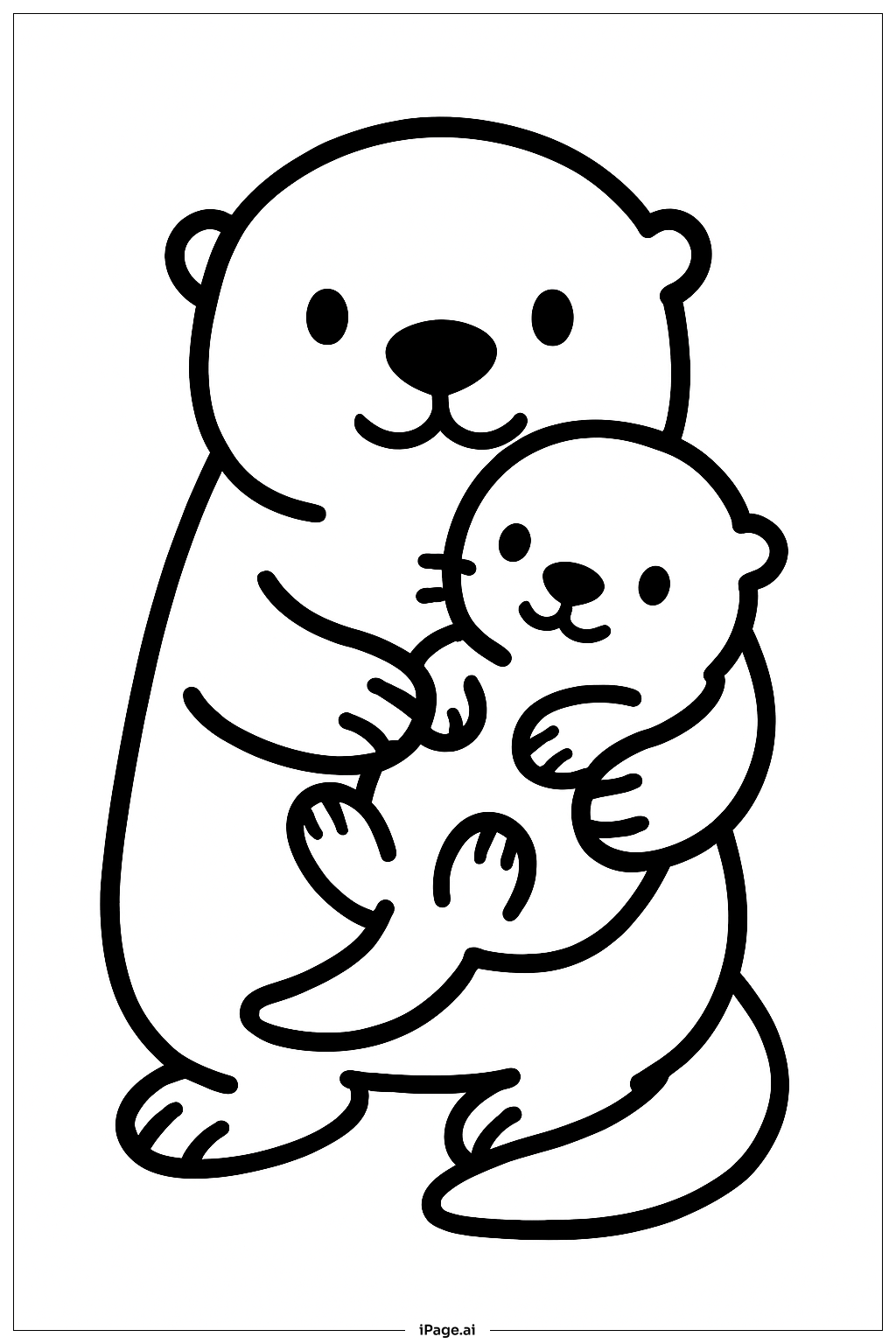
Coloring tips: How to color Otter With Tiny Baby coloring page well?
You can use soft browns or tans for the otters' fur to make them look natural. Maybe try lighter shades for the baby otter to show its small and delicate nature. Use a darker brown or black on the nose and eyes to add contrast. For the background, you could color it with soft blues or greens to represent water or plants where otters live. You can also add small touches like a light blush on the cheeks to make them look even cuter. Keep shading simple to maintain the clear, friendly style of the picture.
Coloring challenges: Which parts are difficult to color and need attention for Otter With Tiny Baby coloring page?
1. Coloring inside the small details like the otters’ eyes and noses can be tricky because these areas are quite small and need careful coloring. 2. Making sure the colors for the baby otter and the big otter look different but still natural requires attention to shading and tone. 3. The arms and paws overlap, so it might be hard to keep the lines clear and not mix the colors between the two otters. 4. Coloring the tails smoothly to have a natural shape without crossing lines is a bit challenging. 5. If you add a background, making it soft but interesting without taking focus away from the otters can be difficult.
Benefits of coloring books: Advantages of drawing Otter With Tiny Baby coloring page
Coloring this picture helps kids develop fine motor skills as they carefully fill in small spaces. It also encourages creativity by choosing different shades for the otters and background. The simple shapes make it great for beginners, while the little details offer a challenge for older kids. Coloring the loving bond between the otters can inspire empathy and understanding of family. Overall, it’s a fun and educational activity, improving focus and color recognition for young artists.