Coloring tips: How to color Otter Among Tide Pool Creatures coloring page well?
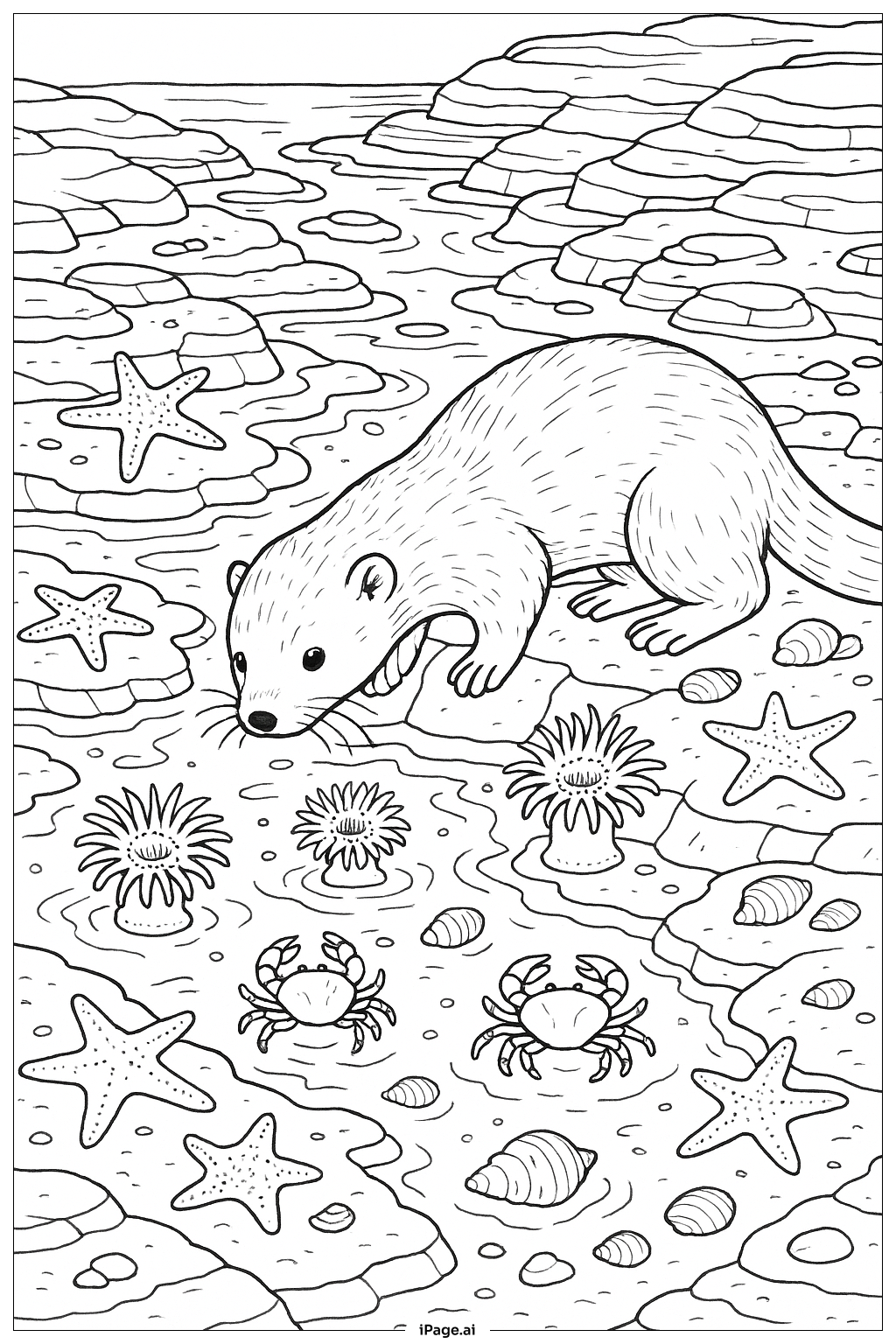
For the otter, use warm brown tones ranging from light tan on the belly to rich chocolate brown on the back and head. Add touches of cream or pale yellow for highlights on the face and chest. The tide pool water can be colored in soft blues and greens with hints of aqua. Make the starfish bright orange or vibrant purple to stand out. Color sea anemones in shades of pink, coral, or green with lighter tips on their tentacles. Use sandy beige and gray tones for rocks and shells, adding shadows with darker browns. Paint seaweed in various greens from olive to emerald. Small crabs can be red, orange, or brown. Consider leaving some white highlights on the water surface to show reflection and movement.
Coloring challenges: Which parts are difficult to color and need attention for Otter Among Tide Pool Creatures coloring page?
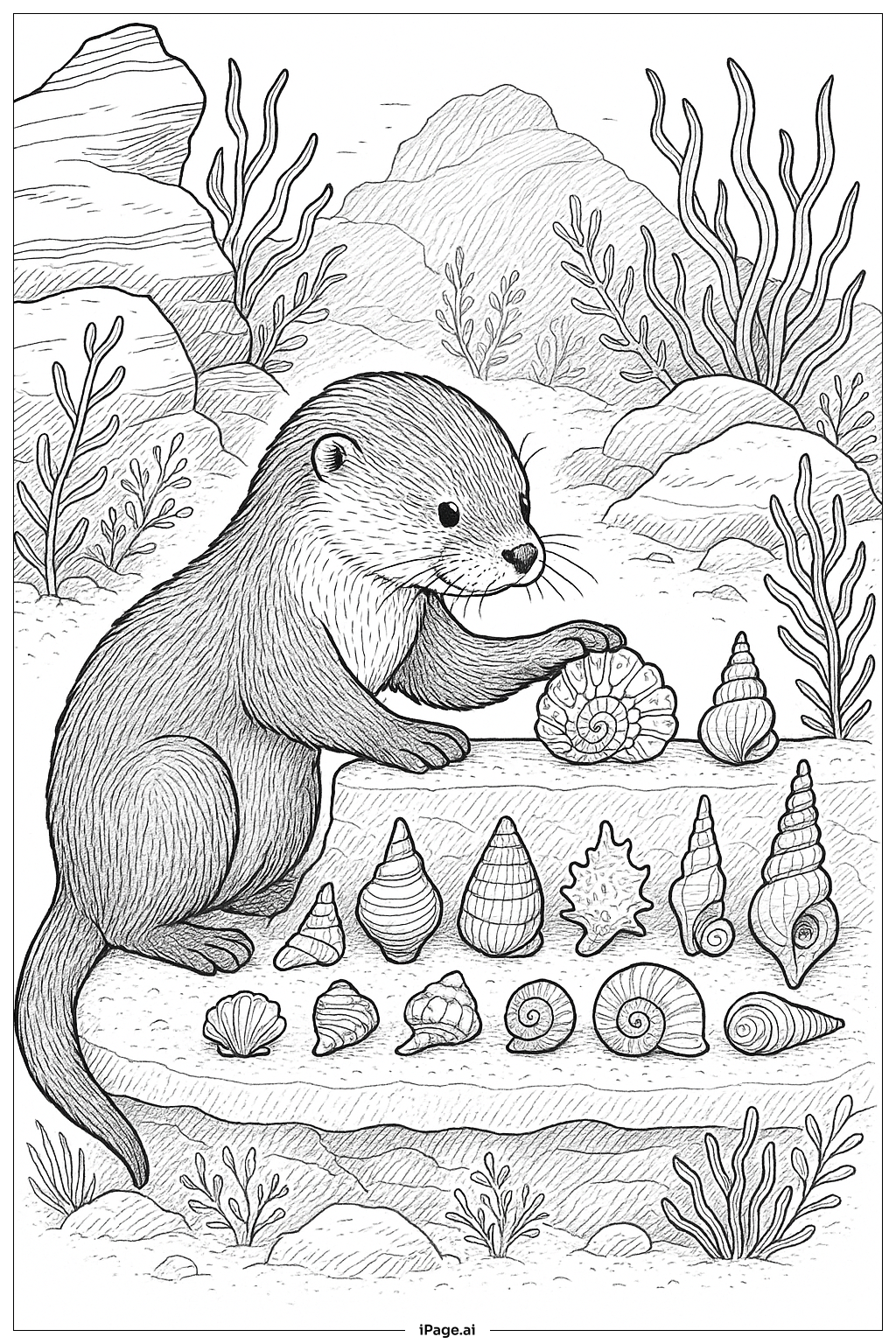
• Fur Texture Detail: The otter's fur requires careful attention to create realistic texture. Color in the direction of fur growth using short strokes rather than solid fills. Layer different shades of brown to build depth, keeping the belly lighter than the back. The challenge lies in maintaining consistent stroke direction while transitioning between light and dark areas without creating harsh lines.
• Multiple Small Elements: This image contains numerous tide pool creatures, each requiring different coloring approaches. Coordinating colors so that each element stands out without clashing demands planning. The small size of crabs, shells, and anemone tentacles makes staying within lines difficult, especially for younger colorists. Consider coloring larger elements first, then tackle smaller details with sharp pencils or fine-tipped markers.
• Water and Transparency Effects: Creating the appearance of water requires blending skills and understanding of light. Water should look transparent enough to see creatures beneath while still appearing wet and reflective. Use light pressure with blue and green colors, leaving white spaces for highlights. The challenge is making water look natural without obscuring the creatures underneath or making it too dark.
• Seaweed and Organic Shapes: The flowing seaweed and anemone tentacles have irregular, curved shapes that require smooth color transitions. These organic forms look best with gradual shading from base to tip. The difficulty is in keeping colors even along long, winding fronds while adding dimension through darker and lighter areas to show how they twist and overlap in the underwater environment.
Benefits of coloring books: Advantages of drawing Otter Among Tide Pool Creatures coloring page
Coloring this tide pool scene offers wonderful educational benefits as children learn about marine ecosystems and the creatures that inhabit them. It encourages observation skills as they notice different textures between fur, shells, and tentacles. The variety of elements helps develop color planning and decision-making abilities. Working on the otter's fur texture improves fine motor control through directional strokes. The multiple small details enhance focus and concentration while building patience. This image promotes environmental awareness and appreciation for coastal wildlife. The peaceful scene can have calming effects, reducing stress while engaging creativity. Children practice color theory by choosing complementary colors for water and creatures, and develop spatial awareness by understanding how creatures arrange in a three-dimensional pool environment.