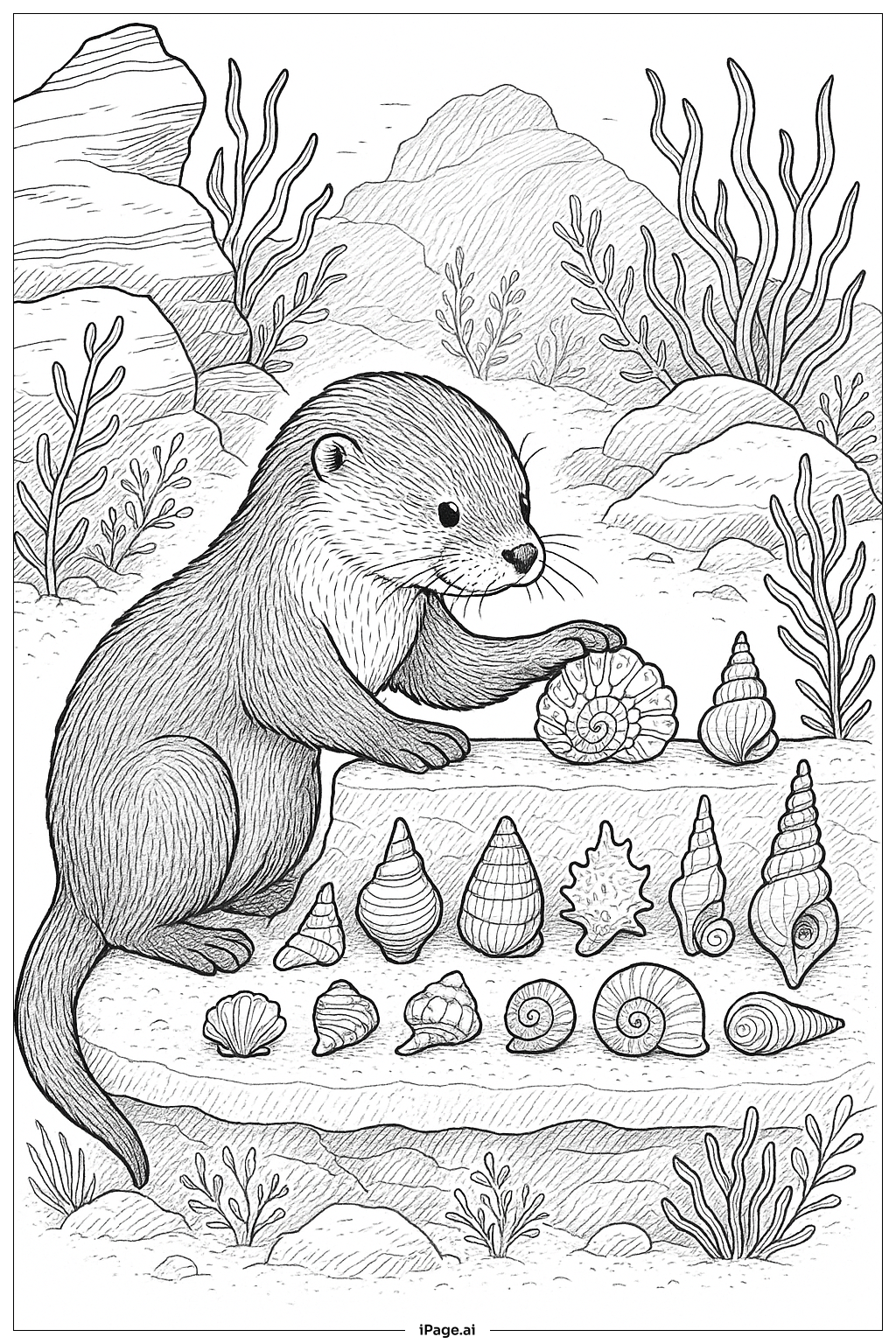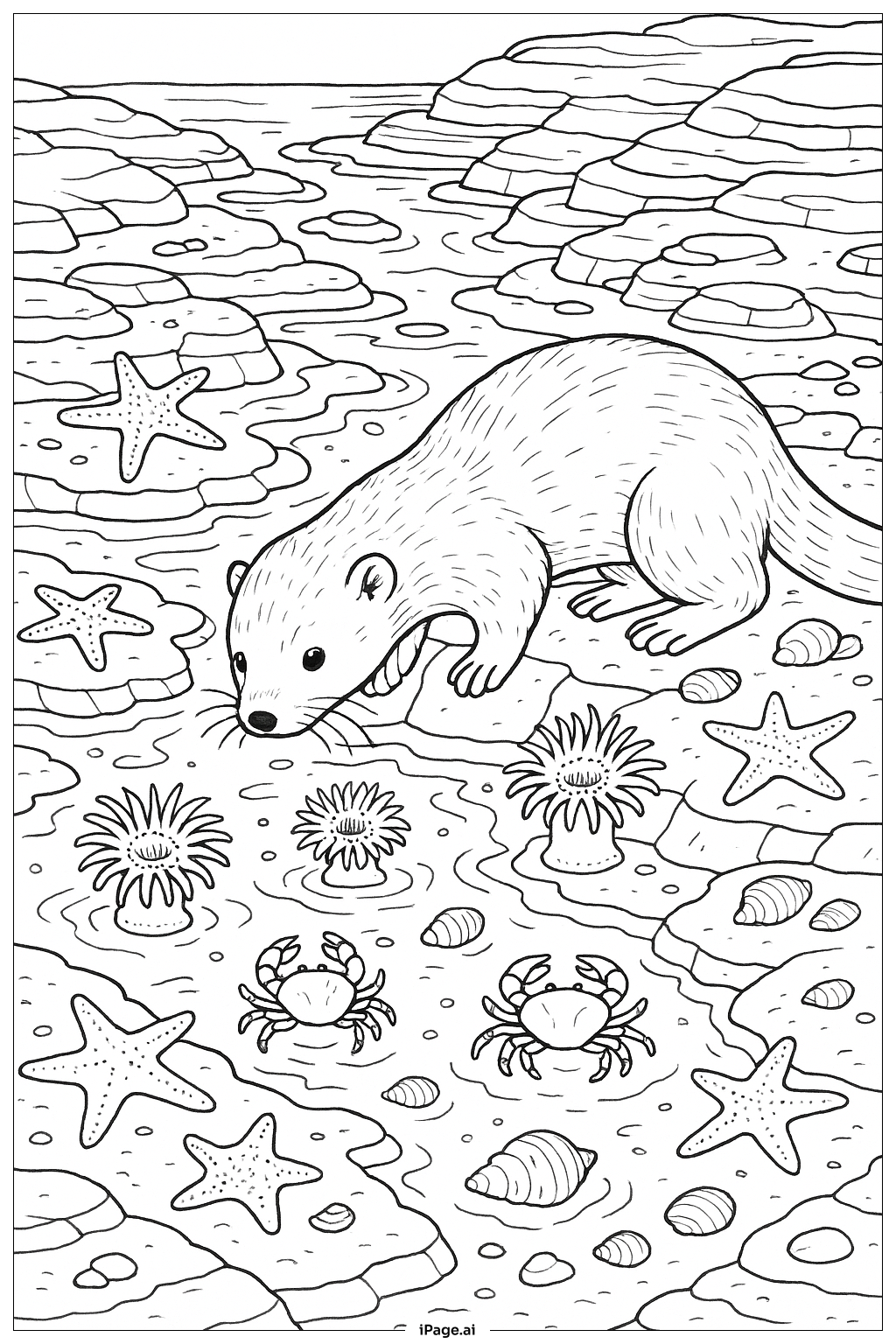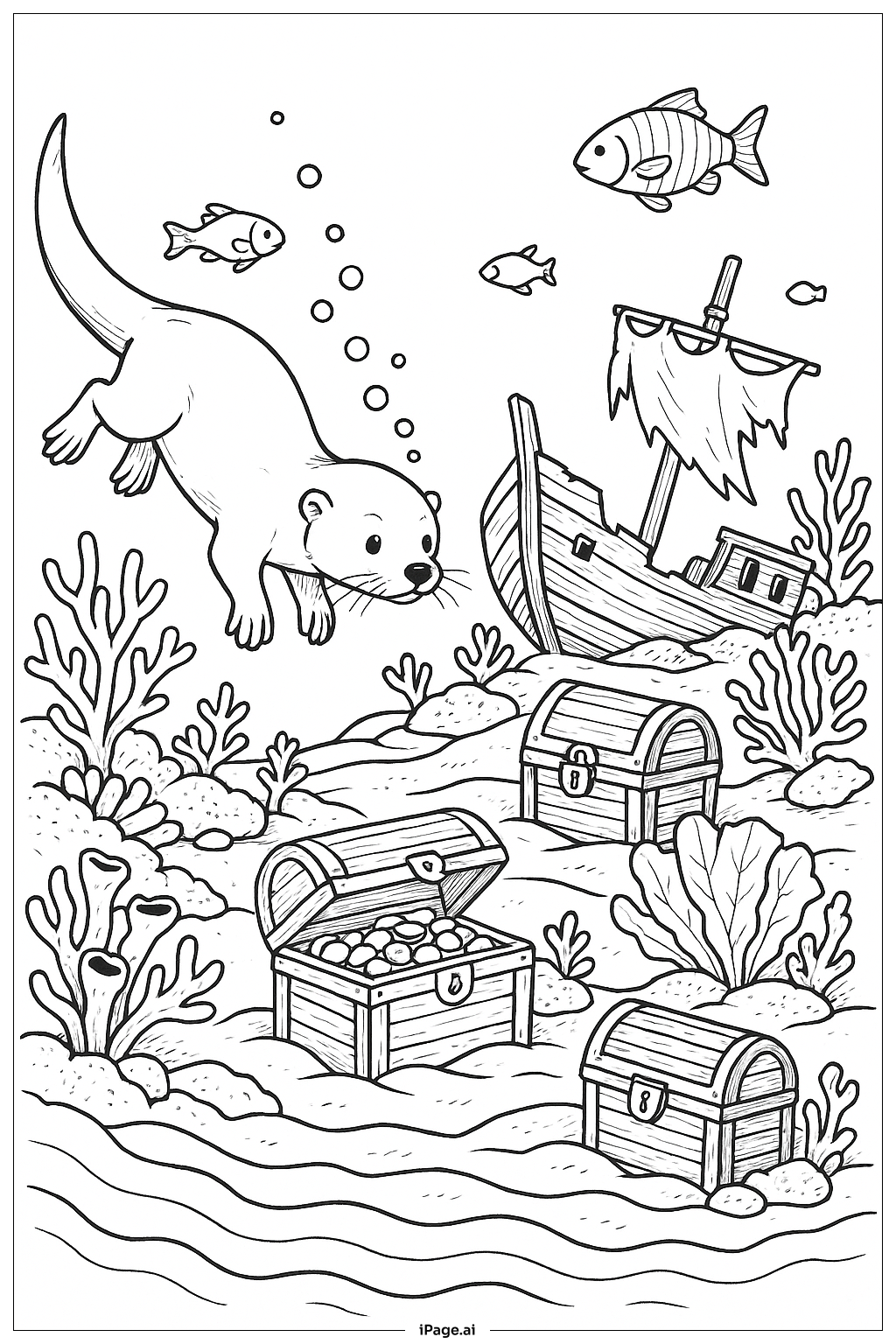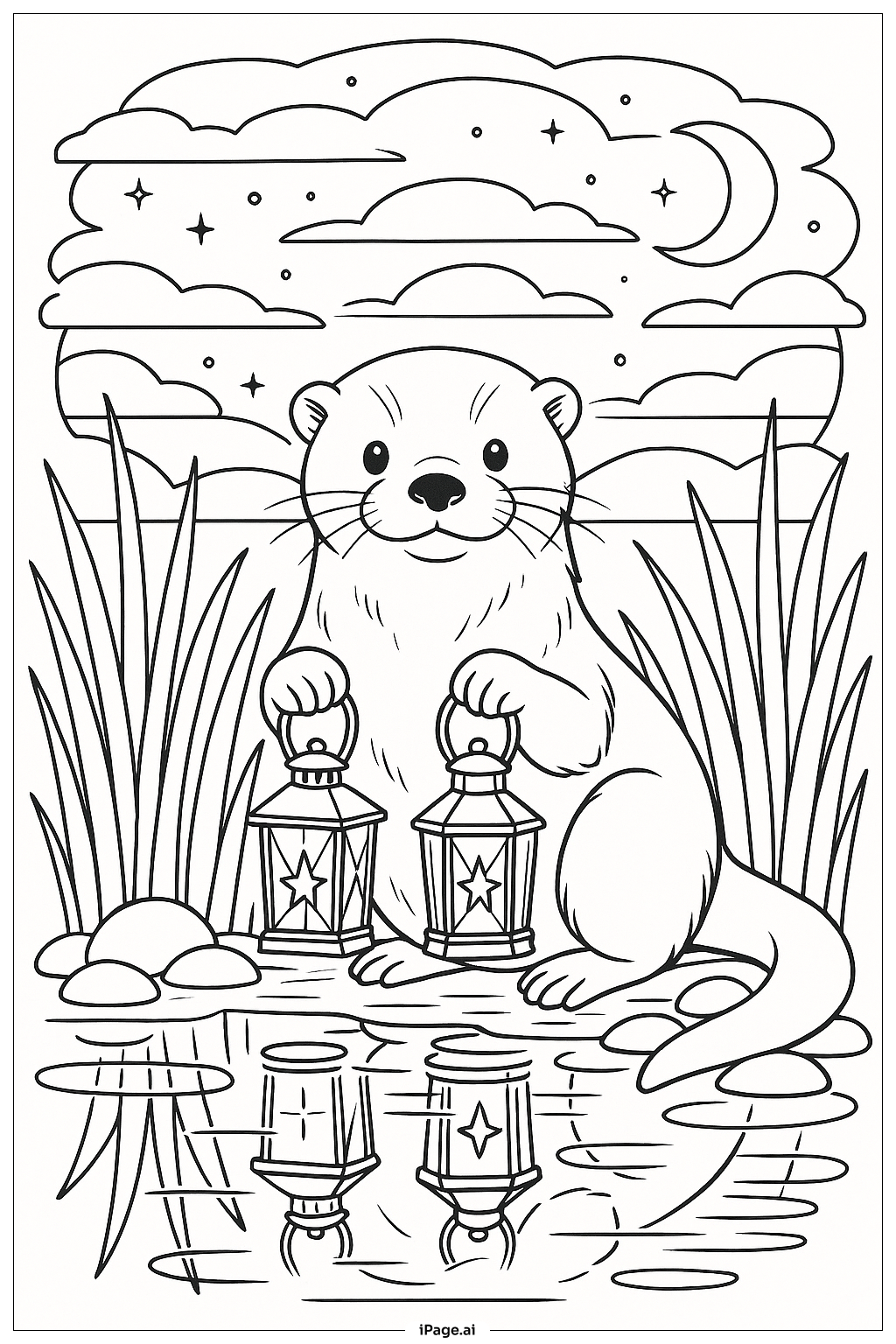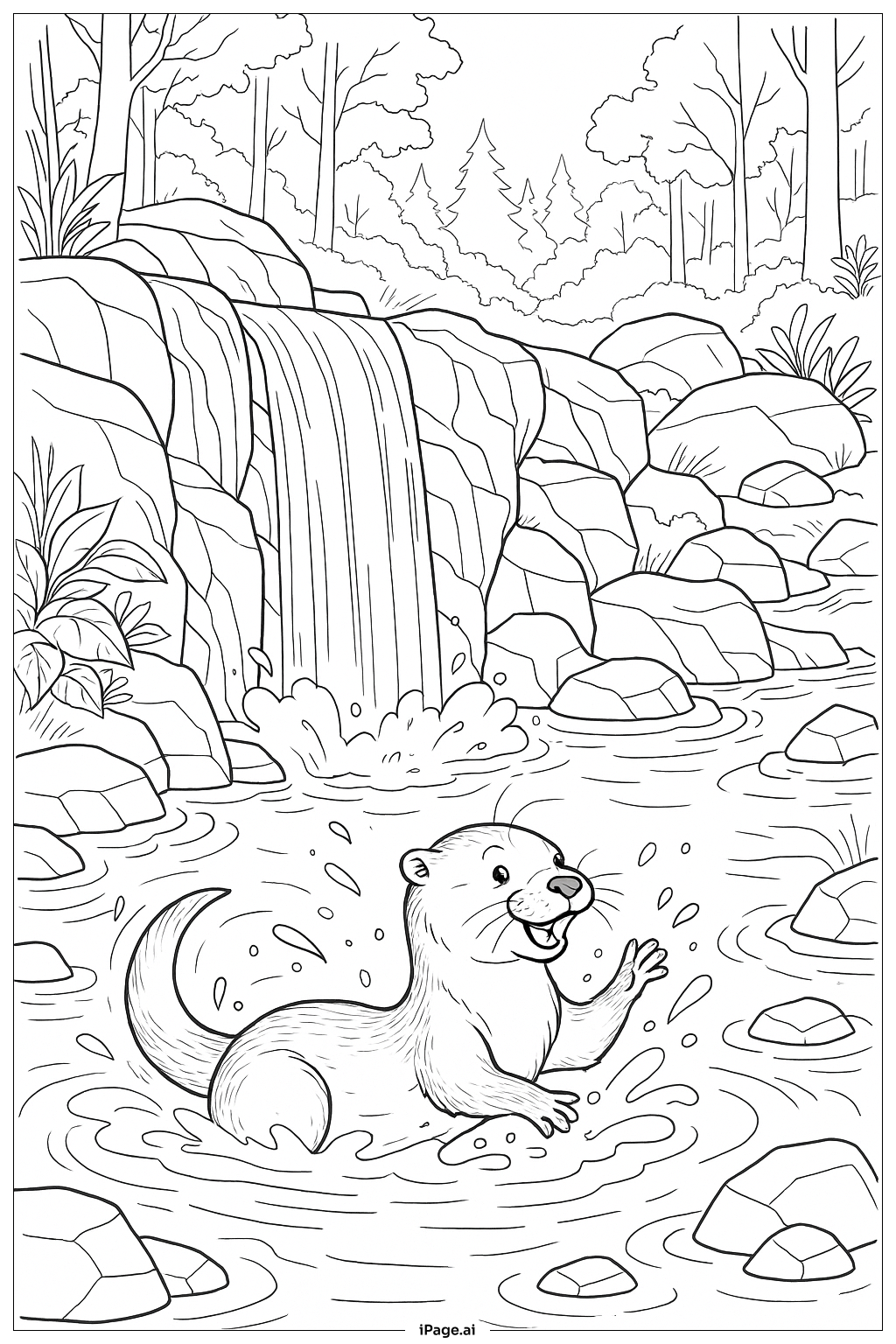
Coloring tips: How to color Otter Playing In Waterfall Pool coloring page well?
Start with the otter's body. Use warm shades of brown for its fur — medium brown for the back and a lighter tan or cream for the belly. Add some gray along the edges to show wet fur. For the water, try light blue and aqua tones. Use white to show foam and splashes near the waterfall. The rocks can be colored in gray, beige, or soft purple. Add a touch of darker gray for shadows between stones. Color the plants and ferns in different shades of green — bright green for fresh leaves and olive or dark green for the mossy areas. Use a soft blue-gray for the waterfall in the background. Keep the water light and airy to give it a flowing feel. White gel pen or leaving areas uncolored can help show where light hits the water. Take your time with the fur — short strokes in the direction of the hair will make it look soft and real. Have fun and make it your own!
Coloring challenges: Which parts are difficult to color and need attention for Otter Playing In Waterfall Pool coloring page?
• Otter Fur Texture: The otter's fur has many short, overlapping strokes that can be tricky to fill in neatly. To make the fur look soft and realistic, you need to apply color in the same direction as the fur growth. Switching between light and dark shades within the same area also takes patience and a steady hand. Young colorists may find this section the most time-consuming part of the image.
• Water and Splashes: Coloring water realistically is one of the hardest challenges in this image. The waterfall, pool surface, ripples, and flying droplets each need slightly different tones and techniques. Getting the right balance of blue, white, and light gray while keeping the water looking transparent and lively requires careful layering and blending. Leaving small areas white or very light is key to showing movement.
• Reflections and Shadows: The water in the pool reflects the surrounding rocks and plants. These reflections need softer, slightly muted versions of the colors used nearby. Adding shadows under the otter and around the rocks helps give the scene depth, but placing shadows in the wrong spots can flatten the image.
• Rock and Stone Details: The smooth river rocks in and around the pool have subtle color variations — cool grays, warm beiges, and mossy greens. Blending these colors without making the rocks look muddy takes practice. Small shadows in the cracks between stones add a three-dimensional feel.
• Background Foliage: The ferns and leafy plants in the background overlap in layers. Keeping each leaf distinct while using multiple shades of green without losing detail in the overlapping areas requires careful color selection and a light touch.
Benefits of coloring books: Advantages of drawing Otter Playing In Waterfall Pool coloring page
Coloring this image of an otter playing in a waterfall pool offers a wide range of fun and meaningful benefits for kids and adults alike. Focusing on the otter's fur, the flowing water, and the lush plants helps build concentration and attention to detail — skills that are useful in school and everyday life. Choosing colors for the water, rocks, and plants encourages creativity and helps children learn how colors work together in nature. The calming scene of a waterfall and peaceful pool makes the coloring experience relaxing and enjoyable. It can help reduce stress and bring a sense of quiet focus, almost like spending time outdoors. For younger children, filling in the otter's fur and the smooth stones helps improve fine motor skills and hand-eye coordination. Older kids and Adults can challenge themselves with shading and blending to make the scene look realistic. This image also sparks curiosity about wildlife and nature. Children may become more interested in learning about otters, rivers, and natural habitats after spending time with the page. Overall, this coloring page is a joyful and enriching activity for Boys, Girls, and Adults of all skill levels.