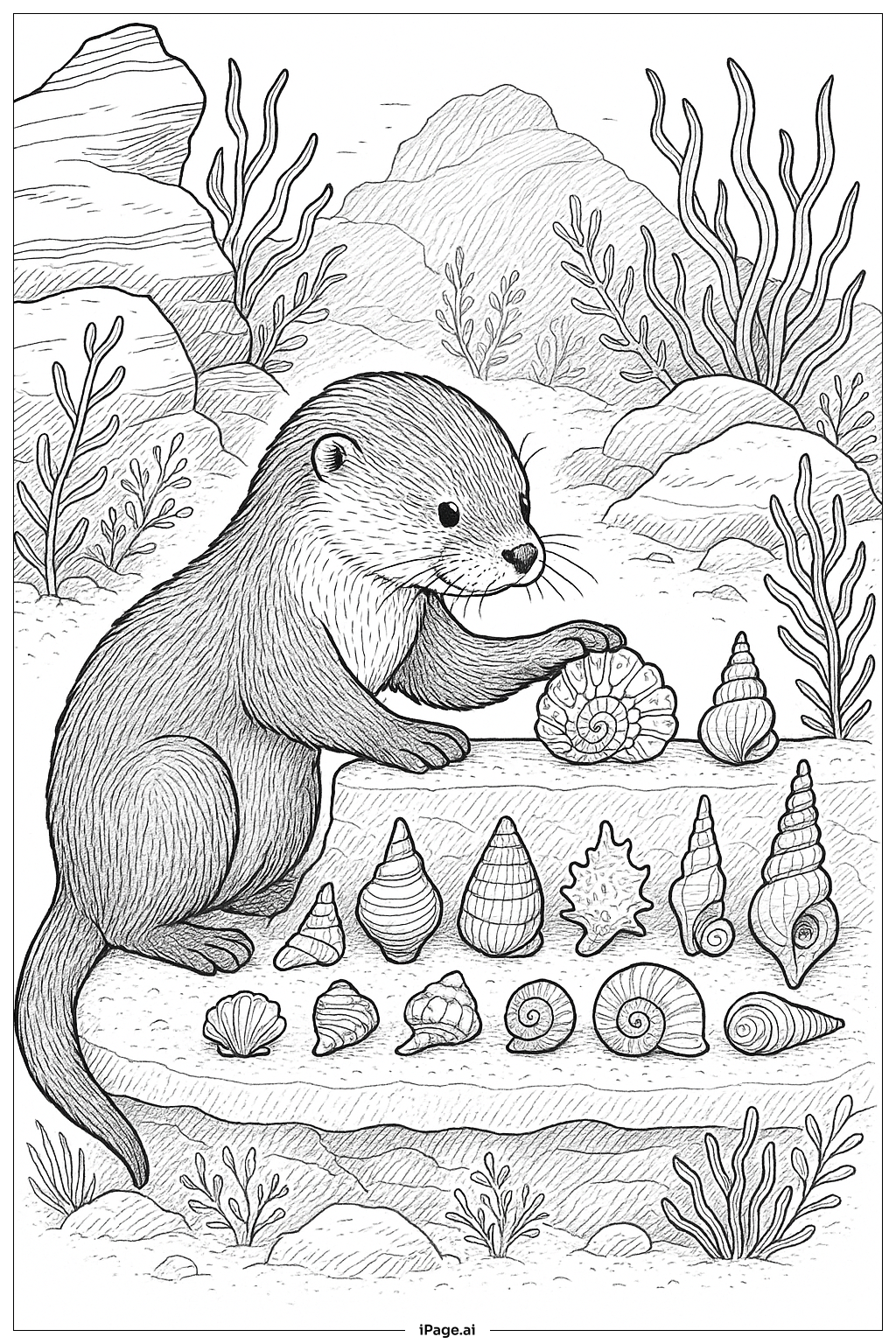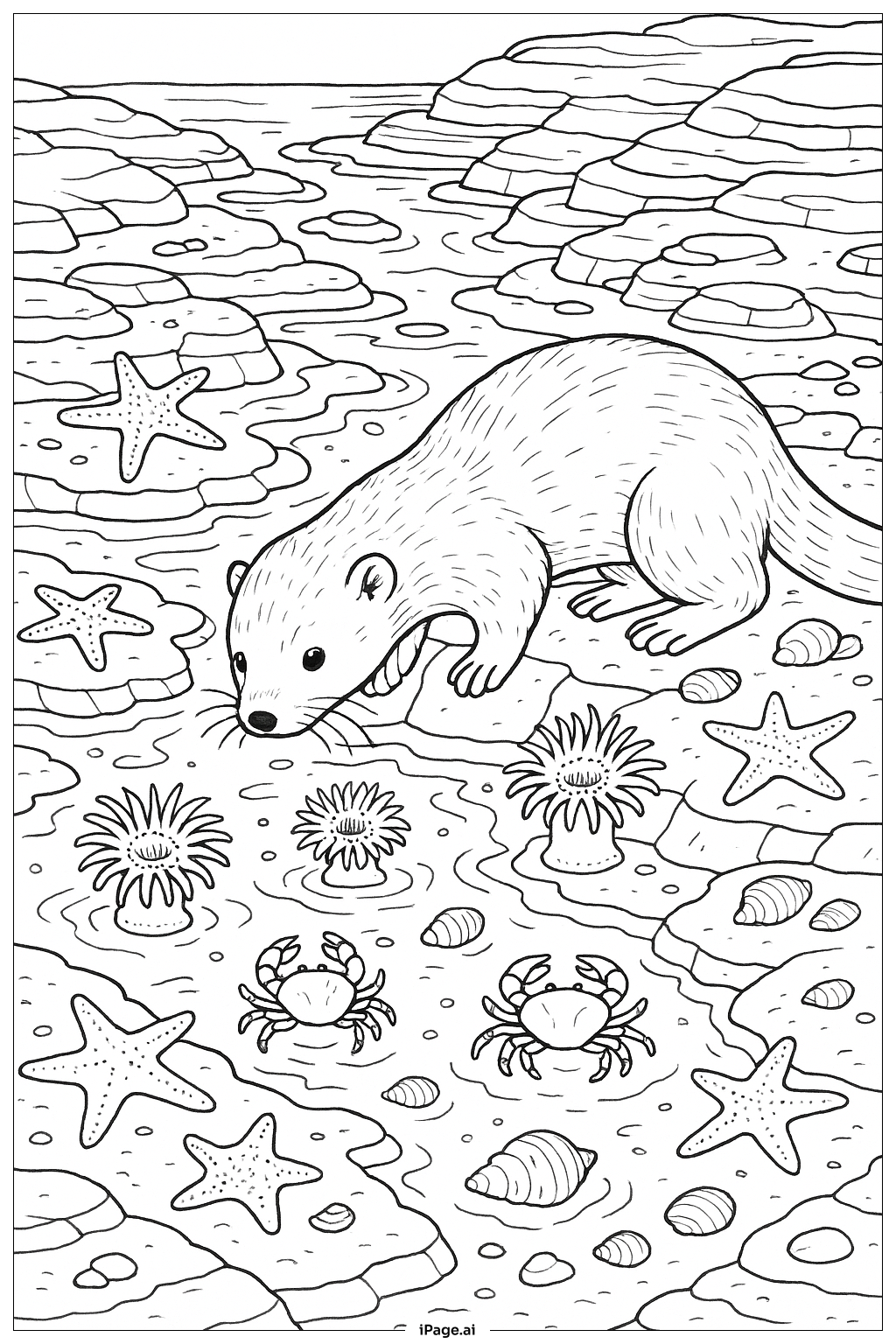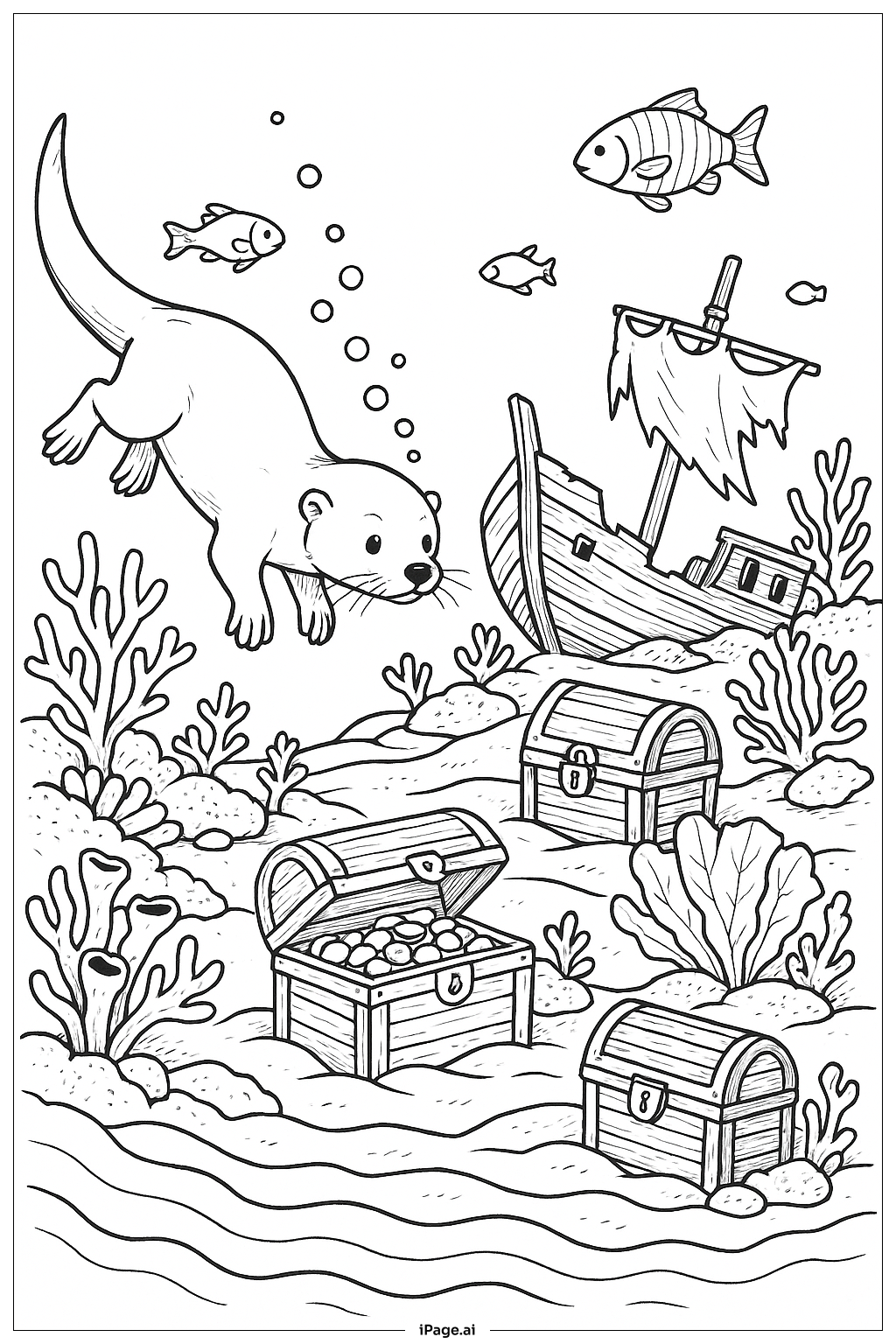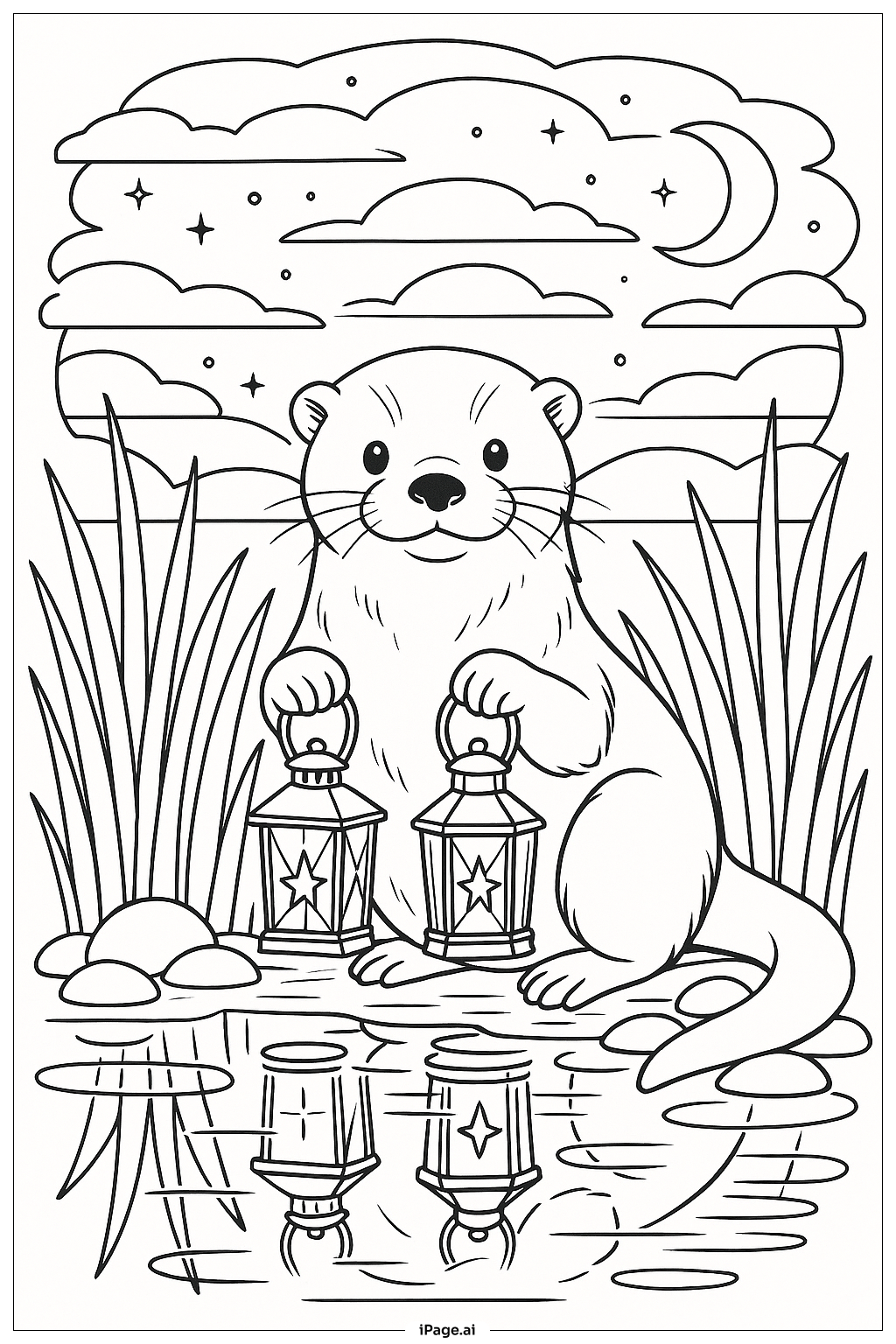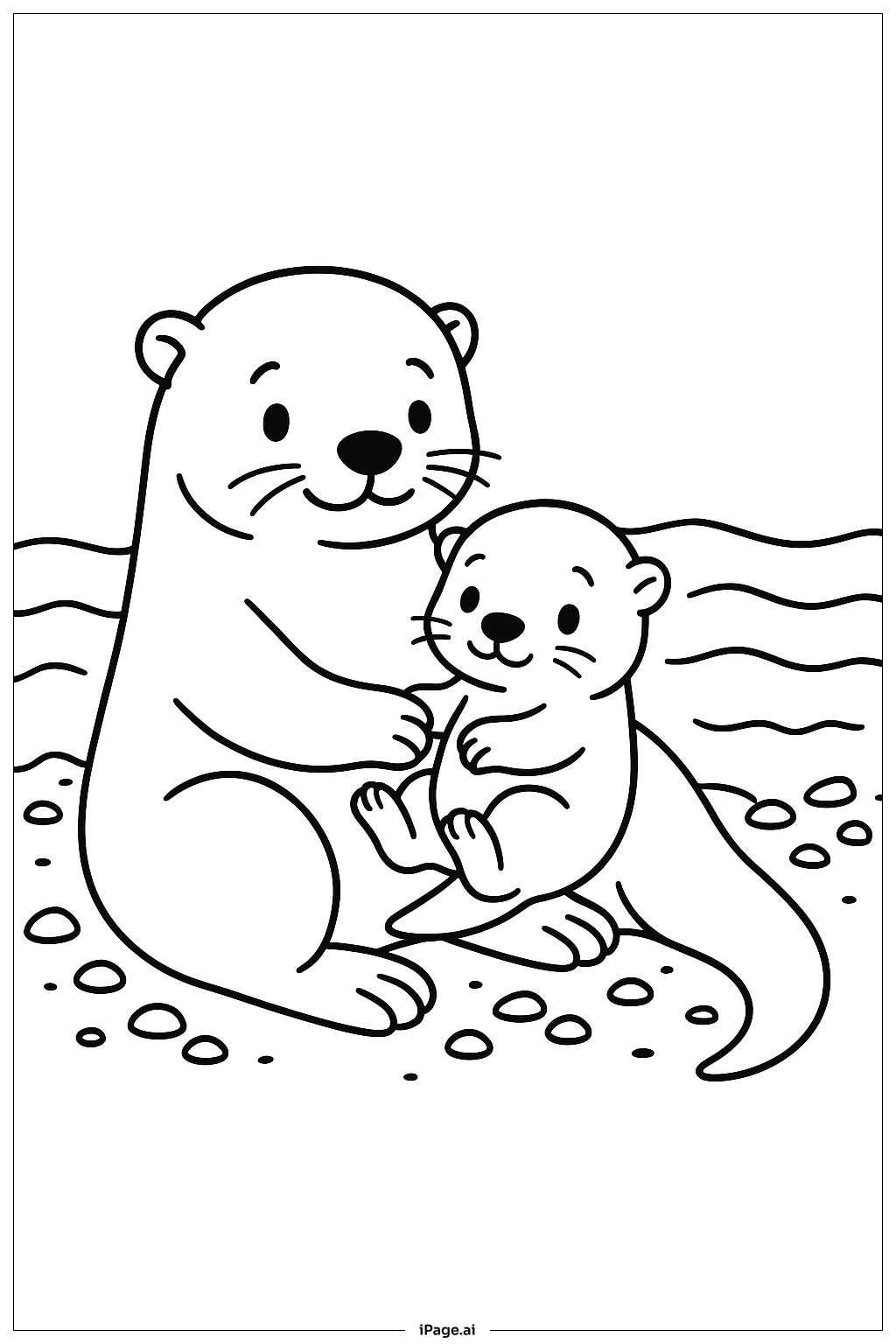
Coloring tips: How to color Otter With Baby Otter coloring page well?
Use soft brown shades to color the otters, with lighter browns or creams on their faces, bellies, and paws to show their fur texture. The rocks can be colored in gray or muted colors to make them look natural. The water behind the otters can be shaded with different blues, adding some light blue highlights for waves. You can use green or brown shades for any small plants or details around the ground to add more life to the picture. Use colors softly and avoid heavy outlines to keep the gentle mood of the scene.
Coloring challenges: Which parts are difficult to color and need attention for Otter With Baby Otter coloring page?
1. Coloring the otters’ bodies evenly can be tricky because they have large smooth areas that should look soft and natural. 2. Adding shading to show the difference between the lighter and darker fur parts needs careful blending. 3. The baby otter’s small paws and ears require careful attention to color inside tiny spaces. 4. The wavy lines of water need smooth, flowing color strokes to look realistic and natural. 5. Coloring the scattered stones on the ground requires small, precise touches to keep detail without coloring outside the lines.
Benefits of coloring books: Advantages of drawing Otter With Baby Otter coloring page
Coloring this picture helps improve fine motor skills as children carefully fill in small details like the baby otter’s paws and the stones. It encourages creativity when choosing colors for the water, otters, and surroundings. This activity also teaches color blending by gently shading different fur areas. Coloring animals and nature scenes promotes awareness and appreciation of the environment. Lastly, it fosters focus and patience while coloring within lines and completing the picture.