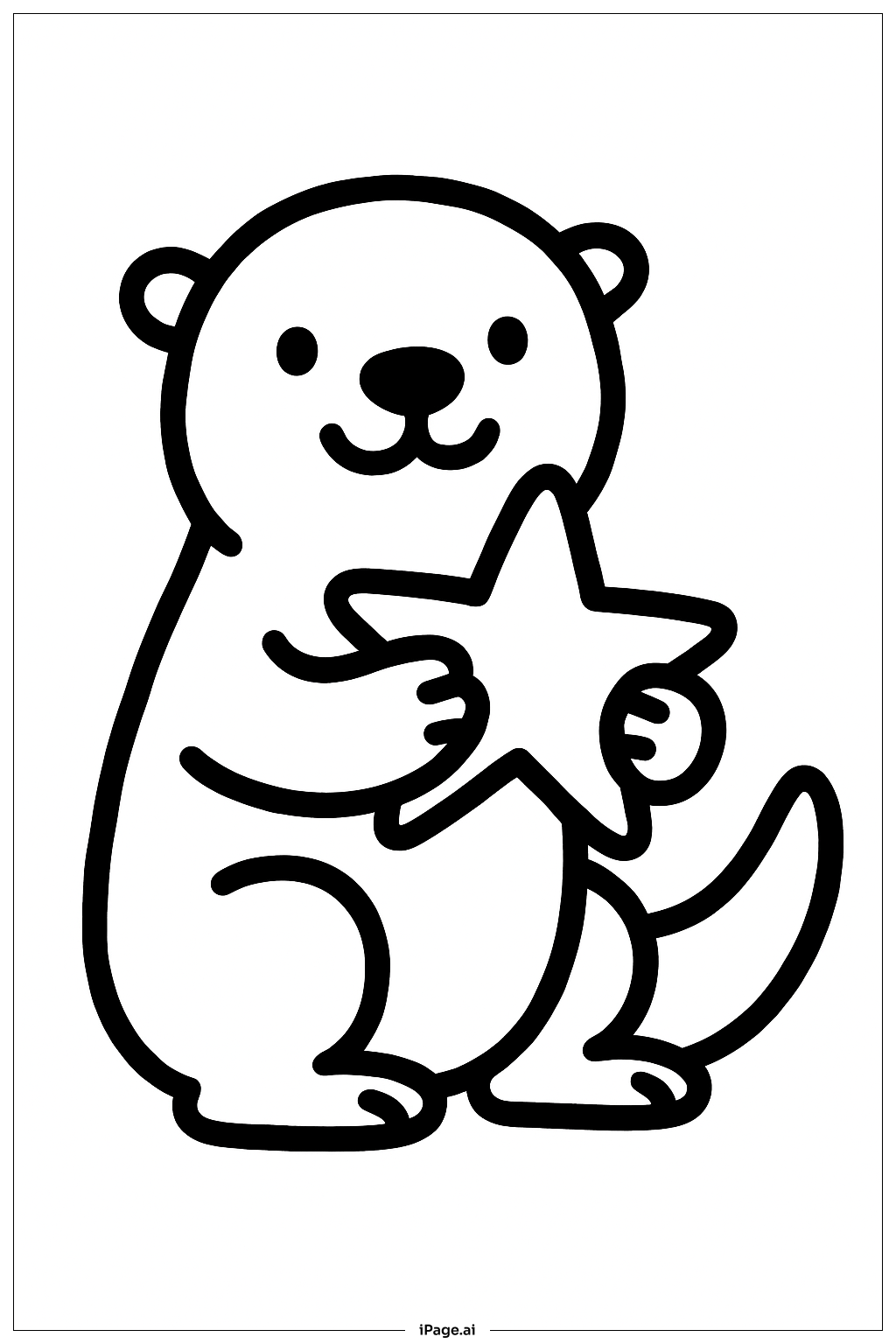
Coloring tips: How to color Otter With A Starfish coloring page well?
For the otter, use rich brown tones ranging from chocolate to light tan, with a lighter cream or beige color for the belly area where the starfish rests. Otters often have lighter faces, so consider using soft browns or tans around the cheeks and muzzle. The starfish offers great color flexibility - try bright orange, vibrant pink, purple, or even red for a bold contrast against the otter's fur. Color the water in shades of blue, from light sky blue to deeper ocean tones, or experiment with turquoise and teal. Add white highlights to the water ripples to create a sense of movement and sparkle. The otter's nose can be dark brown or black, while the eyes should be colored in deep brown or black with a small white dot left uncolored for that characteristic sparkle.
Coloring challenges: Which parts are difficult to color and need attention for Otter With A Starfish coloring page?
• Fur Texture Detail: The otter's body contains numerous lines representing fur texture, which requires patience and consistent coloring direction. Younger children may find it challenging to follow the flow of these lines while maintaining even pressure and color intensity throughout the entire body.
• Small Facial Features: The otter's eyes, nose, and mouth are relatively small details that need careful attention. Coloring within these tiny areas without going over the lines can be tricky, especially the eye highlights which should remain white or very light to create the characteristic sparkle.
• Starfish Texture Dots: The starfish has many small dots covering its surface that represent its natural bumpy texture. Deciding whether to color around each individual dot or color over them requires planning, and maintaining consistency across all five arms of the starfish demands focus and attention to detail.
• Water Ripples and Depth: The curved lines representing water ripples around the otter need thoughtful color gradation to create a realistic water effect. Children may struggle with blending different shades of blue smoothly or deciding where to place lighter and darker tones to suggest water movement and depth.
• Color Coordination: Balancing the color choices between the brown otter, colorful starfish, and blue water requires some understanding of color harmony. Ensuring all elements stand out while creating a cohesive, pleasing overall image can be challenging for beginners.
Benefits of coloring books: Advantages of drawing Otter With A Starfish coloring page
Coloring this adorable otter scene helps children develop fine motor skills through controlling their coloring tools within detailed areas like the fur lines and facial features. The varying textures - smooth water, bumpy starfish, and fluffy fur - teach young artists to use different coloring techniques and pressure levels. This image introduces children to marine wildlife, sparking curiosity about otters and their ocean habitat while providing a calming, enjoyable activity. The friendly, peaceful nature of the scene promotes relaxation and stress relief. Working with the flowing lines of the water and fur helps improve hand-eye coordination and teaches the concept of directional coloring. Choosing colors for the different elements encourages creativity and decision-making skills. Completing this charming picture builds confidence and provides a sense of accomplishment, while the cute subject matter keeps children engaged and motivated throughout the coloring process.