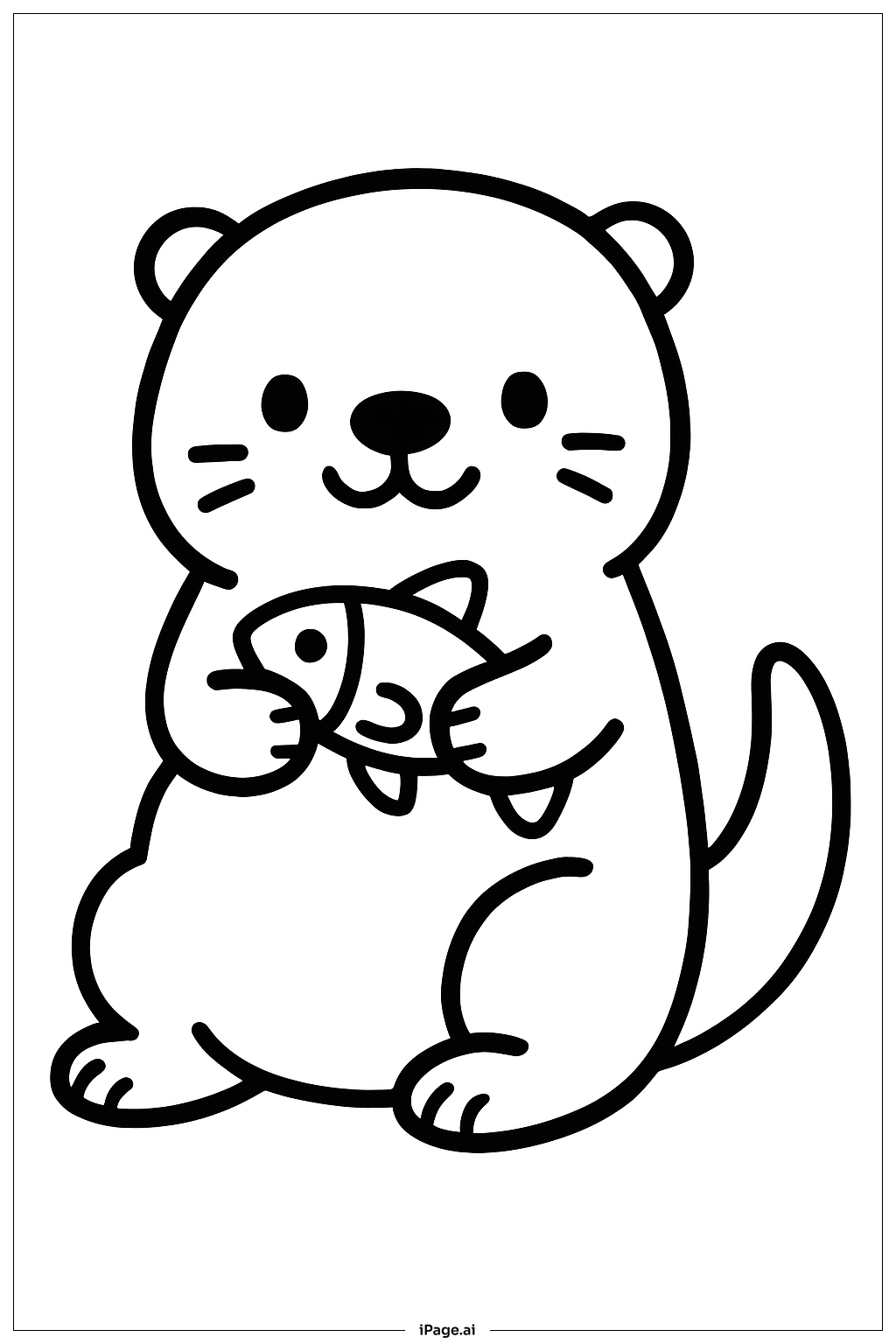
Coloring tips: How to color Otter With A Little Fish coloring page well?
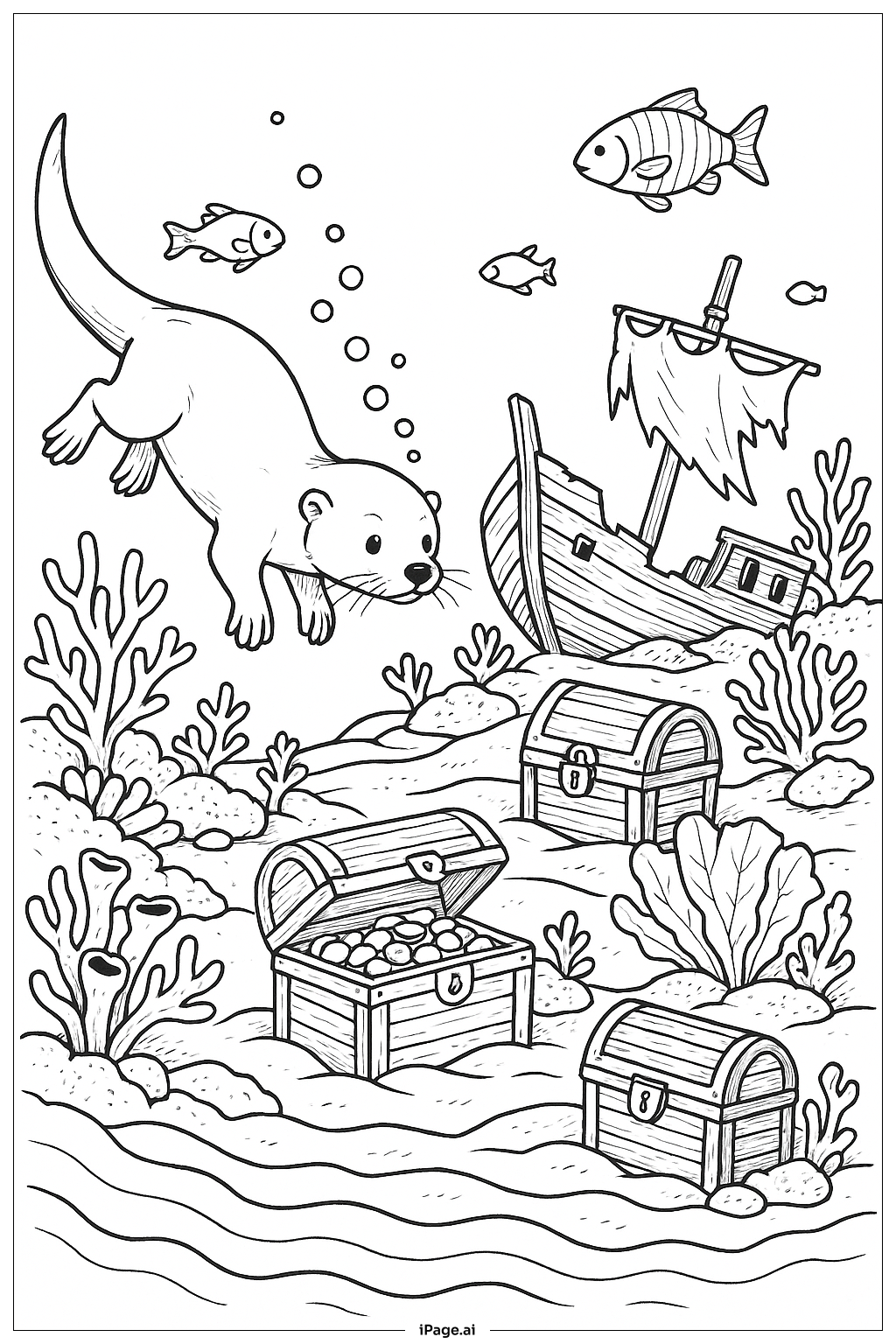
You can color the otter with soft brown or gray shades to make it look natural. Use a lighter shade for the belly to add some contrast. The fish can be colored in bright colors like orange, yellow, or blue to make it stand out. Try to use different colors for the fins and body of the fish to add detail. For the eyes and nose, you can use black or dark brown. Feel free to add a light blue or green background to represent water or nature, making the image more lively.
Coloring challenges: Which parts are difficult to color and need attention for Otter With A Little Fish coloring page?
1. Coloring inside the small parts like the fish's fins and the otter's fingers can be tricky. These parts are small and need careful coloring.
2. Making the otter's belly a different shade from the body requires attention to avoid mixing colors outside the lines.
3. Coloring the eyes and nose requires precision because they are small and very noticeable. A mistake here can change the expression.
4. Adding shadow or texture to the otter to create a three-dimensional look can be difficult for beginners.
5. Choosing colors that look natural together might be challenging but important for a good result.
Benefits of coloring books: Advantages of drawing Otter With A Little Fish coloring page
Coloring this picture helps improve hand-eye coordination and fine motor skills because it has different sized areas to color. It encourages creativity by letting you choose colors for the otter and fish. It also teaches about animals and nature, making learning fun. Coloring inside the lines builds patience and concentration. This image is simple enough for younger kids but also offers some details that older children can enjoy coloring carefully.