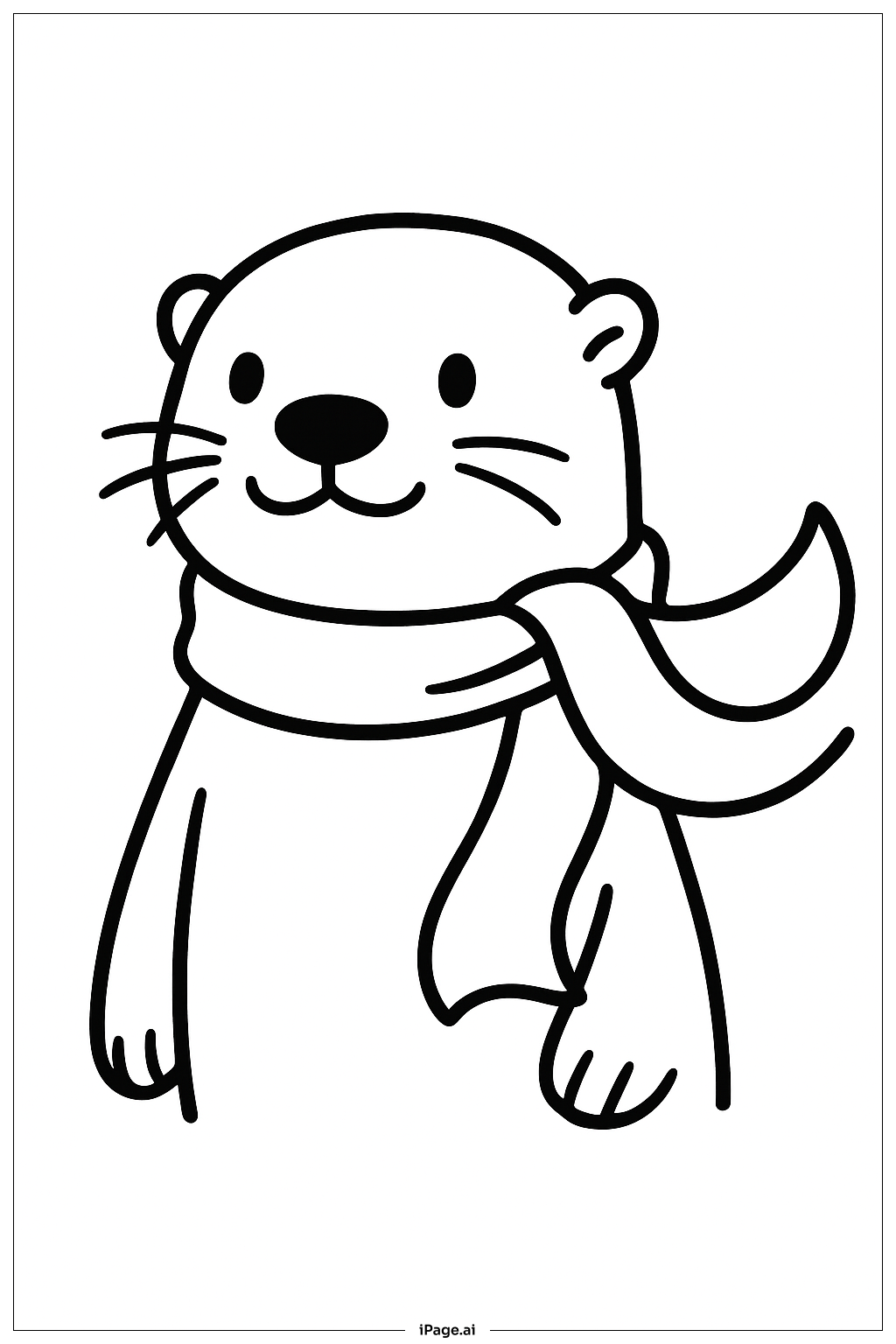
Coloring tips: How to color Otter Wearing A Scarf coloring page well?
Try using soft brown or gray shades for the otter's fur to make it look natural. For the scarf, pick bright and cheerful colors like red, blue, or green to make it stand out. You can use lighter tones for the belly and face to create contrast. Use colored pencils or crayons to blend colors smoothly. Adding shadows with a slightly darker shade of the same color can give the otter more dimension. Don't forget to color the small details like the nose and whiskers carefully for a neat finish.
Coloring challenges: Which parts are difficult to color and need attention for Otter Wearing A Scarf coloring page?
1. Coloring the round shapes of the otter’s head and body evenly can be a bit tricky because it requires smooth strokes to avoid color patches.
2. The scarf has curves and overlapping parts, so staying inside the lines might need extra patience.
3. Balancing light and dark shades when shading the otter to show its roundness could be challenging for beginners.
4. The small details like whiskers and nose require careful coloring to avoid smudging or coloring outside the lines.
5. Making the scarf look like it wraps naturally around the neck needs attention to detail and shading skills.
Benefits of coloring books: Advantages of drawing Otter Wearing A Scarf coloring page
Coloring this otter page helps improve fine motor skills as kids carefully color small parts like whiskers and paws. It encourages creativity in choosing colors for the scarf and fur. The simple design makes it accessible and enjoyable for young artists, boosting confidence. It also teaches attention to detail with the scarf’s shape and folds. Overall, this coloring page offers a fun way to practice focus and hand-eye coordination while creating a cheerful image.