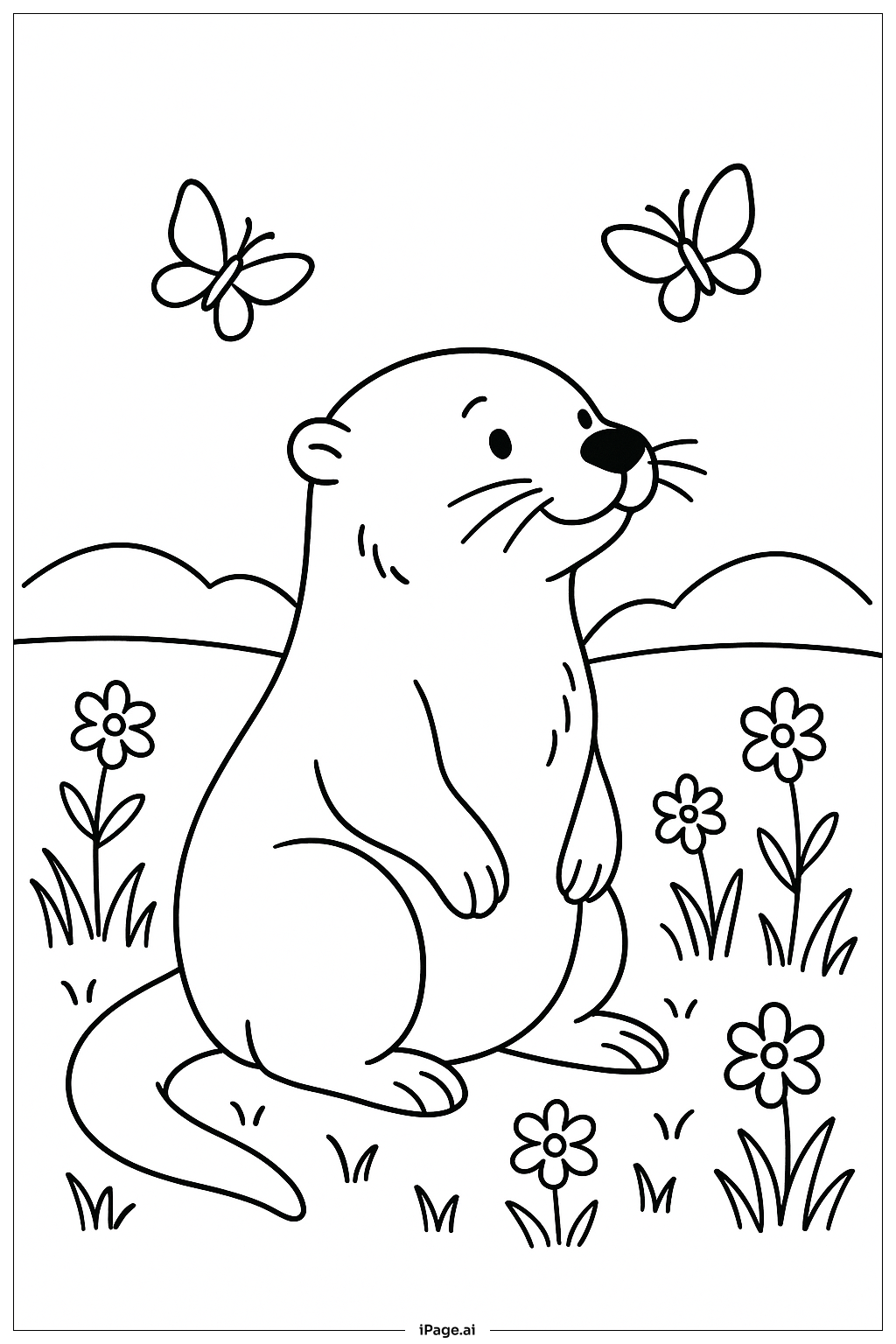
Coloring tips: How to color Otter Watching Butterflies coloring page well?
Start with the otter's fur using warm brown and tan tones. Use darker brown for shadowed areas under the chin and belly to add depth. Color the eyes dark brown with a small white highlight to make them sparkle. For the butterflies, go wild with color! Try bright oranges, yellows, blues, and purples for their wings. Add tiny dots or swirls to make the wing patterns pop. Use soft greens for the grass, reeds, and moss on the rocks. The wildflowers can be any cheerful color you like, such as pink, red, or yellow. Paint the water light blue or teal, and make the lily pads a fresh, medium green. Keep the sky in the background a pale blue or soft yellow for a warm, sunny feel. Take your time with the small details on the butterfly wings — they are the stars of the scene!
Coloring challenges: Which parts are difficult to color and need attention for Otter Watching Butterflies coloring page?
• Otter Fur Texture: The otter's fur has many fine, layered lines that require patience and careful coloring. Using short, directional strokes with your colored pencil or marker will help follow the natural flow of the fur. Blending two shades of brown — a lighter tan and a deeper chocolate — creates a more realistic look. Rushing this area can make the fur appear flat and dull, so take your time.\n\n• Butterfly Wing Patterns: Each butterfly wing is filled with delicate lines, curves, and tiny circular details. These small spaces are tricky to color neatly, especially for younger children. Using fine-tipped markers or sharp colored pencils works best here. Staying inside the lines takes concentration, but the result is stunning.\n\n• Water and Reflections: The stream and lily pad area can be challenging to color in a way that looks natural. Water is rarely just one flat color — adding light blue, soft teal, and hints of white gives it a realistic, shimmering effect. Blending smoothly in this area is key.\n\n• Background Depth: The reeds, grass, and flowers in the background need to look further away than the otter in the foreground. Using lighter, less saturated greens for background plants and deeper, richer tones for closer elements helps create a sense of distance and dimension.\n\n• Small Floral Details: The wildflowers scattered around the scene have small petals and tiny centers. Coloring each petal individually rather than covering them all in one color adds beautiful detail, but requires a steady hand and a fine coloring tool.
Benefits of coloring books: Advantages of drawing Otter Watching Butterflies coloring page
Coloring this sweet otter scene brings a whole range of wonderful benefits for kids and adults alike. For younger children, carefully filling in the otter's fur and the butterfly wings helps build fine motor skills and hand-eye coordination. Choosing which colors to use for each butterfly encourages creative thinking and self-expression. There are no wrong answers — every choice makes the picture unique.\n\nFor older children and teens, the detailed patterns on the butterfly wings and the layered textures of the fur offer a satisfying challenge that builds focus and patience. Completing a detailed image like this gives a real sense of accomplishment.\n\nFor adults, this peaceful nature scene makes a wonderful stress-relief activity. Focusing on coloring quiet, natural imagery — flowing water, soft grass, gentle butterflies — helps calm the mind and ease anxiety. It brings attention to the present moment, similar to mindfulness practice.\n\nThe scene also sparks curiosity about nature. Kids may become interested in learning about real otters and butterfly species after coloring this page, turning a creative activity into a learning opportunity. Overall, this image is a joyful, calming, and enriching coloring experience for all ages.