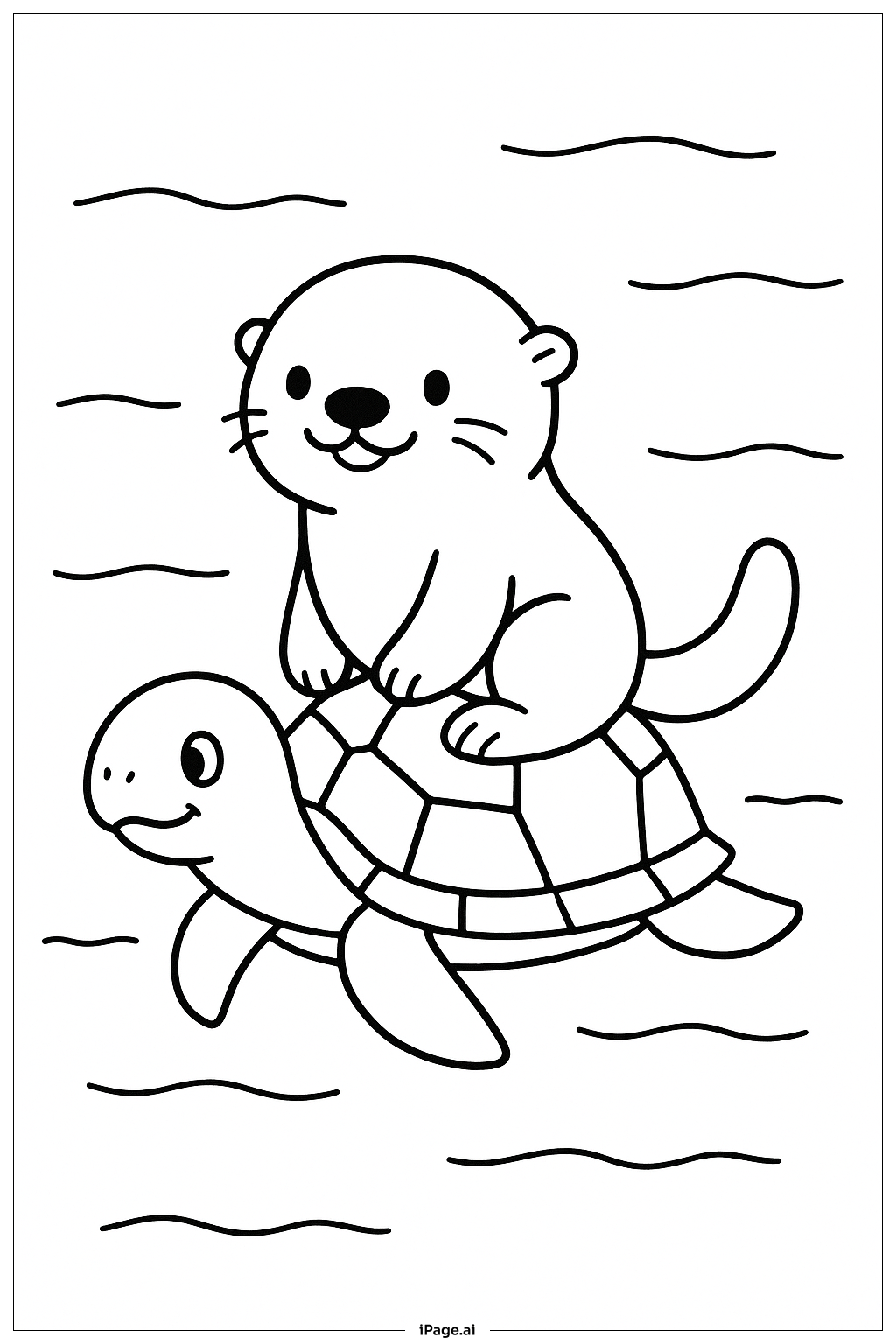
Coloring tips: How to color Otter Riding On Turtle coloring page well?
Use soft brown or gray shades to color the otter, giving it a natural look. For the turtle, use green tones for its shell and limbs, and add darker green or brown for the shell pattern. The water can be colored with light blue or turquoise shades to show calm water. You can also use lighter and darker shades of the same color to add depth. Try coloring the otter’s eyes black or dark brown to make them stand out. Feel free to add some bright colors to make the scene playful and lively.
Coloring challenges: Which parts are difficult to color and need attention for Otter Riding On Turtle coloring page?
1. The otter's small and detailed features like whiskers and paws require careful coloring to avoid coloring outside the lines. 2. The turtle's shell pattern can be tricky because it has many small shapes that need different colors or shading to look good. 3. Coloring the water with wavy lines might be challenging, as it needs multiple shades to show movement and depth properly. 4. Keeping the otter and turtle distinct while choosing colors requires good color contrast to prevent the animals from blending together. 5. Children might find it hard to stay inside the narrow lines, so patience and a steady hand are needed.
Benefits of coloring books: Advantages of drawing Otter Riding On Turtle coloring page
Coloring this picture helps children improve fine motor skills by practicing small, detailed areas like the turtle’s shell and the otter’s whiskers. It also encourages creativity when choosing colors for animals and water. The picture promotes focus and patience because of the many small parts to color carefully. Coloring animals like the otter and turtle can teach kids about nature and animal life. Overall, it’s a fun way to develop coordination, attention to detail, and artistic expression.