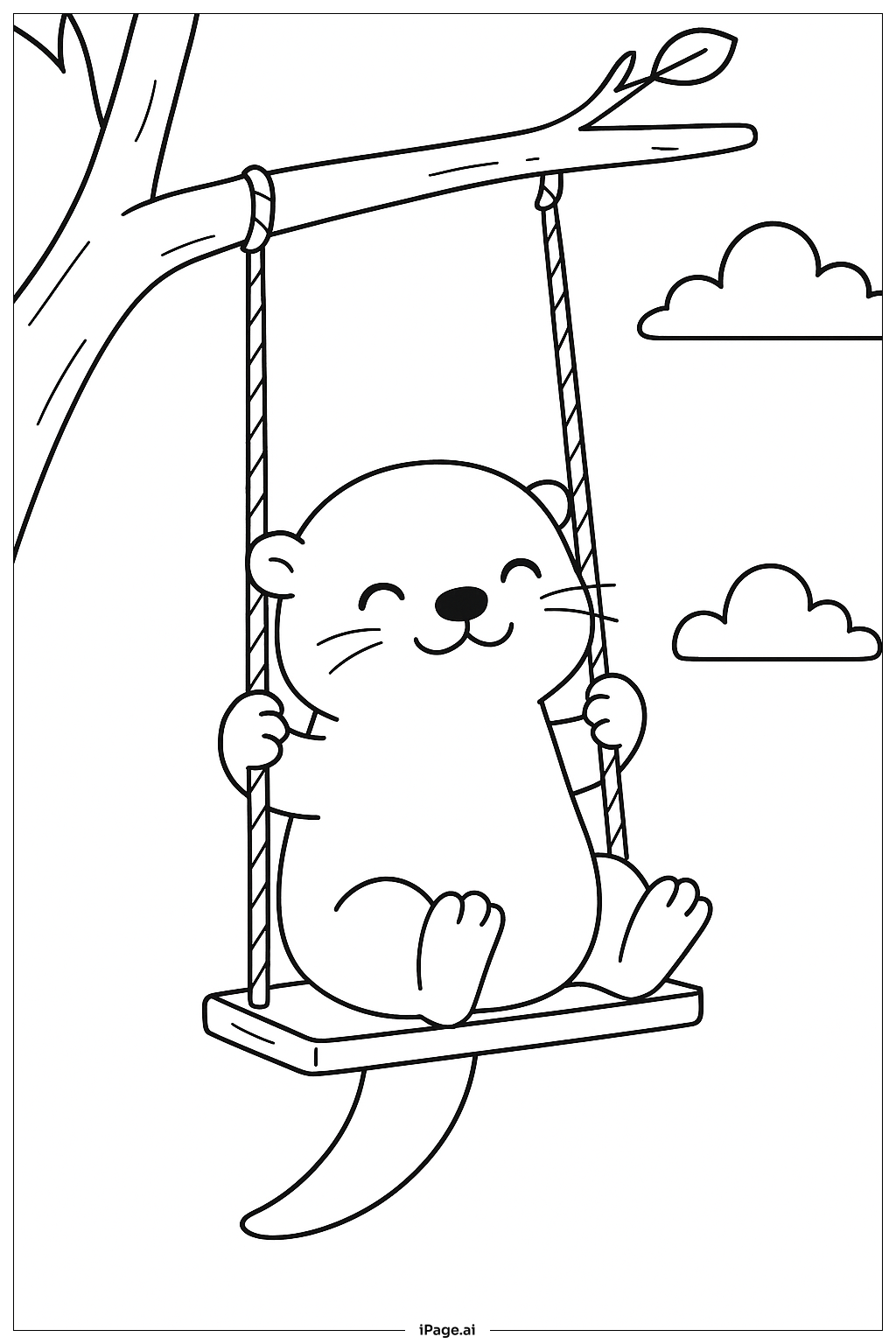
Coloring tips: How to color Otter On Swing coloring page well?
Use soft browns or grays to color the otter’s fur for a natural look. Color the tree branch in warm browns to show its woody texture. The swing seat can be a light brown or tan to contrast with the ropes. The ropes can be left white or slightly shaded with gray or beige to show their twisted appearance. For the clouds, soft blues or light grays work well to create a calm sky. Add some green at the edges of the branch where leaves might be attached. Keep colors light and cheerful to match the happy mood of the image.
Coloring challenges: Which parts are difficult to color and need attention for Otter On Swing coloring page?
1. Coloring the ropes evenly can be tricky because they have a twisted pattern that needs careful shading to show texture.
2. The otter’s paws and face have small, detailed areas that require careful coloring to stay within the lines.
3. The branch has thin lines that show wood texture and need gentle coloring to avoid covering these details.
4. Avoid coloring outside the swing seat to keep the picture neat.
5. Creating a balanced background with clouds without overcrowding the image can be a challenge for young colorers.
Benefits of coloring books: Advantages of drawing Otter On Swing coloring page
Coloring this picture helps children practice fine motor skills and hand-eye coordination, especially with the detailed ropes and small parts like the otter’s face and paws. It encourages using different shades and blending colors gently to show texture. This activity also promotes creativity by allowing children to choose warm, natural colors or imaginative ones for the otter and background. Finally, it encourages focus and patience, as kids need to stay within lines and work carefully to make the picture look cheerful and neat.