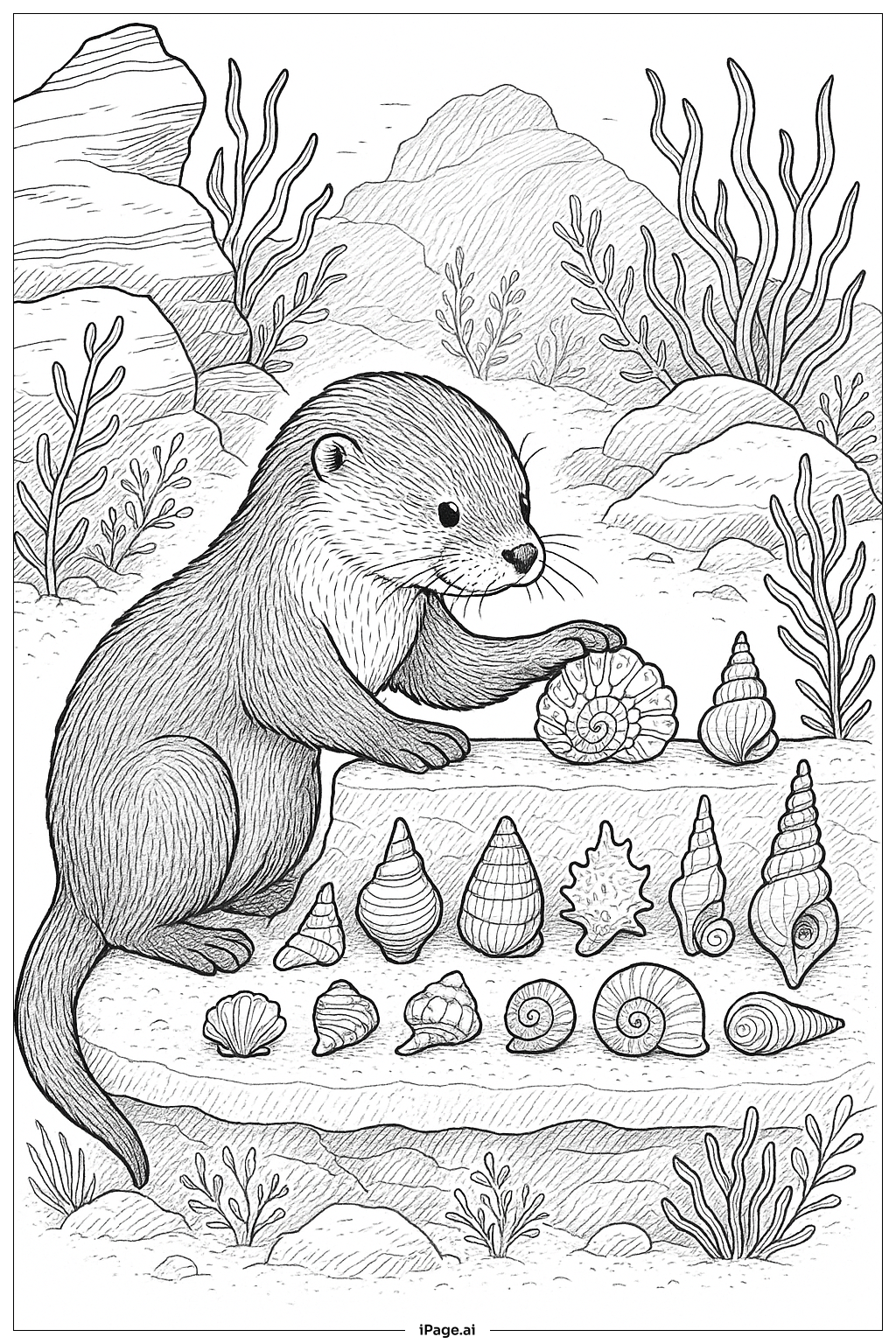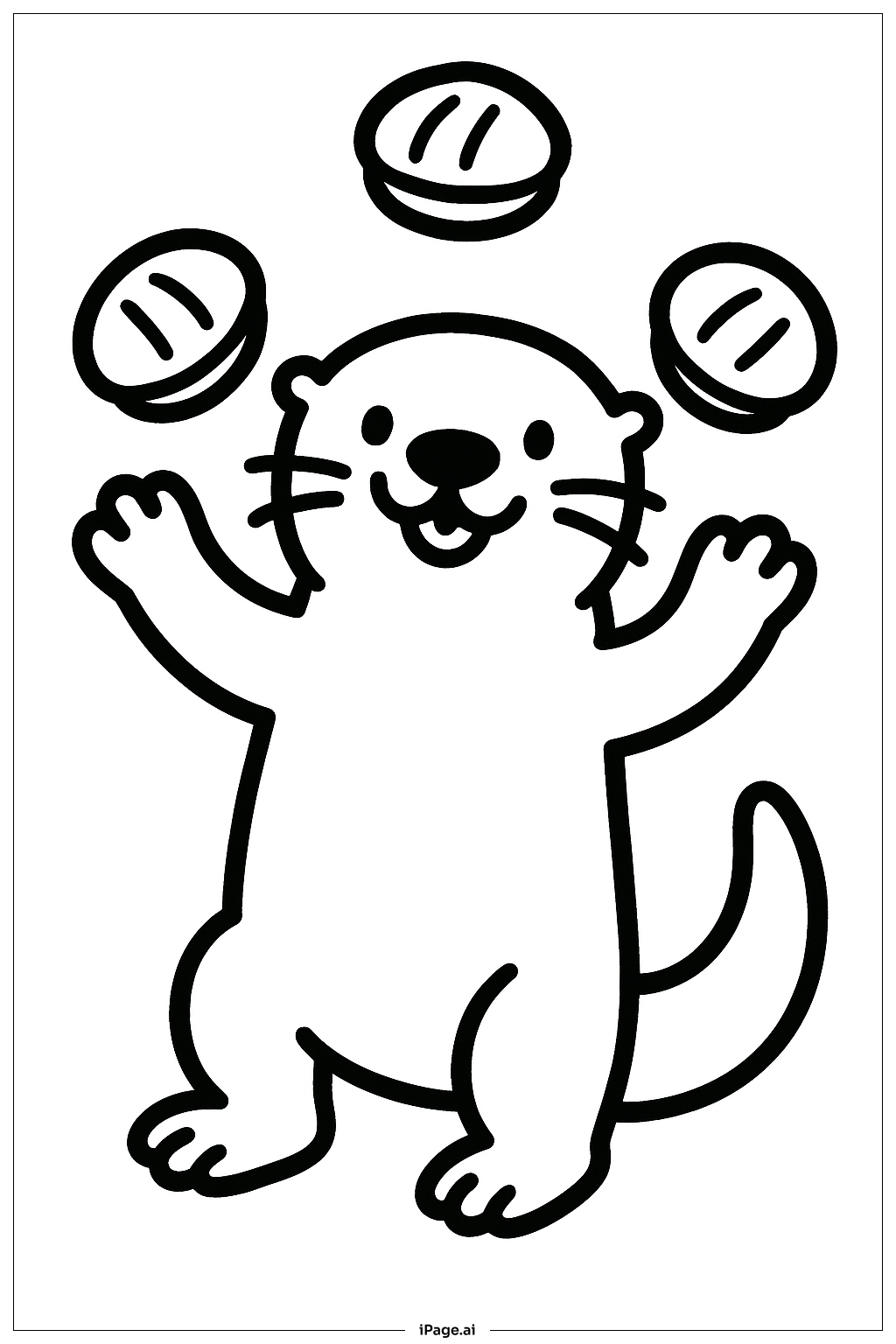
Coloring tips: How to color Otter Juggling Shells coloring page well?
For the otter, use rich brown tones for the body, blending darker shades along the back and lighter beige or tan colors for the belly and face. Add touches of gray around the whiskers and paws for depth. The shells offer wonderful variety: try sandy beige, cream, and soft pink for the conch shells, while clam shells can be pearl white with hints of lavender or pale blue. Consider adding subtle rainbow shimmer effects inside the shells. Use light blue for water droplets and splashes to create a fresh, aquatic feel. The background could feature soft ocean blues fading to sandy yellows, or keep it simple with gentle waves. Add shadows beneath the otter using light gray to ground the figure. Blend colors smoothly on the otter's fur to show its soft, water-resistant coat.
Coloring challenges: Which parts are difficult to color and need attention for Otter Juggling Shells coloring page?
• Shell Details and Variety: Each shell has intricate spiral patterns, ridges, and textures that require careful attention. The curved lines of conch shells need consistent color gradients to show their three-dimensional spiral form. Younger children may find it challenging to stay within these small, detailed spaces while older colorists can experiment with realistic shading techniques to make each shell look unique and dimensional.
• Otter Fur Texture: Creating realistic fur texture requires layering multiple shades of brown and using directional strokes that follow the natural flow of the coat. The transition from dark back fur to light belly fur needs smooth blending to avoid harsh lines. The whiskers are thin lines that require precision, and the overall furry appearance demands patience to build up color gradually rather than filling in flat, solid tones.
• Dynamic Movement and Depth: The juggling motion creates overlapping elements where shells appear at different distances from the viewer. Shells in the foreground should be colored more vibrantly while background shells need lighter, softer tones to show depth. The curved path of the juggling arc requires understanding spatial relationships, and adding motion blur or trailing effects around moving shells adds complexity that challenges advanced colorists.
• Water Elements: The water droplets and splashes have transparent qualities that are tricky to render. They need highlights and shadows to appear three-dimensional and liquid. Deciding where to leave white highlights for shininess versus where to add pale blue tones requires planning and understanding of how light interacts with water.
Benefits of coloring books: Advantages of drawing Otter Juggling Shells coloring page
Coloring this playful otter scene helps children develop fine motor skills through precise movements needed for small details like whiskers and shell patterns. The variety of elements encourages color recognition and creative decision-making as children choose different shades for multiple shells. The dynamic composition teaches spatial awareness and helps young artists understand movement and action in still images. Following the curved lines of shells improves hand-eye coordination and control. The subject matter sparks imagination and curiosity about marine animals and their playful behaviors, potentially inspiring interest in ocean wildlife. The moderate complexity level provides an achievable challenge that builds confidence when completed. For older children and adults, this image offers stress relief through focused, meditative coloring while the whimsical subject brings joy and lightheartedness to the activity.