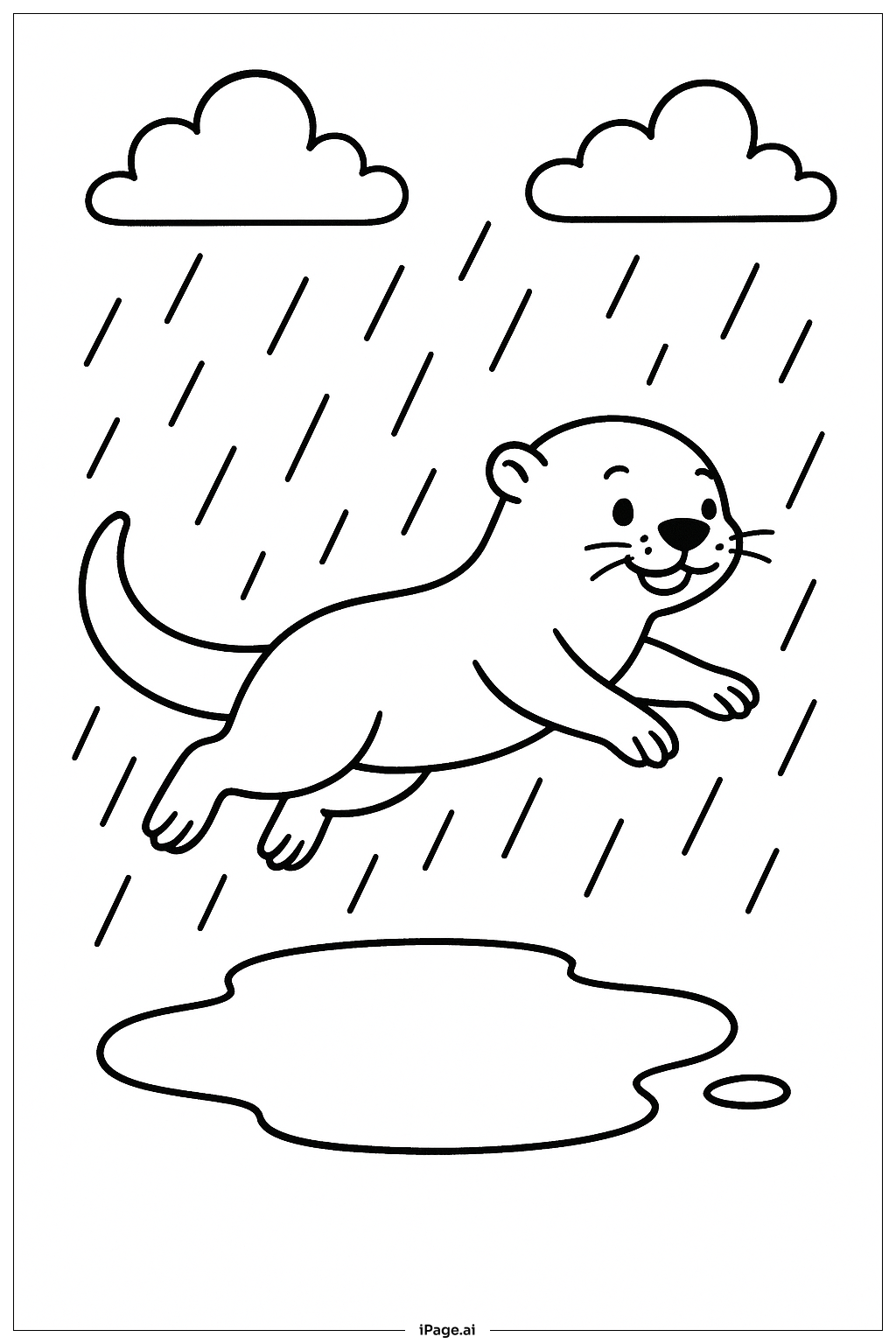
Coloring tips: How to color Otter In Rain With Puddle coloring page well?
Start with the otter's body using warm brown and tan shades. Use a lighter cream or beige for the belly and face area to show the softer, fluffier fur. For the wet fur effect, add slightly darker brown strokes along the edges to give depth.
Color the puddle with light blue and soft gray tones. Add gentle streaks of white to suggest water reflections and ripples. The falling raindrops can be colored in pale blue or light silver.
For the background, use soft gray and blue tones to create a cloudy, rainy-day sky. Keep the overall palette cool and calm to match the rainy mood.
Add small touches of white highlights on the otter's eyes to make them sparkle with life. You can use a slightly darker gray-blue on the ripples around the puddle to give a sense of movement. Keep colors gentle and soft throughout to capture the cozy feeling of a rainy day.
Coloring challenges: Which parts are difficult to color and need attention for Otter In Rain With Puddle coloring page?
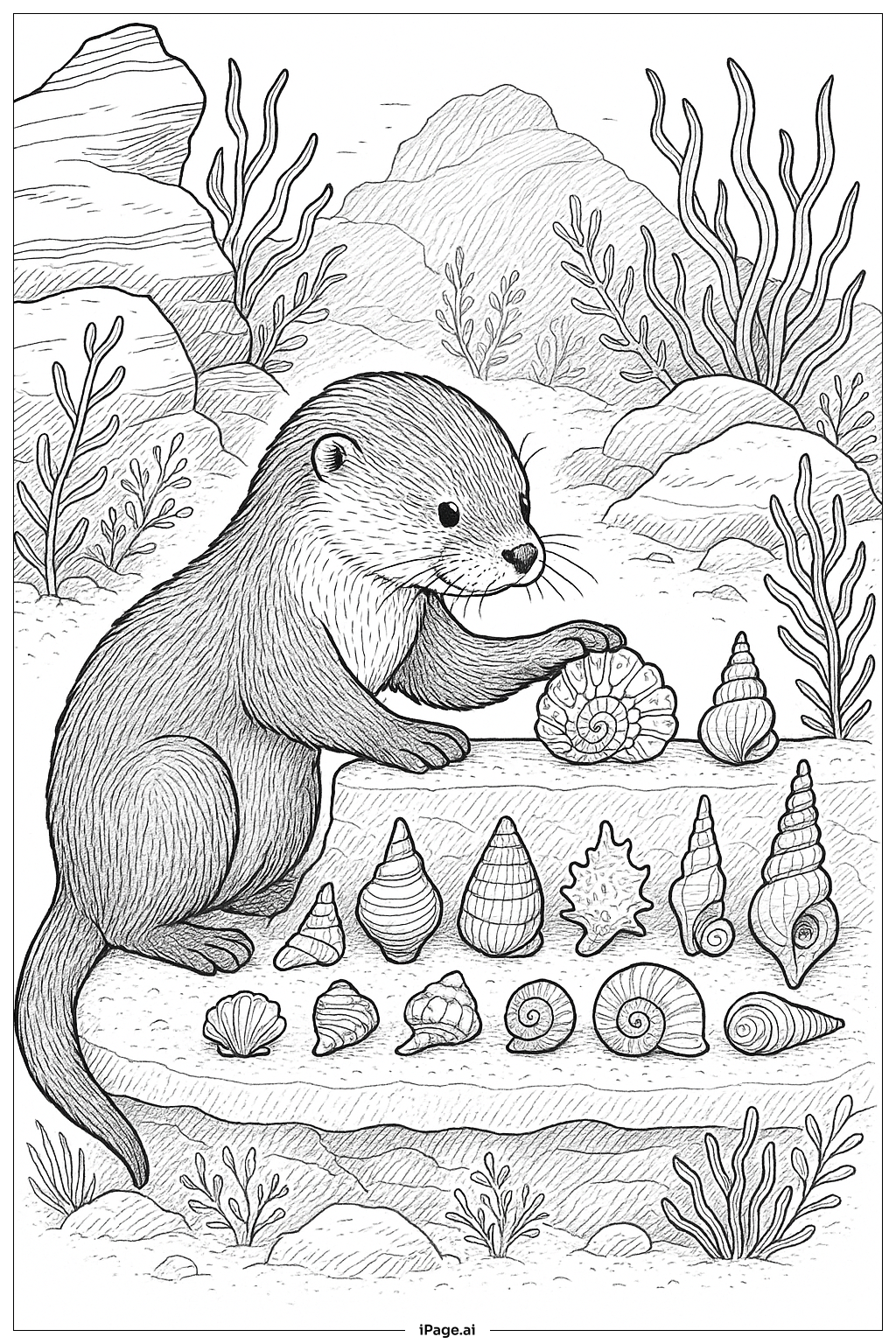
• Otter Fur Texture: The otter's fur has many fine lines and layers that need careful coloring. You will need to follow the direction of the fur strokes to make it look natural. Using multiple shades of brown and blending them smoothly is tricky, especially around the face, chest, and paws where the fur changes from darker to lighter tones.
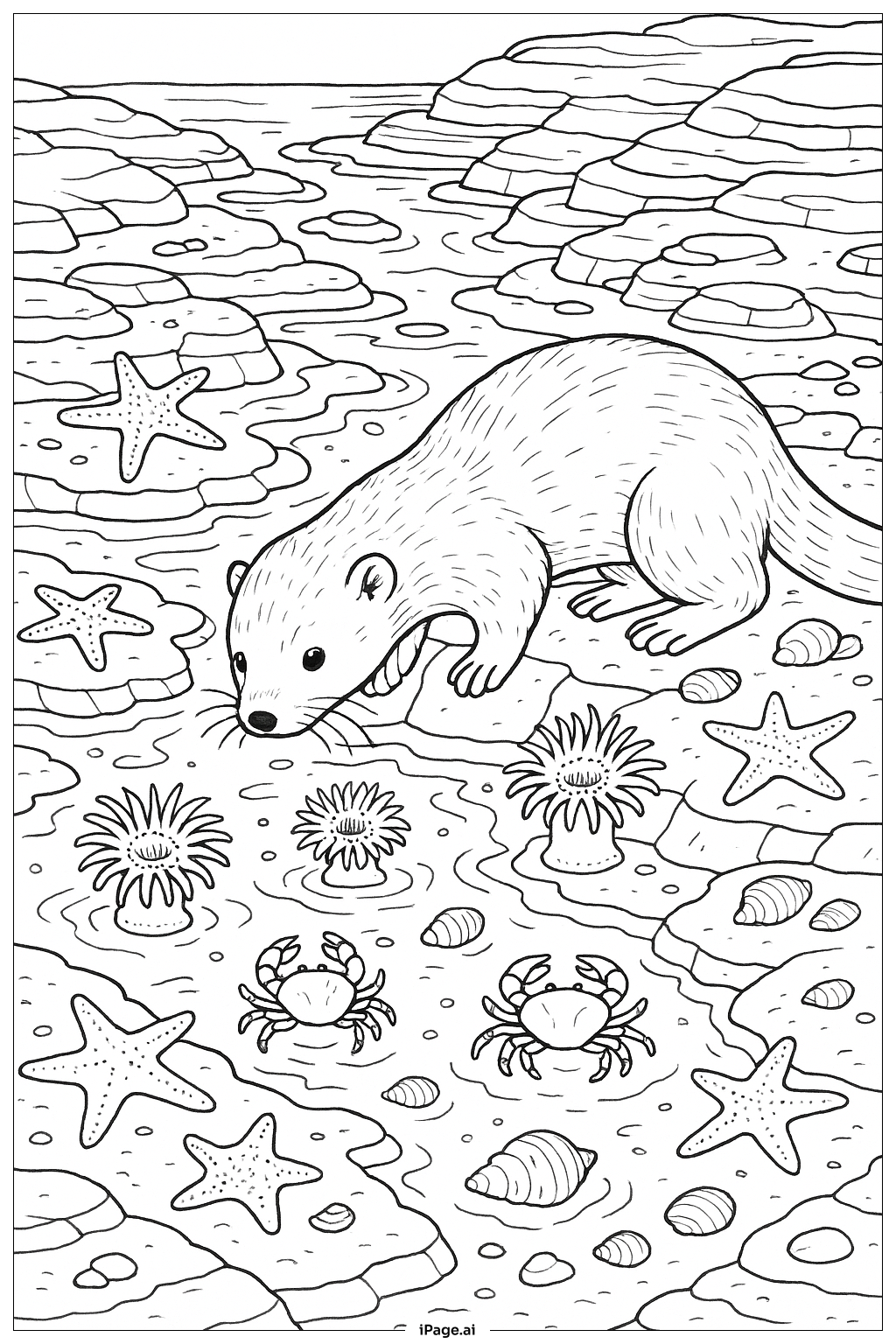
• Water Ripple Details: The puddle and raindrops contain small curved lines that represent ripples and splashes. These are tight, closely spaced lines that require a steady hand and a fine-tipped tool. Keeping the water looking fluid and realistic without going outside the lines takes patience and focus.
• Reflections on the Puddle Surface: The puddle reflects light in a way that requires using multiple colors together, such as light blue, white, and gray. Blending these colors to mimic a shiny, wet surface without making it look muddy or flat is one of the harder coloring challenges in this image.
• Raindrop Lines in the Background: The falling rain is shown as many thin diagonal lines across the background. These lines are close together and can be easy to miss or color over. Keeping each line separate and using a consistent light blue or gray tone without pressing too hard requires control and attention to detail.
• Contrast Between Otter and Background: Making sure the otter stands out clearly from the rainy background is important. If similar colors are used for both, the image can look flat. Balancing warm tones on the otter against the cool blues and grays of the rain and puddle takes color planning and careful choices.
Benefits of coloring books: Advantages of drawing Otter In Rain With Puddle coloring page
Coloring this otter in the rain scene offers many wonderful benefits for kids and beginners alike.
First, it builds focus and patience. The small details like fur texture, ripples, and raindrops encourage children to slow down and concentrate, which strengthens their attention span over time.
Second, it develops fine motor skills. Carefully coloring inside the fine lines of the fur, the puddle ripples, and the falling rain helps train hand control and pencil grip, skills that are useful in writing and drawing.
Third, it sparks creativity. Choosing colors for the otter, the puddle, and the rainy sky lets children express their imagination. There is no single right answer, so every child can make their own unique version.
Fourth, it introduces nature appreciation. The rainy-day setting with an otter playing in a puddle helps children connect with animals and the natural world in a fun and gentle way.
Finally, it offers a calming, relaxing experience. The soft, peaceful mood of the image makes it a great activity for winding down after a busy day. Coloring can reduce stress and bring a sense of joy and accomplishment when the page is complete.