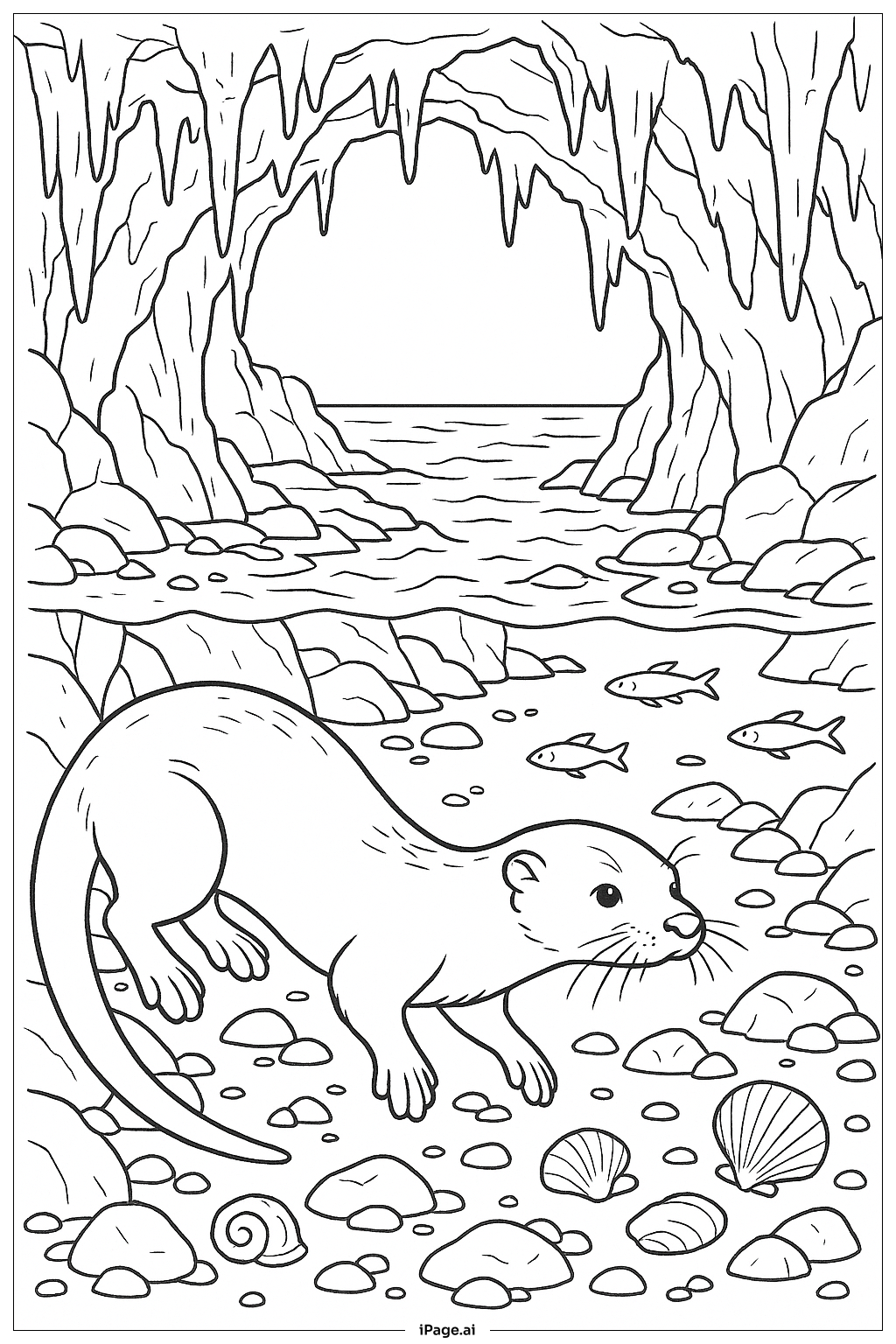
Coloring tips: How to color Otter In Ocean Cave coloring page well?
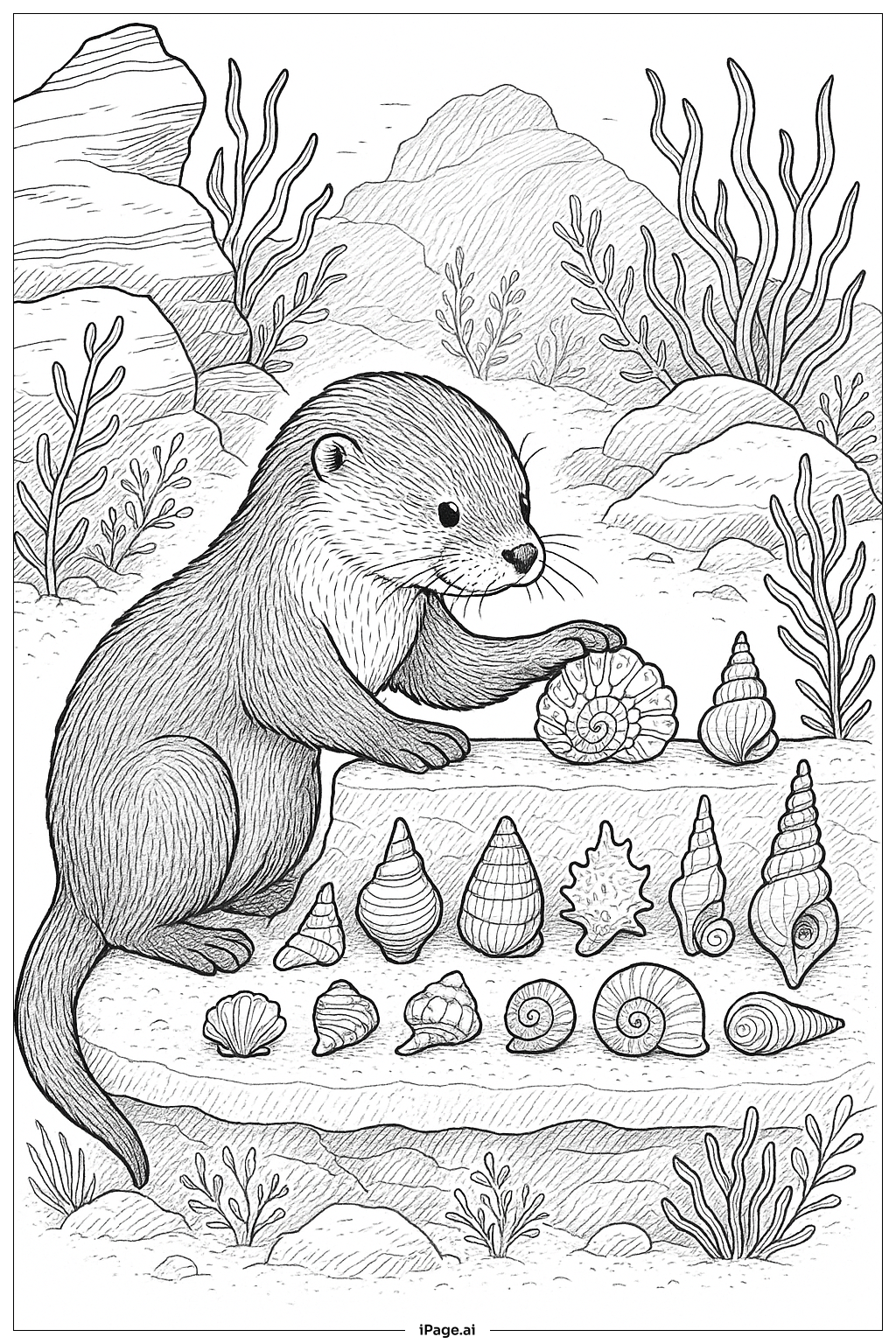
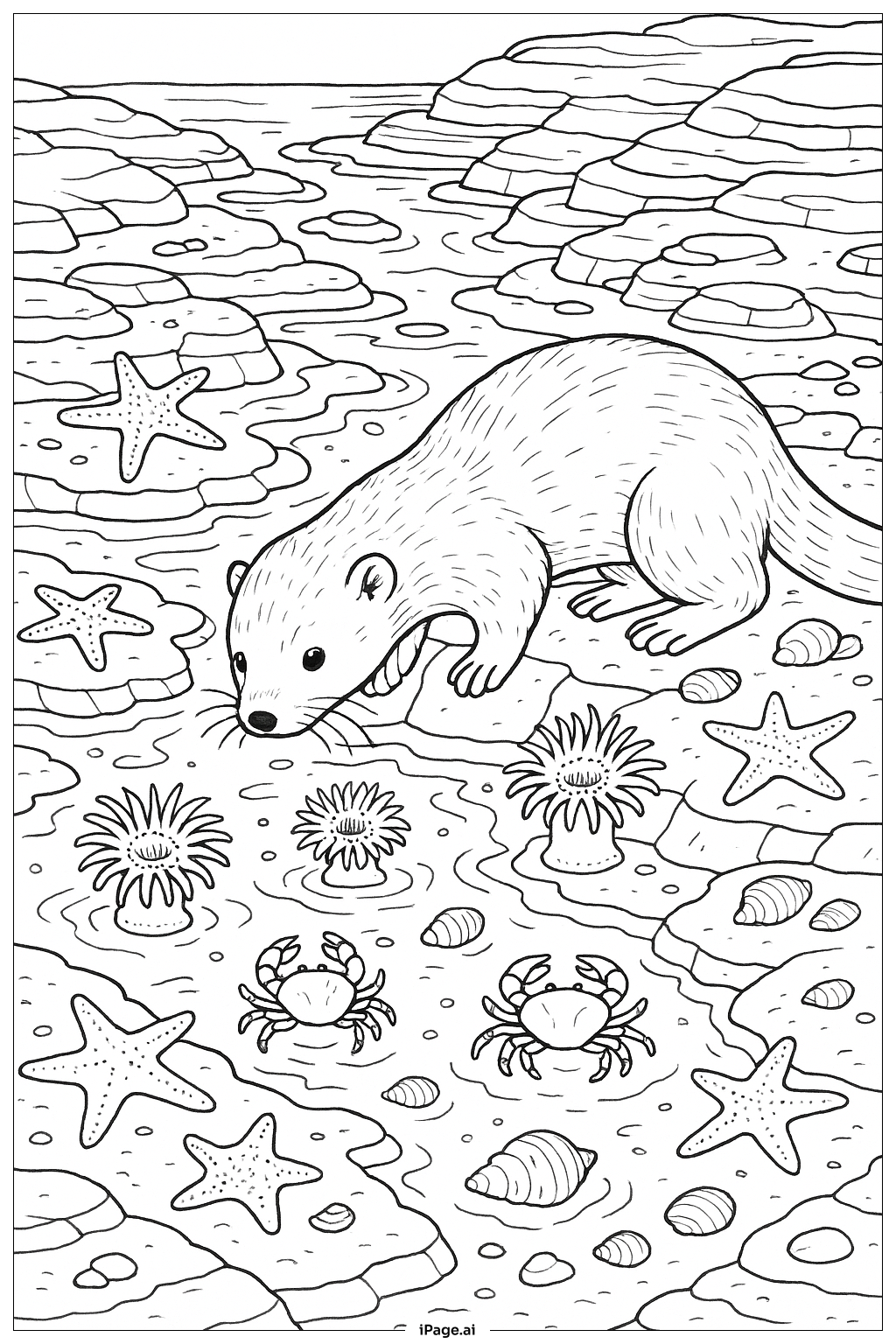
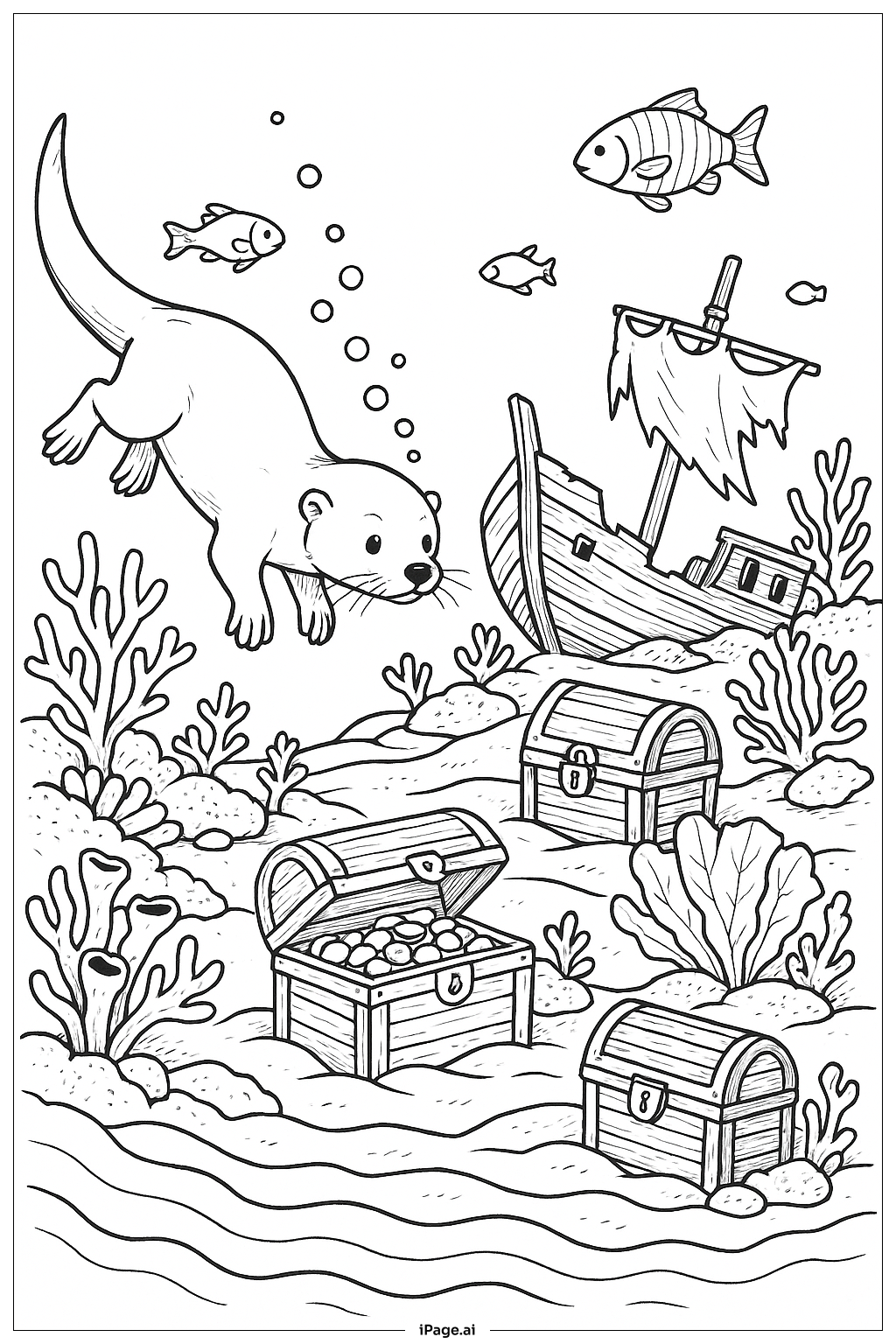
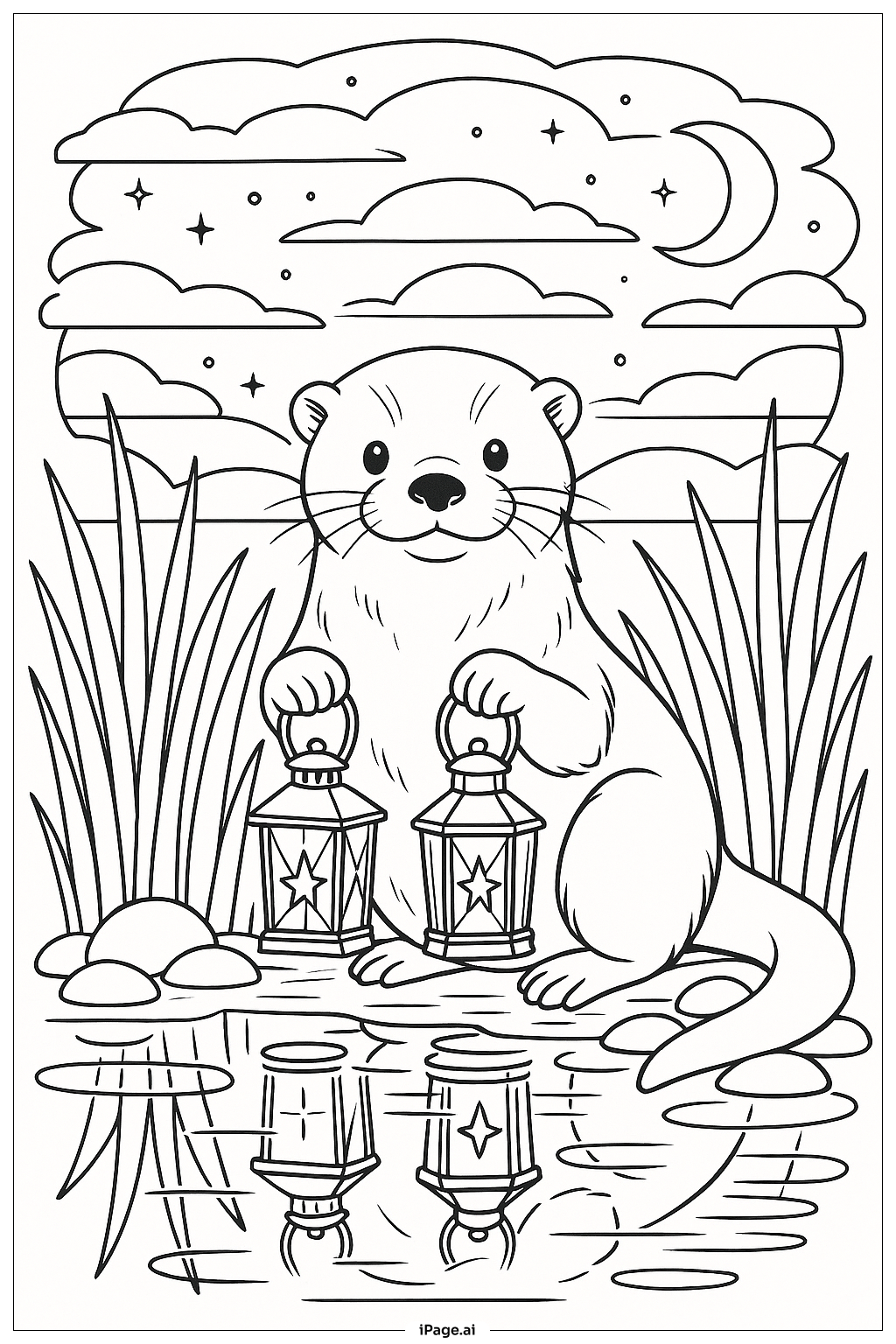
Use soft brown or gray tones to color the otter's fur for a realistic look. The cave walls can be shaded with different shades of gray and light brown to show the rough texture of the rocks. Use light blue or teal for the water inside the cave and a deeper blue for the ocean outside. Color the fish in bright colors like orange, yellow, or silver to make them stand out. For the sea shells, try using light pinks, purples, or creams. Rocks and stones can be in various shades of gray and beige.
Coloring challenges: Which parts are difficult to color and need attention for Otter In Ocean Cave coloring page?
1. The otter's body has smooth curves and small details like whiskers, which need careful coloring to stay inside the lines.
2. The cave walls have many sharp edges and narrow spaces between stalactites, which may be tricky to color neatly.
3. There are many small rocks and pebbles that require attention to avoid coloring them all the same.
4. The water's surface has wavy lines that might be challenging to color evenly without making it too dark or light.
5. The fish are small and detailed, needing precise coloring to make them look lively and distinct.
Benefits of coloring books: Advantages of drawing Otter In Ocean Cave coloring page
Coloring this scene helps improve fine motor skills because there are many small details to color carefully. It encourages creativity when choosing colors for the otter, fish, and cave. Coloring the natural environment and animals also teaches kids about ocean life and habitats. It can be relaxing and fun, helping children focus and develop patience. This picture's mix of big shapes and small details makes coloring both easy and challenging, which is good for skill development.