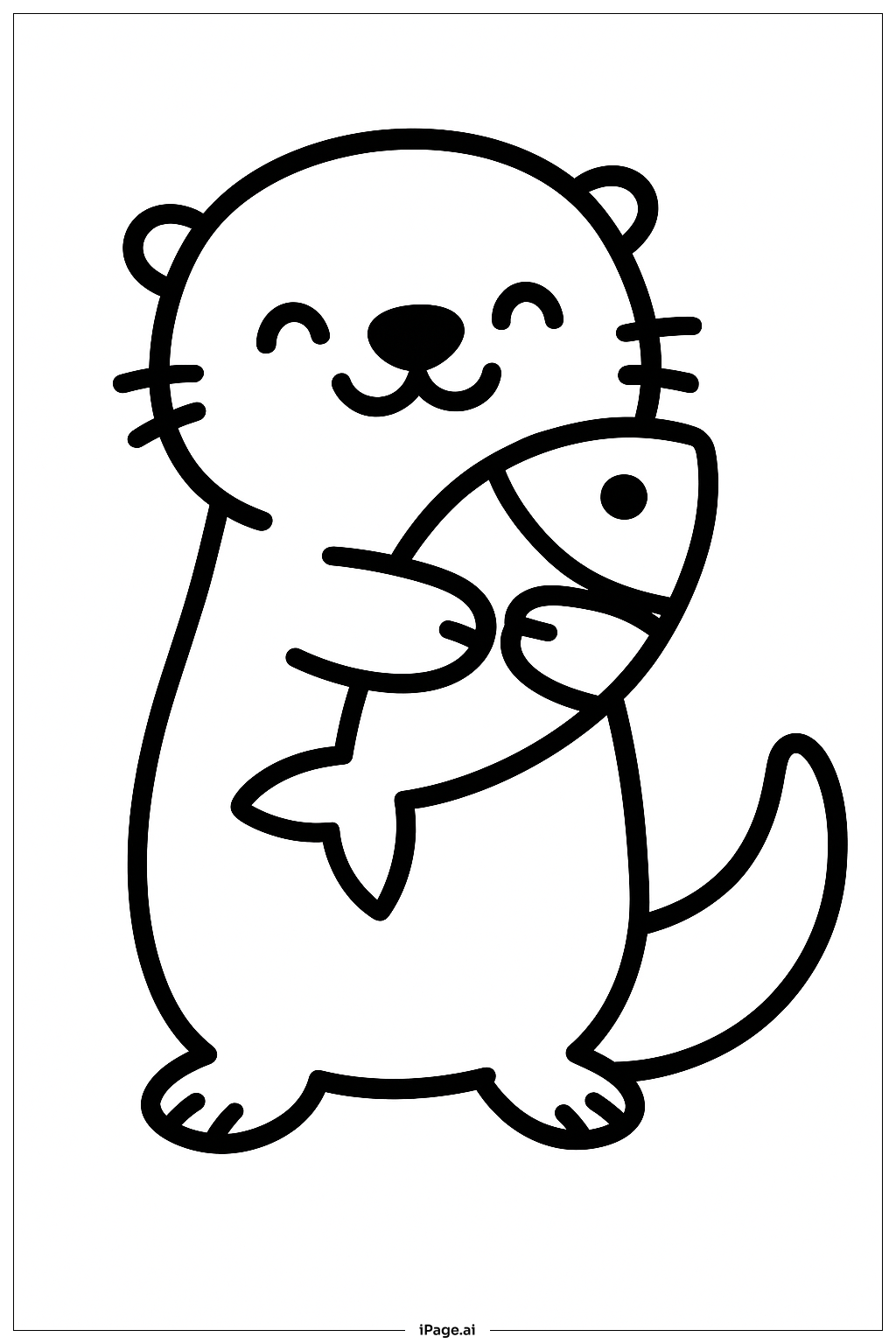
Coloring tips: How to color Otter Hugging A Fish coloring page well?
For the otter, use rich brown tones for the body, ranging from chocolate brown to lighter tan shades. The belly area can be colored in cream or light beige to show the natural contrast. Add touches of gray or darker brown for shading around the face and paws. For the fish, consider bright silver or gray as a base, with options for colorful accents like orange, pink, or yellow to make it pop. You could also choose a specific fish type like a salmon with peachy-orange tones or a trout with spotted patterns. The background can feature soft blue water tones or green aquatic plants. Use lighter colors for highlights on both animals to show their wet, shiny fur and scales. Adding subtle shadows will create depth and make the hug feel more three-dimensional and realistic.
Coloring challenges: Which parts are difficult to color and need attention for Otter Hugging A Fish coloring page?
• Fur Texture Detail: The otter's fur requires careful attention to create a realistic, fluffy appearance. Coloring in one direction with varying pressure can help achieve texture. Layering different brown shades adds depth, but keeping the strokes consistent without creating harsh lines takes practice and patience, especially for younger colorists.
• Scale Pattern Precision: The fish's scales present a repetitive pattern challenge that requires steady hands and concentration. Each scale needs individual attention to create dimension and avoid a flat appearance. Maintaining consistent color intensity across all scales while adding highlights for a shiny effect demands focus and careful color blending techniques.
• Overlapping Forms: Where the otter's arms wrap around the fish creates overlapping areas that can be tricky to color without confusion. Determining which parts are in front and which are behind requires careful observation. Maintaining distinct color boundaries while also blending shadows where the two animals meet adds complexity to the coloring process.
• Facial Expression Details: Both the otter and fish have expressive faces with small features like eyes, whiskers, and mouths that need precision coloring. These tiny areas require careful control to avoid coloring outside the lines. Choosing the right colors for eyes and adding catchlights makes the characters come alive but demands steady hands and attention to detail.
Benefits of coloring books: Advantages of drawing Otter Hugging A Fish coloring page
Coloring this heartwarming scene offers wonderful benefits for children. It helps develop fine motor skills and hand-eye coordination through the detailed work required for fur texture and fish scales. The emotional theme of friendship and kindness encourages children to think about caring relationships and empathy while they color. This image provides opportunities to learn about nature and marine animals, sparking curiosity about otters and their habitats. The varying levels of detail accommodate different skill levels, allowing younger children to focus on large areas while older kids can challenge themselves with intricate textures. The joyful subject matter promotes positive emotions and relaxation, making coloring time a calming, stress-reducing activity. Completing this adorable scene builds confidence and provides a sense of accomplishment that children can proudly display.