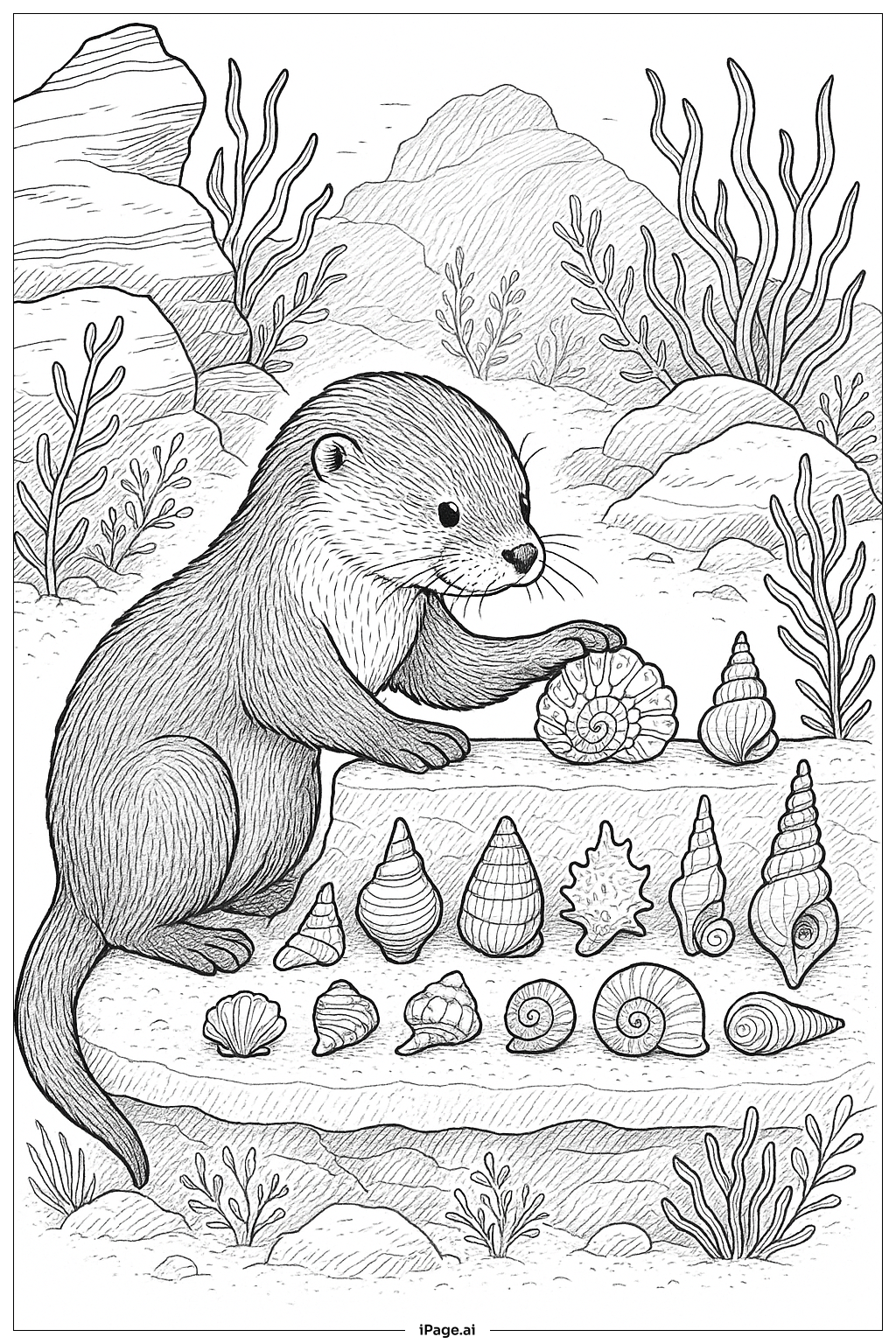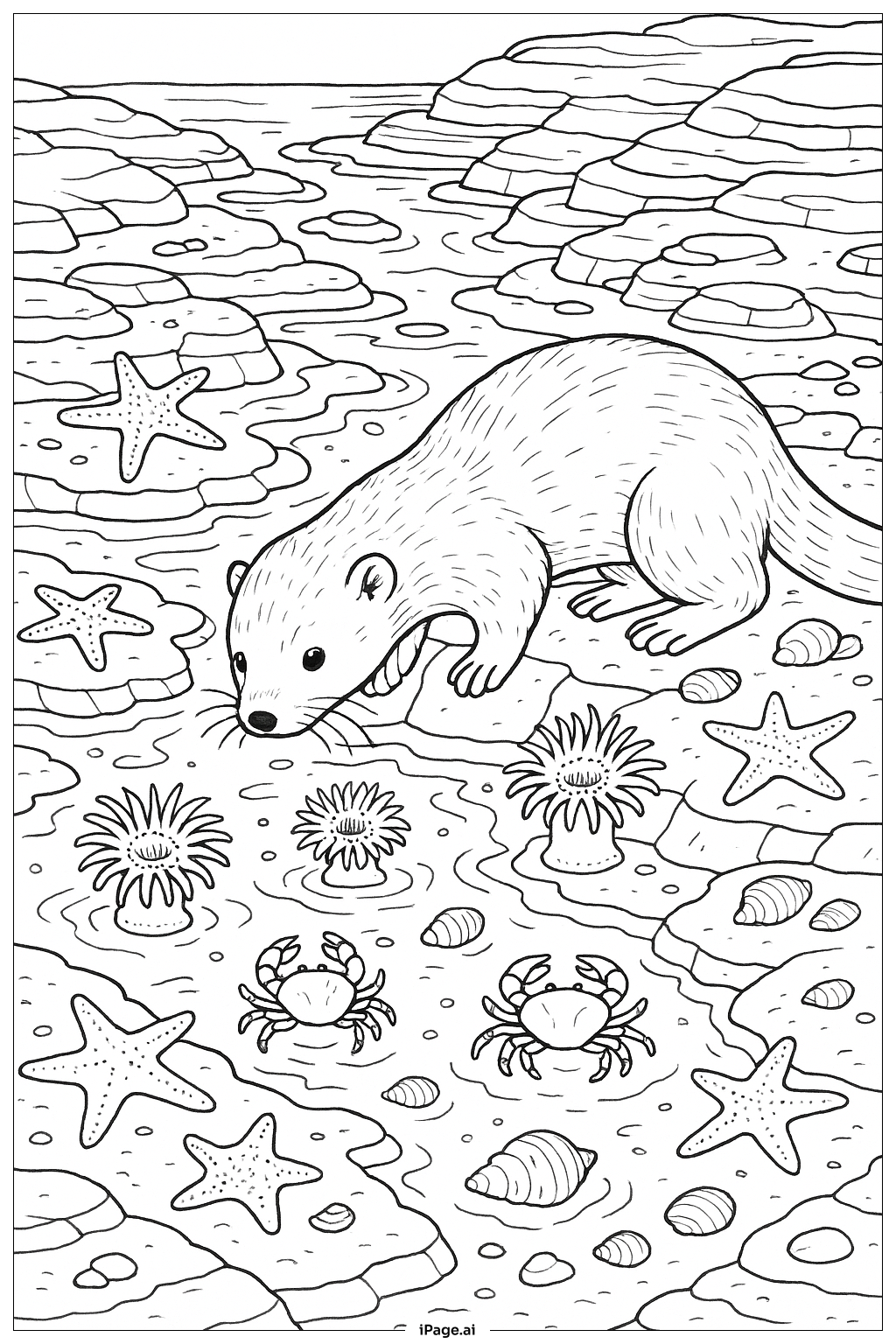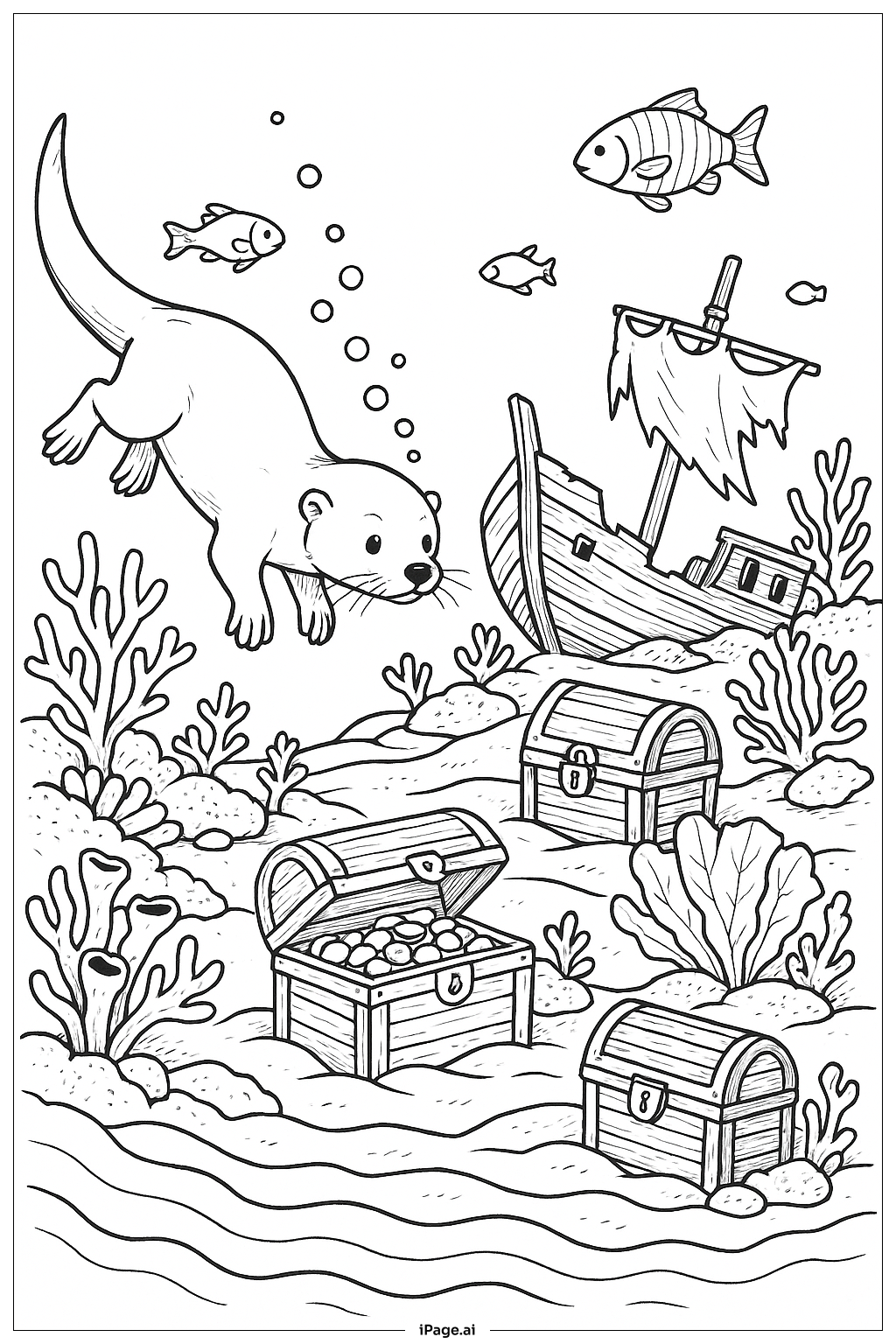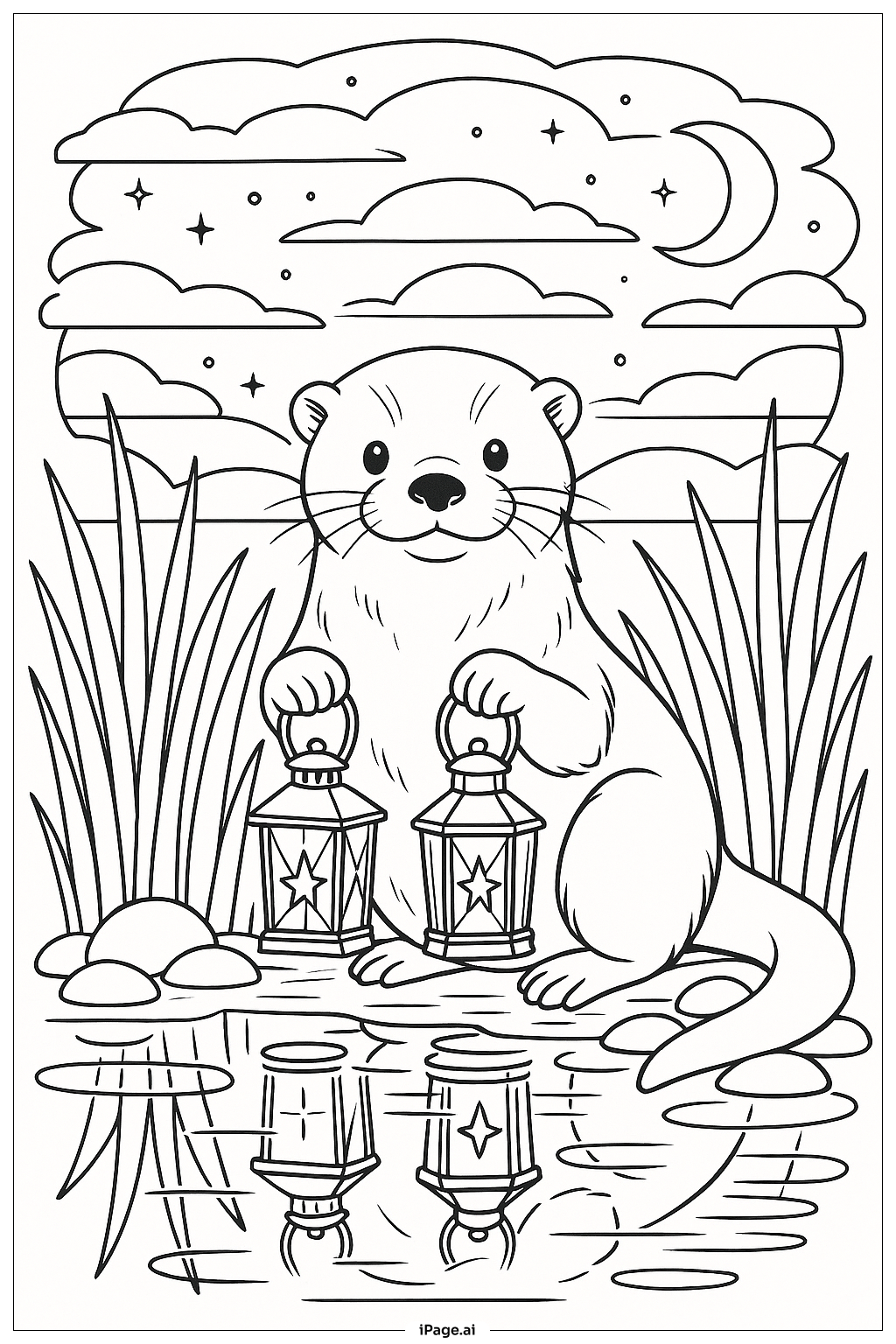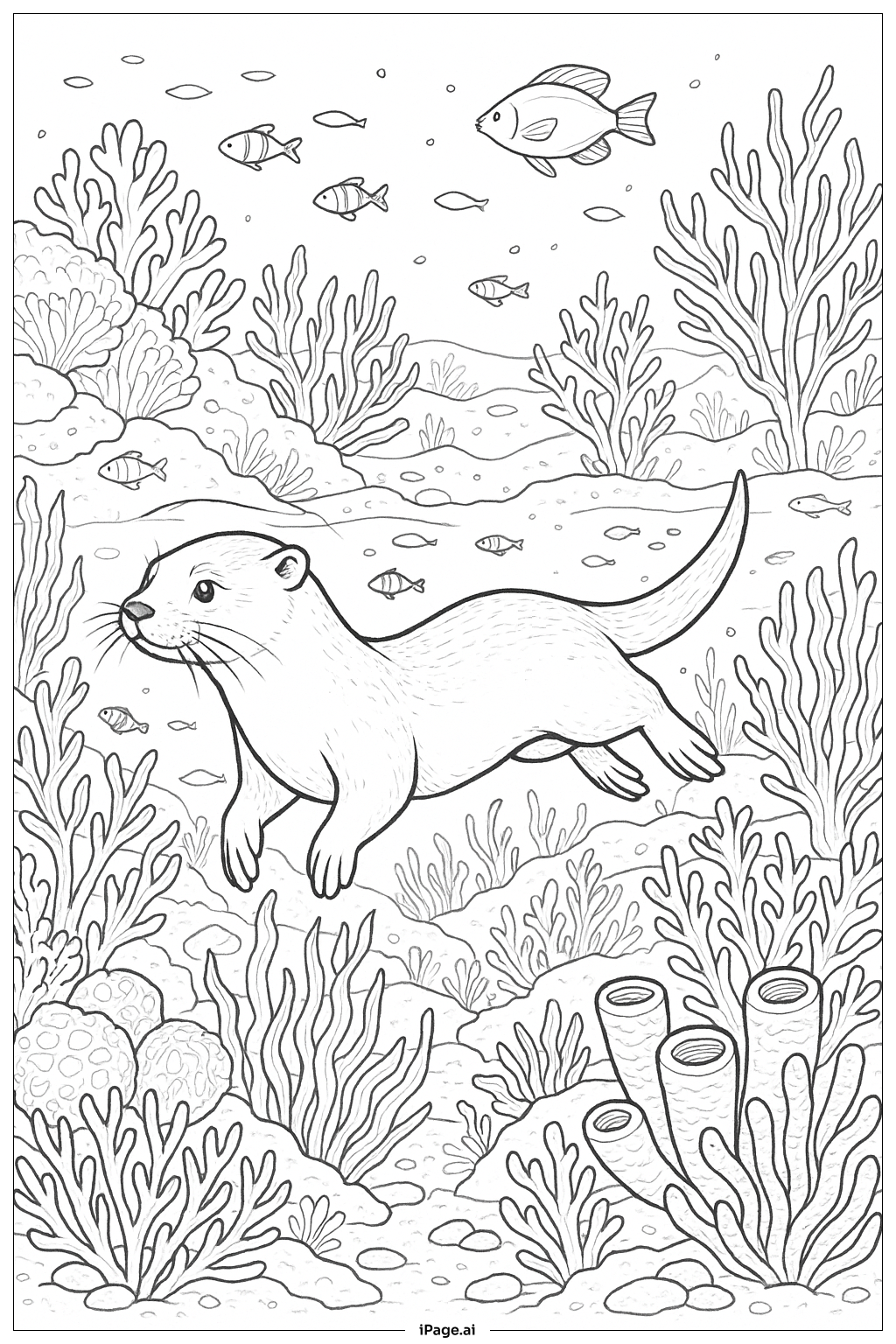
Coloring tips: How to color Otter Exploring Coral Reef coloring page well?
For the otter, use rich brown tones for the body and lighter cream or tan shades for the belly and face. Add depth by blending darker browns along the back and lighter highlights on the head. The coral reef offers endless color possibilities: try bright oranges, hot pinks, deep purples, and sunny yellows for different coral types. Paint the tropical fish in vibrant blues, yellows, and striped patterns. Use various shades of blue and turquoise for the water background, creating lighter areas near the surface and deeper blues in the lower portions. Color seaweed in greens ranging from lime to forest green. Starfish can be orange or red, while shells might be pink, cream, or spotted patterns. Add subtle purple or blue tints to sea anemones for magical underwater effects.
Coloring challenges: Which parts are difficult to color and need attention for Otter Exploring Coral Reef coloring page?
• Coral Texture Details: The intricate patterns and varied textures of different coral types require careful attention and patience. Each coral formation has unique ridges, bumps, or branch-like structures that need consistent coloring to look realistic. Children may find it challenging to color within these small, detailed areas without going outside the lines, especially when corals overlap or cluster together.
• Otter Fur Direction and Shading: Creating the appearance of sleek, wet fur on the otter requires thoughtful shading techniques. The fur should follow the natural flow of the otter's body curves, and achieving smooth color transitions from dark to light areas can be difficult. Young artists may struggle with blending colors to create the three-dimensional effect that makes the otter look rounded and lifelike rather than flat.
• Water Background Gradients: Coloring an underwater scene requires creating depth through color gradients, which is an advanced technique. The water should appear lighter near the top and gradually darken toward the bottom. Maintaining smooth transitions without harsh lines or patchy areas takes practice and a steady hand, especially when working around the many elements in the foreground.
• Multiple Small Elements: The numerous small fish, shells, starfish, and other sea creatures scattered throughout the scene each need individual attention and color choices. Keeping track of which elements have been colored and maintaining visual balance so no single area becomes too busy or overwhelming requires planning and concentration that younger children may find taxing.
Benefits of coloring books: Advantages of drawing Otter Exploring Coral Reef coloring page
Coloring this underwater scene helps children develop fine motor skills and hand-eye coordination through the detailed coral patterns and small sea creatures. The variety of textures and shapes encourages creative color choices and experimentation with different coloring techniques like blending and shading. Learning about marine ecosystems becomes fun as children engage with otters, coral reefs, and ocean life, sparking curiosity about ocean conservation. The peaceful underwater setting promotes relaxation and mindfulness, helping reduce stress and anxiety. Children practice focus and concentration as they work through the intricate details. The scene also teaches color theory as they explore complementary colors in the vibrant reef environment, building confidence in their artistic abilities with each completed section.