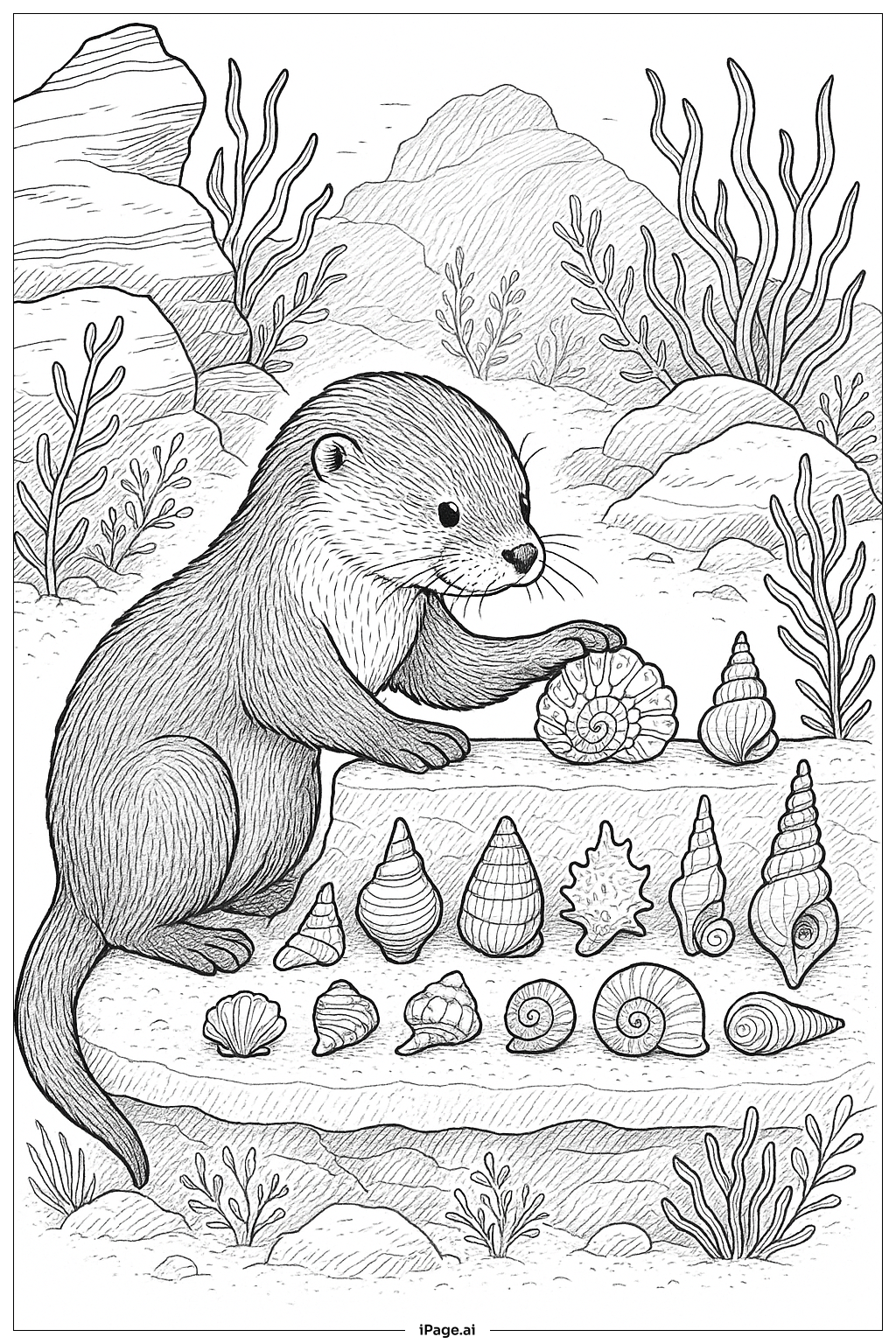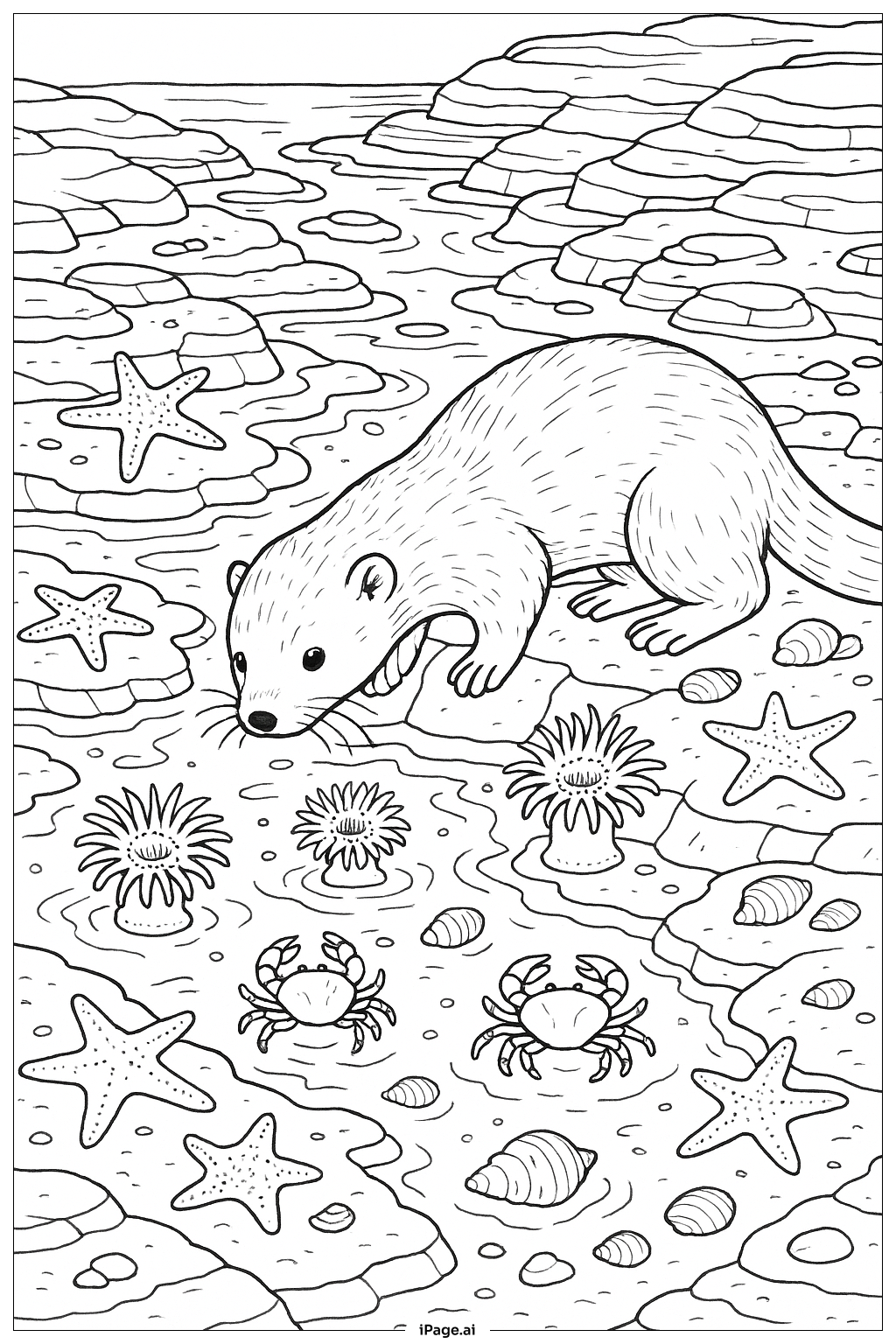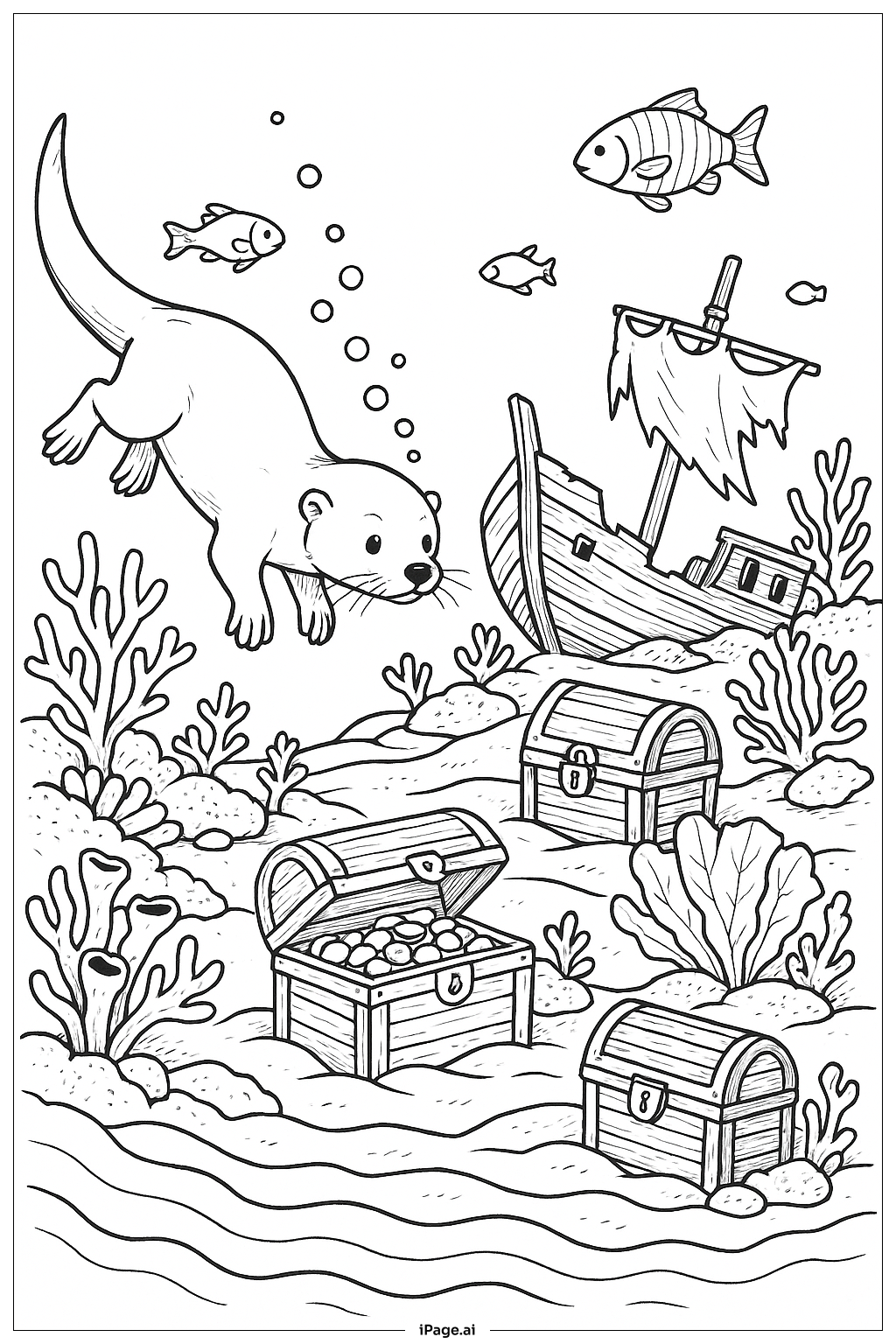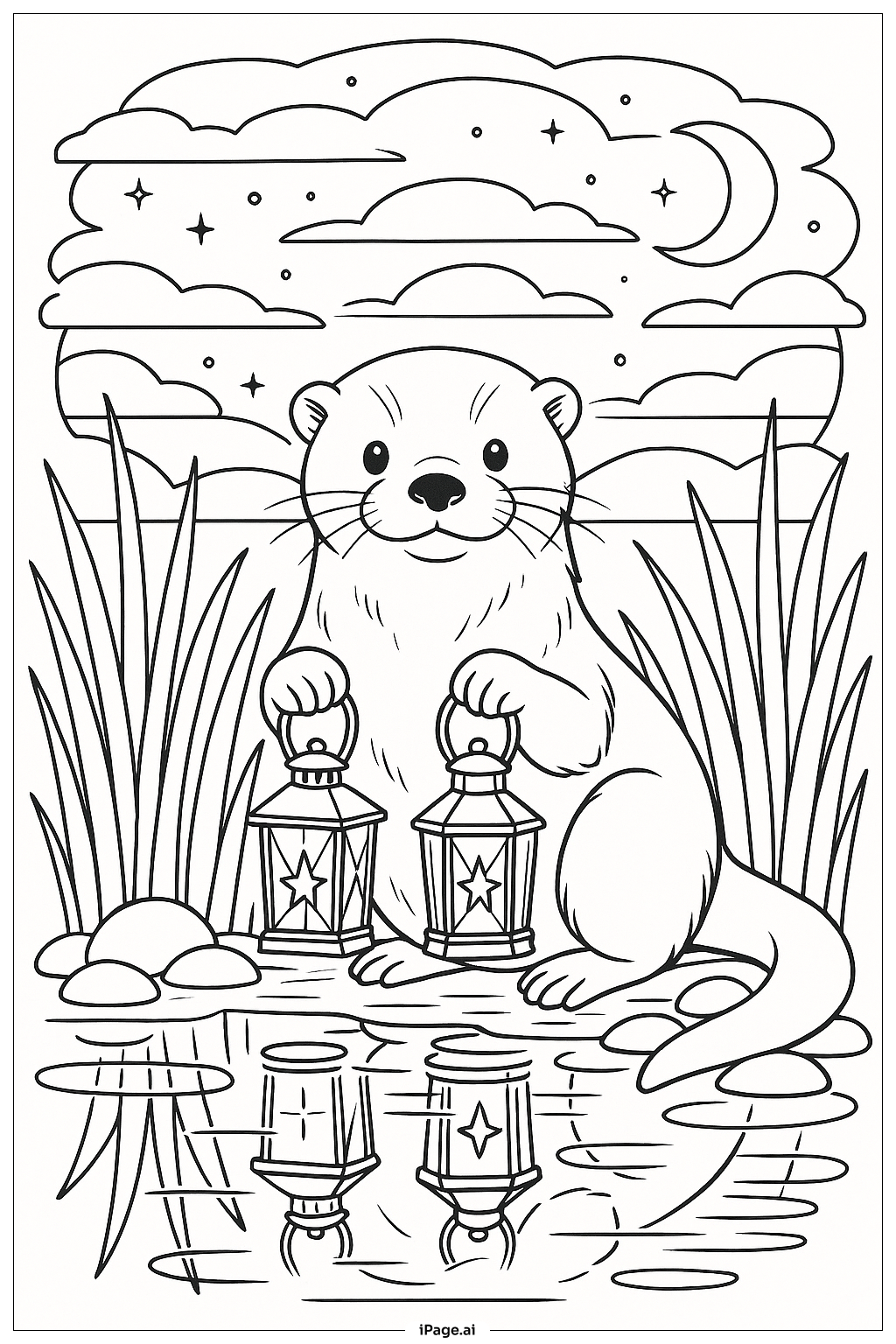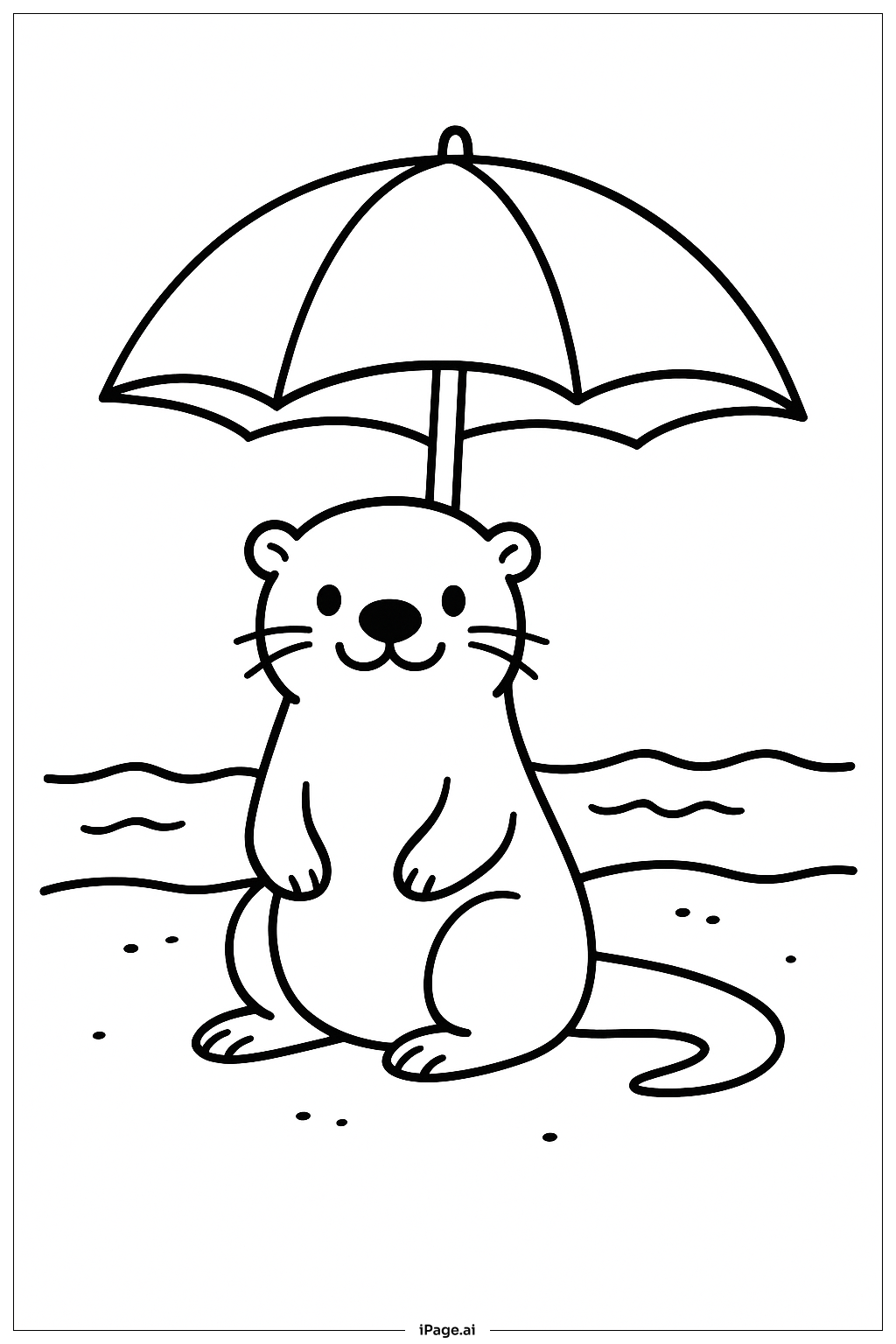
Coloring tips: How to color Otter At Beach Umbrella coloring page well?
You can color the otter with soft browns or grays to make it look natural. Try different shades to add depth, like a lighter belly and a darker back. The umbrella can be bright and colorful, such as red, yellow, blue, or green sections to make it cheerful. For the sand, use yellow or light brown. The sea waves can be colored in different blues to show the water. You could also add some color to the sky, maybe a light blue or sunset colors. Feel free to get creative with the umbrella colors to make it vibrant and fun!
Coloring challenges: Which parts are difficult to color and need attention for Otter At Beach Umbrella coloring page?
1. Small Parts: The otter’s face and paws are small, so it can be tricky to color neatly inside the lines. 2. Umbrella Sections: The umbrella has sections separated by lines which need careful coloring to keep them neat and avoid going over the edges. 3. Keeping Clean Edges: Since the otter is sitting under the umbrella, you need to color closely but accurately to keep the colors separate. 4. Wave Lines: The waves are thin and may be hard to color evenly without going outside the lines. 5. Shading: Adding different shades to the otter and sand to make the picture more interesting might be challenging for beginners.
Benefits of coloring books: Advantages of drawing Otter At Beach Umbrella coloring page
Coloring this picture helps children improve their hand-eye coordination and fine motor skills. It encourages creativity by letting them choose their favorite colors for the otter and umbrella. Coloring small parts like the otter’s face helps develop focus and attention to detail. It also introduces the concept of shading and color blending for more advanced artists. Most importantly, coloring is fun and relaxing, helping kids express themselves and enjoy art.