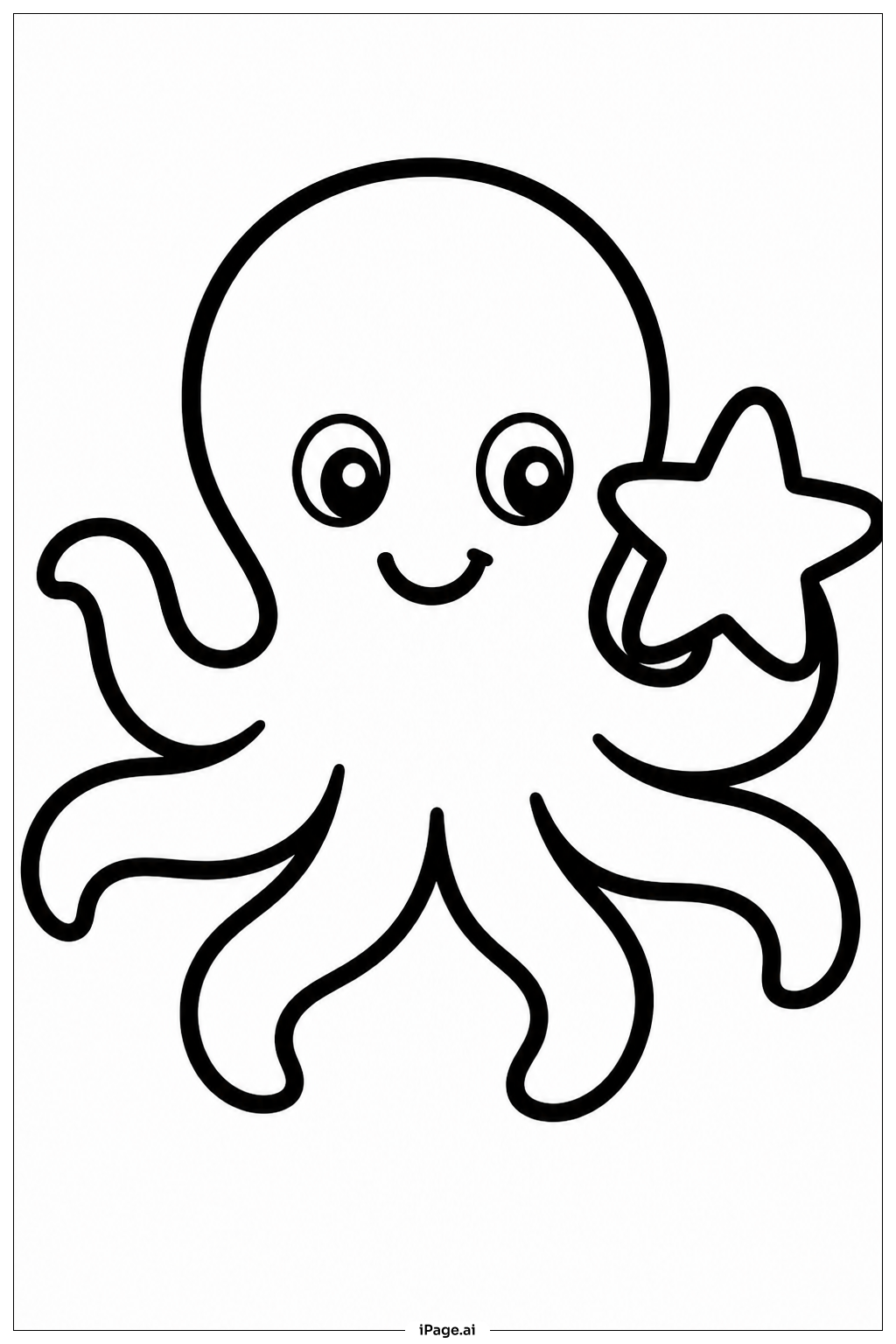
Coloring tips: How to color Octopus With Starfish coloring page well?
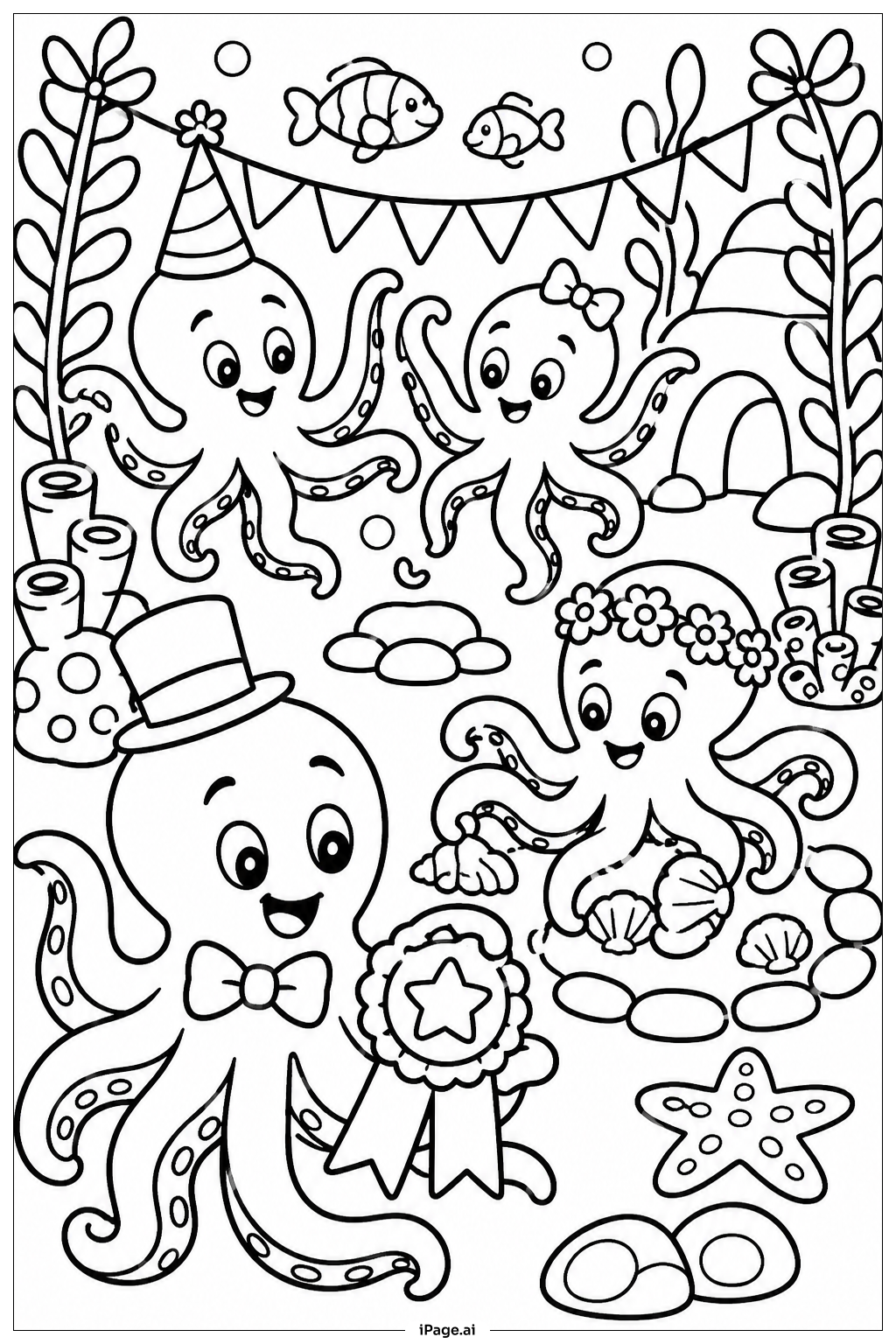
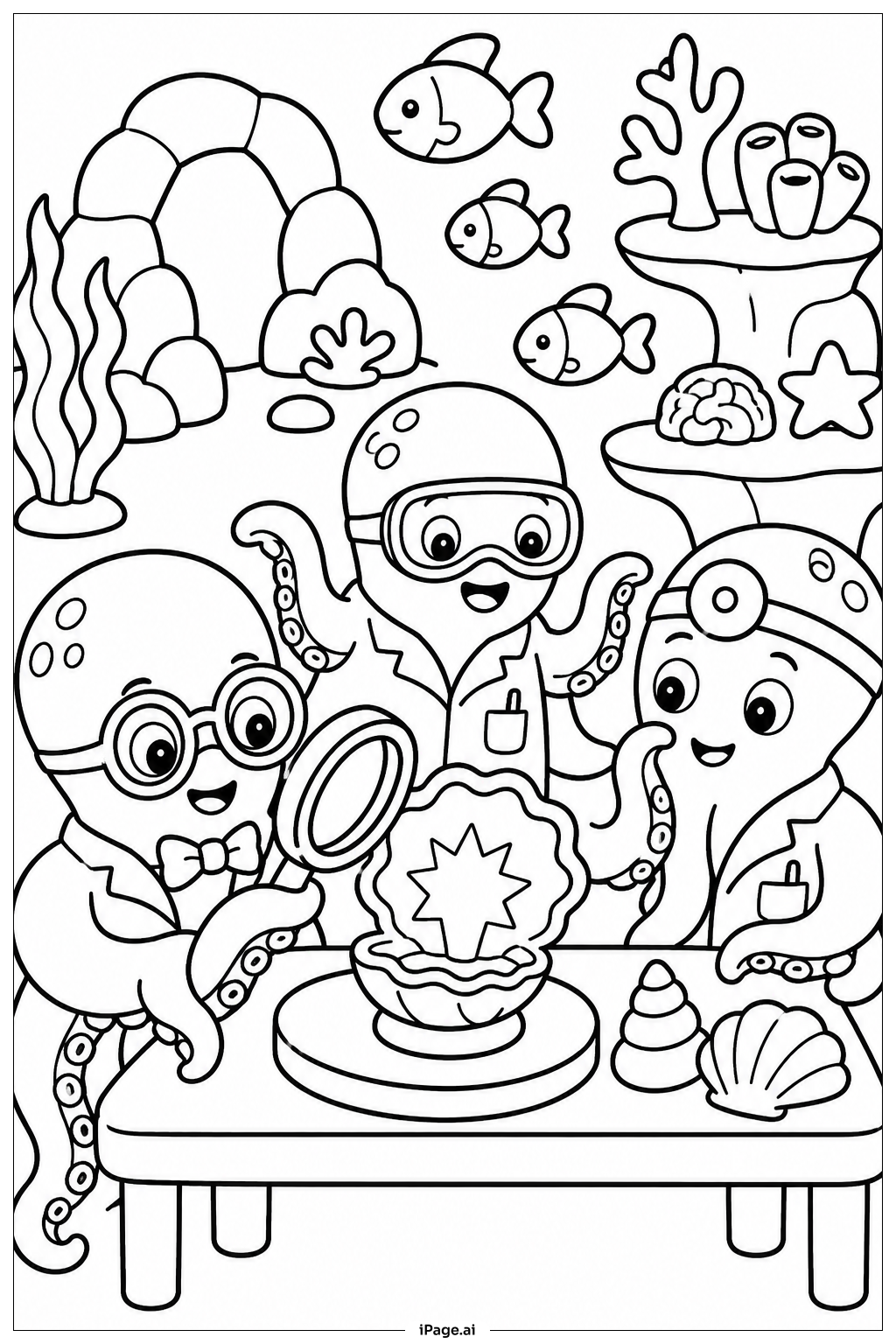
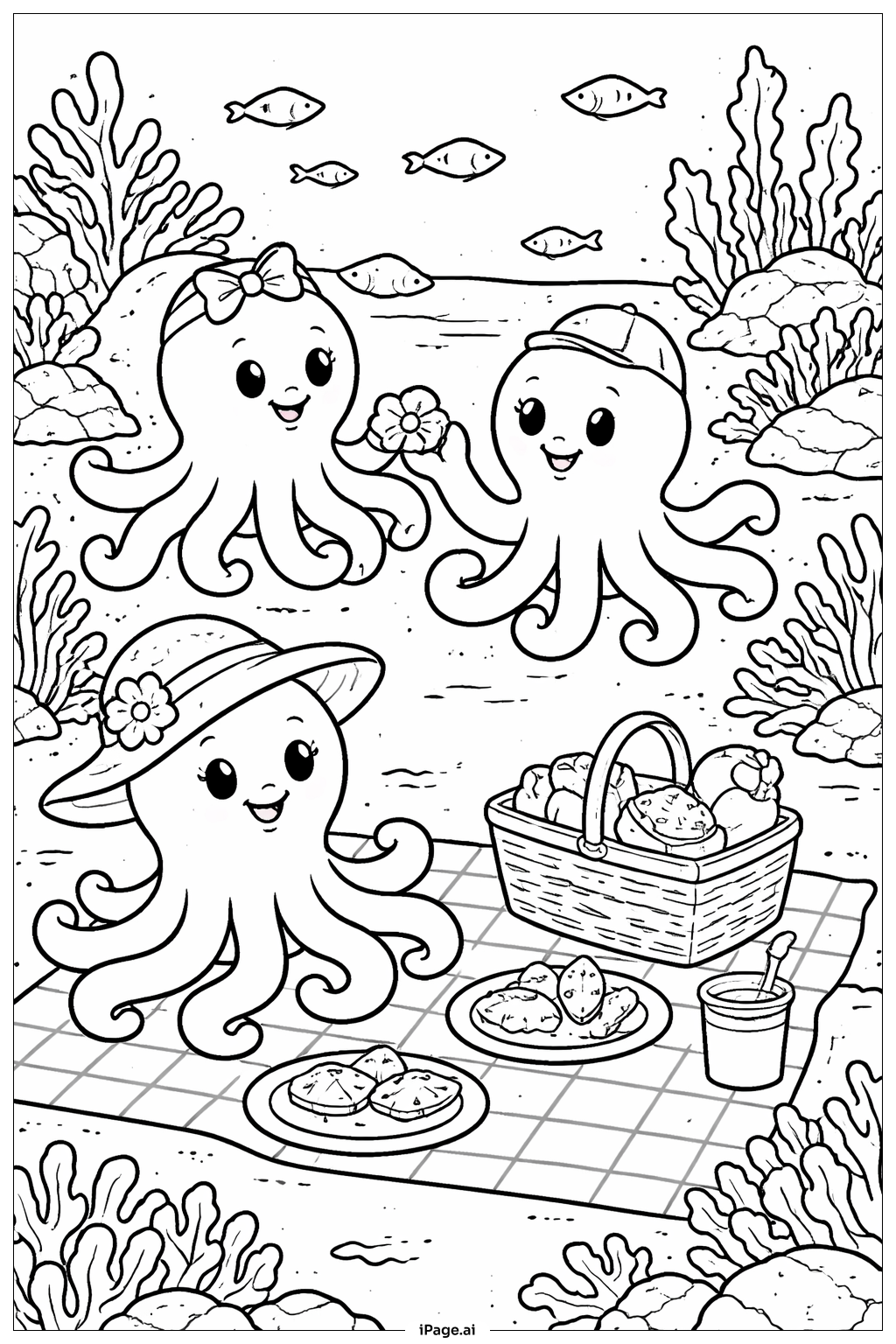
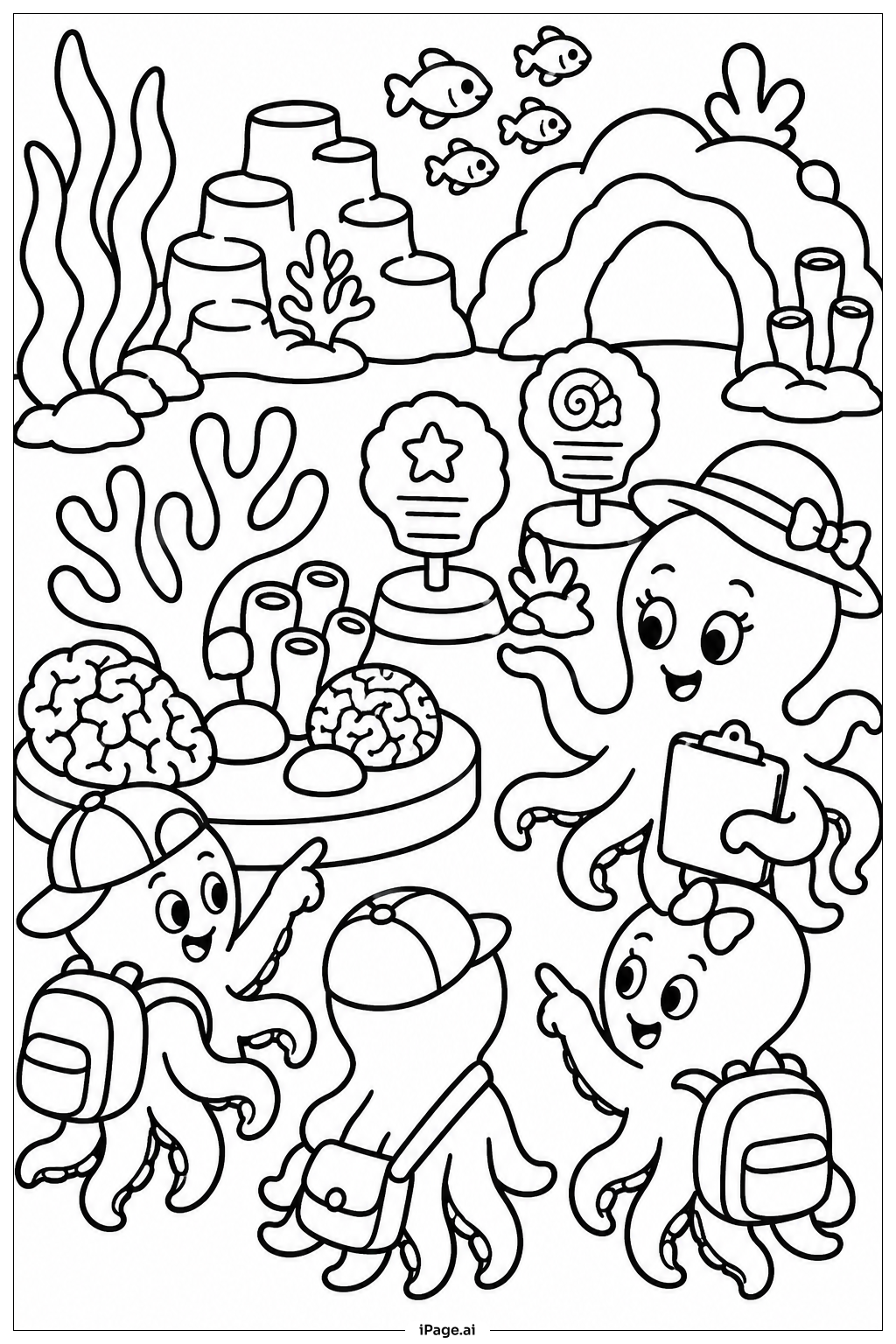
Start with the octopus body and use a bright color like orange, red, or purple — these are classic octopus shades that really pop. You can add a slightly darker tone to the underside of the body to give it a rounded, three-dimensional look. For the tentacles, try blending two close shades of the same color to show depth and movement. The suction cups can be colored in a lighter or contrasting tone to make them stand out. Give the starfish a warm yellow, coral, or sandy orange color. For the background, use cool blues and blue-greens to suggest deep ocean water. Bubbles can be left lightly shaded or colored in pale blue. Seaweed looks great in shades of green, from bright lime to deep forest green. Don't be afraid to mix colors and experiment — the ocean is full of surprises!
Coloring challenges: Which parts are difficult to color and need attention for Octopus With Starfish coloring page?
Coloring this image is a fun challenge, but a few areas need extra care and patience:
• **Tentacle Details and Suction Cups:** The octopus has eight long, curling tentacles, each lined with rows of small suction cups. Staying inside the lines on these narrow, curved shapes takes steady hands and a fine-tipped coloring tool. Switching between the tentacle color and the suction cup color repeatedly can be time-consuming but very rewarding.
• **Overlapping Elements:** The tentacles curl and cross over each other, and the starfish is nestled in between them. Where shapes overlap, you need to decide which element sits "on top" and shade accordingly. Using slightly different tones for overlapping sections helps separate them visually and adds depth to the image.
• **Background Consistency:** The background is filled with bubbles, swirls, and wave patterns. Keeping the background color smooth and consistent without accidentally coloring over the foreground details requires focus and careful brush or pencil control. Using a lighter hand in these areas helps maintain clarity.
• **Small Decorative Details:** Tiny bubbles, fine swirl lines, and small sea accents are scattered throughout the image. These small elements are tricky to color neatly, especially for younger artists. A sharp colored pencil or a fine-tip marker works best for these spots.
• **Color Harmony Across the Scene:** Balancing the warm tones of the octopus and starfish against the cool blues of the ocean background is a creative challenge. Choosing colors that complement rather than clash takes some planning, but the result is a beautifully unified underwater scene.
Benefits of coloring books: Advantages of drawing Octopus With Starfish coloring page
Coloring this octopus and starfish scene offers a wonderful range of benefits for kids and beginners alike. Working through the tentacles and fine details helps build fine motor skills and improves hand-eye coordination. Carefully staying within the curved lines of the tentacles and small suction cups trains steady, controlled hand movements that are useful in writing and drawing.
The underwater theme sparks curiosity about ocean life. Kids naturally start asking questions about octopuses, starfish, and the sea creatures around them, turning a coloring session into a gentle learning moment.
Choosing colors for the octopus, starfish, and ocean background encourages creative thinking and color awareness. Kids learn how warm and cool colors interact and how shading can make a flat image look three-dimensional.
The repetitive, focused nature of coloring also has a calming effect. It helps children slow down, concentrate, and find a quiet sense of flow — similar to mindfulness. Completing the page gives a real sense of accomplishment and boosts confidence.
For older kids, the layered complexity of this image — overlapping tentacles, background patterns, and small details — offers a satisfying artistic challenge that builds patience and attention to detail. Overall, this page is both fun and genuinely enriching.