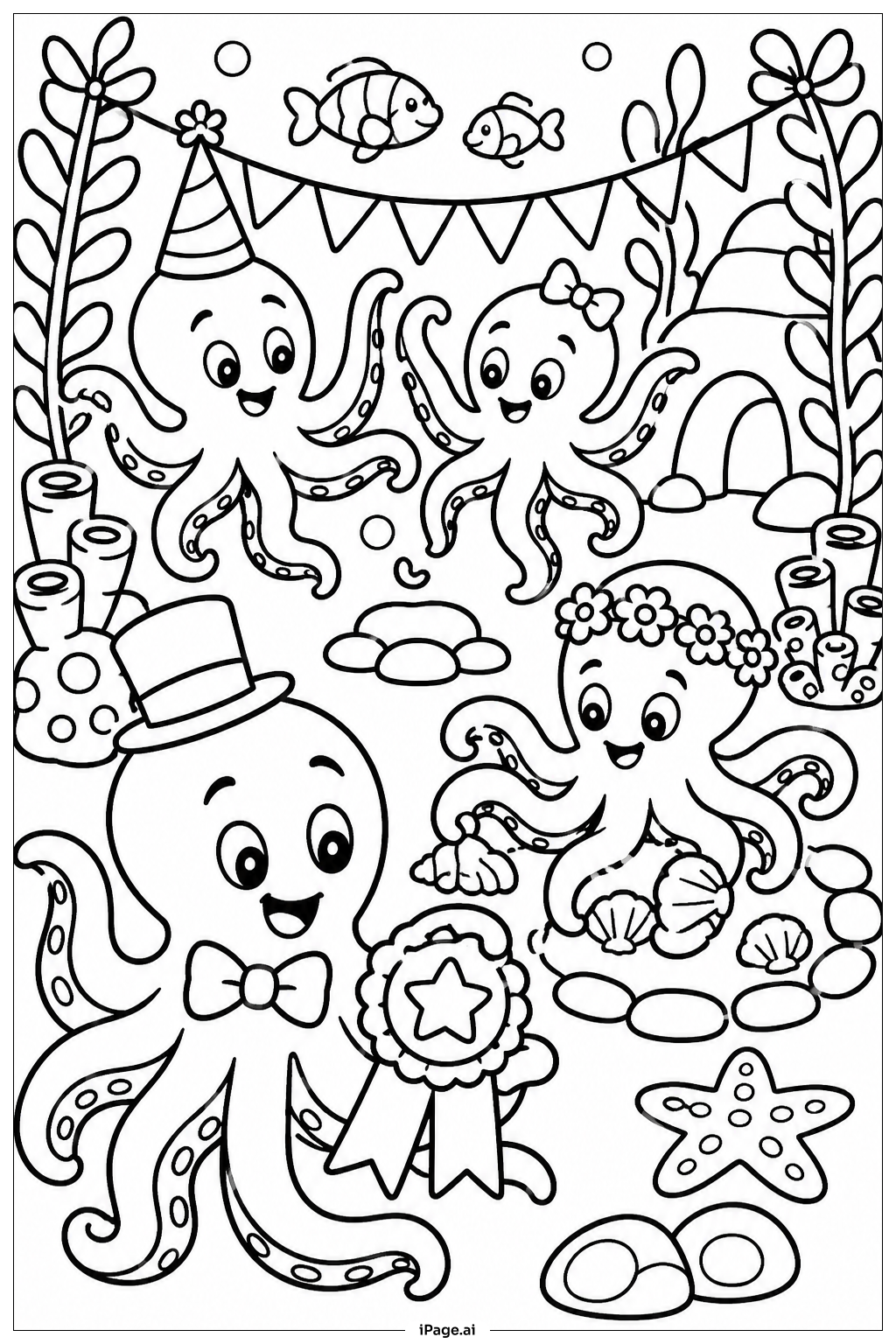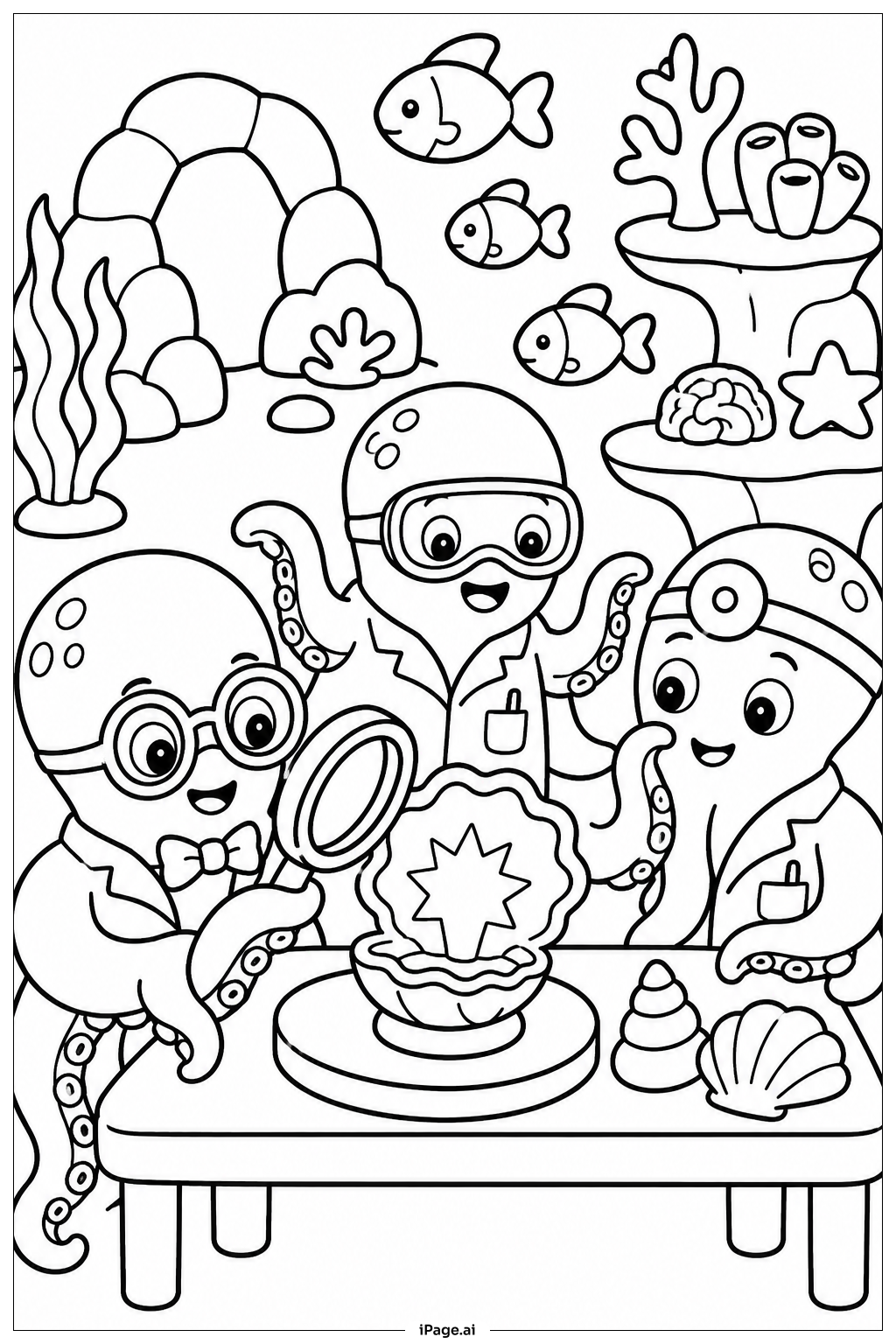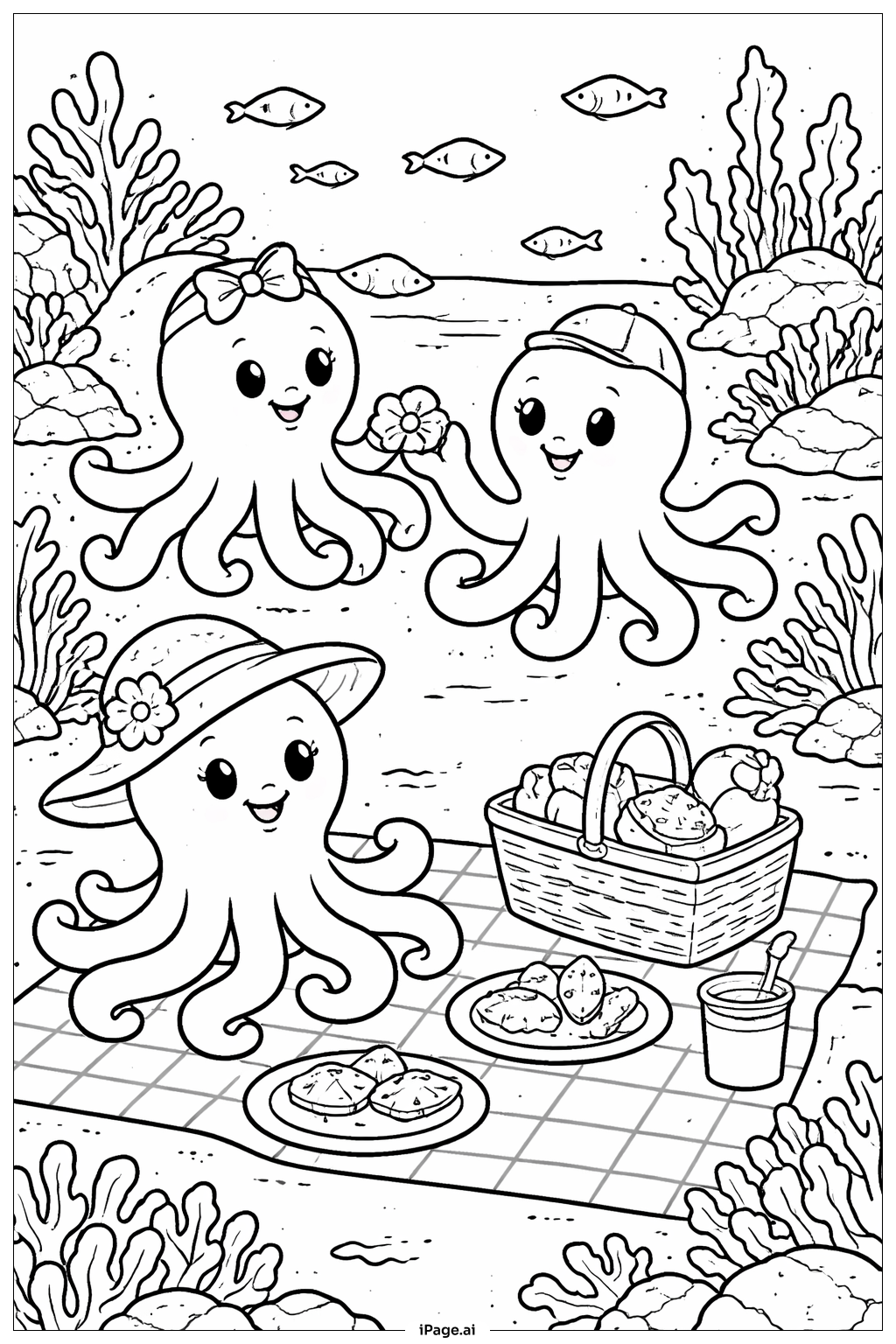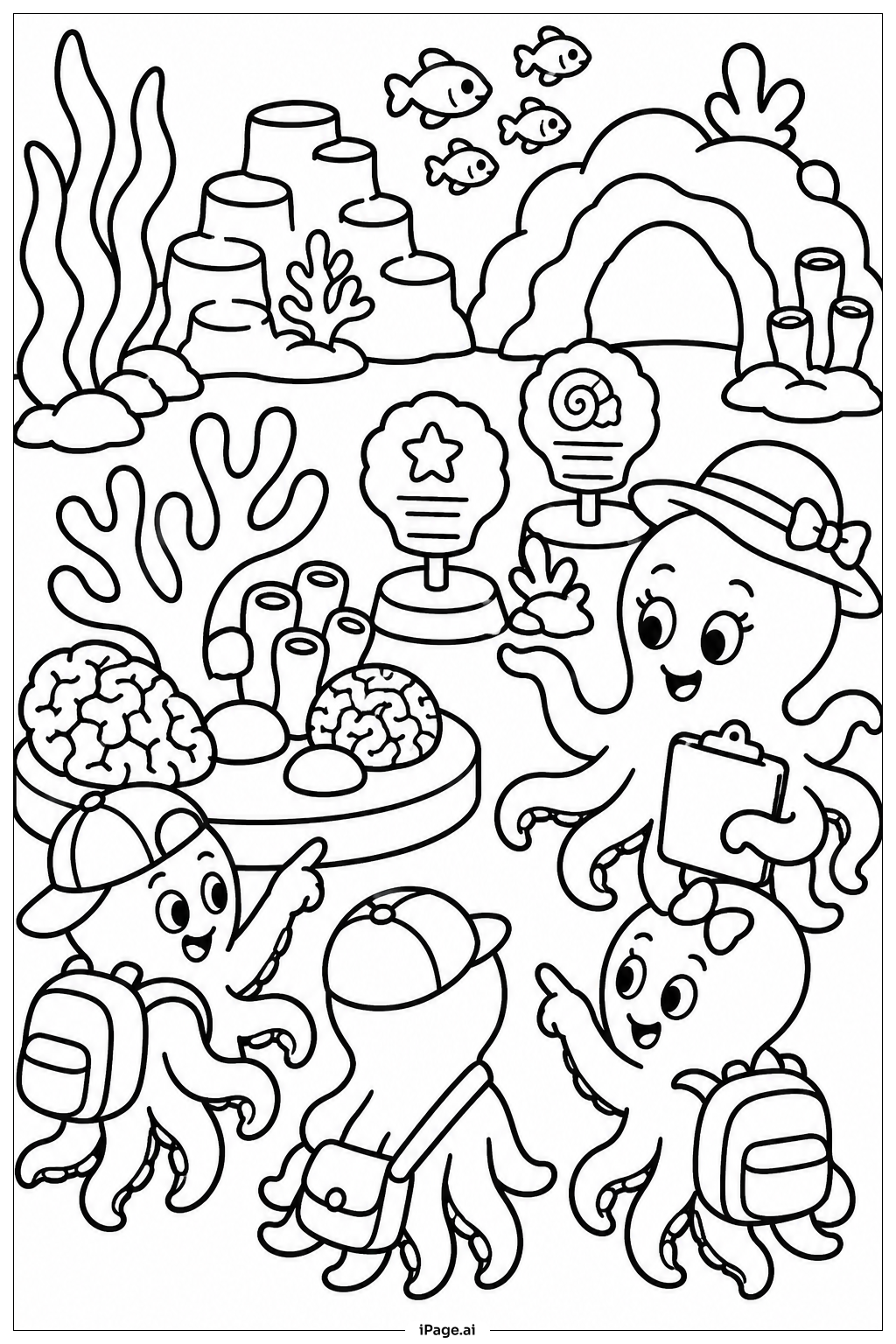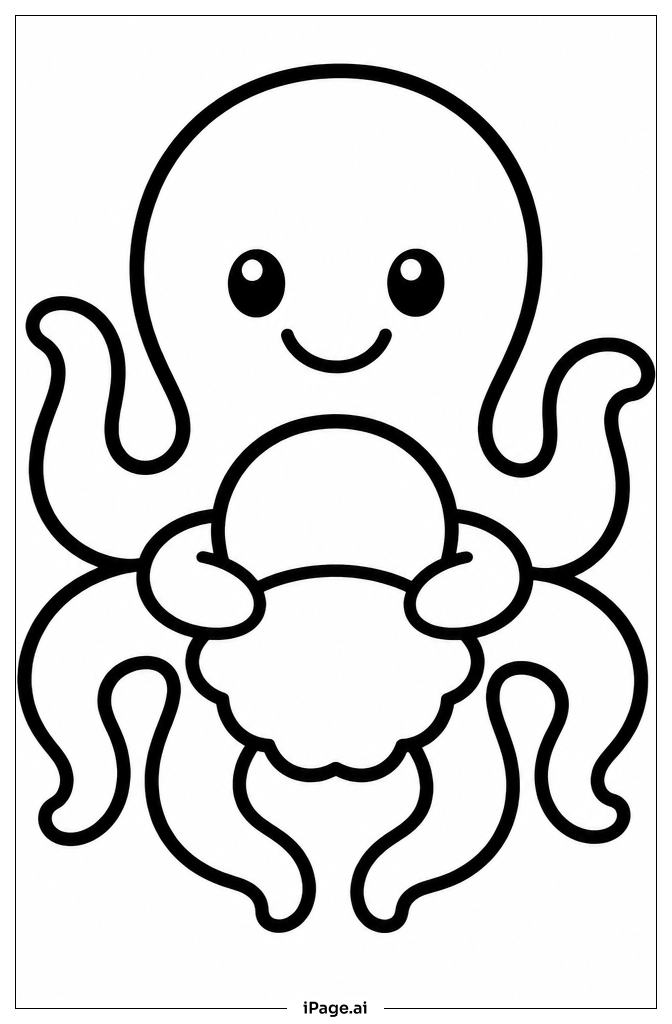
Coloring tips: How to color Octopus With Shell coloring page well?
Start with the octopus body and use a bright color like orange, red, or purple — octopuses come in many shades, so feel free to get creative! Use a slightly darker tone on the underside of the tentacles to add depth. Color the suction cups in a lighter shade, like pale yellow or cream, to make them stand out. For the shell, try warm tones like sandy beige, peach, or soft pink. Add streaks of brown or gold along the ridges to give it a realistic, layered look. The background water can be colored in shades of blue and teal. Use lighter blue for the bubbles and leave small white highlights to make them look shiny. Mixing different shades of the same color throughout the image will make it look more lively and three-dimensional.
Coloring challenges: Which parts are difficult to color and need attention for Octopus With Shell coloring page?
Coloring this image comes with a few fun challenges to keep in mind:
• **Tentacle details and suction cups:** The octopus has eight long, curling tentacles, each lined with small suction cups. Staying inside the lines on these curved shapes takes patience and a fine-tipped coloring tool. Younger colorists may find it tricky to color each suction cup individually without going over the edges.
• **Shell spiral patterns:** The shell features detailed spiral ridges and grooves. Coloring along these curves smoothly — while using different shades to show depth — requires careful control. Blending colors gradually from light to dark along each ridge can be challenging but very rewarding.
• **Creating depth and dimension:** Both the octopus and the shell are round, three-dimensional objects. Showing that roundness through shading means using lighter colors in the center and darker tones near the edges. This technique can be difficult for beginners who are still learning how to blend.
• **Background water and bubbles:** The swirling waves and scattered bubbles in the background need to be colored carefully so they don't overpower the main subjects. Keeping the background colors softer and lighter than the octopus and shell requires good color judgment.
• **Balancing the overall color scheme:** With so many elements — tentacles, body, shell, water, and bubbles — choosing colors that work well together without clashing is a real creative challenge. Planning your color palette before you start can make a big difference in the final result.
Benefits of coloring books: Advantages of drawing Octopus With Shell coloring page
Coloring this octopus and shell image offers a wonderful range of benefits for kids and adults alike.
For younger children, tracing the curves of the tentacles and the spiral of the shell helps build fine motor skills and hand-eye coordination. Staying within the lines takes focus and practice, which strengthens concentration over time.
For older kids and teens, experimenting with color blending and shading on the rounded body of the octopus and the layered shell is a great introduction to basic art techniques. It encourages creative thinking and builds confidence in making artistic choices.
For adults, the detailed patterns in this image make it a relaxing and meditative activity. Focusing on small sections at a time helps quiet a busy mind and reduce stress.
The ocean theme also sparks curiosity about marine life. Kids may become interested in learning more about real octopuses — how they change color, how they move, and what shells they might encounter on the seafloor. This makes the coloring experience both creative and educational, turning a simple activity into a gateway for discovery and imagination.