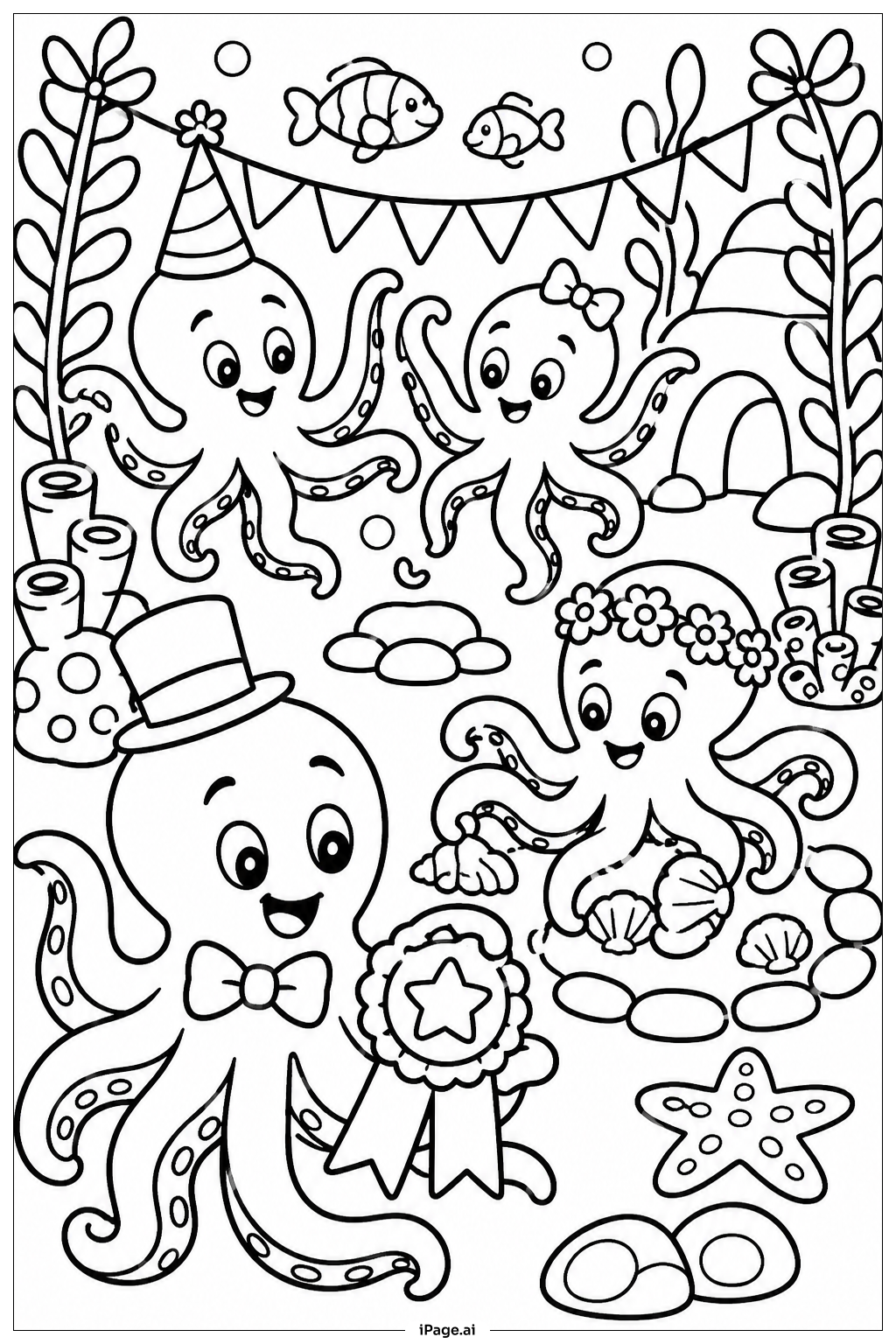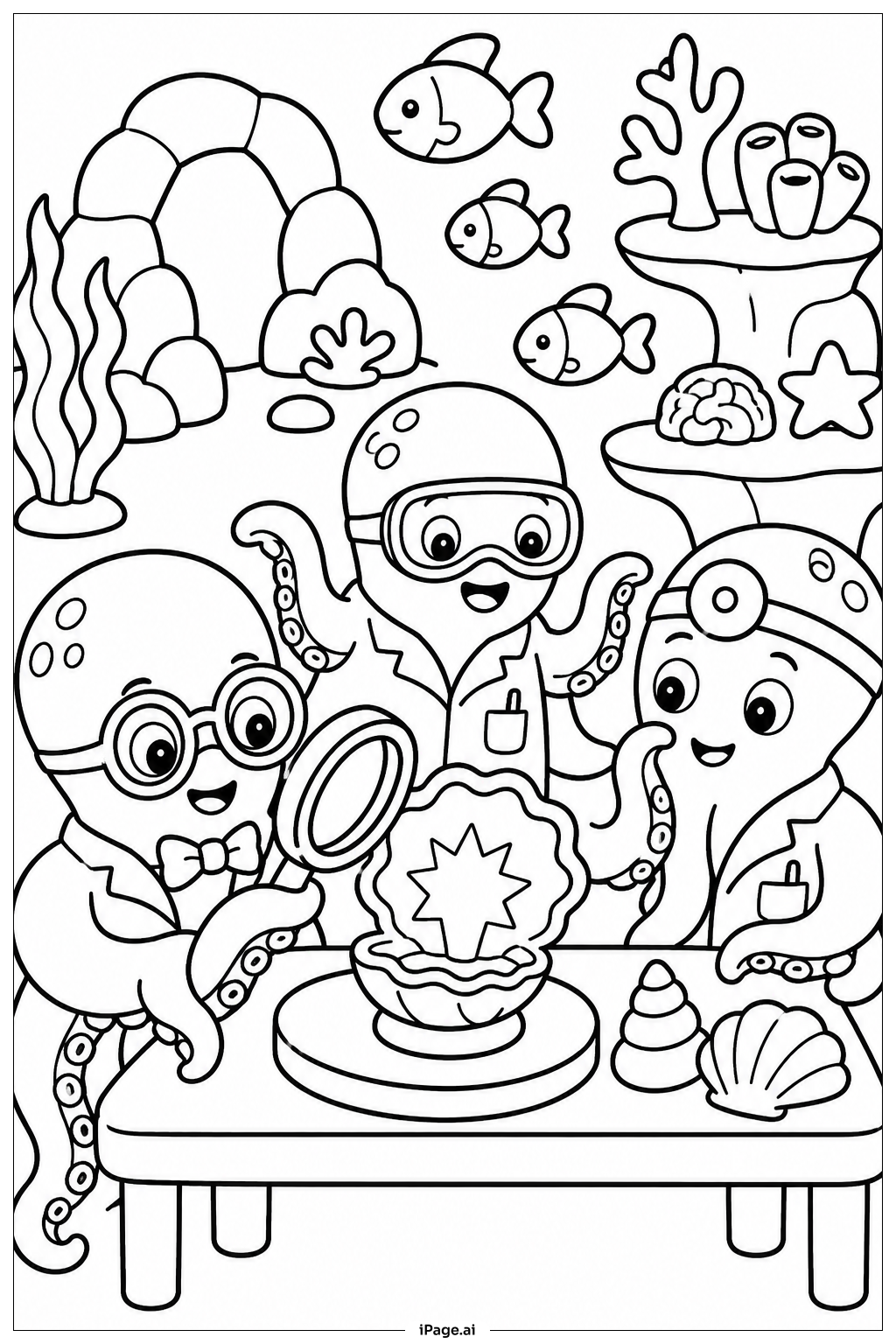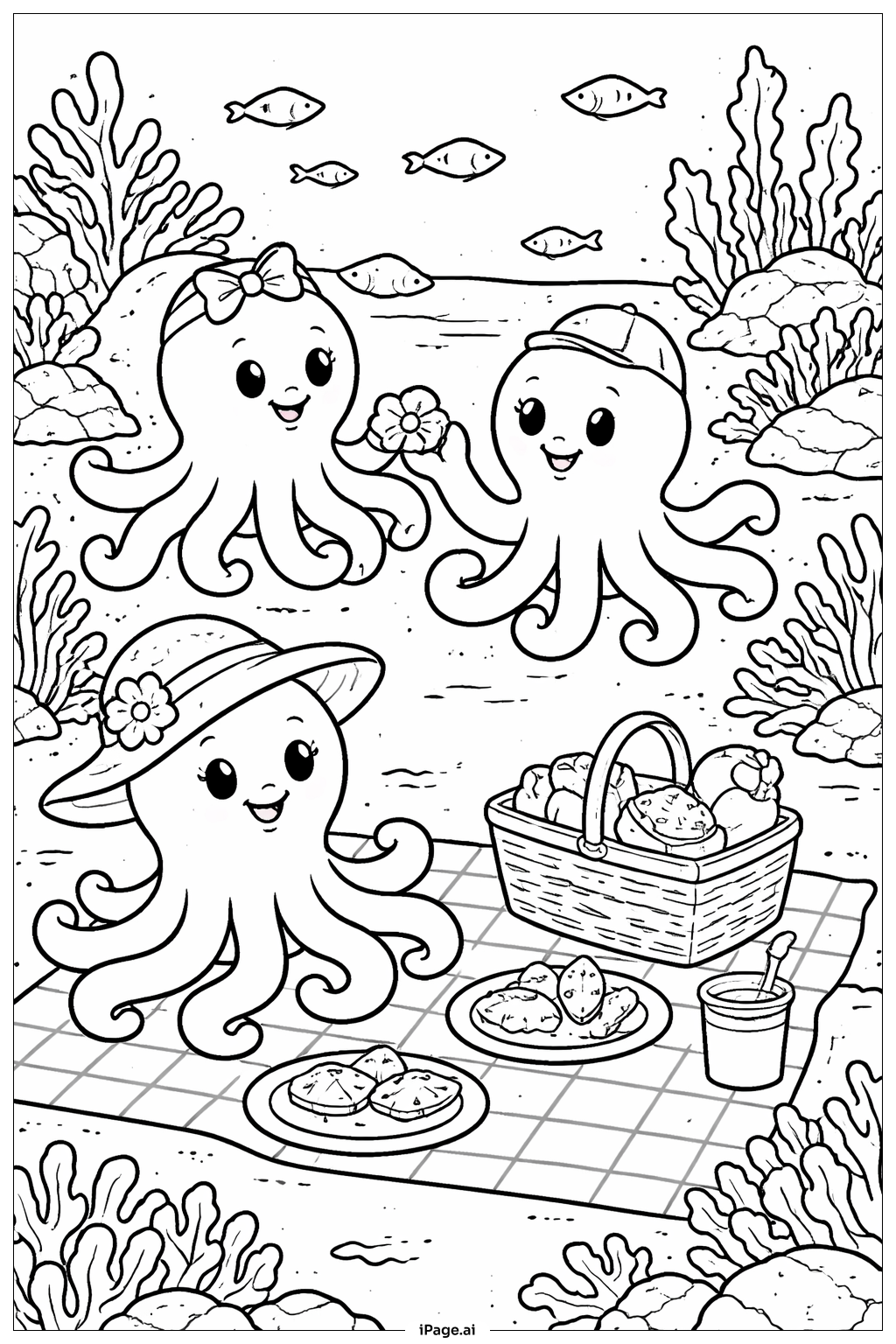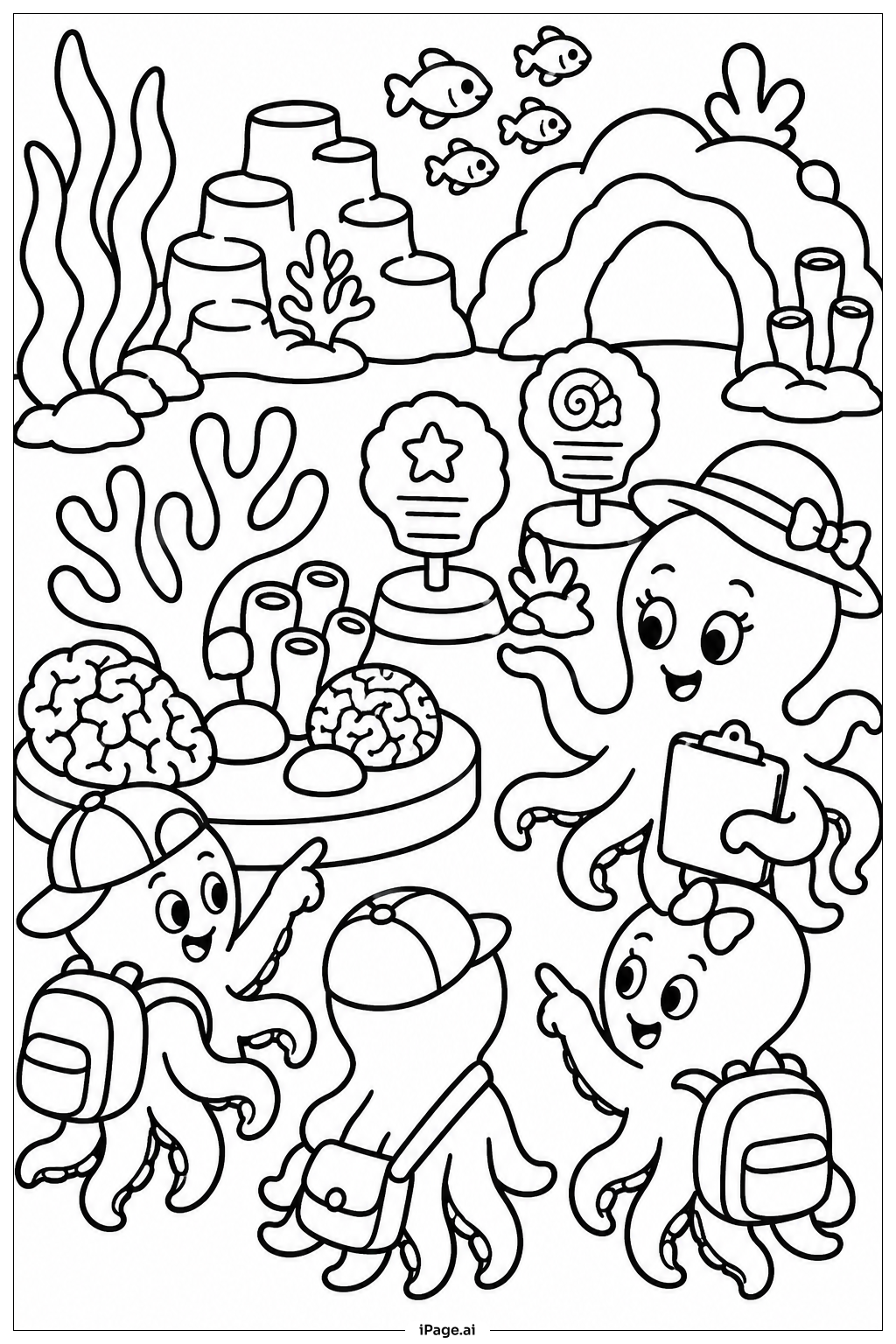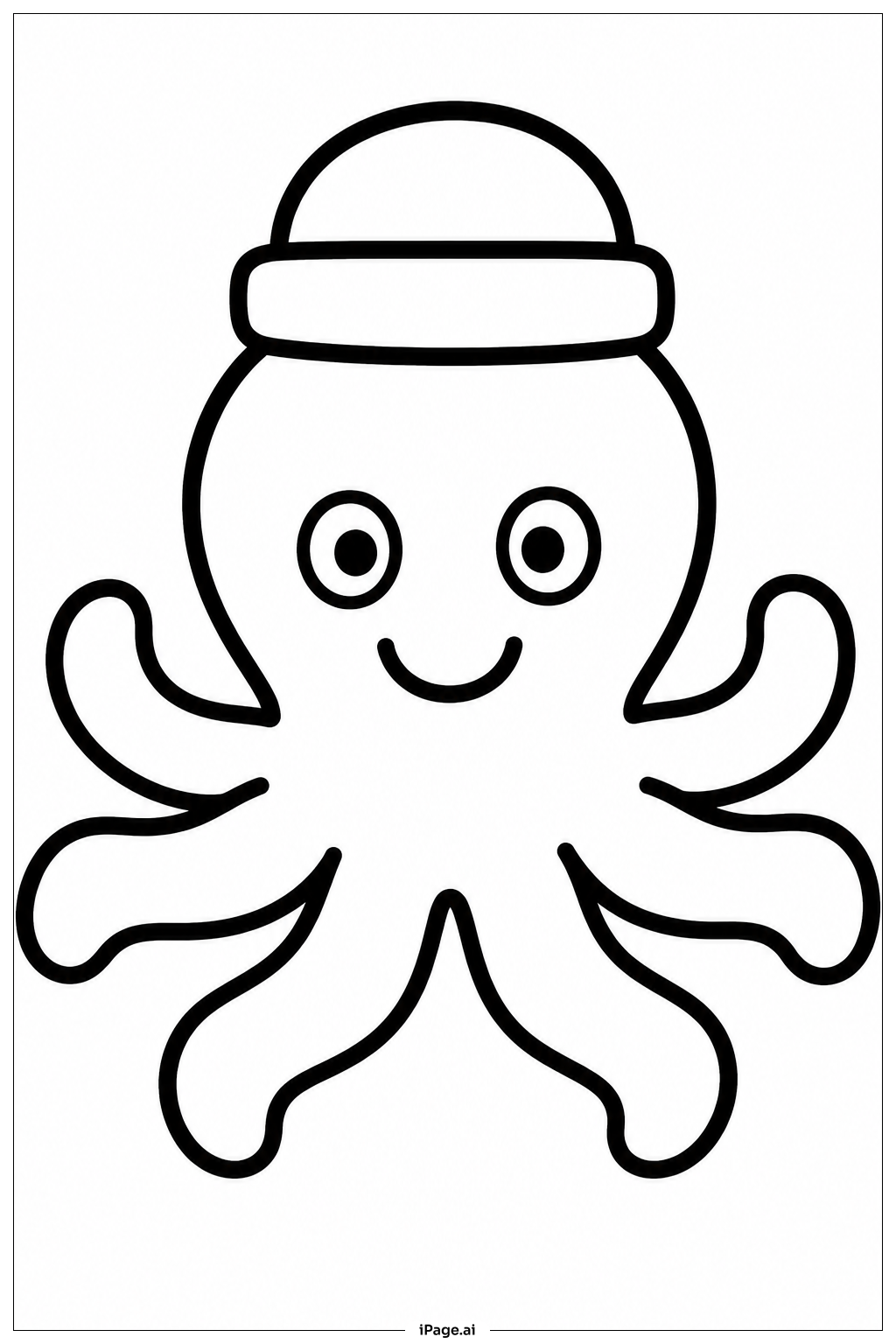
Coloring tips: How to color Octopus With Hat coloring page well?
Start with the octopus's body and use a bright, fun color like orange, purple, or pink — octopuses can be any color you imagine! Leave the belly area slightly lighter to give it a rounded, 3D look. For the tentacles, try using a gradient effect by starting with a darker shade at the base and getting lighter toward the tips. The suckers on the tentacles can be colored in a contrasting shade, like pale yellow or white, to make them pop. For the hat, pick a bold color like red, blue, or deep green to make it stand out. Add stripes, polka dots, or patterns to the hat to make it extra fun and unique. The eyes can be colored with bright whites and dark pupils, with a little sparkle dot left uncolored for a lively look. Use a light blue or soft teal for any water-themed background details if you choose to add them.
Coloring challenges: Which parts are difficult to color and need attention for Octopus With Hat coloring page?
Coloring this octopus image is a fun challenge, but there are a few tricky parts to watch out for:
• **The Tentacles:** The eight curling tentacles are the most complex part of this image. Each one twists and overlaps, making it easy to accidentally color two touching sections the same shade. Try using slightly different tones or shades of the same color to keep each tentacle looking separate and distinct.
• **The Suckers:** The small circular suckers running along the tentacles require careful, precise coloring. They are tiny and closely spaced, so using a fine-tipped colored pencil or marker will help you stay inside the lines without smudging into the surrounding tentacle color.
• **The Hat Details:** If the hat has a brim, band, or decorative elements, these small sections sit close together and need neat, controlled coloring. Switching between tools — like a broad marker for large areas and a thin pencil for details — can make this much easier.
• **The Face:** The eyes and smile are the heart of the octopus's expression. Coloring the eyes neatly, including the pupils, irises, and any highlight spots, takes patience. Rushing this area can make the face look less expressive, so take your time here.
• **Blending Body and Tentacles:** Keeping a consistent color flow from the main body down into each tentacle can be tricky. Planning your color palette before you start will help everything look unified and polished.
Benefits of coloring books: Advantages of drawing Octopus With Hat coloring page
Coloring this fun octopus image offers a wide range of benefits for kids and beginners alike.
**Creativity and Imagination:** Choosing colors for a fantasy octopus — one that can be any color you like — encourages free thinking and creative expression. There are no wrong answers, which builds confidence.
**Fine Motor Skills:** Carefully coloring the small suckers, tentacle curves, and hat details helps strengthen hand control and pencil grip. These are important skills for writing and drawing.
**Focus and Patience:** Staying inside the lines of the curling tentacles and tiny details requires concentration. Regular coloring practice helps children build longer attention spans and patience.
**Color Theory:** Experimenting with shading, gradients, and contrasting colors on the tentacles and hat is a natural, playful way to learn basic color theory concepts like light and shadow.
**Emotional Calm:** The repetitive, gentle motion of coloring is known to reduce stress and anxiety. The octopus's happy, smiling face also creates a positive, joyful mood while coloring.
**Sense of Achievement:** Completing a detailed image like this gives children a real sense of pride and accomplishment, motivating them to keep creating.