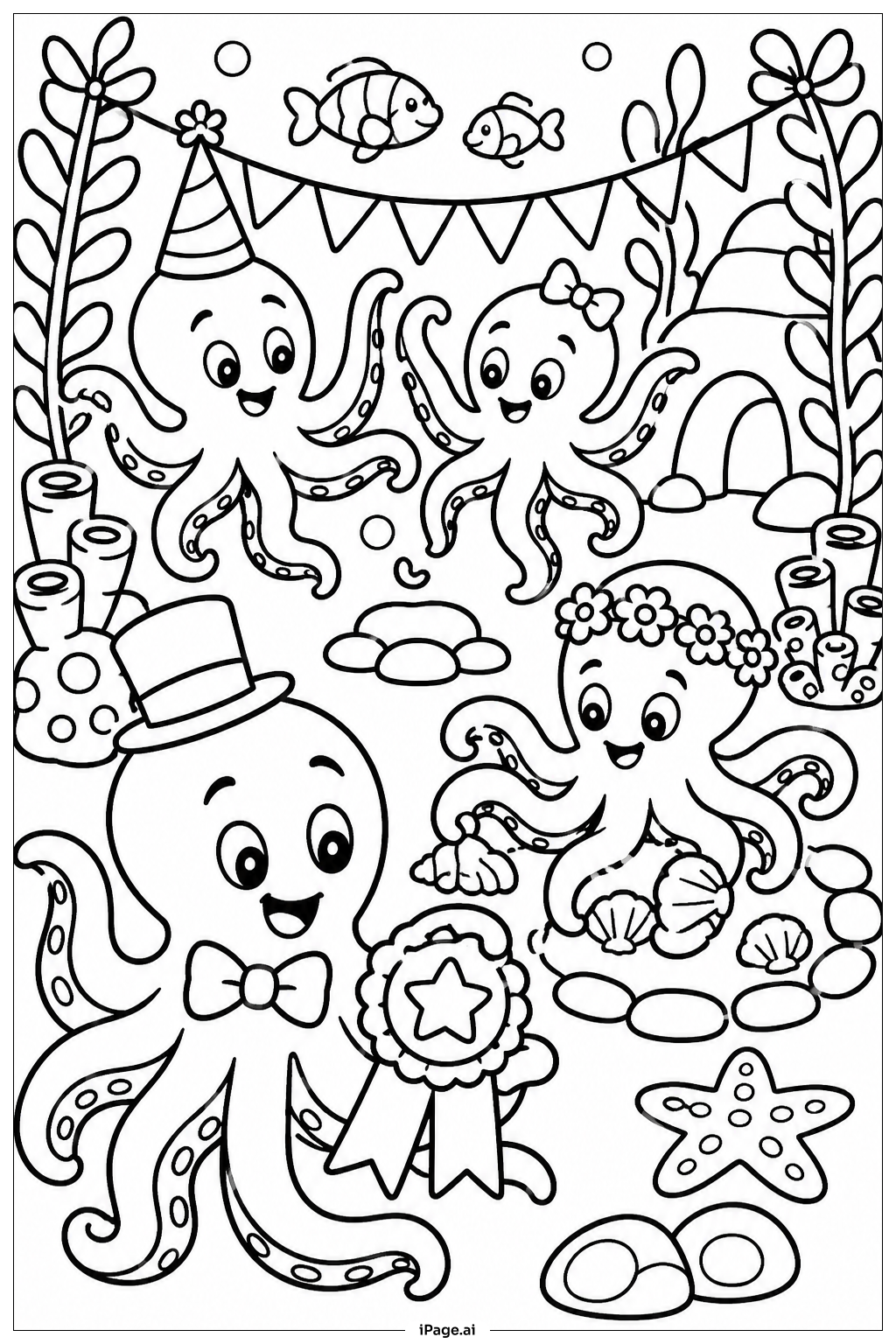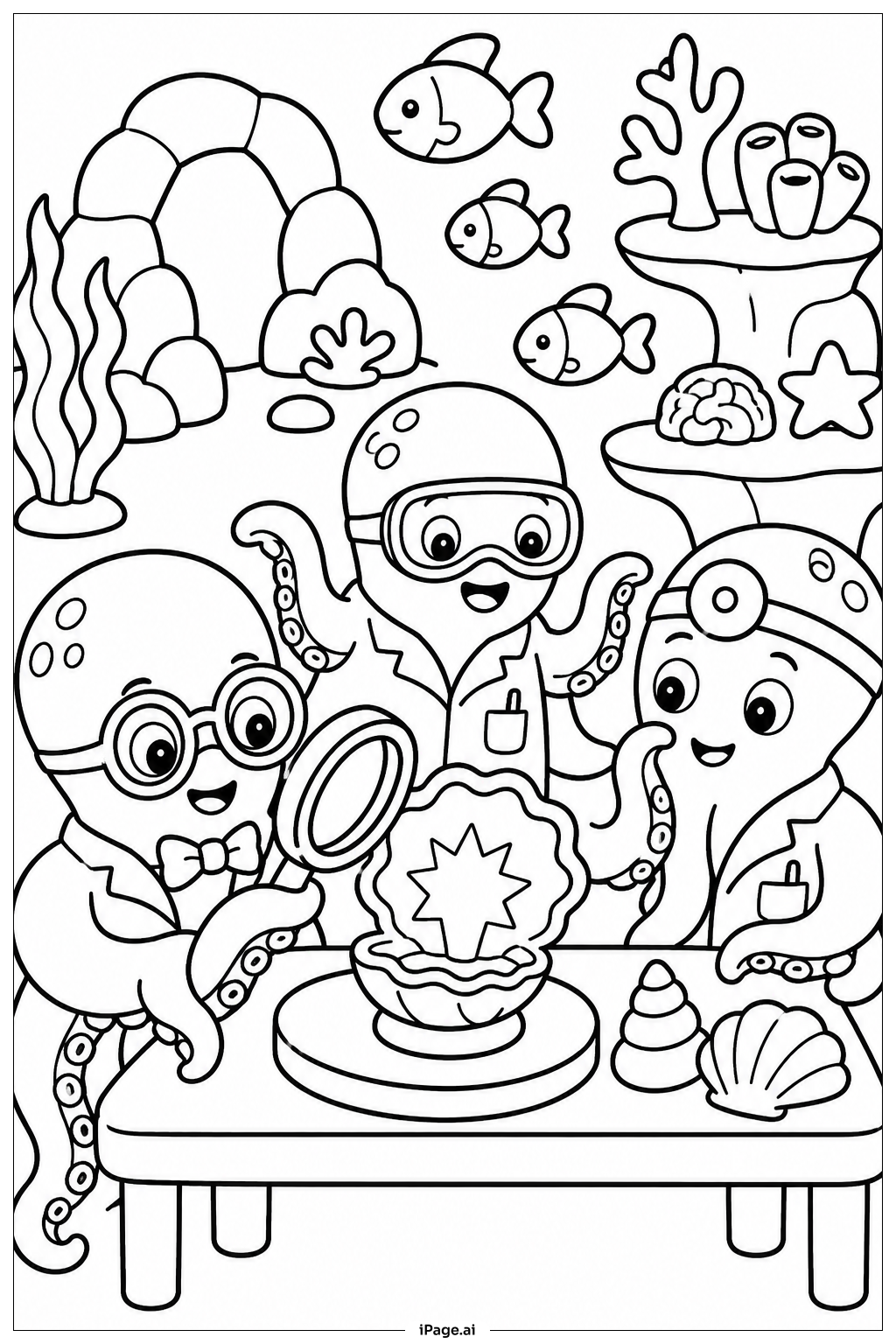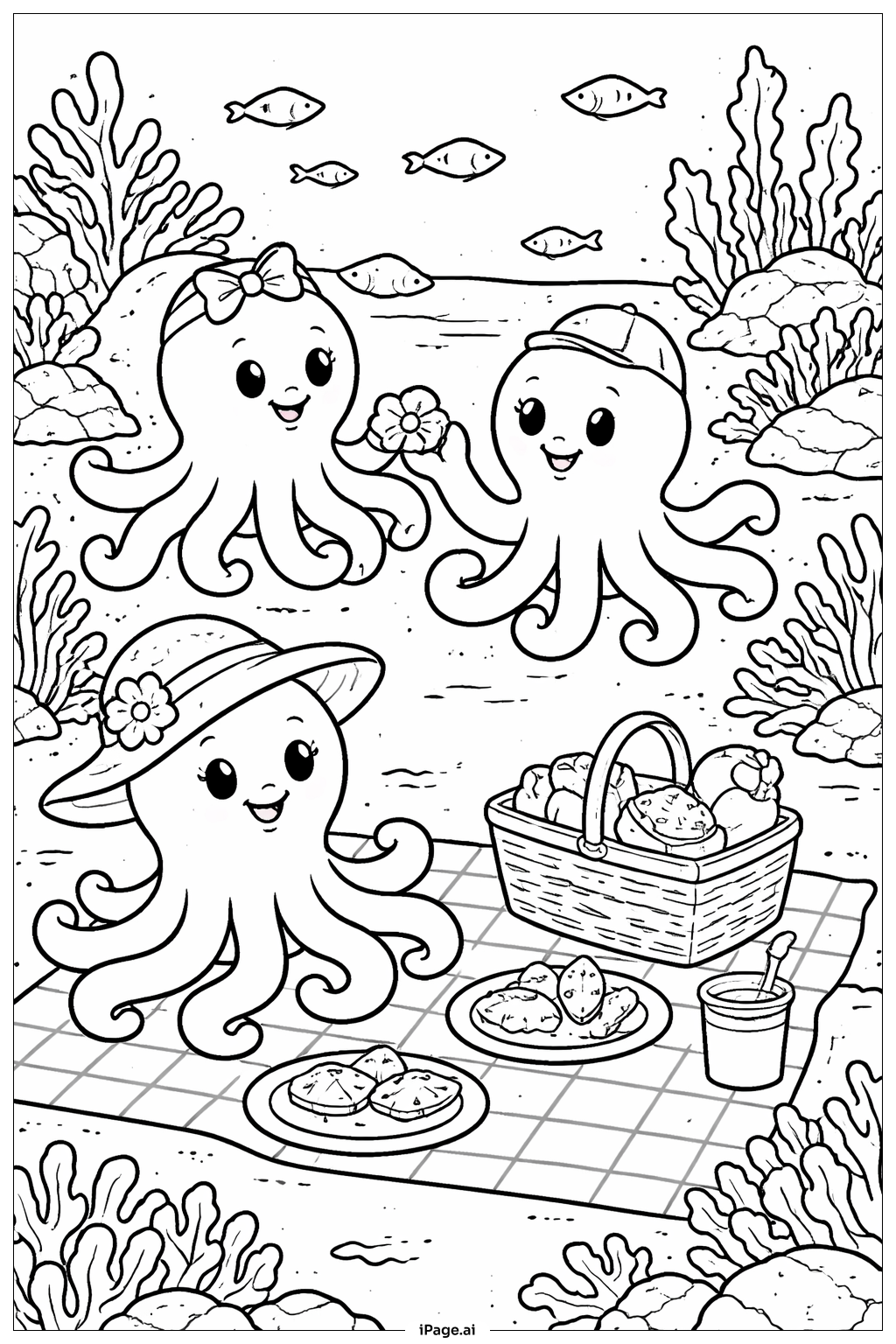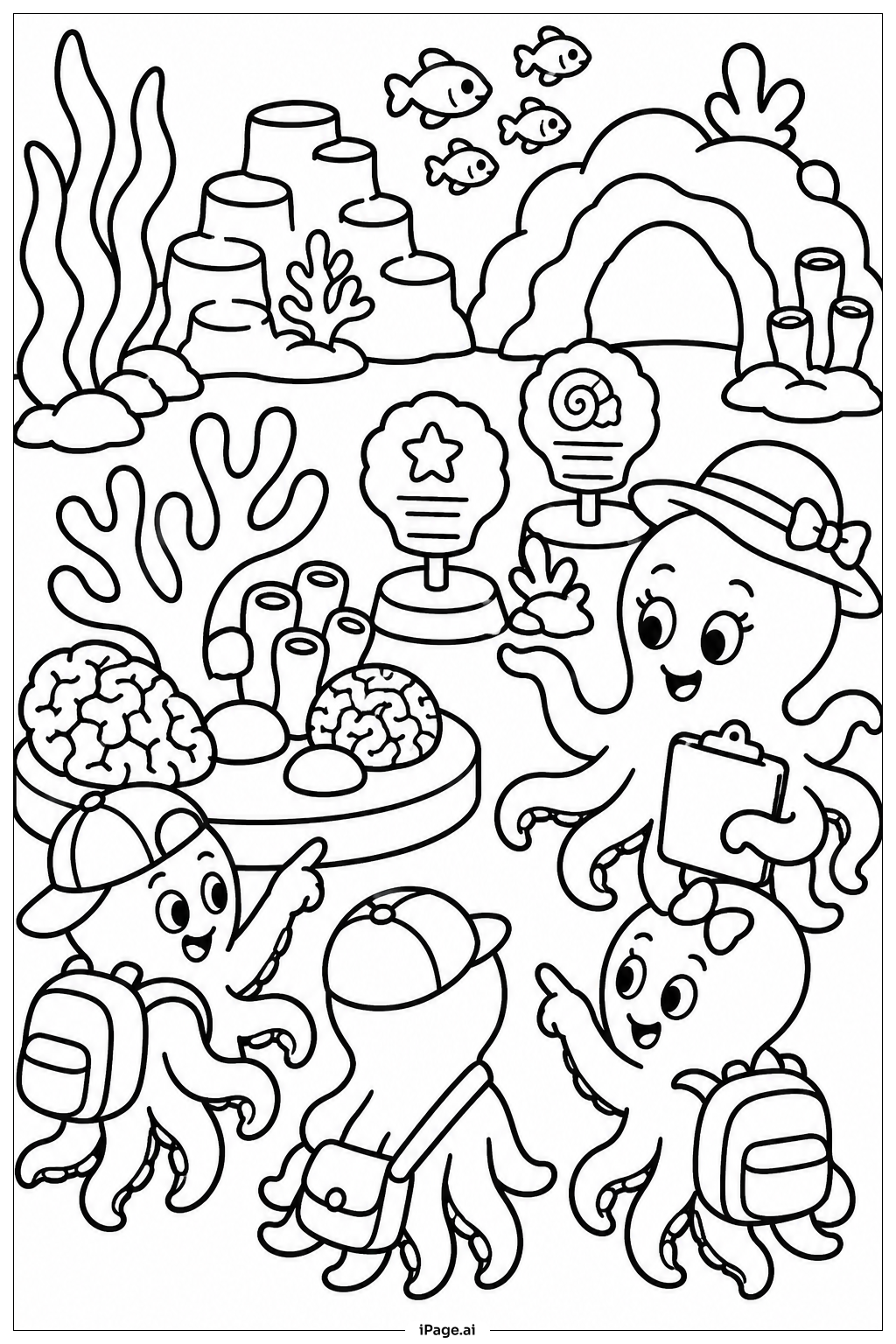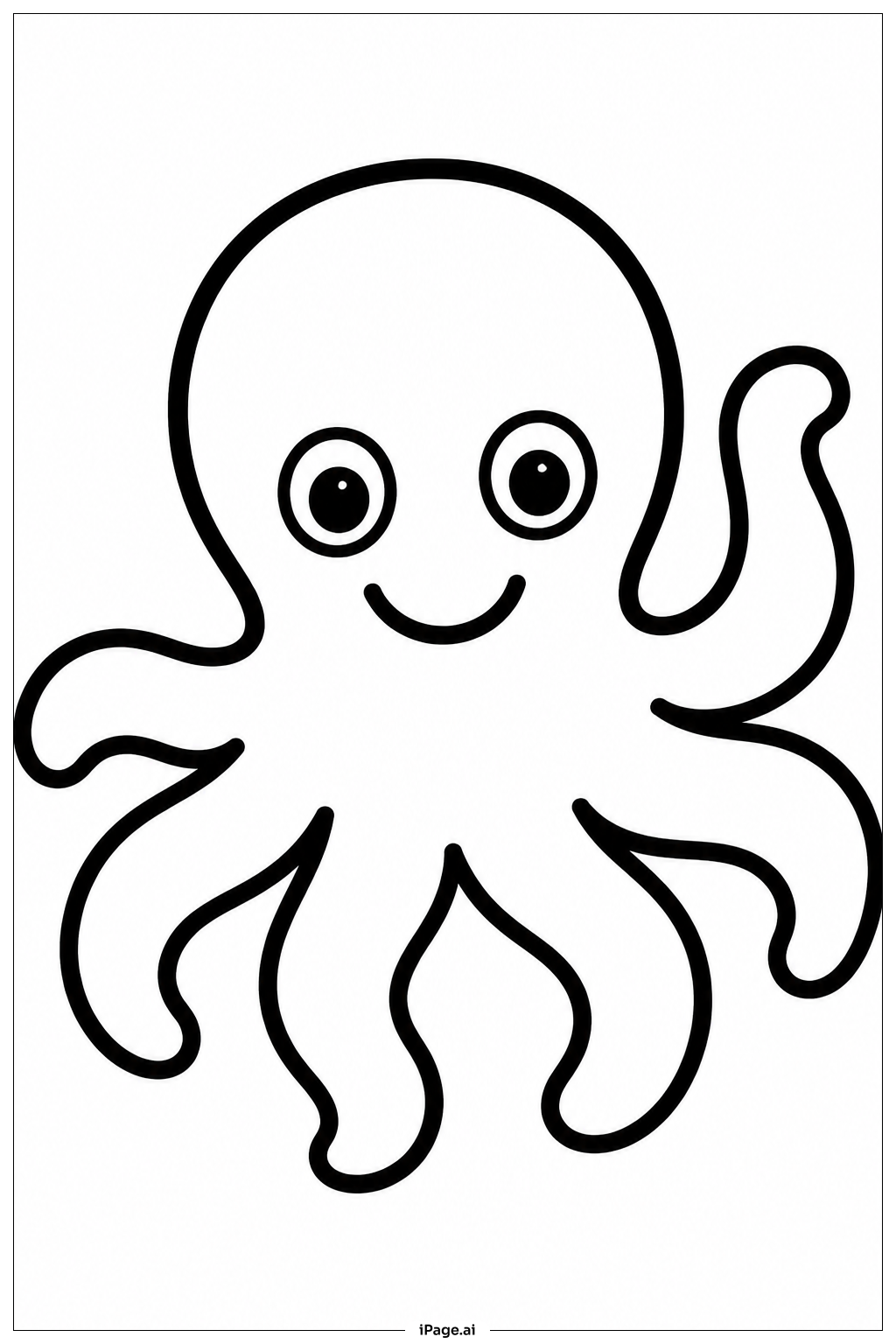
Coloring tips: How to color Octopus Waving coloring page well?
Start with the octopus's body and use a bold, fun color like orange, purple, or red — octopuses come in many shades, so let your imagination run wild! Use a slightly darker version of the same color to shade the underside of the tentacles and give them a rounded, three-dimensional look. Color the suction cups in a lighter tone, like pale yellow or cream, to make them pop. For the eyes, try bright white with dark pupils and add a tiny white dot to make them look shiny and alive. Use cool blues and teals for the surrounding water, and color the bubbles in light blue or leave them white for a fresh, airy feel. Kids can also try a rainbow octopus by giving each tentacle a different color — it's a great way to practice using multiple colors together!
Coloring challenges: Which parts are difficult to color and need attention for Octopus Waving coloring page?
Coloring this octopus waving image is a fun challenge, but there are a few tricky areas to watch out for:
• **The tentacles and suction cups:** The tentacles curl and overlap in different directions, making it easy to accidentally color outside the lines. The small suction cups along each tentacle require a fine-tipped coloring tool and a steady hand. Younger children may find it helpful to use a thin marker or colored pencil for these tiny details.
• **Keeping colors consistent across tentacles:** Because there are eight tentacles spreading in different directions, it can be hard to keep the same color tone throughout without losing track of which areas have already been colored. Planning your color scheme before you start can help avoid patchy or uneven results.
• **Shading the round body:** The octopus's body is smooth and dome-shaped. Capturing that rounded, three-dimensional form through shading requires blending from a lighter center to a darker edge — a technique that can be challenging for beginners but is great practice.
• **The facial details:** The large eyes and smile are the most expressive part of the image. Coloring them neatly without smudging or going outside the fine lines takes patience and precision, especially around the pupils and the curved smile.
• **Background water and bubbles:** Filling in the water background evenly while keeping the bubbles clean and uncolored (or lightly tinted) requires careful control, particularly where the bubbles sit close to the octopus's body.
Benefits of coloring books: Advantages of drawing Octopus Waving coloring page
Coloring this friendly waving octopus offers a wonderful range of benefits for children and young artists:
**Builds fine motor skills:** Carefully coloring the small suction cups and curling tentacles helps children develop hand control and pencil grip — skills that support handwriting and everyday tasks.
**Sparks creativity:** Choosing colors for an octopus is a great creative exercise. Since octopuses can change color in real life, kids are free to experiment with any palette they like, building confidence in their artistic choices.
**Teaches focus and patience:** Working through the detailed tentacles and facial features encourages children to slow down, concentrate, and take their time — habits that carry over into school and learning.
**Introduces ocean science:** The image naturally invites curiosity about marine life. Parents and teachers can use it as a starting point to talk about octopuses, the ocean, and sea creatures, making coloring a fun learning moment.
**Promotes emotional well-being:** The octopus's big smile and friendly wave create a positive, joyful mood. Coloring calming, happy images helps reduce stress and gives children a satisfying sense of accomplishment when they finish.