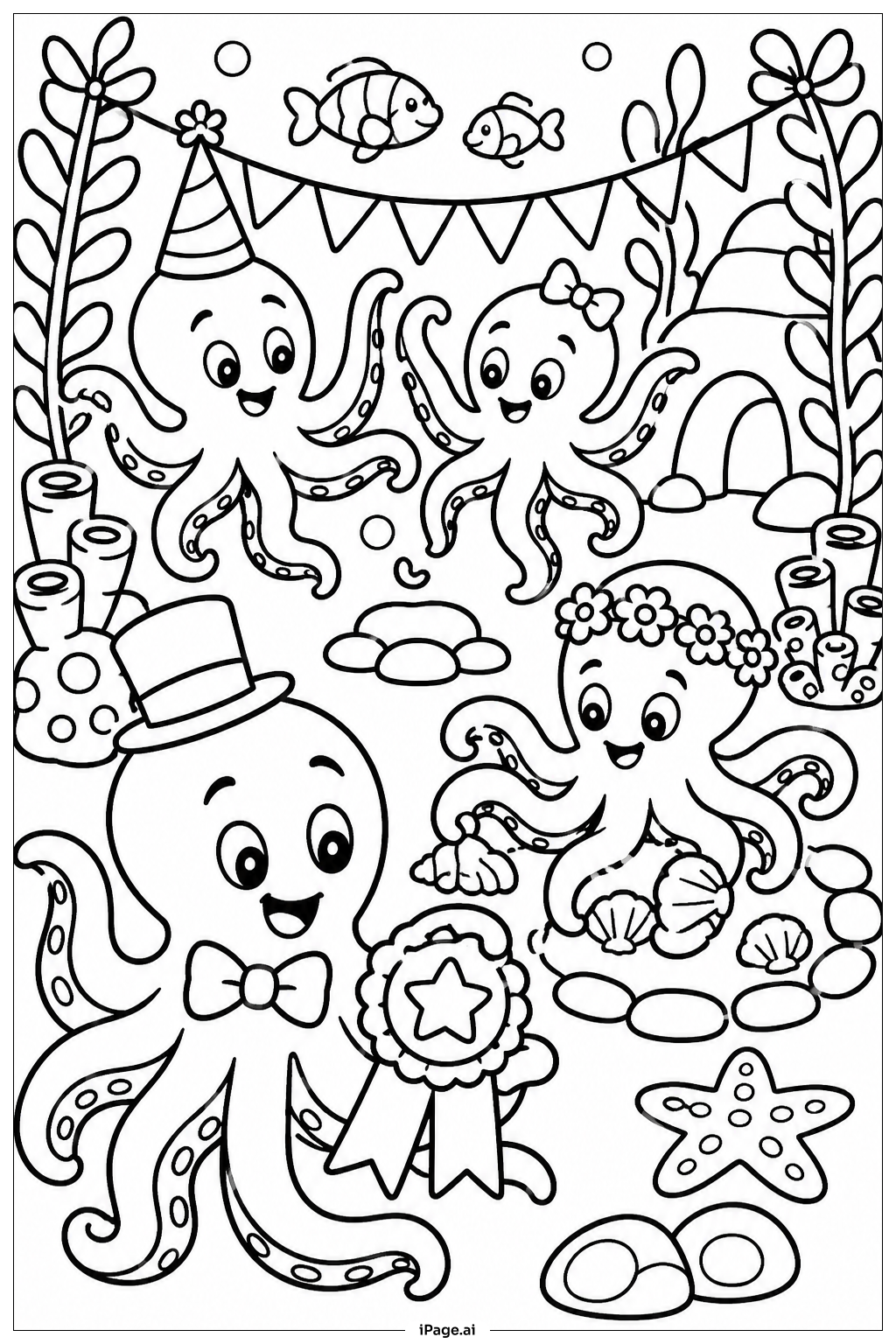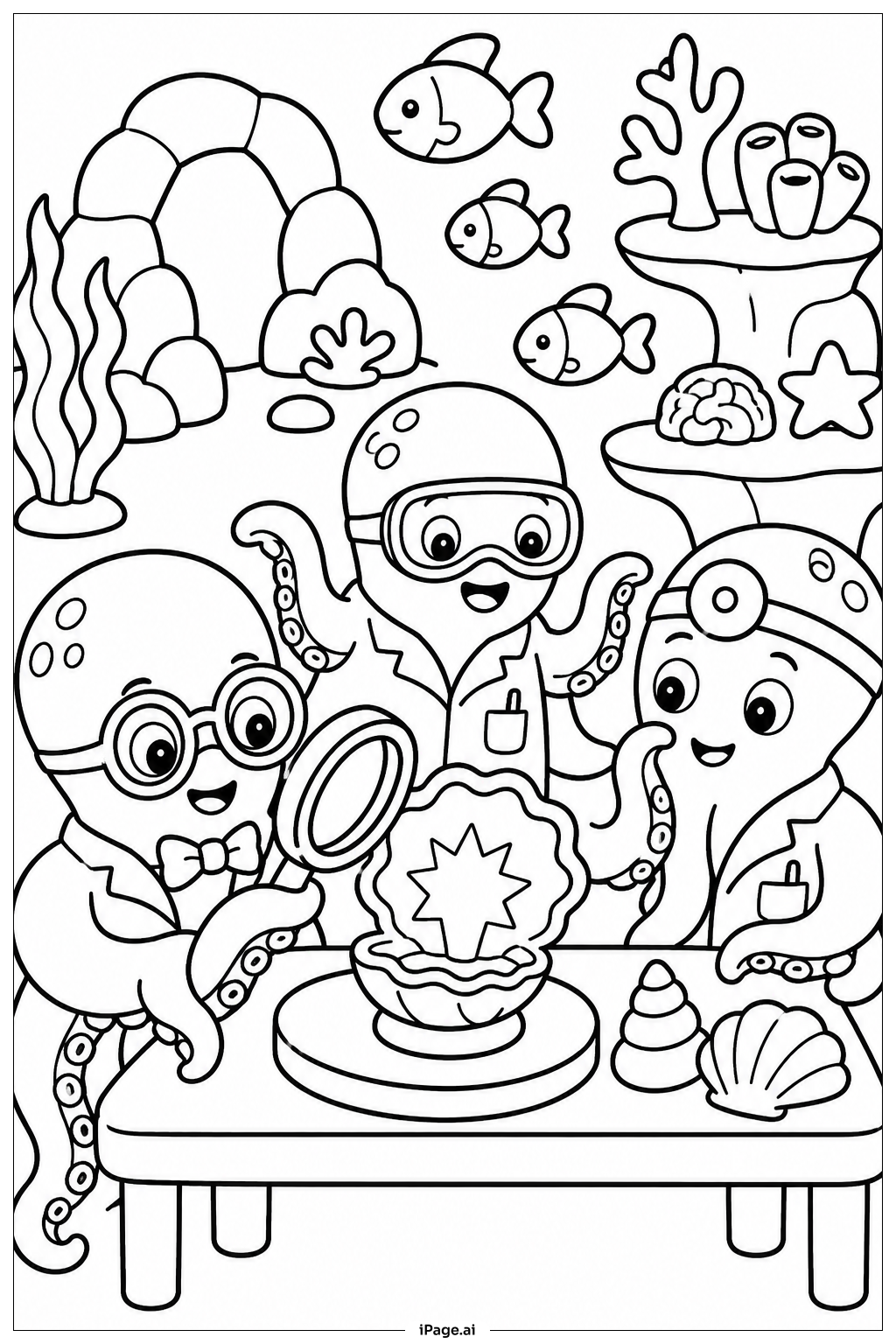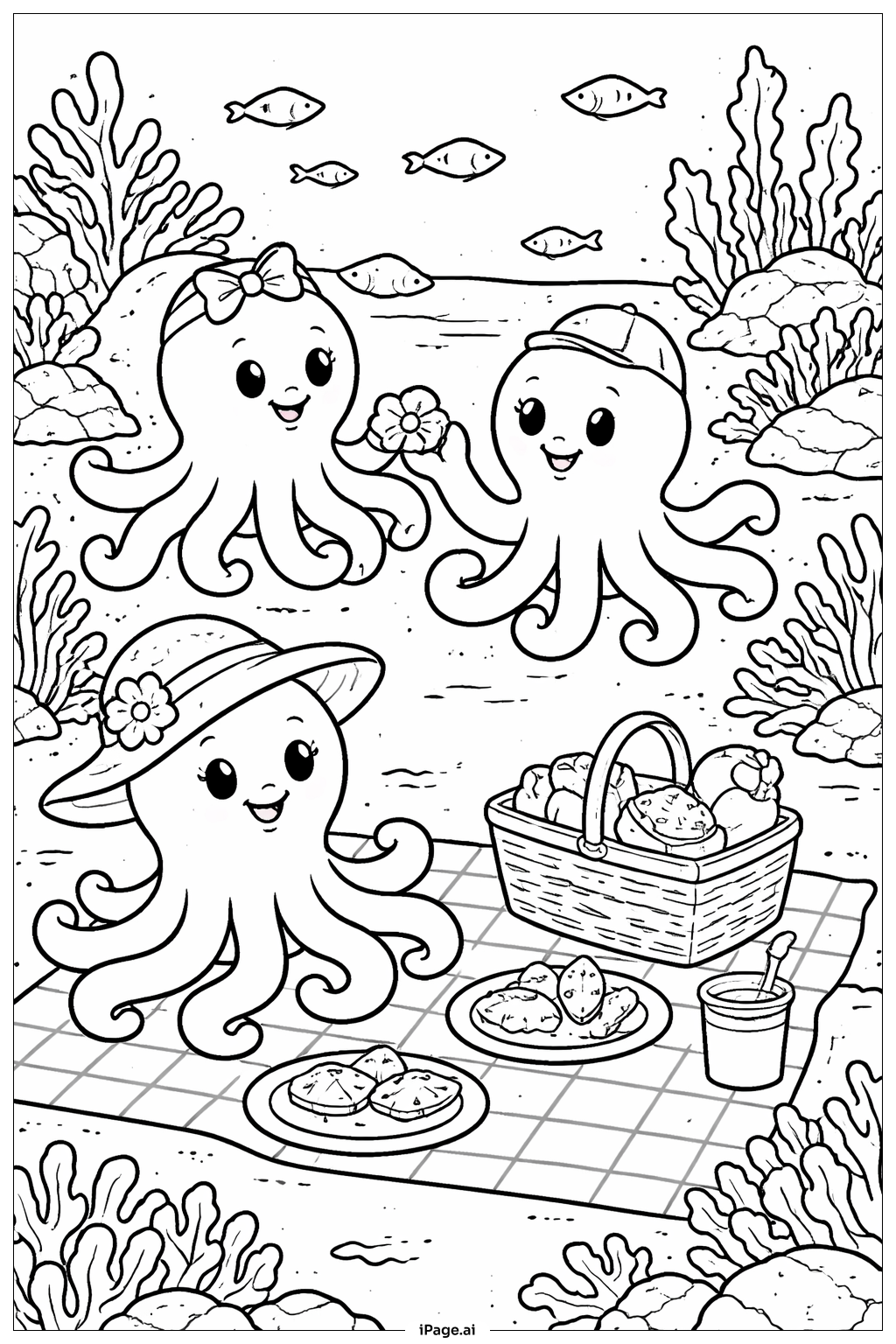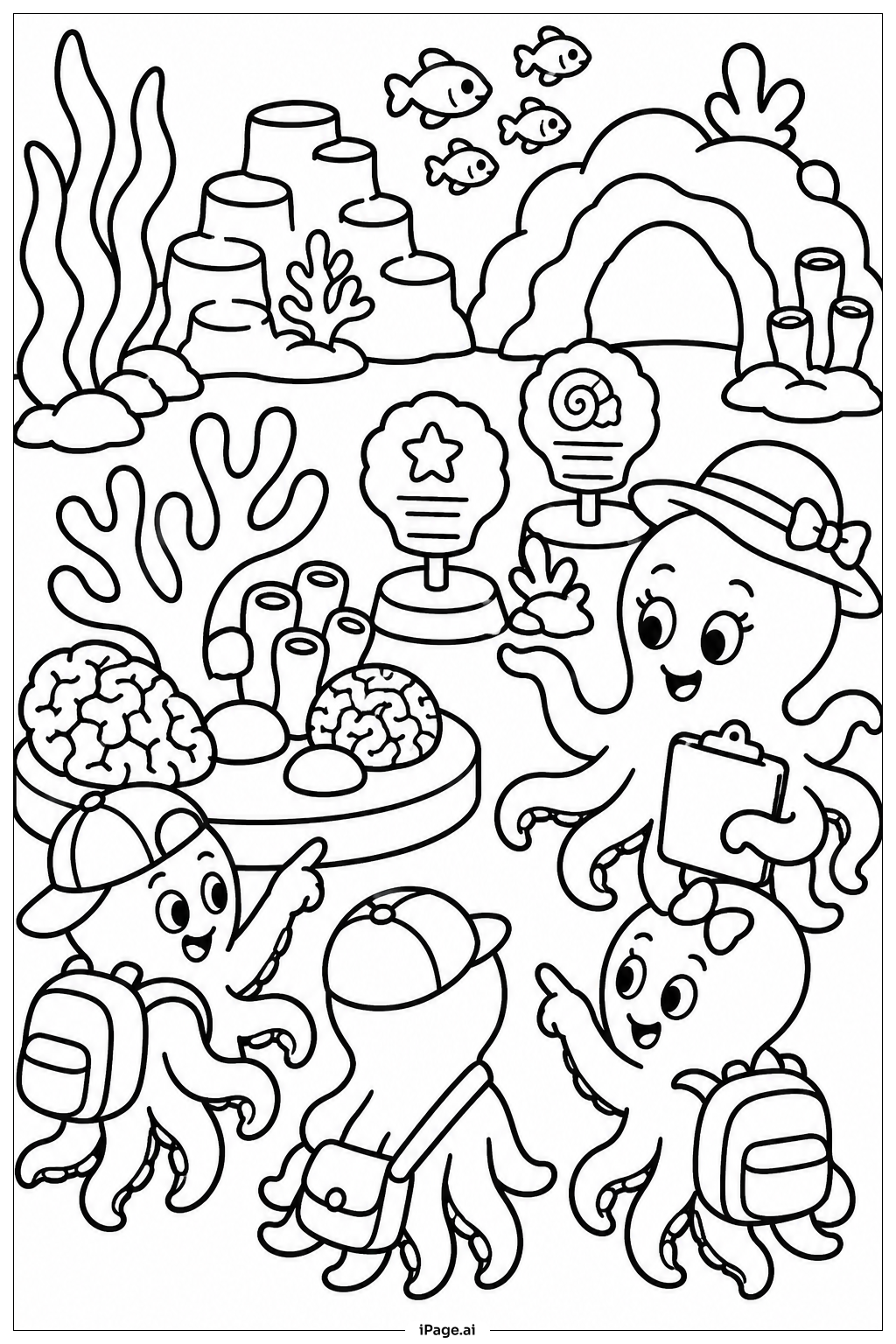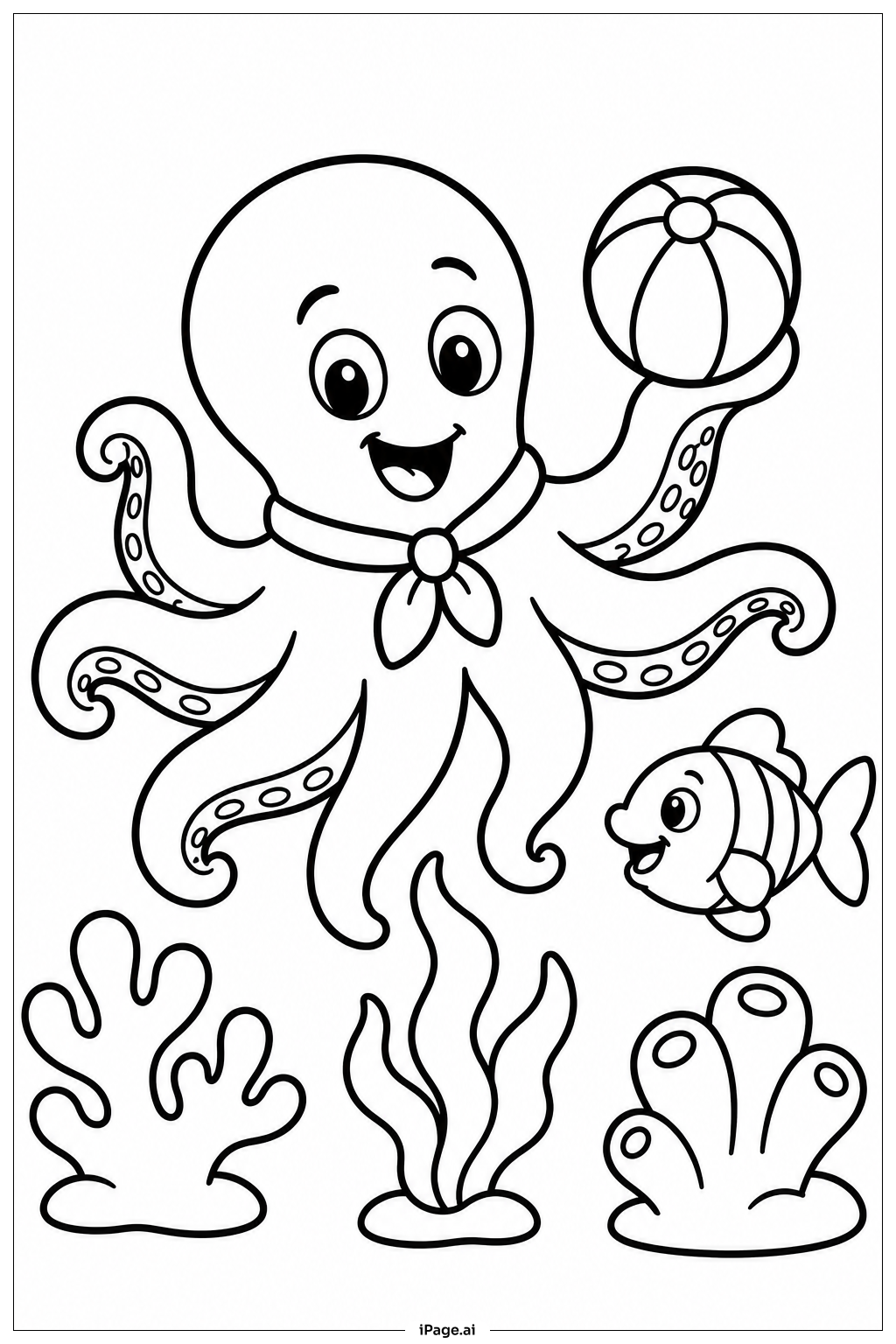
Coloring tips: How to color Octopus Playing With Fish coloring page well?
Start with the octopus's body. Use a bright orange or deep purple to make it stand out. You can add spots or patterns on the tentacles to make them look more interesting. Color each tentacle a slightly different shade to show depth and movement.
For the fish, use a mix of bold colors — red, yellow, blue, and green. Give each fish its own unique color so they look like different species swimming together.
Use light blue or aqua for the water background. Add darker blue tones near the edges to create a sense of depth in the ocean.
Color the bubbles with a very light blue or leave them mostly white with just a thin outline. For the sea plants, try greens and teals. Use yellow or sandy tones for any starfish or ocean floor details.
Don't be afraid to mix colors and experiment. The ocean is full of vibrant, unexpected colors, so this is a great page to be bold and creative!
Coloring challenges: Which parts are difficult to color and need attention for Octopus Playing With Fish coloring page?
Coloring this image comes with a few fun challenges to keep in mind:
• **Tentacle Details and Spacing:** The octopus has eight long, curling tentacles that weave around the fish and fill much of the page. Staying inside the lines along each tentacle's curves requires patience and a steady hand. Using a fine-tipped marker or a sharpened colored pencil will help you navigate the tight curves without accidentally coloring over the fish or background.
• **Overlapping Elements:** The fish and tentacles overlap in several places, making it tricky to decide where one color ends and another begins. Plan your color choices ahead of time so that neighboring shapes — like a tentacle next to a fish — use contrasting colors. This helps each element stand out clearly and keeps the image from looking muddy.
• **Small Background Details:** Tiny bubbles, sea plants, and decorative patterns fill the background. These small shapes are easy to accidentally skip or smudge. Work slowly in these areas and use the tip of your coloring tool for precision. A light hand works best for bubbles so they look transparent and airy.
• **Creating Depth in the Water:** Making the background look like a real ocean requires blending shades of blue. Transitioning from lighter blue near the surface to deeper blue toward the edges can be tricky without the right technique. Try layering colors gently or using circular strokes to blend smoothly.
• **Keeping Colors Consistent:** With so many fish, tentacles, and details, it can be hard to keep a consistent color theme across the whole page. Sketching out a quick color plan before you start can save a lot of time and help the final result look polished and balanced.
Benefits of coloring books: Advantages of drawing Octopus Playing With Fish coloring page
Coloring this fun underwater scene offers a wide range of benefits for kids and adults alike.
For children, following the lines of the octopus's curling tentacles and tiny fish helps build fine motor skills and hand-eye coordination. Choosing colors for each character encourages creative thinking and self-expression. Kids also get to learn about ocean life in a playful, engaging way.
The friendly, playful mood of the image — with the octopus and fish having fun together — promotes positive emotions. Focusing on coloring can help children feel calm and focused, making it a great quiet-time activity.
For older kids and adults, the detailed background elements like bubbles, sea plants, and patterns offer a satisfying challenge. Completing a complex page builds a sense of accomplishment and boosts confidence.
Coloring also encourages mindfulness. Spending time on a detailed image like this helps quiet a busy mind and reduce stress. It's a screen-free activity that still feels rewarding and fun.
Sharing the finished page with friends or family can spark conversations about ocean animals, colors, and creativity — making it a wonderful social and educational experience for all ages.