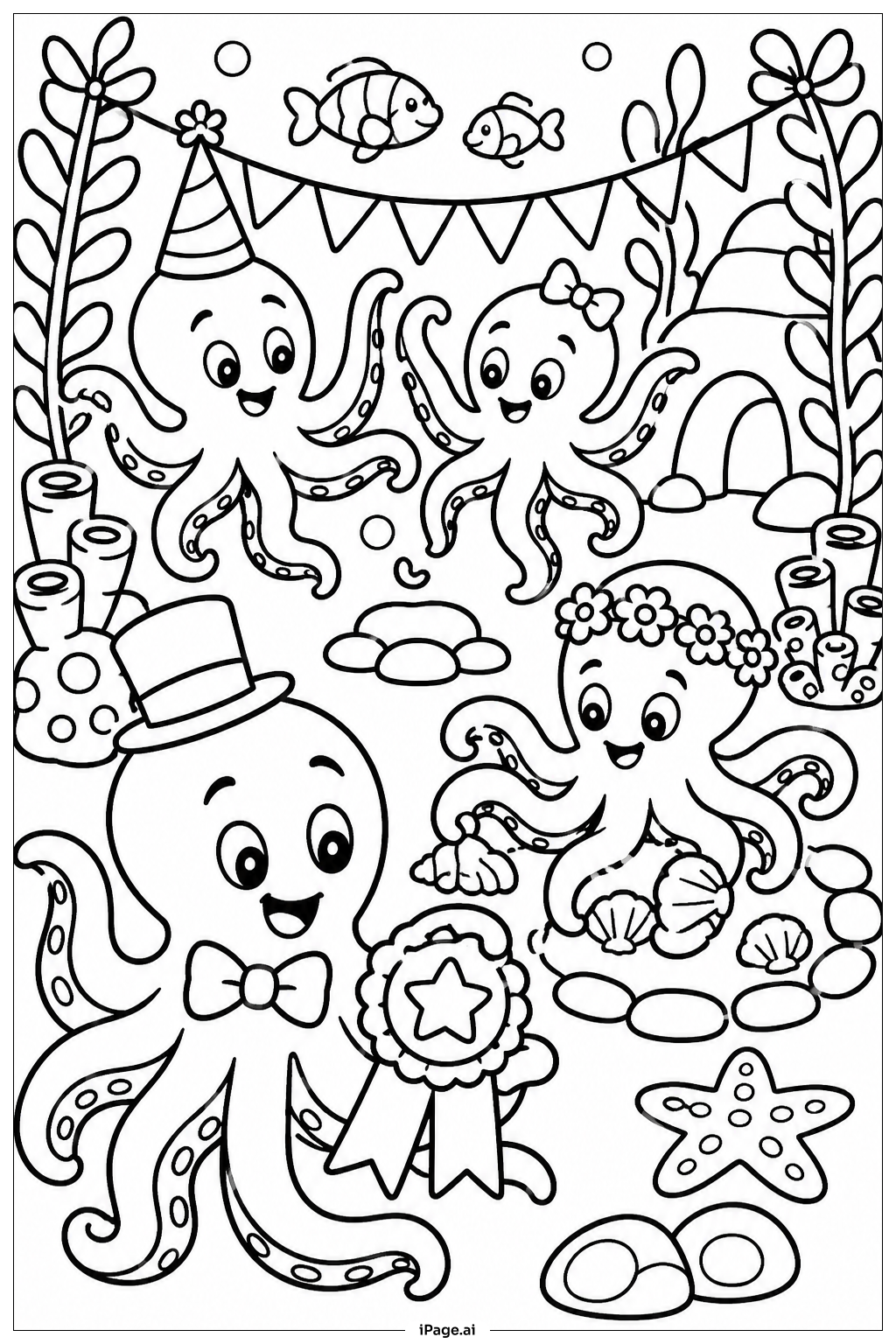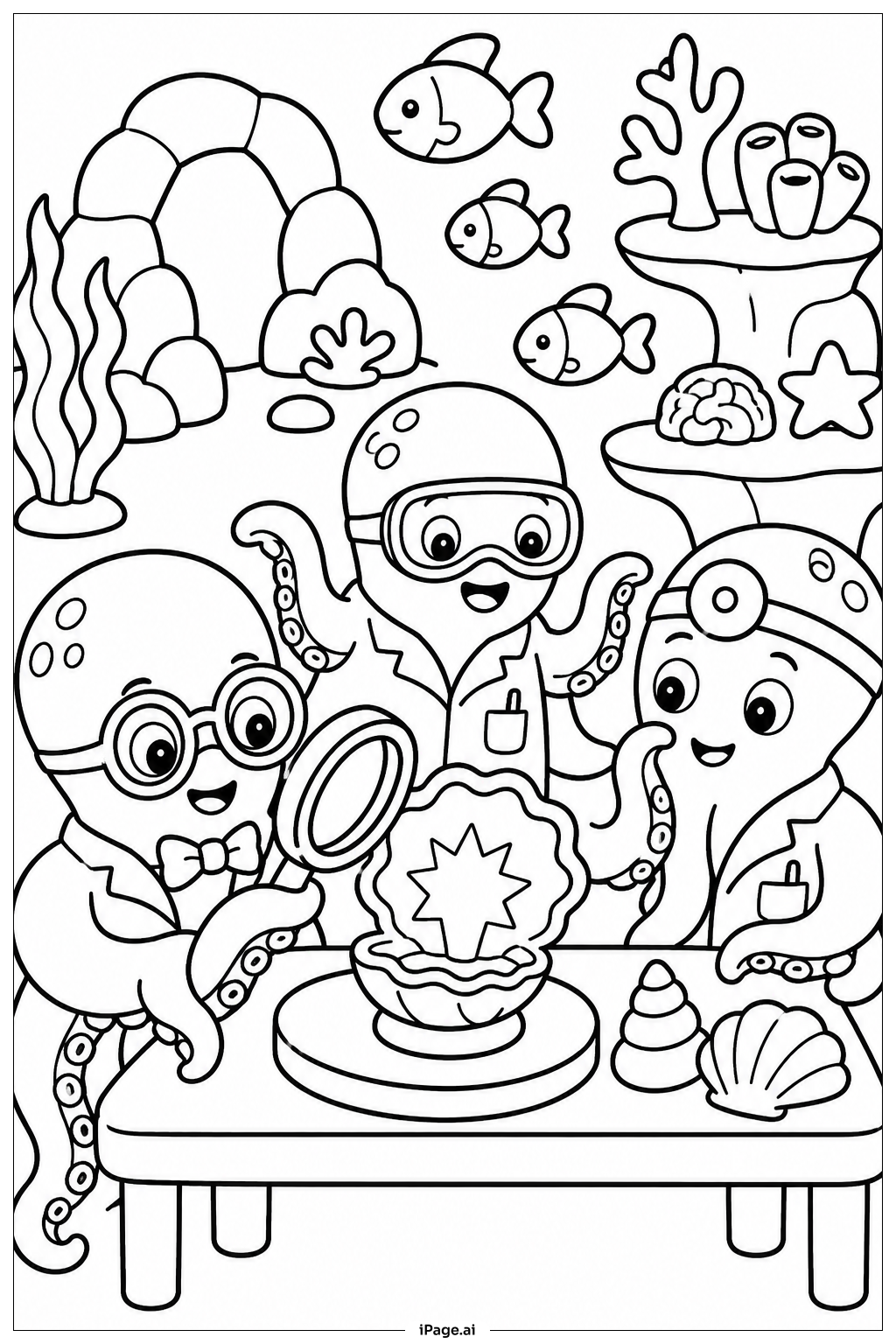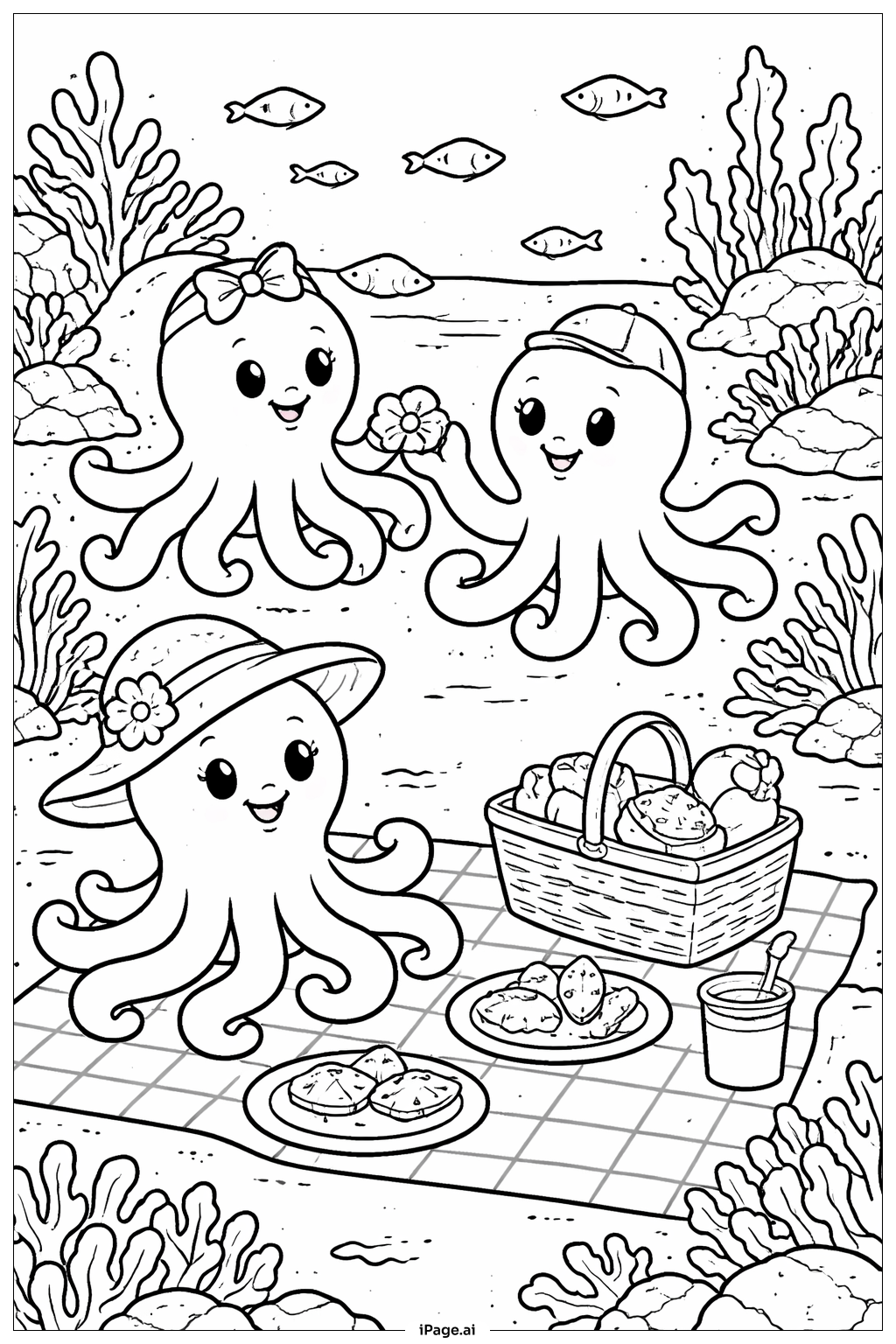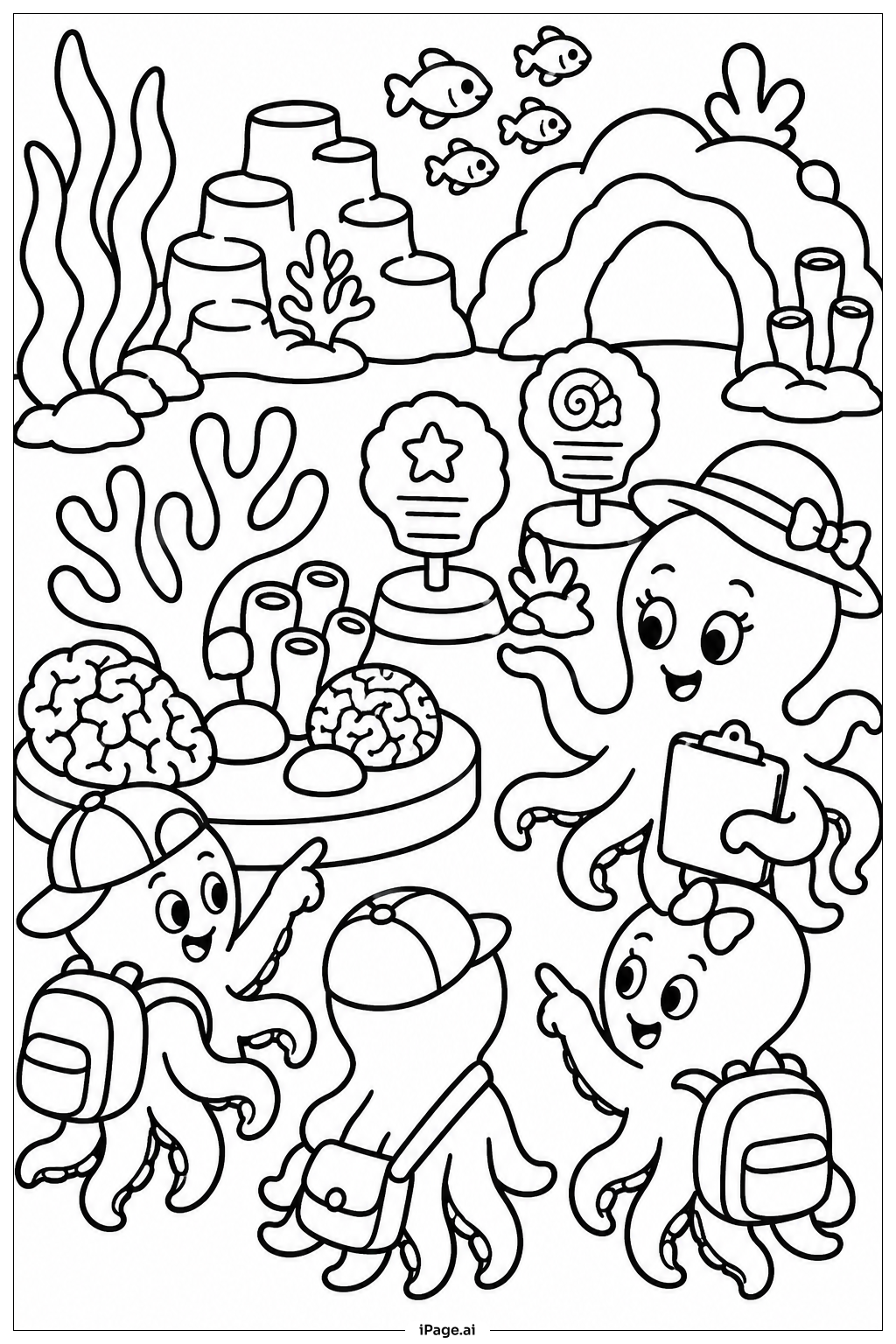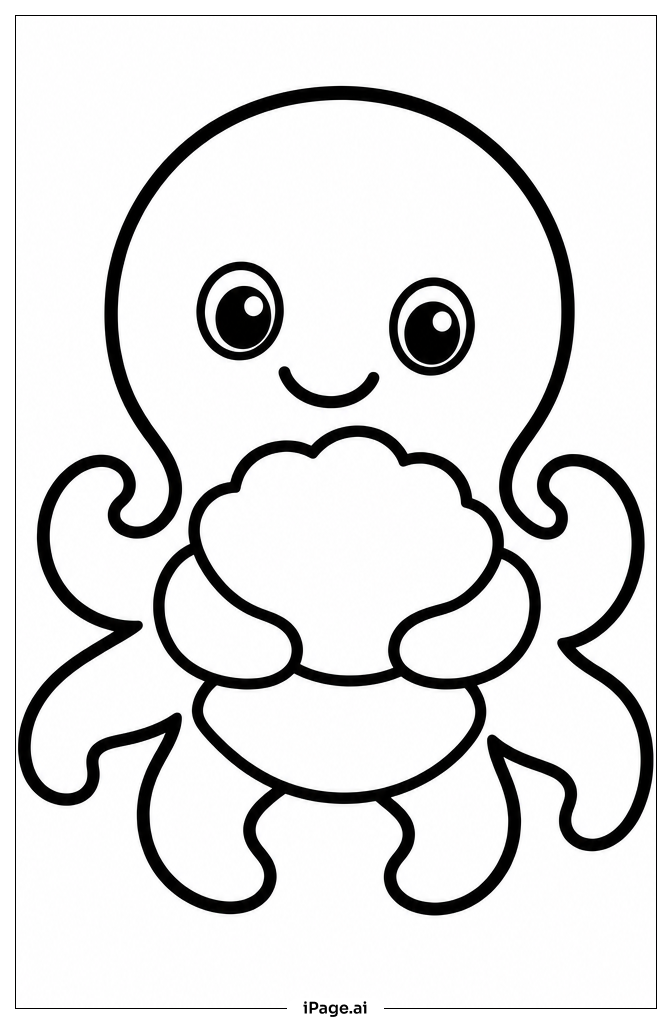
Coloring tips: How to color Octopus Hugging Shell coloring page well?
Start with the octopus body. Use a bright orange or deep red for a classic look, or go bold with purple or pink for a fun, fantasy feel. Add a slightly darker shade on the underside of the tentacles to give them a rounded, three-dimensional look. Color the suckers in a pale cream or light yellow to make them pop.
For the shell, try warm sandy tones like beige, tan, or soft brown. Use a darker shade inside the spiral grooves to highlight the ridges. A touch of peach or rose on the outer edges adds a beautiful, natural glow.
Fill the background with soft ocean blues and teals. Use lighter blue near the top and deeper blue toward the bottom to suggest depth. Color the bubbles in pale blue or leave them white. Add yellow or orange to the starfish for a cheerful contrast.
Feel free to mix colors creatively — this is your ocean world!
Coloring challenges: Which parts are difficult to color and need attention for Octopus Hugging Shell coloring page?
Coloring this image comes with several fun but tricky challenges to keep in mind:
• **Tentacle Details and Suckers:** The octopus has eight long, curling tentacles covered in rows of small suckers. Staying inside the lines of each individual sucker is very difficult, especially for younger colorists. Using a fine-tipped colored pencil or a thin marker works best here. Take your time and color each sucker one by one.
• **Shell Ridges and Spiral Patterns:** The seashell has many narrow ridges and a tight spiral at its tip. Coloring inside these thin grooves without going over the lines requires a steady hand and a sharp pencil. Blending two or three close shades of brown or tan along the ridges will make the shell look realistic and textured.
• **Shading and Depth:** Both the octopus body and the shell have curved, three-dimensional shapes. Creating a sense of depth by adding lighter colors in the center and darker tones along the edges takes practice. Without shading, the image may look flat, so this is a great opportunity to experiment with gradients.
• **Small Background Elements:** The bubbles, starfish, and wave details in the background are small and closely spaced. Coloring them neatly without accidentally blending them into the main figures requires patience and careful tool selection.
• **Color Harmony:** Choosing colors that work well together across the octopus, shell, and background can be challenging. Planning your color palette before you start will help the whole scene feel balanced and visually pleasing.
Benefits of coloring books: Advantages of drawing Octopus Hugging Shell coloring page
Coloring this octopus and shell scene offers a wonderful range of benefits for kids and beginners alike.
**Builds Fine Motor Skills:** Carefully coloring the tiny suckers, shell ridges, and curling tentacles strengthens hand muscles and improves pencil control — skills that directly support handwriting and everyday tasks.
**Encourages Creativity:** Choosing colors for an underwater scene sparks imagination. There are no wrong answers — a rainbow octopus or a golden shell are just as valid as realistic choices, giving children the freedom to express themselves.
**Teaches Focus and Patience:** Working through the detailed sections of this image — especially the shell spiral and background bubbles — helps children practice sitting still, concentrating, and completing a task step by step.
**Introduces Ocean Life:** The image gently introduces kids to sea creatures like octopuses, shells, and starfish, sparking curiosity about marine biology and the natural world.
**Promotes Relaxation:** The flowing, organic shapes of the tentacles and the shell's spiral are naturally calming to color. The repetitive motion of filling in patterns helps reduce stress and creates a peaceful, meditative experience.
**Builds Confidence:** Finishing a detailed coloring page gives children a real sense of accomplishment and pride in their work.