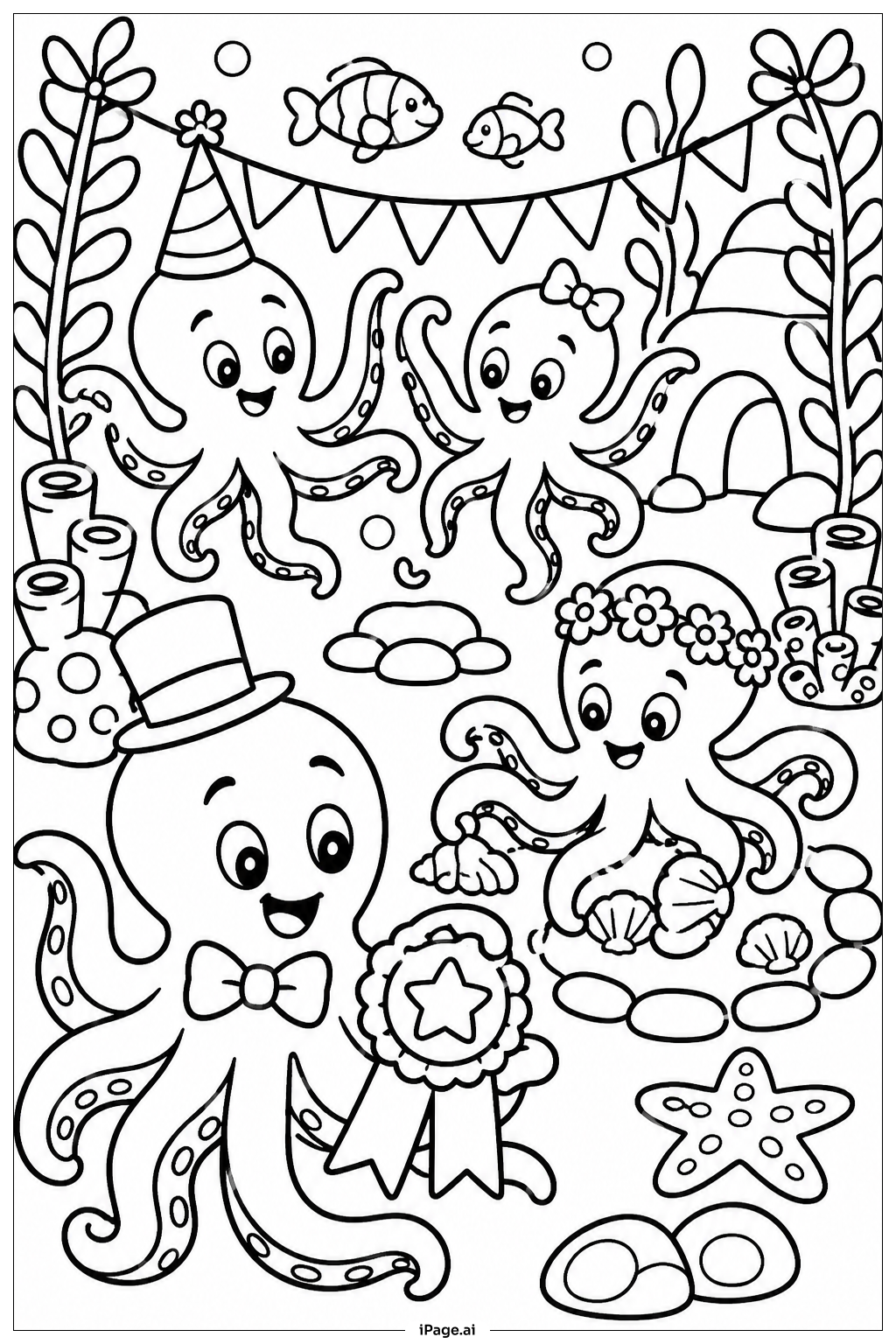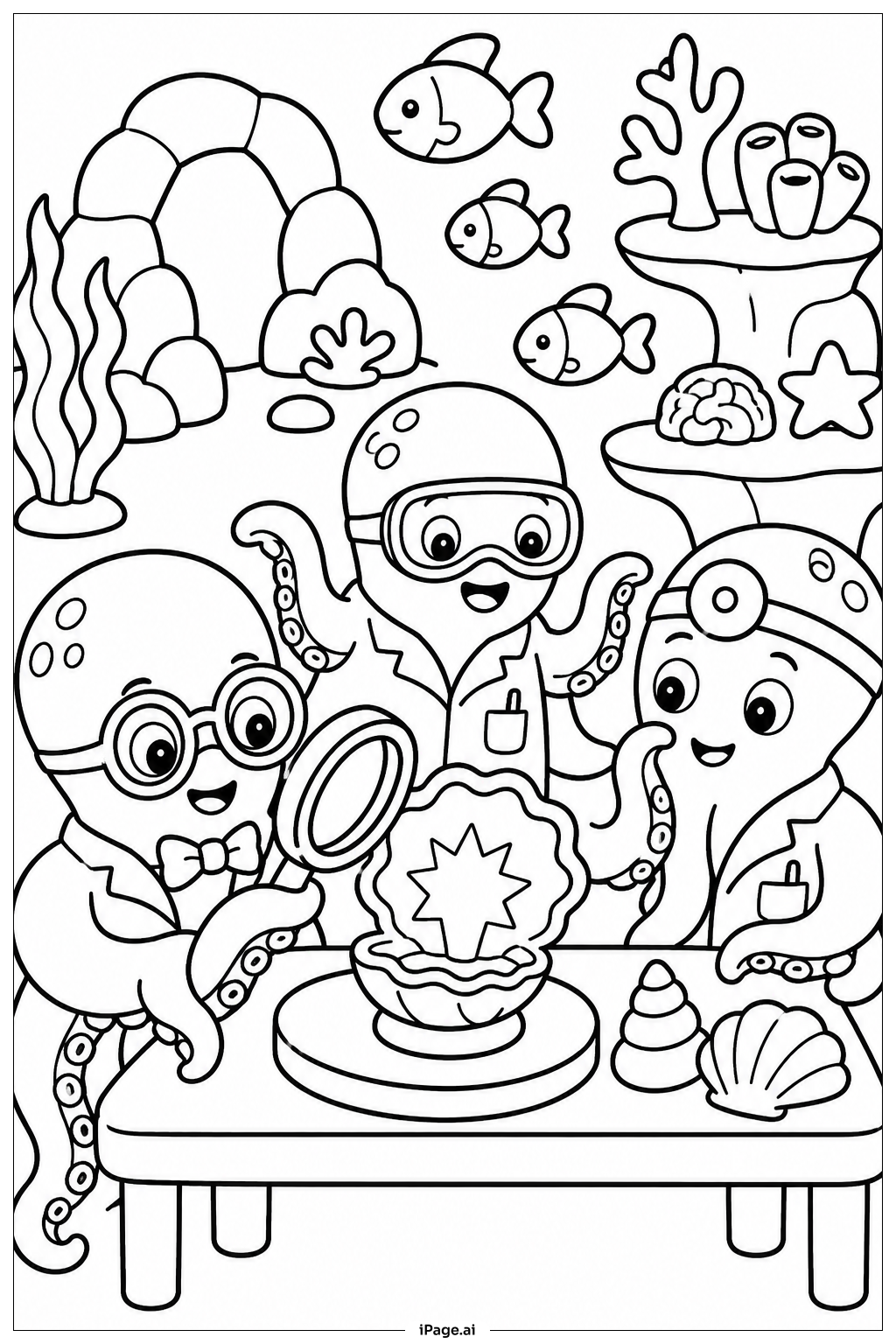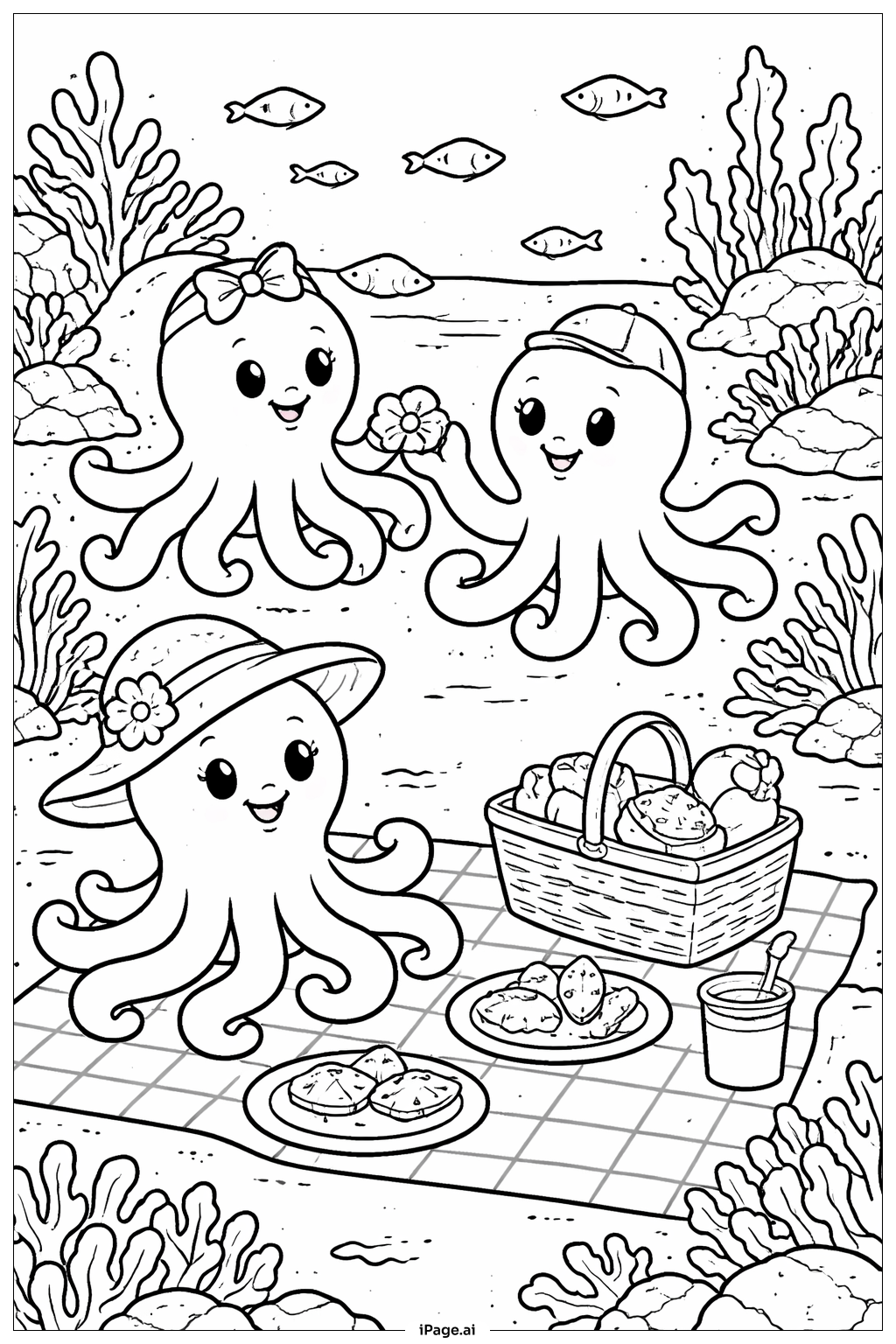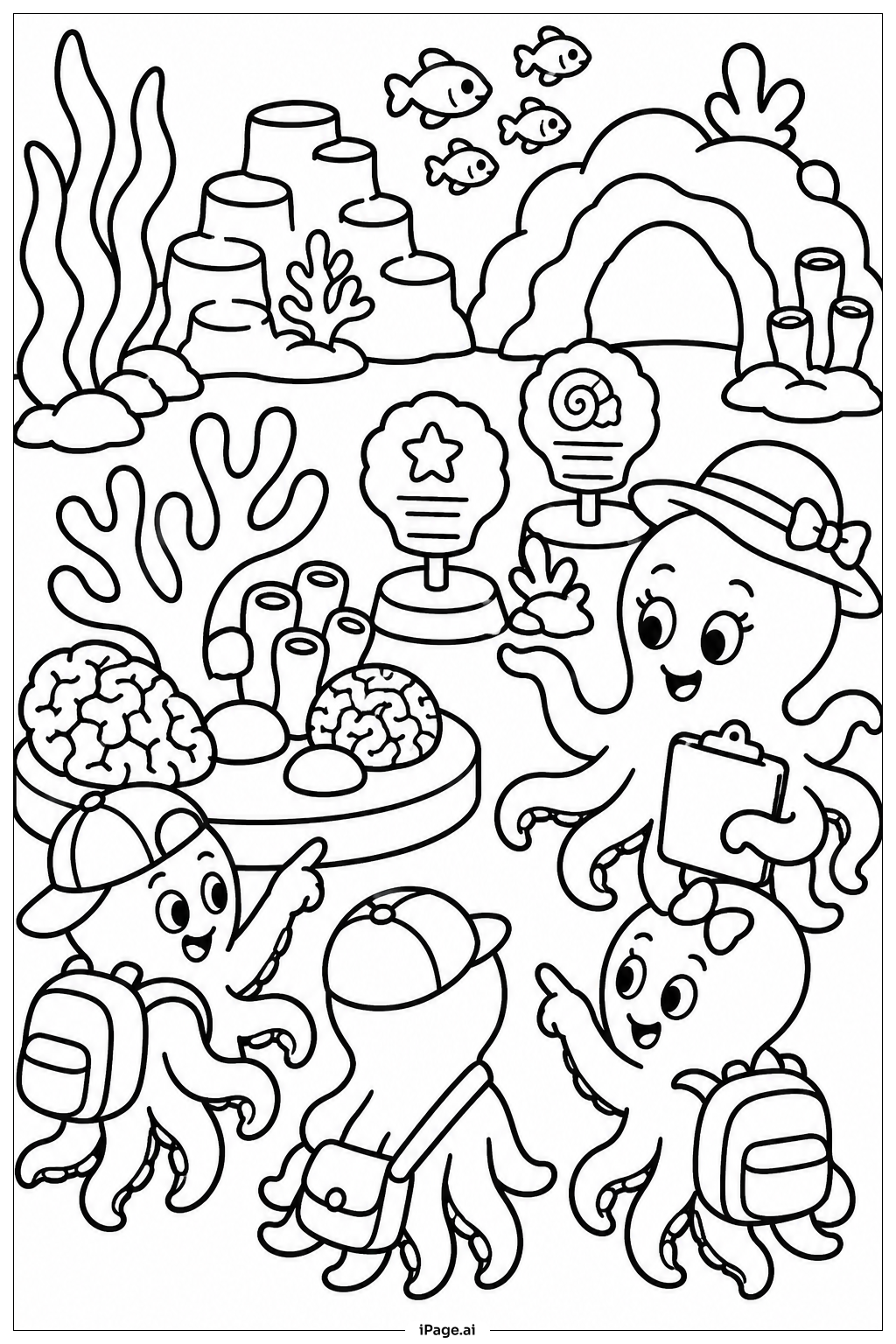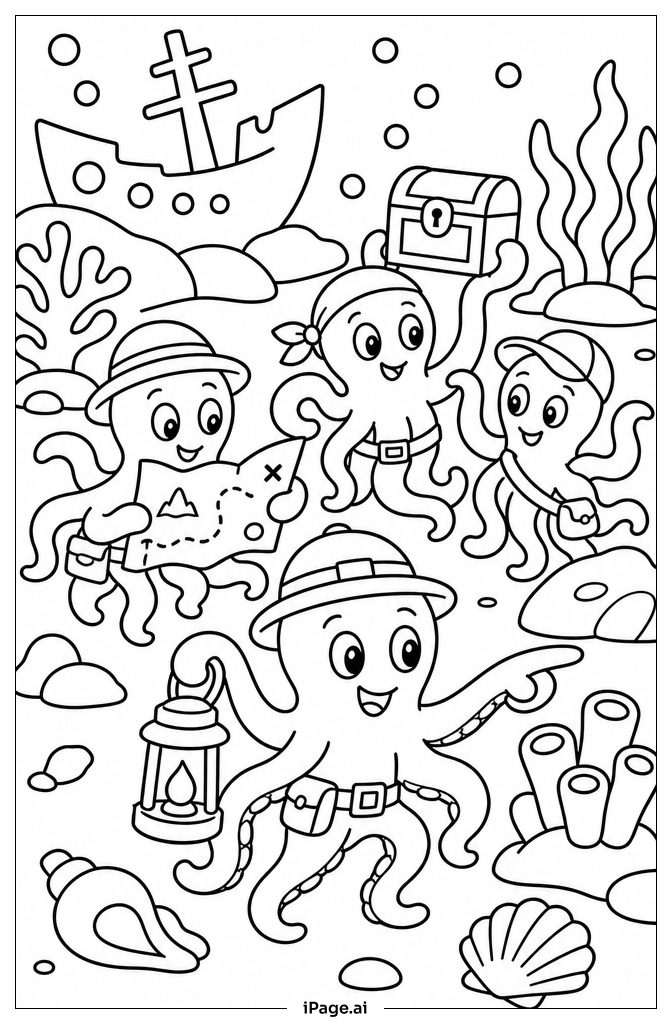
Coloring tips: How to color Octopus Explorer Team coloring page well?
Start with the octopuses' bodies and choose bold, fun colors like orange, purple, pink, or teal — octopuses can be any color you imagine! Give each one a different color so they stand out as individual team members. Use brown or tan for the explorer hats and backpacks to give them a classic adventure look. Color the goggles with bright lens tints like yellow or blue. For the ocean background, use soft blues and greens to create a calm underwater atmosphere. Add pops of color to the coral and sea plants using red, orange, and lime green. Use a light yellow or gold for the compasses and maps to make them look like real explorer tools. Don't be afraid to mix shades — darker tones on the edges of the tentacles and lighter tones in the center will make them look round and three-dimensional. Have fun and let your creativity lead the way!
Coloring challenges: Which parts are difficult to color and need attention for Octopus Explorer Team coloring page?
Coloring this image comes with a few fun challenges to keep in mind:
• **Multiple overlapping tentacles:** Each octopus has eight tentacles that curl and weave around each other and the surrounding objects. Keeping track of which tentacle belongs to which octopus — and making sure neighboring tentacles don't end up the same color — requires careful attention and patience. Using a light pencil outline before applying color can help.
• **Small explorer accessories:** Items like compasses, magnifying glasses, goggles, and map details are tiny and packed with fine lines. Coloring inside these small areas without going over the edges is tricky, especially for younger children. Fine-tipped colored pencils or thin markers work best for these sections.
• **Distinguishing multiple characters:** With several octopuses in one scene, it can be hard to make each one look unique without the image feeling cluttered or confusing. Planning a color palette for each character before you start helps keep the scene organized and visually balanced.
• **The underwater background:** The coral, bubbles, and sea plants in the background need to feel like a cohesive underwater world without overpowering the main characters. Choosing softer, cooler tones for the background while keeping the octopuses in warmer or brighter colors helps create a natural sense of depth and focus.
• **Shading rounded bodies:** Octopus bodies are smooth and dome-shaped. Adding shading to suggest their round, three-dimensional form — especially across the head and along the tentacles — takes some practice but makes the final result look much more polished and lifelike.
Benefits of coloring books: Advantages of drawing Octopus Explorer Team coloring page
Coloring the Octopus Explorer Team page offers a wonderful range of benefits for kids and young learners.
First, it builds **fine motor skills**. Carefully coloring tentacles, tiny accessories, and detailed backgrounds strengthens hand control and pencil grip — skills that directly support handwriting and everyday tasks.
Second, it sparks **creativity and imagination**. Since octopuses don't have a fixed color in real life, children are free to invent their own color combinations, encouraging original thinking and self-expression.
Third, it supports **focus and concentration**. Working through a busy, detailed scene trains children to slow down, pay attention, and complete a task step by step — a habit that helps in school and beyond.
Fourth, it introduces **early science curiosity**. The explorer theme naturally invites questions about ocean life, what octopuses eat, where they live, and how they move. Coloring becomes a gateway to learning about the natural world.
Finally, finishing the page gives children a real sense of **pride and accomplishment**. Seeing their completed artwork builds confidence and motivates them to take on new creative challenges. It's a simple, screen-free activity with lasting positive effects.