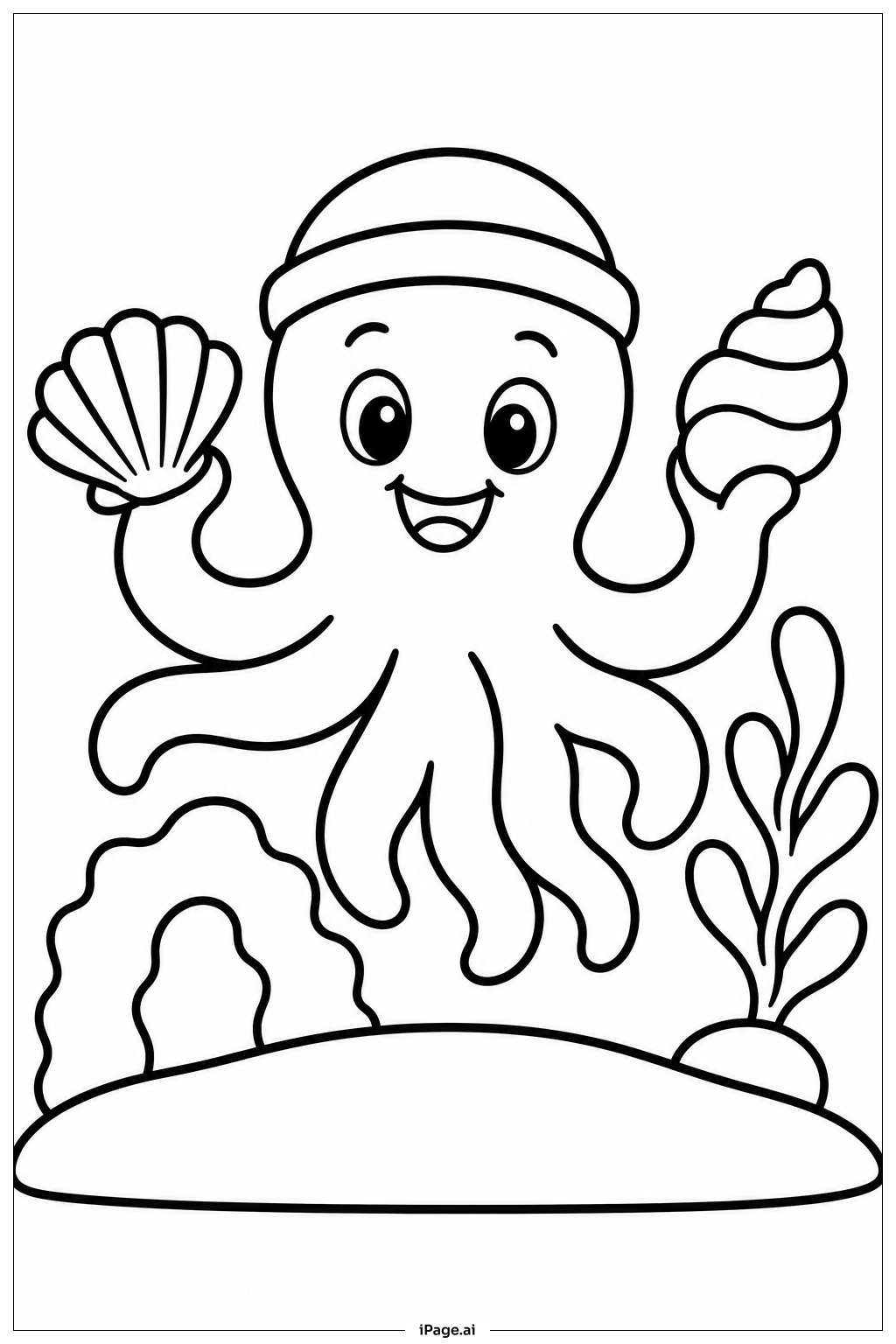
Coloring tips: How to color Octopus Collecting Shells coloring page well?
Start with the octopus's body. Orange is a classic choice, but you can also try purple, pink, or even blue to make it unique. Use a slightly darker shade on the underside of the tentacles to add depth. For the shells, have fun mixing warm tones like cream, peach, tan, and soft brown. Add stripes or spots to the spiral shells for extra detail. Color the sandy ocean floor in light beige or golden yellow. Use different shades of green and teal for the seaweed. Make the bubbles light blue or leave them white. A deep blue or blue-green background will make the whole scene feel like a real underwater world. Don't be afraid to mix colors and try new combinations — this image is a great place to experiment!
Coloring challenges: Which parts are difficult to color and need attention for Octopus Collecting Shells coloring page?
Coloring this image comes with a few fun challenges to keep in mind:
• **Tentacle details and curves:** The octopus has eight long, winding tentacles that twist and overlap across the page. Staying inside the curved lines takes patience and a steady hand. Using a fine-tipped marker or a sharpened colored pencil will help you color neatly along the edges without going outside the lines.
• **Small shell patterns:** The shells scattered around the octopus come in many shapes, and some have tiny ridges, spirals, or dotted patterns. These small details are tricky to color without smudging or mixing up neighboring areas. Working slowly with a thin tool and letting each section dry before moving on will give the best results.
• **Overlapping elements:** In several spots, tentacles cross over shells or seaweed overlaps with the ocean floor. When two areas share a border, it can be hard to choose colors that look good next to each other without blending together. Planning your color palette before you start helps avoid clashing tones.
• **Creating depth in the background:** The underwater scene has multiple layers — the sandy floor, mid-level seaweed, and open water in the background. Blending lighter and darker shades of blue or green in the background gives a sense of depth, but smooth gradients can be difficult for beginners to achieve.
• **Keeping the octopus the focal point:** With so many shells and background details, it can be easy to over-color the surroundings. Using brighter, bolder colors on the octopus and softer, muted tones for the background will help the main character stand out.
Benefits of coloring books: Advantages of drawing Octopus Collecting Shells coloring page
Coloring this image offers a wonderful mix of fun and learning for kids and beginners alike. Here are some of the great benefits:
**Builds focus and patience.** The curling tentacles and tiny shell details encourage children to slow down, concentrate, and work carefully — skills that carry over into school and everyday life.
**Sparks creativity.** With so many shells, textures, and background elements to color, kids are free to experiment with colors and patterns. There is no single right answer, which builds confidence and creative thinking.
**Teaches ocean life.** As children color the octopus and shells, they naturally become curious about sea creatures and the underwater world. It is a gentle, playful introduction to marine biology.
**Improves fine motor skills.** Coloring within the curved lines of the tentacles and the small shell shapes helps strengthen hand muscles and improve pencil control — great preparation for writing.
**Reduces stress and promotes calm.** The peaceful underwater scene and the repetitive motion of coloring help children relax and unwind. It is a screen-free activity that encourages mindfulness in a simple, enjoyable way.