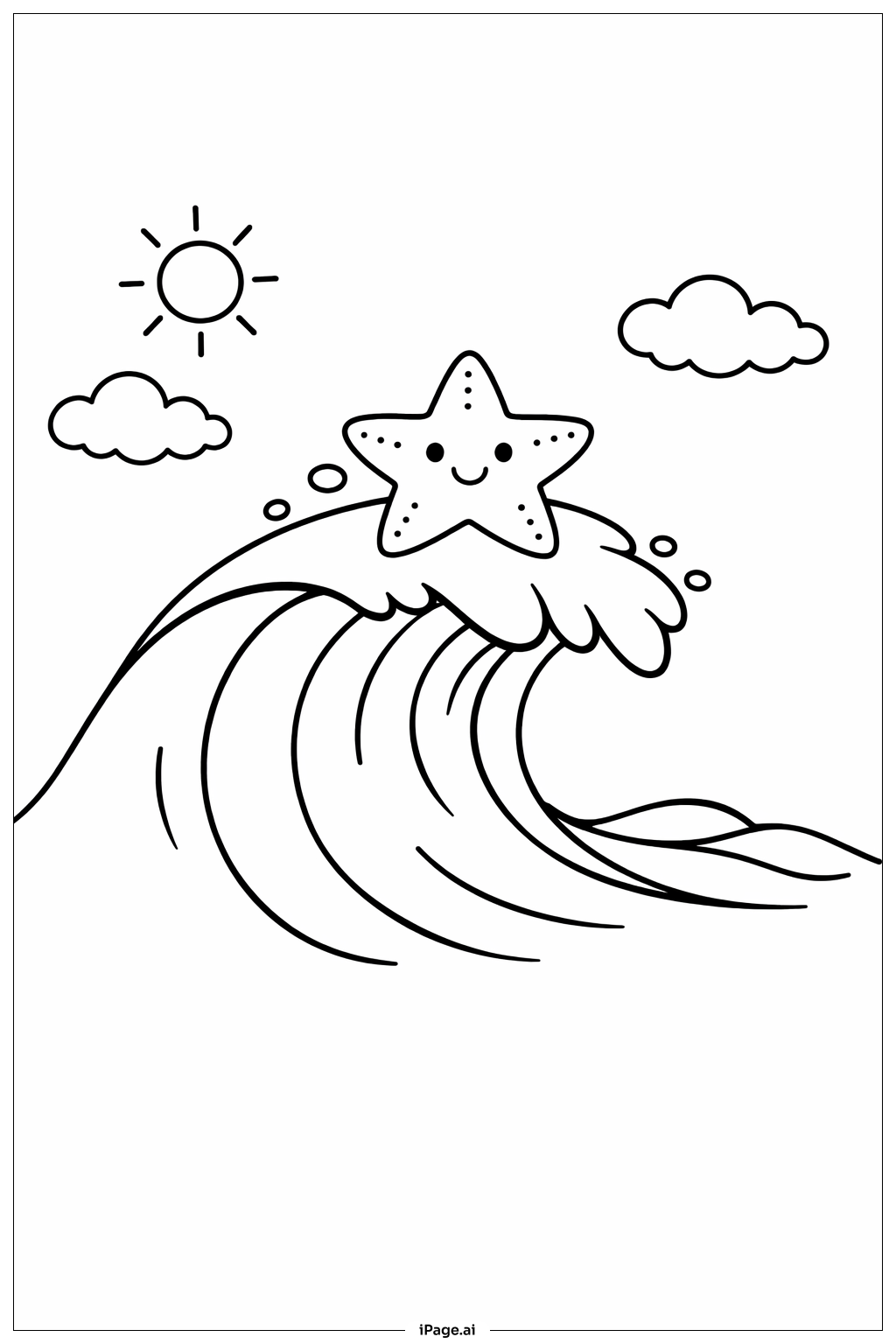
Coloring tips: How to color Ocean Wave With Starfish coloring page well?
Start with the wave using shades of blue and teal. Use a lighter blue near the crest where the foam forms, and a deeper navy or ocean blue toward the base and inner curve. Add touches of white at the very top of the wave to show the foamy splash. For the water droplets, try light sky blue or even leave them very pale. Color the starfish in warm tones like orange, coral, or golden yellow to make it stand out against the blue wave. For the background water, use soft, muted blues and blue-greens with gentle gradient blending. You can add hints of purple or turquoise to give the ocean a magical, glowing feel. Take your time layering colors to create depth in the wave.
Coloring challenges: Which parts are difficult to color and need attention for Ocean Wave With Starfish coloring page?
• Wave Gradients: The wave is made up of many curved sections, each at a different depth and angle. Blending from light blue at the foamy crest down to deep navy at the base requires careful layering of colors. Rushing this step can make the wave look flat instead of full and powerful. Take time to layer and blend slowly for a realistic look.
• Foam and Spray Details: The foamy crest and water droplets are small, intricate areas that need a light touch. Using too much color here can muddy the effect. A sharp white pencil or leaving the paper bare can help suggest bright foam. This level of fine control can be tricky, especially for younger colorists.
• Starfish Texture: The starfish has a bumpy, textured surface with small dots and ridges along its arms. Coloring within these tiny details without going outside the lines takes patience and a fine-tipped tool. Shading around the bumps adds dimension but demands careful attention to where light and shadow fall.
• Background Water: The open ocean behind the wave uses flowing, curved lines to suggest rippling water. Keeping the background colors lighter than the main wave so it does not compete visually is a common challenge. Choosing the right value contrast between foreground and background is key to making the wave pop.
• Overall Color Balance: Balancing warm starfish tones against the cool blues of the wave without one overpowering the other is a compositional challenge. Colorists need to think about the whole picture at once, not just one section at a time.
Benefits of coloring books: Advantages of drawing Ocean Wave With Starfish coloring page
Coloring this ocean wave and starfish scene offers a wonderful range of benefits for kids and adults alike. Working through the flowing curves of the wave builds fine motor skills and strengthens hand control. Choosing colors and blending shades encourages creative thinking and artistic confidence.
The ocean theme also sparks curiosity about the natural world. Kids may start asking questions about how waves form, where starfish live, and what else hides beneath the sea. That sense of wonder is a great starting point for learning.
Focusing on a detailed scene like this one helps develop concentration and patience. Staying within the lines, layering colors carefully, and completing a full picture teaches kids how to follow through on a task.
For older colorists and adults, this image offers a calming, meditative experience. The rhythmic motion suggested by the wave has a naturally soothing quality, and the act of coloring itself helps reduce stress and quiet a busy mind.
Finishing the page also gives a real sense of accomplishment. Seeing a completed, colorful piece of ocean art is rewarding at any age and builds the kind of confidence that carries over into other creative and daily activities.