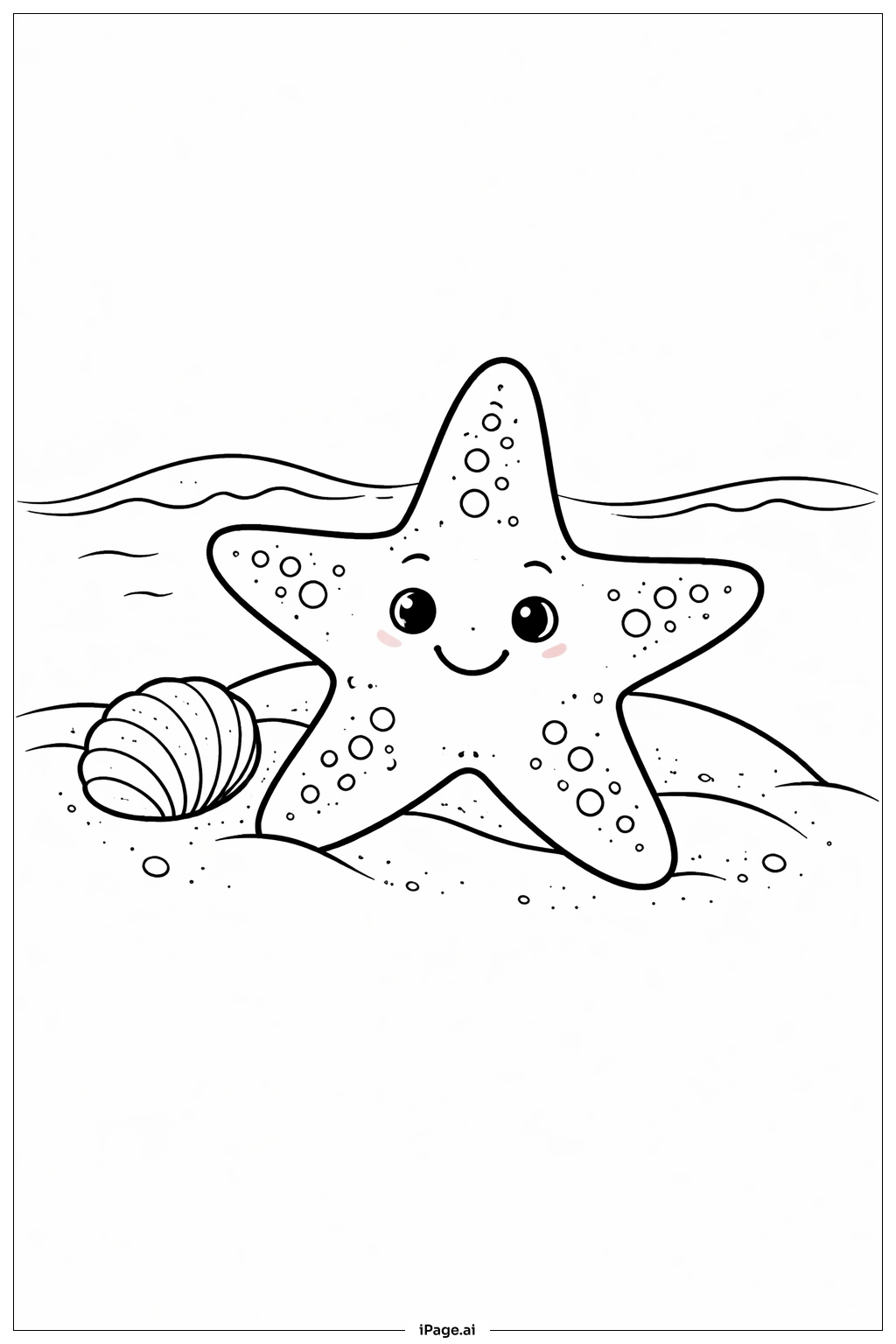
Coloring tips: How to color Ocean Starfish Smile coloring page well?
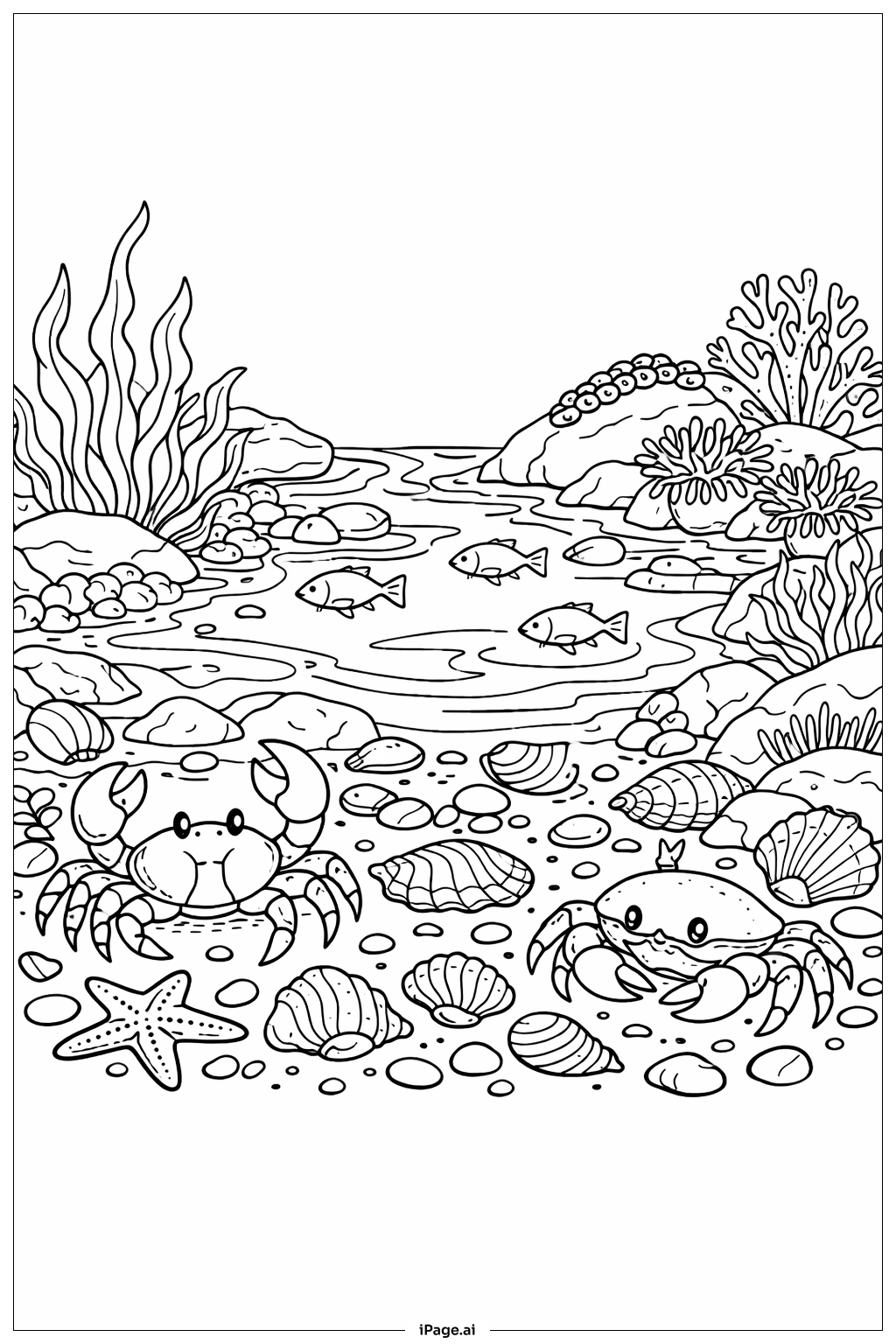
Use bright and cheerful colors to bring this picture to life. The starfish can be colored orange, yellow, or red to make it stand out. You can add shades of pink or light red for the cheeks to keep the smile friendly. The seashell can be colored in soft browns, beiges, or light purples to look natural. Use light blues and whites for the ocean waves in the background, and sandy colors like light brown or beige for the beach. Try blending different shades to give a smooth and lively look. Don’t forget to color the small circles on the starfish in a slightly darker or lighter shade to add depth.
Coloring challenges: Which parts are difficult to color and need attention for Ocean Starfish Smile coloring page?
1. Coloring the starfish evenly might be tricky because of the many small circles and dots on its body. These details require careful coloring to stay neat.
2. Balancing the colors between the starfish and the seashell is important to make sure both stand out without clashing.
3. Creating smooth shading on the ocean waves to show movement and light reflection needs attention to detail.
4. Coloring the sand with tiny dots can be challenging because you want it to look natural without coloring outside the lines.
5. Making the starfish's eyes appear shiny and lively requires careful coloring of small areas inside the eyes.
Benefits of coloring books: Advantages of drawing Ocean Starfish Smile coloring page
Coloring this picture helps children improve hand-eye coordination and fine motor skills as they fill in small details like dots and circles. It encourages creativity by allowing them to choose bright and fun colors. The simple smiling starfish design promotes happiness and positivity. Coloring the ocean and beach scene can also teach kids about sea life and nature. Overall, this activity is relaxing and helps develop patience and focus in young artists.