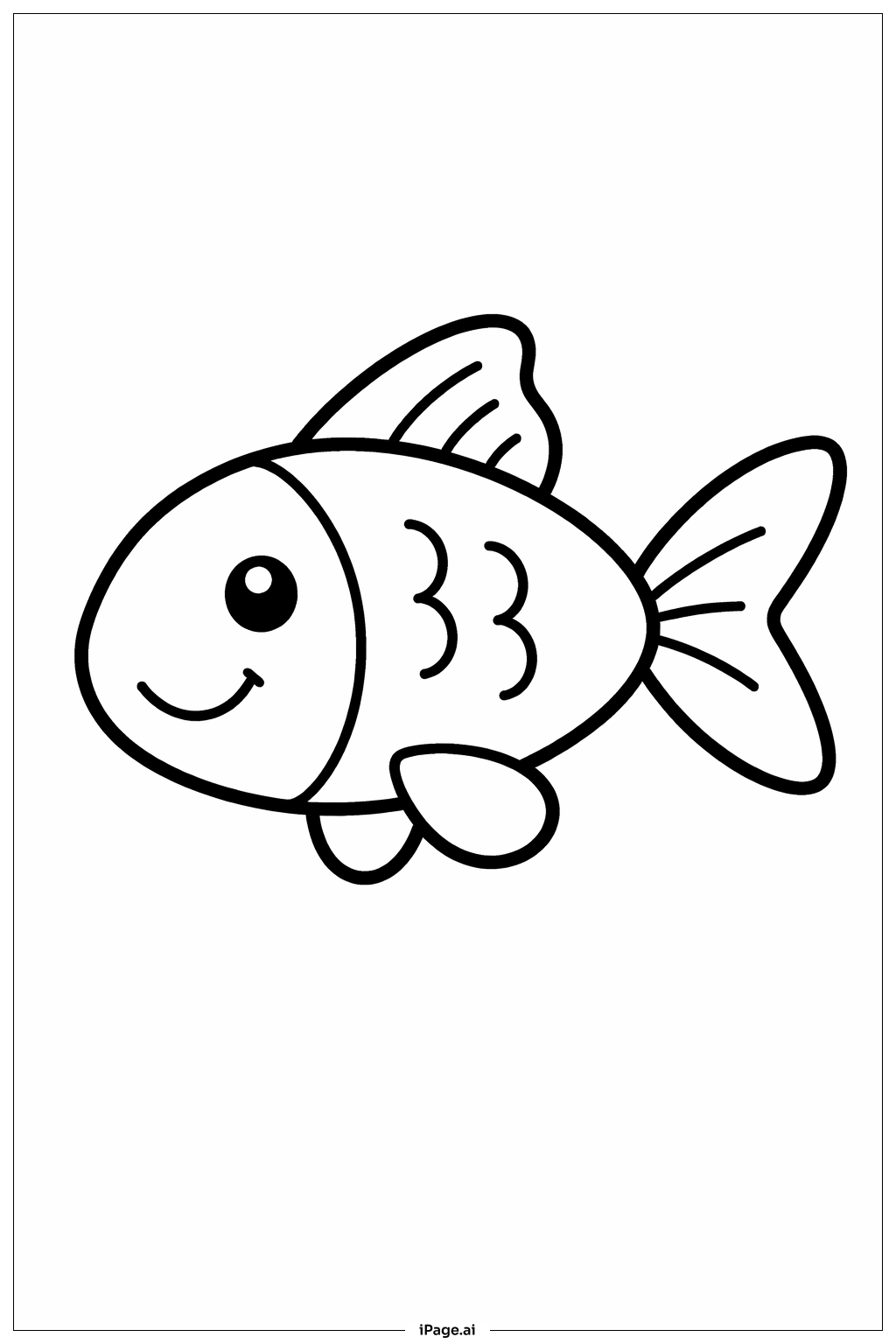
Coloring tips: How to color Ocean Smiling Fish coloring page well?
Start with the fish's body and choose a bright, cheerful base color like orange, yellow, or blue to make it pop. Use a slightly darker shade of the same color to add depth to the scales — just color along the edges of each scale to create a shadow effect. For the eyes, use black or dark brown for the pupil and leave a small white dot to make them look shiny and alive. Color the fins and tail with a lighter or contrasting color to help them stand out from the body. Use light blue or turquoise for the water around the fish. Add darker blue near the edges to give the ocean a sense of depth. Color the bubbles with pale blue or leave them white with just a light outline. Feel free to mix and blend colors to make your fish totally unique. There are no wrong choices — the more colorful, the better!
Coloring challenges: Which parts are difficult to color and need attention for Ocean Smiling Fish coloring page?
• Scale Pattern Consistency: The fish's body is covered in many small, overlapping scales. Keeping each scale neatly colored within its borders takes patience and a steady hand. If you use two shades to add depth, it can be tricky to stay consistent across all the scales without the colors blending together or looking uneven. A fine-tipped coloring tool works best here.
• Facial Expression Details: The face includes a big smile, round eyes, and subtle expression lines. These small features are close together, which makes it easy to color outside the lines. Taking your time and using a sharp pencil or thin marker will help you capture the friendly look without smudging the details.
• Fin and Tail Shading: The fins and tail have flowing, curved lines inside them. Coloring these areas with smooth, even strokes while following the natural direction of the lines can be challenging, especially for younger children. Using gradients — lighter at the tips and darker near the body — adds a beautiful effect but requires careful blending.
• Bubble Rendering: The small bubbles scattered around the fish look simple but can be surprisingly tricky. To make them look round and transparent, you need to leave highlights and use very light, gentle color. Pressing too hard or using too dark a color will make them look flat rather than floating and bubbly.
• Background Ocean Depth: Coloring the water so it looks like a real ocean requires blending multiple shades of blue and green. Creating a smooth gradient from lighter near the surface to darker in the deep takes practice and control, especially when working around the fish without disturbing its colors.
Benefits of coloring books: Advantages of drawing Ocean Smiling Fish coloring page
Coloring this Ocean Smiling Fish page brings a wide range of benefits for children and young artists. The detailed scale patterns help develop fine motor skills and hand-eye coordination as kids carefully fill in each small section. Choosing colors for the fish, water, and bubbles encourages creative thinking and helps children learn how colors work together. The friendly, happy face of the fish creates a positive and joyful mood, making the coloring experience feel fun rather than like a task. Focusing on staying within the lines and completing the full image builds concentration and patience — skills that carry over into schoolwork and daily life. The underwater theme also sparks curiosity about ocean life and sea creatures, making it a gentle introduction to the natural world. For younger children aged 4 to 8, the bold shapes and clear outlines make it easy to get started. For older kids and teens, the scale details and shading opportunities offer a satisfying creative challenge. Overall, this coloring page is a simple, screen-free activity that supports learning, imagination, and calm focus all at once.