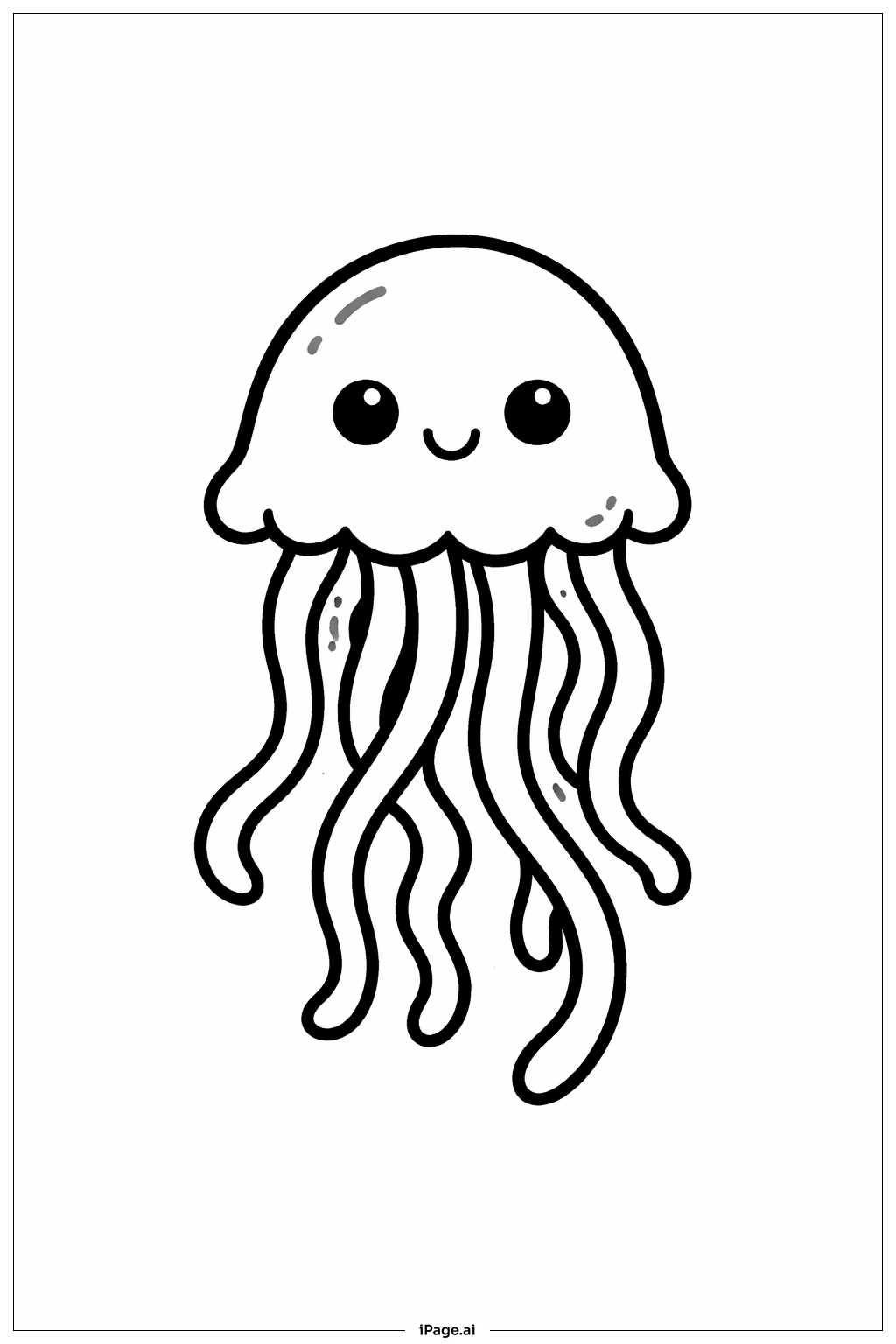
Coloring tips: How to color Ocean Small Jellyfish coloring page well?
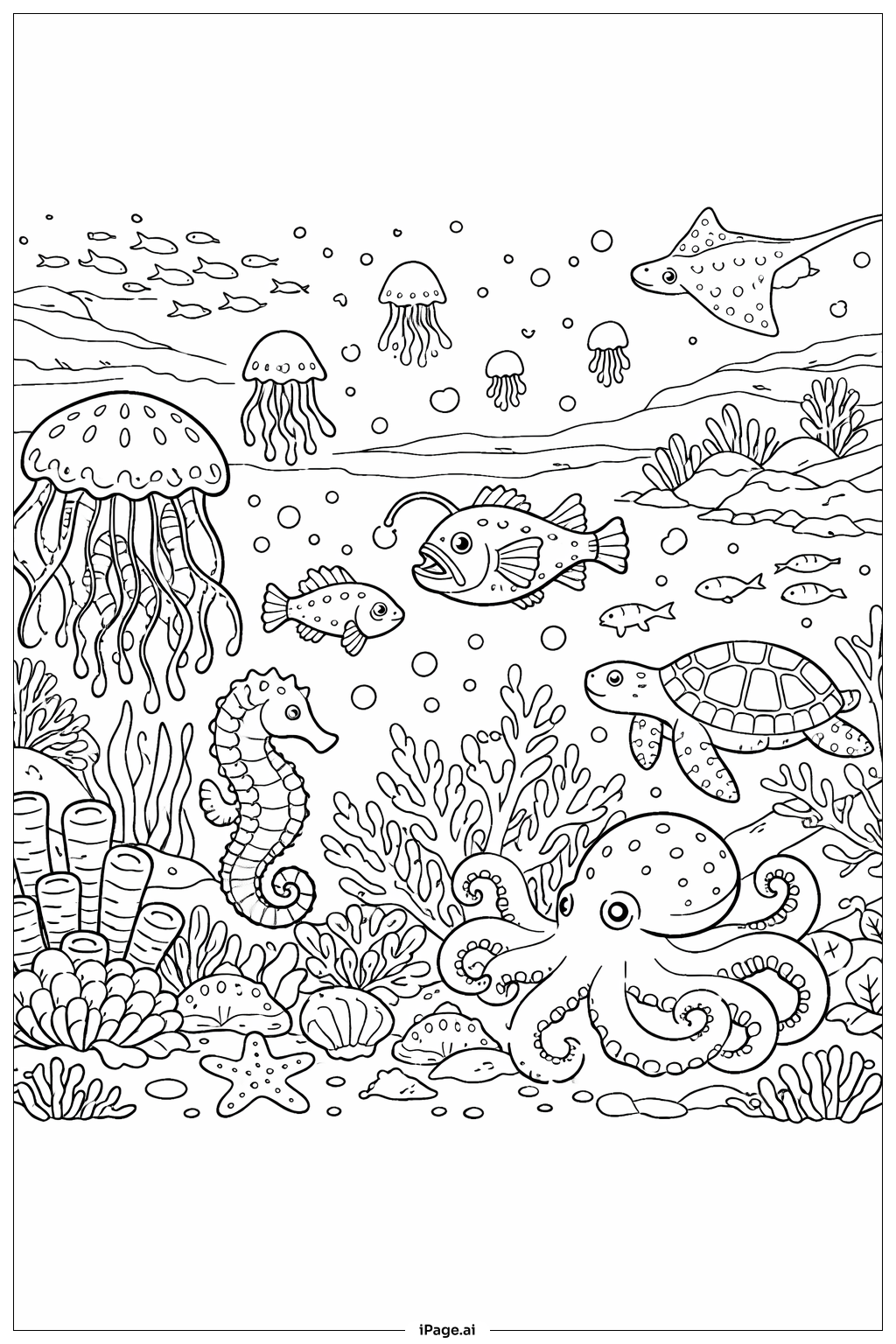
For the jellyfish bell, consider using soft translucent colors like pale pink, light purple, lavender, or gentle blue to capture its see-through quality. You might add slightly darker shades around the edges to create dimension. The tentacles can be colored with the same hue as the bell but in a lighter tone, or try alternating colors for a playful rainbow effect. Add tiny dots of white or yellow inside the bell to represent bioluminescence. The bubbles surrounding the jellyfish work beautifully with light blue centers and white highlights to make them look shiny and three-dimensional. For the background water, gradient shading from light blue at the top to deeper blue-green at the bottom creates depth. Younger children might enjoy bright, bold colors like hot pink or electric blue, while older colorists can experiment with subtle color blending and realistic ocean tones.
Coloring challenges: Which parts are difficult to color and need attention for Ocean Small Jellyfish coloring page?
• Tentacle Details: The numerous flowing tentacles require patience and steady hand control. Each thin, wavy line needs to be colored carefully without crossing into adjacent tentacles. Younger children may find it challenging to stay within these narrow spaces, while the repetitive nature can help develop fine motor precision and focus.
• Creating Translucency Effects: Jellyfish are naturally transparent creatures, and capturing this quality with crayons or colored pencils presents an artistic challenge. Colorists need to use light pressure and layering techniques, leaving some areas white or very pale to suggest the see-through nature of the bell. Understanding how to blend colors softly rather than filling solidly requires practice and color theory knowledge.
• Bubble Dimension and Shine: Making the bubbles look round and glossy involves strategic coloring. Each bubble needs a darker shade on one side and a bright white highlight spot to create the illusion of reflection and spherical shape. Positioning these highlights consistently requires planning and spatial awareness.
• Maintaining Consistency: With multiple repeating elements like tentacles and bubbles throughout the image, keeping colors and shading consistent presents a challenge. Colorists must remember their initial choices and replicate pressure and technique across the entire page for a cohesive finished piece.
Benefits of coloring books: Advantages of drawing Ocean Small Jellyfish coloring page
Coloring this jellyfish design offers wonderful developmental benefits for children. The intricate tentacles provide excellent fine motor skill practice, strengthening the small hand muscles needed for writing. The repetitive flowing lines encourage focus and concentration, helping children develop longer attention spans. Choosing colors for the translucent jellyfish body introduces basic concepts of light, transparency, and color mixing in a fun, hands-on way. The calming, flowing nature of the subject matter can have a relaxing effect, making this an ideal activity for winding down or managing stress. Children learn about ocean life and marine biology while being creative. The combination of larger areas like the bell and smaller detailed sections accommodates different skill levels, building confidence as young artists see their progress. Completing this page provides a sense of accomplishment and encourages artistic expression and decision-making through color choices.