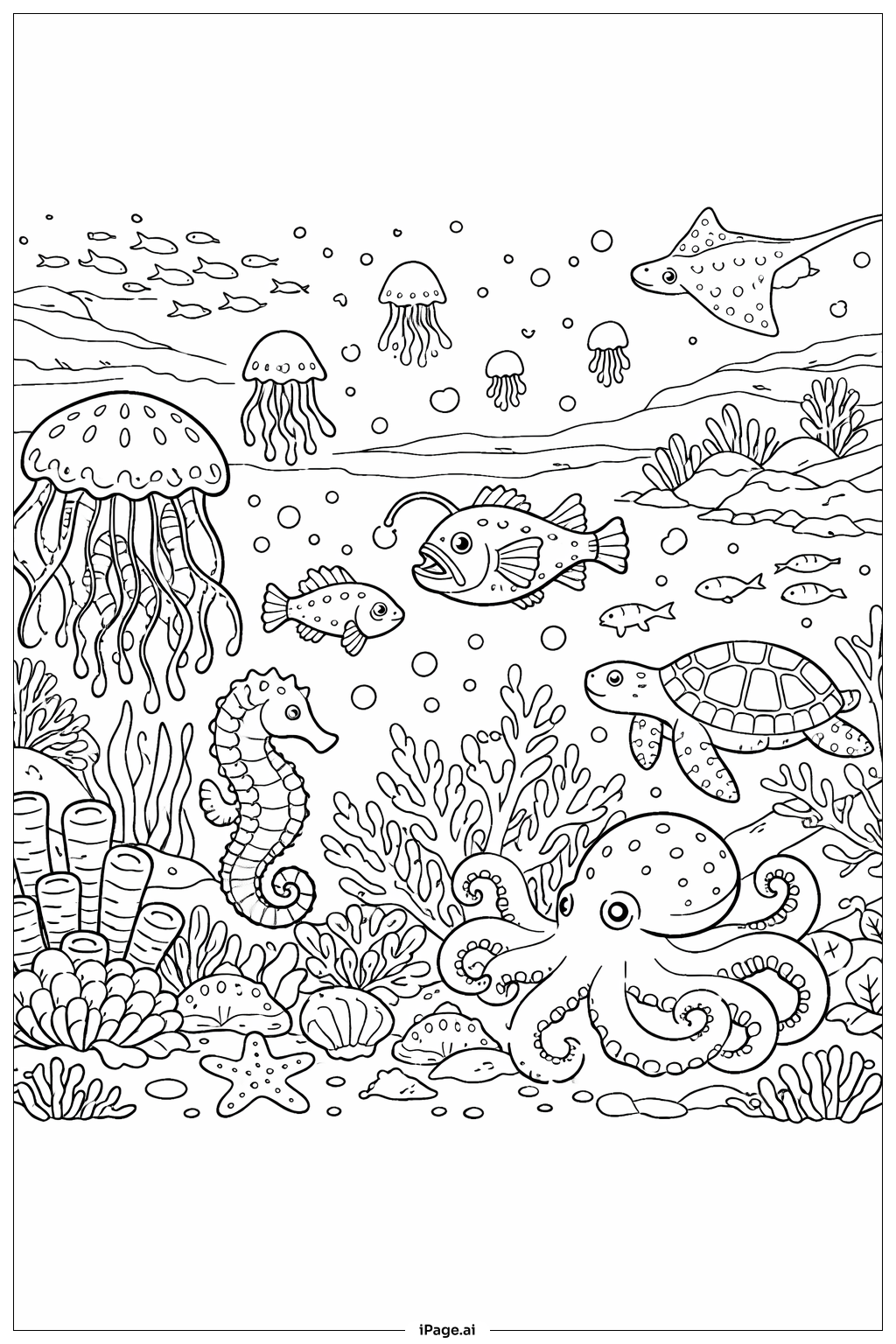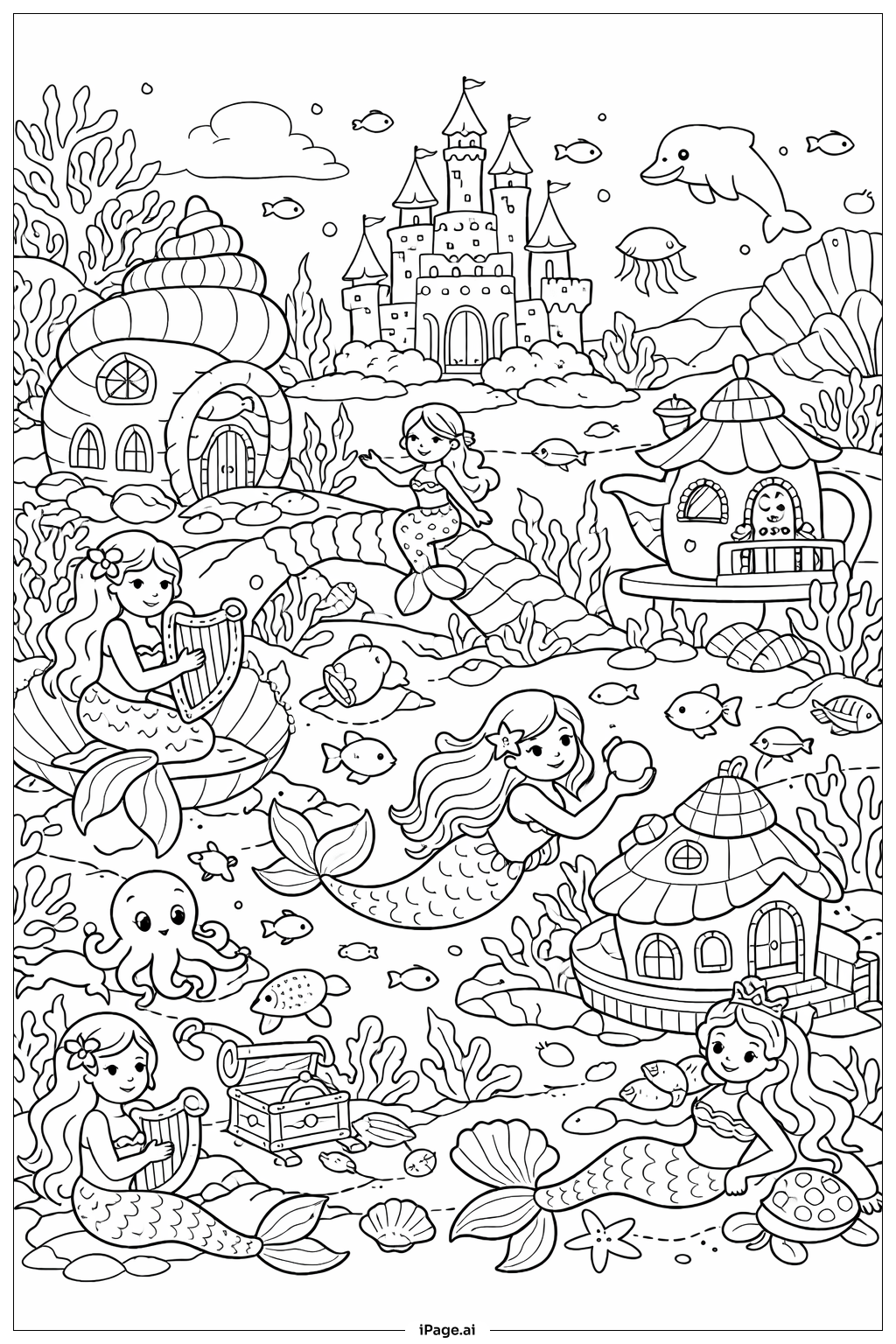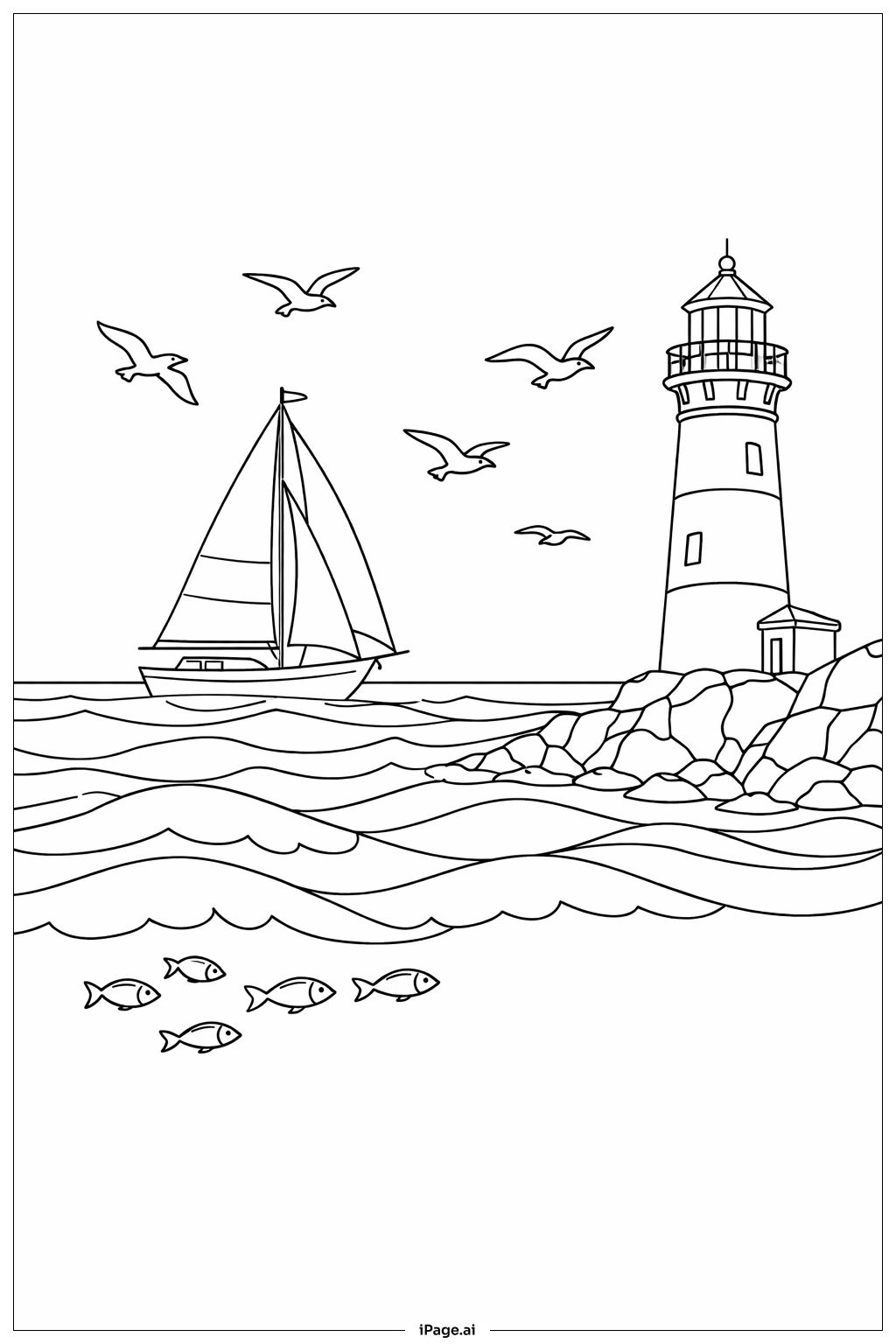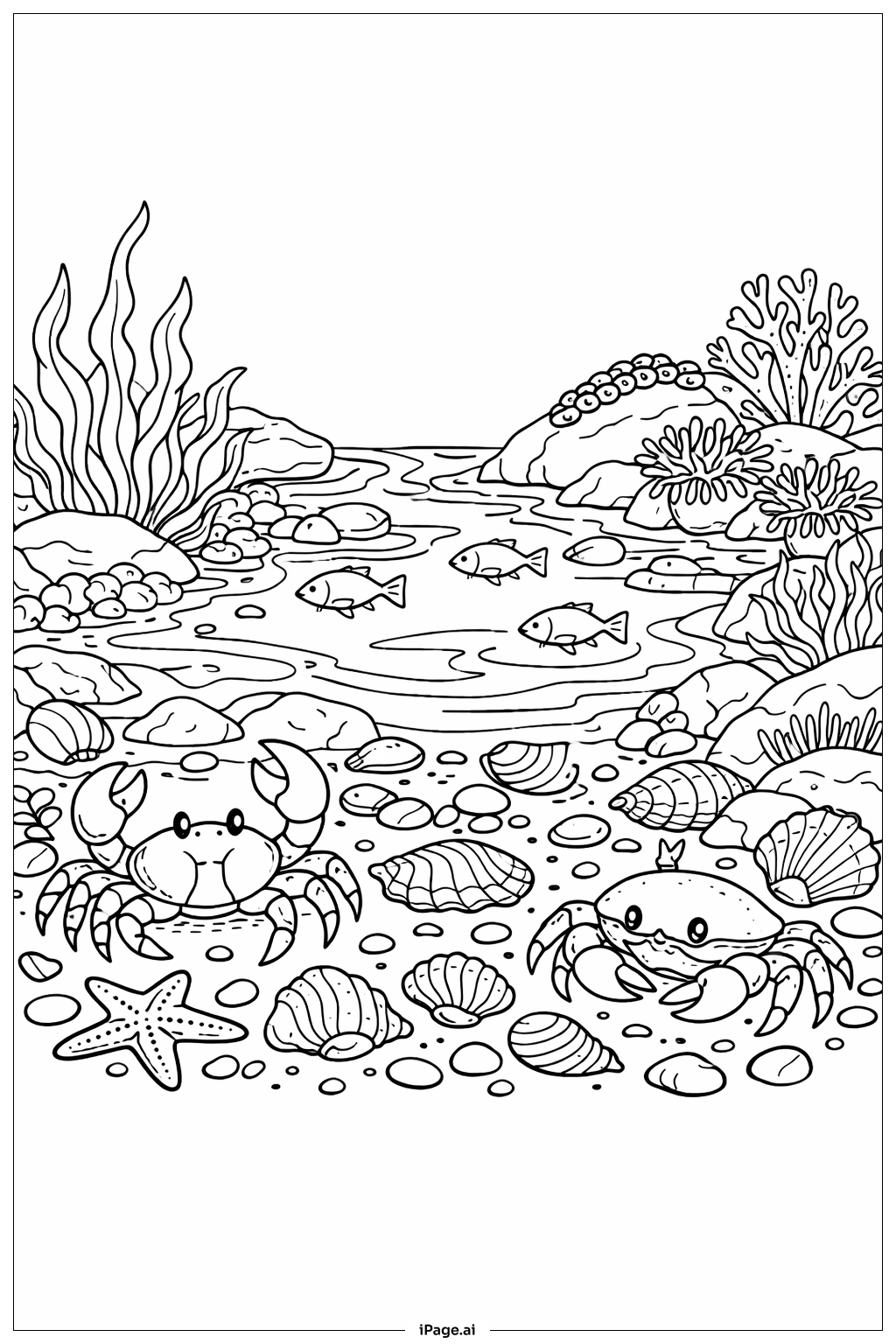
Coloring tips: How to color Ocean Simple Shell coloring page well?
For the shell, consider using warm tones like peach, cream, soft pink, or light orange to capture the natural beauty of ocean shells. You could add subtle shading by using a slightly darker shade along the spiral ridges to create depth. The pebbles can be colored in various earth tones such as gray, brown, tan, and beige to show variety. Try making some stones lighter and others darker for a realistic effect. The ocean background can be filled with beautiful blues ranging from light aqua to deeper ocean blue, perhaps lighter near the top and darker toward the bottom. Color the bubbles in light blue or leave them white with a hint of blue outline. The sandy bottom works well in soft yellow, tan, or light brown shades. Remember to blend colors gently for a softer, more natural underwater appearance.
Coloring challenges: Which parts are difficult to color and need attention for Ocean Simple Shell coloring page?
• Shell Ridge Details: The spiral ridges and curved lines on the shell require careful attention to stay within the lines. Young colorists may find it challenging to follow the flowing patterns without crossing boundaries. Using the tip of colored pencils or fine markers can help achieve precision. Taking time to color each section slowly will result in a more polished look.
• Creating Depth and Dimension: Making the shell look three-dimensional requires understanding light and shadow. Children may struggle with knowing where to place darker shades versus lighter tones. The ridges should have subtle variations in color intensity to appear raised. Practicing shading techniques like pressing harder in shadowed areas and lighter in highlighted spots will enhance the realistic effect.
• Stone Variety and Texture: Coloring multiple pebbles in different shades while maintaining visual harmony can be tricky. Each stone should look distinct yet belong to the same scene. Younger artists might color all stones the same way, missing the opportunity to show natural variation. Adding small dots or specks on some stones can suggest texture and make them more interesting.
• Background Blending: Achieving a smooth underwater gradient effect with the ocean background requires blending skills that take practice. Harsh color transitions can make the scene look unnatural. Children should learn to overlap colors gently or use lighter pressure to create seamless transitions from light to dark blue throughout the water.
Benefits of coloring books: Advantages of drawing Ocean Simple Shell coloring page
Coloring this ocean shell scene offers wonderful developmental benefits for children. It helps improve fine motor skills and hand-eye coordination as they carefully navigate the shell's curved lines and detailed ridges. The varying sizes of elements, from the large shell to tiny bubbles, provide excellent practice for precision control. This image encourages creativity as children choose color combinations to bring the underwater world to life. They learn about color theory by experimenting with different shades of blue for water and earth tones for natural elements. The peaceful ocean theme promotes relaxation and mindfulness, helping children focus and calm their minds. Working on the detailed patterns builds patience and concentration as they complete each section. Children also develop spatial awareness by understanding foreground and background elements. This coloring page introduces them to marine life and nature, sparking curiosity about ocean ecosystems and the beautiful treasures found beneath the waves.