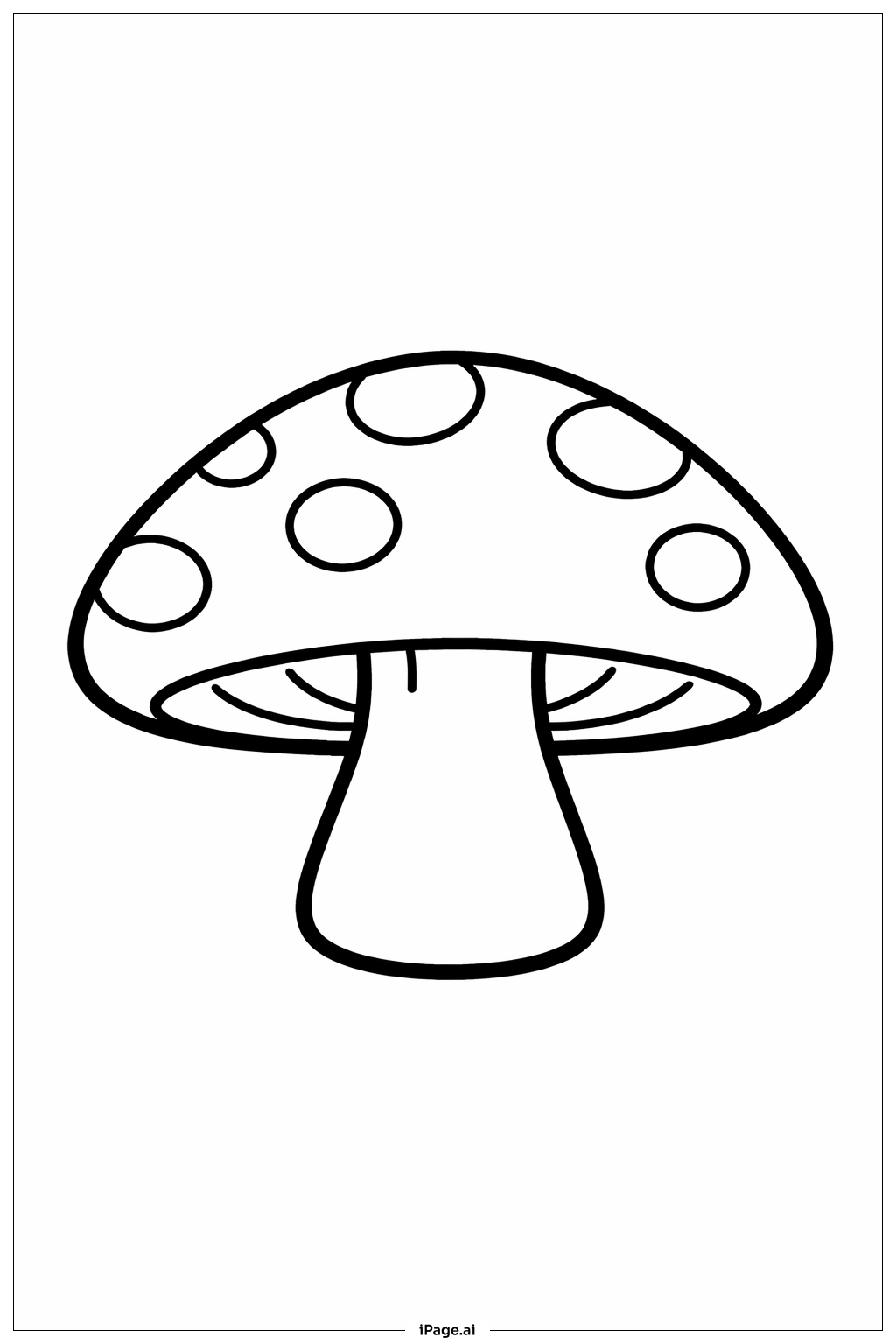
Coloring tips: How to color Wide Mushroom coloring page well?
Start with the mushroom cap using warm reds, oranges, or classic red with white spots for a traditional toadstool look. You could also try earthy browns, golden yellows, or even fantasy colors like purple or blue. The spots on the cap can be left white or colored in a contrasting shade. For the stem, consider cream, pale yellow, or soft beige tones to create natural depth. Add shading by pressing harder on one side of the stem and lighter on the other to create dimension. The ground area can be colored with greens and browns to suggest grass or forest floor. Consider adding gradient effects by blending colors together where the cap curves. Younger children might enjoy bright, bold colors, while older colorists can experiment with realistic shading techniques and subtle color variations to make the mushroom look three-dimensional.
Coloring challenges: Which parts are difficult to color and need attention for Wide Mushroom coloring page?
• Spot Consistency: The decorative spots scattered across the mushroom cap require careful attention to maintain uniform coloring within each spot while keeping them distinct from the cap background. Children may find it challenging to stay within the boundaries of smaller spots, especially if using markers or crayons with broad tips.
• Curved Surface Shading: Creating the illusion of the mushroom's rounded, dome-shaped cap requires understanding how light and shadow work on curved surfaces. Applying darker tones on one side and gradually transitioning to lighter tones on the other demands control and patience, which can be difficult for younger colorists who are still developing fine motor skills.
• Stem Dimension: The thick stem needs shading to appear cylindrical rather than flat. This involves adding darker tones along the edges and lighter tones in the center, requiring an understanding of three-dimensional form that may challenge beginners.
• Color Blending: Achieving smooth transitions between colors, especially when creating realistic effects or gradient backgrounds, requires practice. Harsh lines between colors can make the image look less polished, but blending techniques take time to master.
• Background Integration: Deciding how to color the ground area and any surrounding space while making the mushroom stand out as the focal point requires planning and compositional awareness that develops with experience.
Benefits of coloring books: Advantages of drawing Wide Mushroom coloring page
Coloring this wide mushroom design offers numerous developmental and therapeutic benefits. It helps children aged 4-16 improve fine motor skills and hand-eye coordination as they carefully color within the lines and navigate the curved shapes. The simple yet engaging design builds confidence, especially for younger children who can successfully complete the project and feel proud of their artwork. The repetitive motion of coloring promotes relaxation and mindfulness, reducing stress and anxiety. Working with the spots and curved surfaces encourages focus and concentration skills. Children learn about color theory by experimenting with different combinations and seeing how colors interact. The mushroom theme can spark interest in nature and biology, leading to educational conversations. For older children and adults, adding shading and dimension develops artistic skills and spatial reasoning. Completing the coloring page provides a sense of accomplishment and creates a tangible piece of art to display or share.