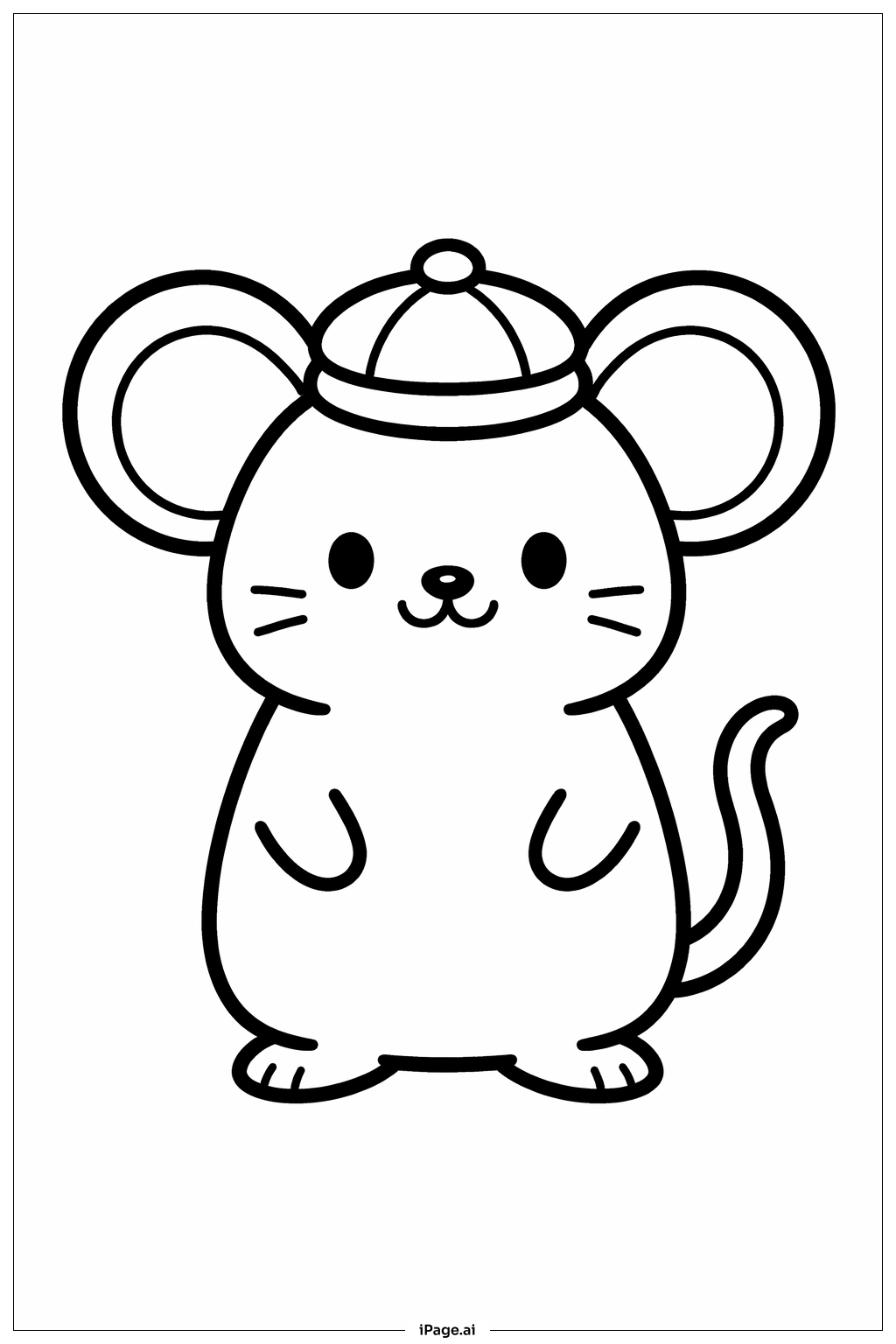
Coloring tips: How to color Mouse With Hat coloring page well?
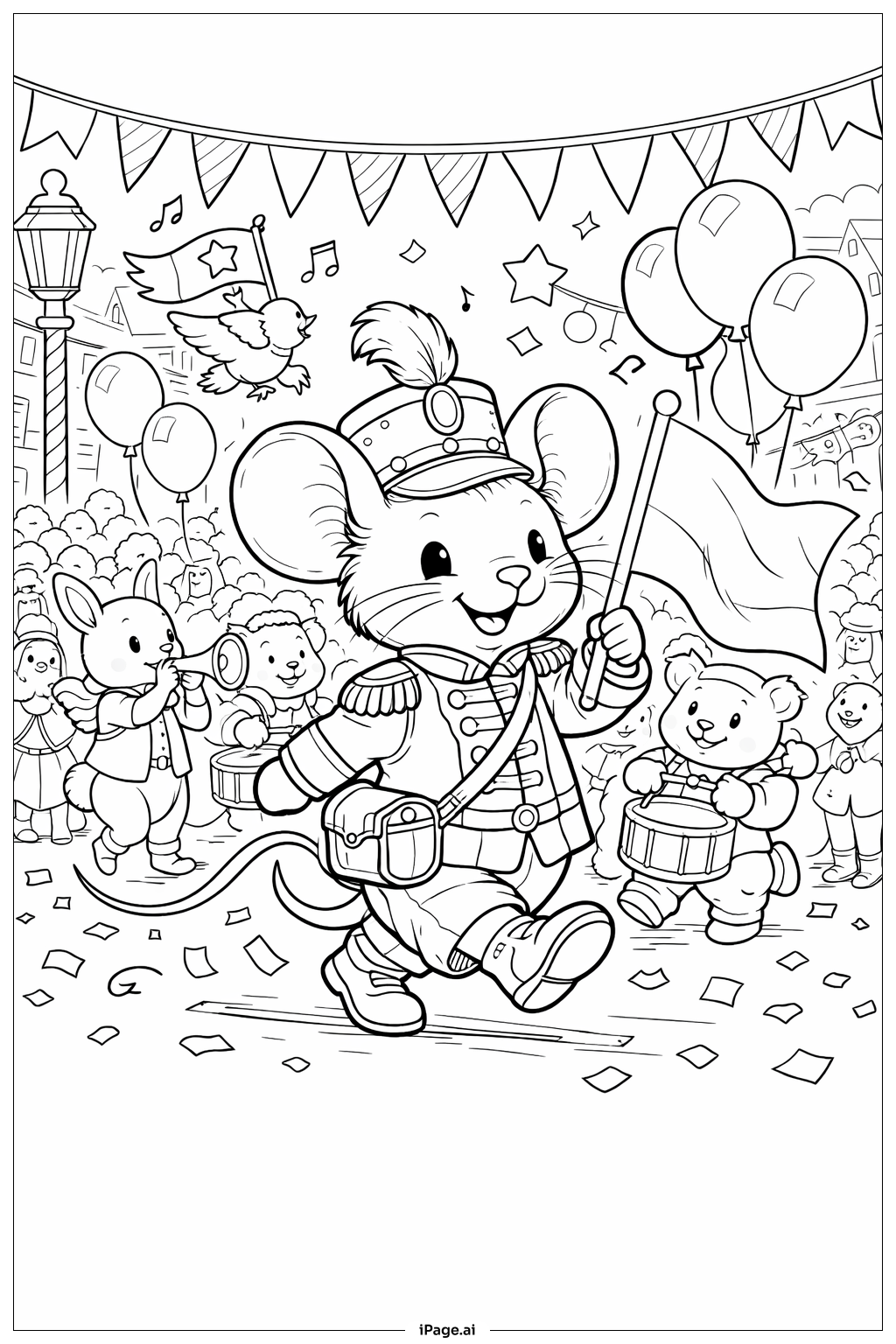
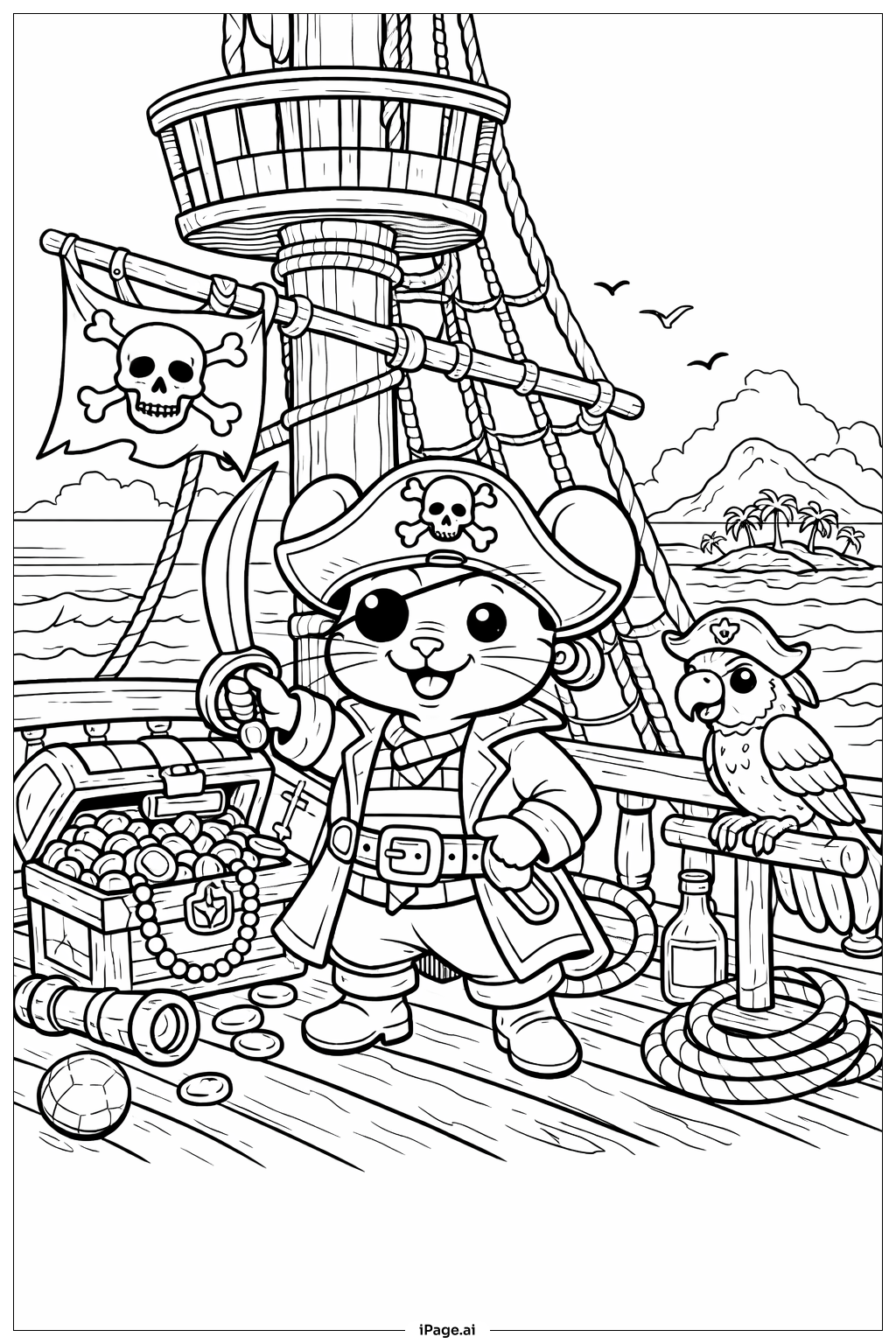
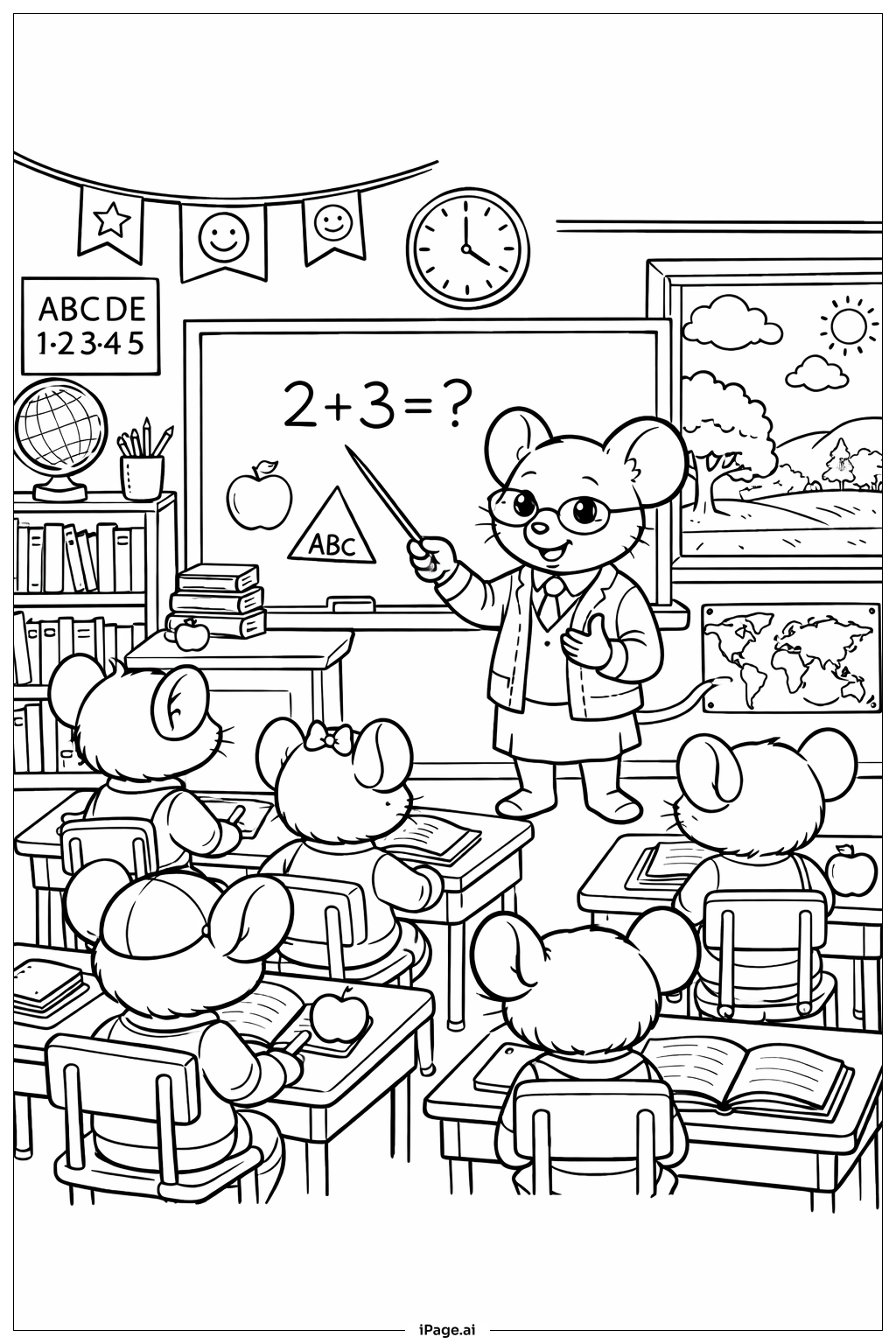
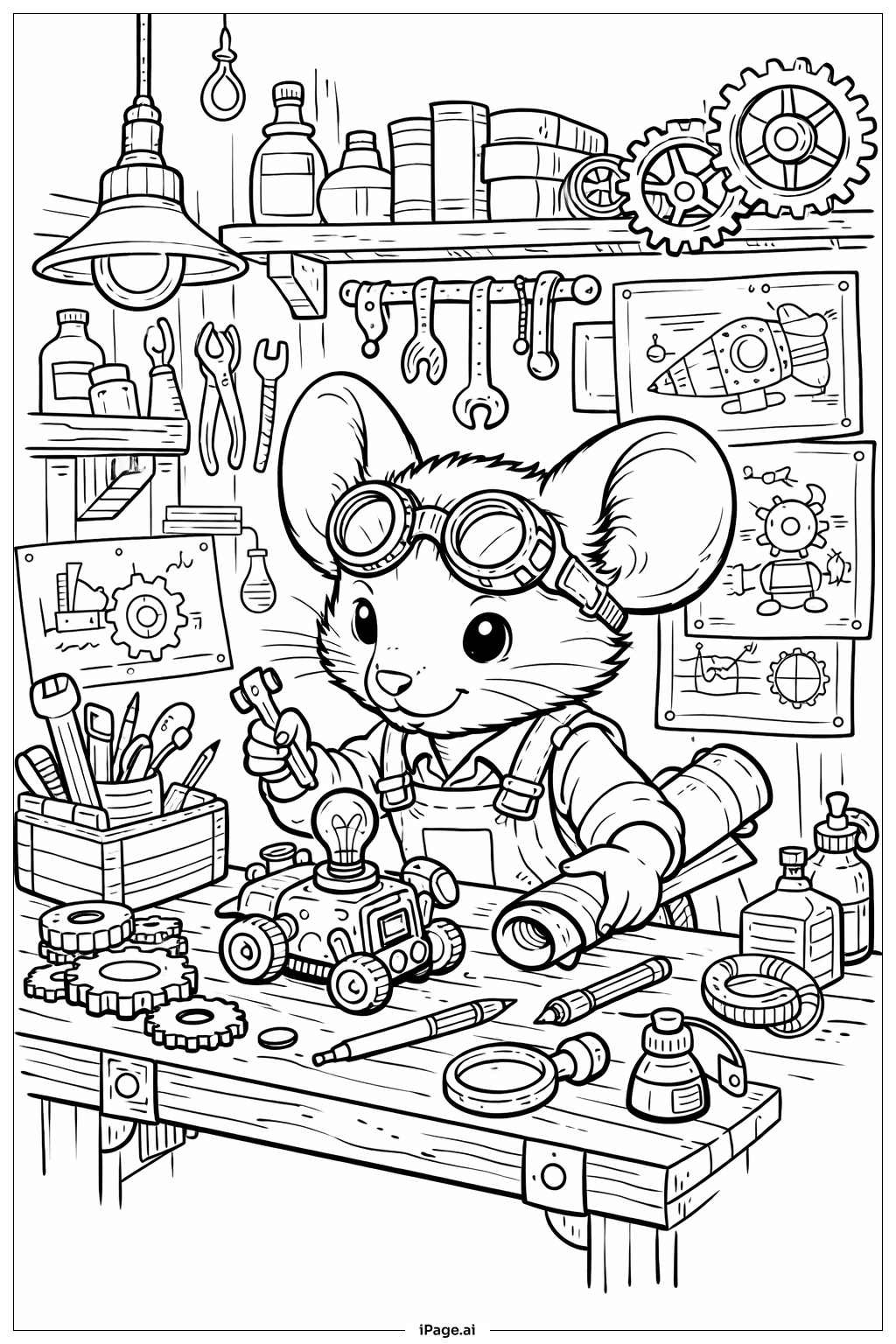
For the mouse, consider using soft grays, light browns, or even a warm tan for the body to create a natural look. The inner ears could be a delicate pink or peachy tone. The nose can be a darker pink or brown. For the hat, you have wonderful creative freedom. Try a classic red or blue, or go bold with purple, green, or yellow. The hat band offers a great opportunity for contrast, perhaps using a complementary color or adding stripes or dots for extra interest. Consider shading techniques to add dimension, using slightly darker tones on one side of the mouse and hat to create shadows. The whiskers can remain white or be lightly traced with gray. For a magical touch, add rosy cheeks with light pink. Background colors could be soft pastels or bright cheerful hues to make your mouse friend really stand out.
Coloring challenges: Which parts are difficult to color and need attention for Mouse With Hat coloring page?
• Small Facial Features: The mouse's tiny eyes, nose, and whiskers require careful coloring with precision. Young children may find it challenging to stay within these small areas without overlapping colors. Using fine-tipped coloring tools like colored pencils or thin markers can help maintain control and keep details crisp and clean.
• Hat Texture and Dimension: Creating a realistic three-dimensional appearance for the hat involves understanding light and shadow placement. The brim and crown require different shading intensities to show depth. Children may struggle with blending techniques needed to transition from light to dark areas smoothly, especially around the curved surfaces of the hat.
• Fur Texture Rendering: Depicting realistic or stylized fur texture on the mouse's body presents a challenge. Deciding between solid coloring or adding directional strokes to suggest fur requires planning. Layering colors to build up depth and using lighter pressure for highlights can be difficult skills for younger colorists to master.
• Proportional Color Balance: Choosing colors that complement each other between the mouse and hat without one overwhelming the other requires color theory understanding. Children need to consider how their color choices work together as a whole composition, ensuring the mouse remains the focal point while the hat adds interest without dominating the image.
• Tail and Paw Details: The thin tail and small paws contain delicate lines that need steady hands to color accurately. The curved tail especially requires following the line carefully to avoid coloring outside the boundaries, which can be challenging for developing fine motor skills.
Benefits of coloring books: Advantages of drawing Mouse With Hat coloring page
Coloring this adorable mouse character helps children develop essential fine motor skills through careful control within defined lines and small detailed areas. The varying sizes of elements, from tiny whiskers to the larger hat, provide excellent practice for hand-eye coordination and pencil grip control. This image encourages creative decision-making as children choose color schemes and decide whether to use realistic or imaginative colors. The friendly character promotes positive emotional engagement, making the coloring experience enjoyable and stress-relieving. Working on the different textures and surfaces helps children understand concepts of dimension and shading. Completing this image builds confidence and provides a sense of accomplishment. The charming subject matter sparks imagination and storytelling, as children might create narratives about where the mouse is going with its special hat. This coloring activity also offers a calm, focused task that can improve concentration and patience in young learners.