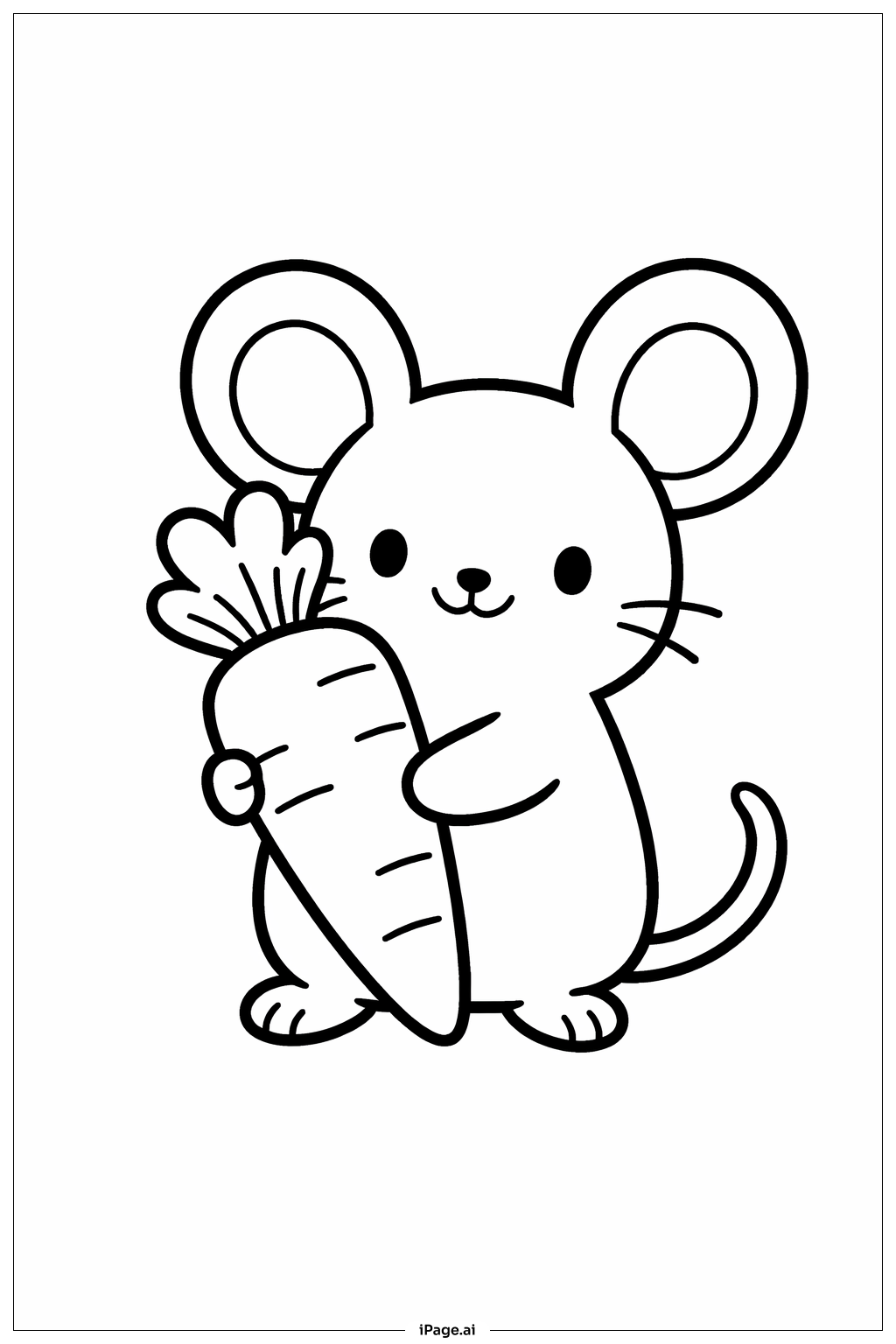
Coloring tips: How to color Mouse With Carrot coloring page well?
Start with the mouse's body by using warm shades of gray or light brown for the fur. You can add a slightly darker tone on the edges to give it a soft, fluffy look. Use a pale pink for the inner ears, nose, and paws to bring the mouse to life. For the carrot, use a bright orange for the body and layer in a touch of yellow to add warmth and shine. The leafy tops look great in two or three shades of green — a medium green as the base and a darker green for depth. Use a light brown or cream color for the tips of the whiskers. Feel free to add a fun background — a soft blue sky, green grass, or a cozy wooden floor can make the scene feel complete. Let your imagination guide your color choices and have fun!
Coloring challenges: Which parts are difficult to color and need attention for Mouse With Carrot coloring page?
• Fur Texture Details: The mouse's body has fine lines suggesting soft fur. Coloring these small, closely spaced lines neatly without going outside the boundaries can be tricky. Using a sharp colored pencil or a thin marker will help you stay precise and create a realistic fluffy look.
• Small Facial Features: The mouse has tiny facial details like eyes, a small nose, and delicate whiskers. These areas are very small and require a steady hand. Using a fine-tipped tool and working slowly will help you color each feature cleanly without smudging or overlapping onto nearby areas.
• Carrot Shading and Gradient: The carrot looks most realistic when it has a gradient — lighter in the center and slightly darker along the edges. Blending two shades of orange smoothly in such a narrow shape takes patience and practice, especially for younger colorists.
• Leafy Carrot Tops: The feathery leaves at the top of the carrot have many thin, overlapping sections. Coloring each leaf individually with different shades of green, without making the area look muddy or flat, requires careful attention and color control.
• Curling Tail Outline: The mouse's long, curling tail is a thin and winding line. Staying inside the outline of such a narrow shape while still adding a hint of color or shading is one of the more challenging parts of this image, especially for younger children using thicker coloring tools.
Benefits of coloring books: Advantages of drawing Mouse With Carrot coloring page
Coloring this fun mouse and carrot image offers a wide range of benefits for children and creative minds of all ages. First, it helps build fine motor skills. Carefully coloring small details like whiskers, fur lines, and tiny paws strengthens hand-eye coordination and grip control. Second, it encourages color awareness. Choosing the right shades for the mouse's fur, the bright orange carrot, and the green leafy tops helps children learn how colors relate to the real world and how to mix tones for a more lifelike result. Third, it supports focus and patience. Working through the different sections of the image — from the mouse's body to the carrot details — teaches children to slow down, concentrate, and complete a task step by step. Fourth, it sparks creativity and imagination. There are no strict rules for how this image should be colored, so children are free to experiment with unusual color choices and create their own unique version of the scene. Finally, it provides a calming and enjoyable activity that reduces stress, boosts confidence, and gives a real sense of accomplishment when the finished page comes to life with color.