Coloring tips: How to color Mouse On Wheel coloring page well?
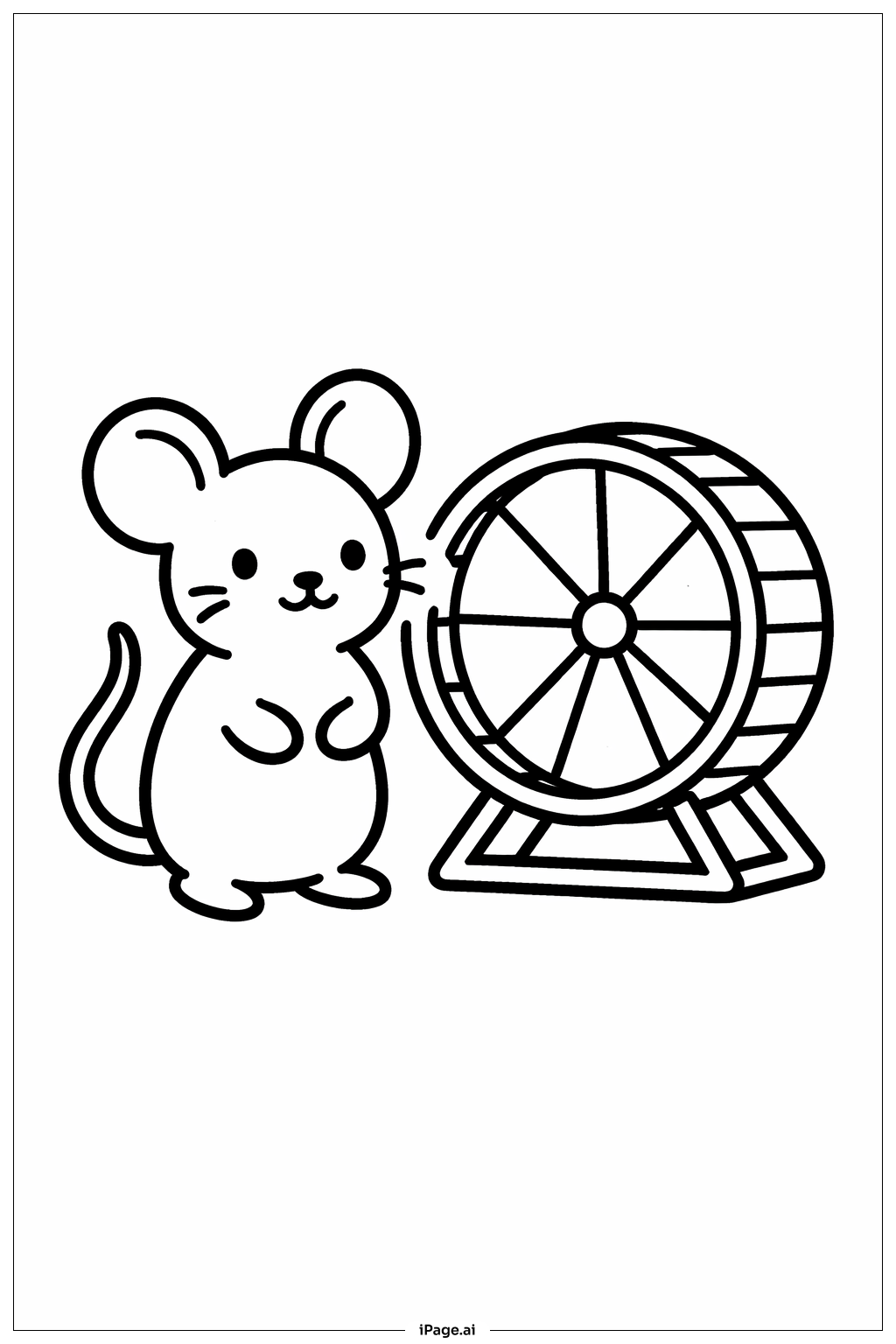
For this image, use soft gray or brown colors for the mouse to give it a natural look. You can add lighter shades on its belly and inside the ears to create depth. The exercise wheel can be colored using brown or wooden tones to make it appear like a real hamster wheel. Add some shadows inside the sections to show roundness. Feel free to be creative with the background by adding green grass or a colorful room to make the picture lively. Use bright colors for small details to catch attention.
Coloring challenges: Which parts are difficult to color and need attention for Mouse On Wheel coloring page?
1. The mouse’s small features like eyes, nose, and whiskers require careful coloring to avoid coloring outside the lines.
2. The wheel’s sections have thin lines and tight spaces, making it challenging to color evenly without overlapping.
3. Balancing colors between the mouse and the wheel to make both stand out without clashing can be difficult.
4. Keeping the coloring neat inside the mouse’s curved tail and paws might need steady hands and focus.
5. Adding shadows or different shades to give depth while maintaining clarity can be tricky for beginners.
Benefits of coloring books: Advantages of drawing Mouse On Wheel coloring page
Coloring this picture helps children practice fine motor skills by filling small spaces like the mouse’s face details and the wheel sections. It also encourages creativity through color choices for the mouse and the exercise wheel. By working on this image, children improve concentration and patience as they carefully color within lines. It is a fun way to learn about animals and exercise habits. Completing this picture boosts confidence and gives a sense of achievement.