Coloring tips: How to color Mouse In Kitchen coloring page well?
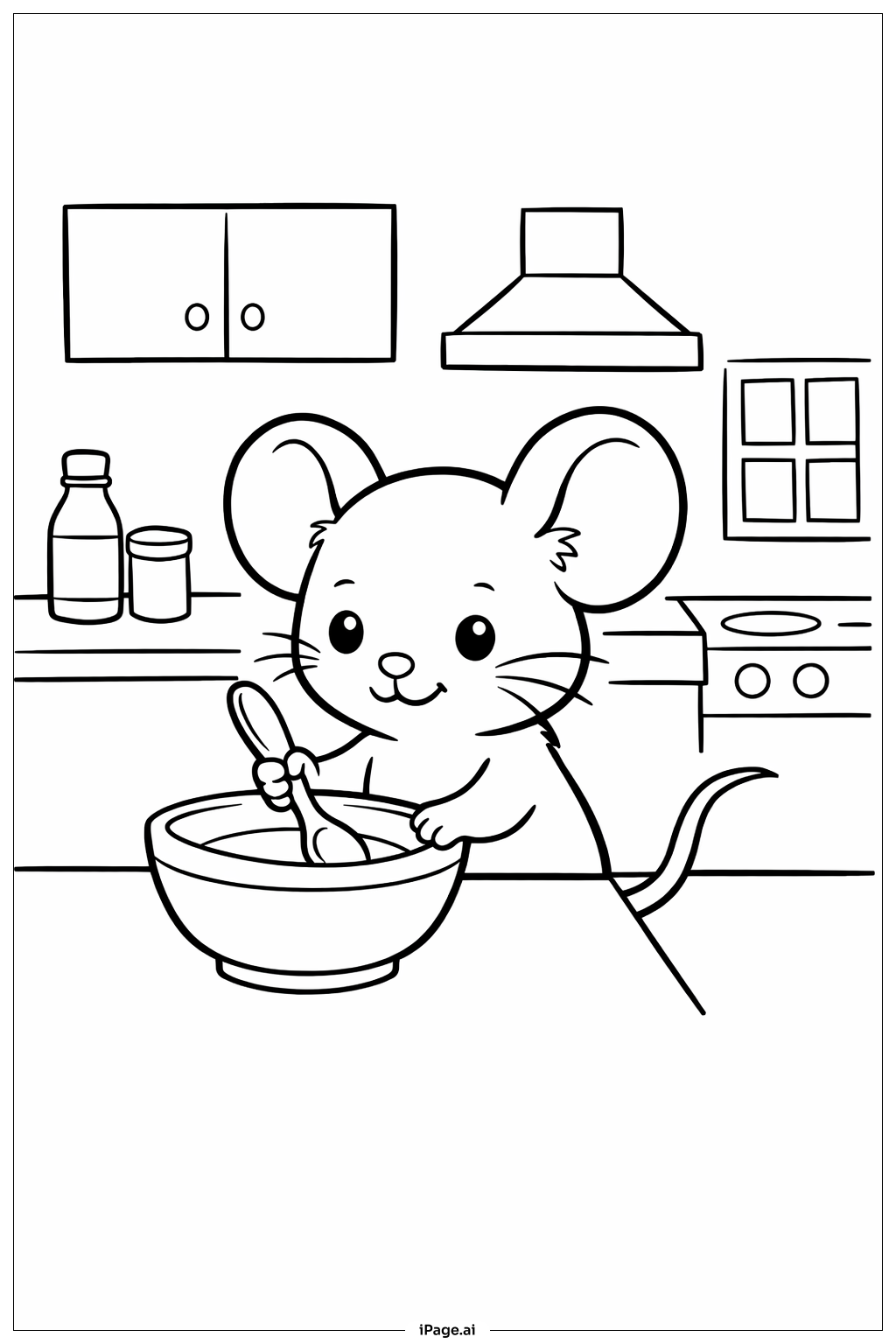
Use light brown or grey for the mouse’s fur to make it look soft and natural. The ears can be colored pink inside for a cute touch. For the bowl, use bright colors like blue, red, or green to make it stand out. The spoon could be colored silver or brown. For the kitchen cabinets and stove, choose simple colors like white, light brown, or grey. The background can be light blue or yellow to show a bright kitchen. Try to color the window with light blue to indicate daylight outside.
Coloring challenges: Which parts are difficult to color and need attention for Mouse In Kitchen coloring page?
1. Small details like the mouse’s eyes, whiskers, and fingers can be hard to color inside the lines. 2. The bowl has two rings around it, which may require careful coloring to keep the shape clear. 3. Coloring the mouse’s tail thinly and evenly might need patience. 4. The kitchen items like bottles and stove knobs are small and need attention to avoid coloring mistakes. 5. The window’s grid lines might be tricky to color without spilling over to the panes.
Benefits of coloring books: Advantages of drawing Mouse In Kitchen coloring page
Coloring this picture helps children practice fine motor skills by filling small and medium-sized areas with color. It encourages creativity because they can choose many colors for the mouse, bowl, and kitchen. Coloring the mouse’s face and small details improves hand-eye coordination. It can also teach kids about kitchens and cooking in a fun way. Overall, it supports concentration and patience while making a joyful, colorful picture.